
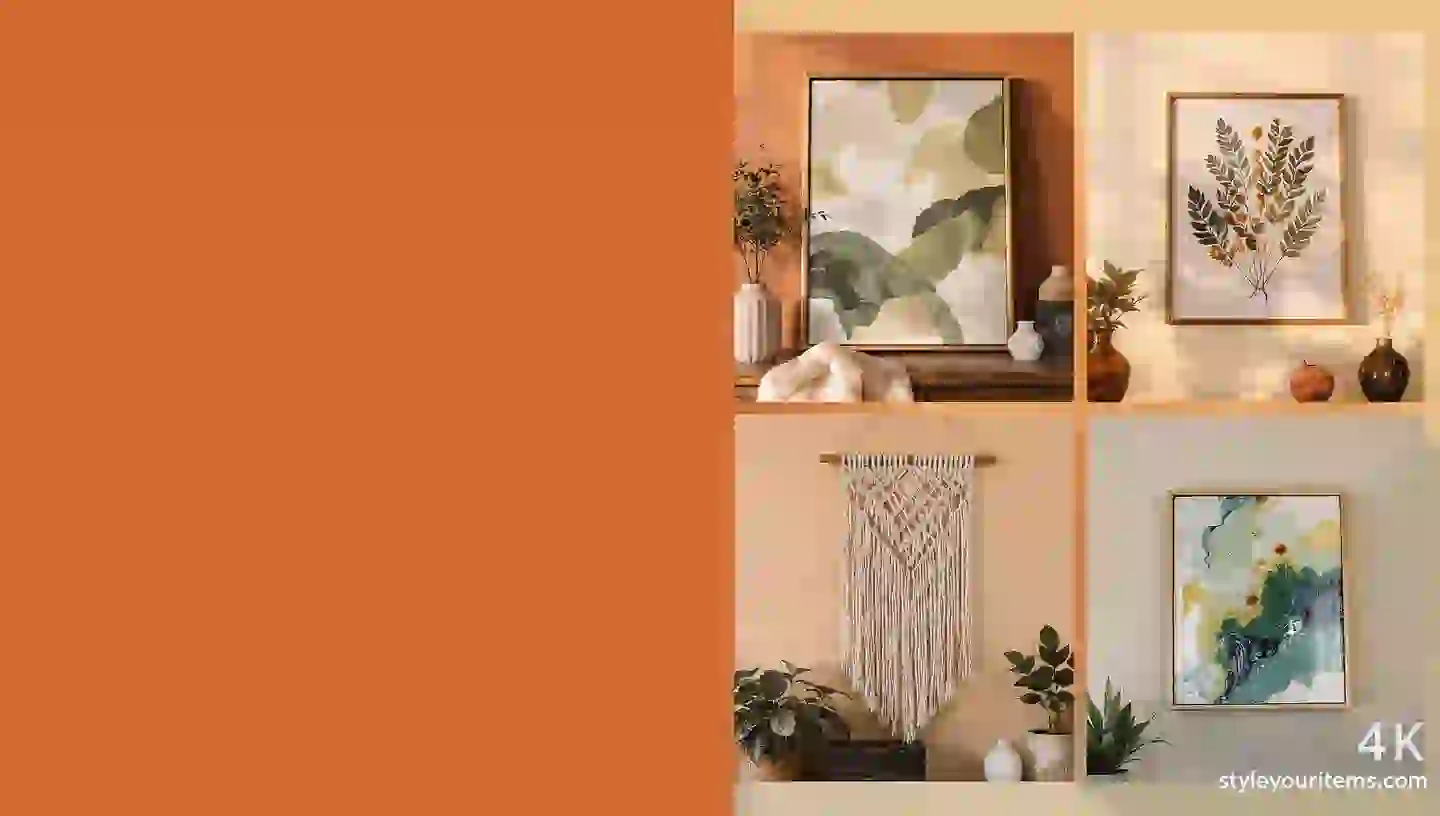
The truth is, browsing wall art ideas on Pinterest and actually creating something yourself are two completely different things. You’ve probably seen the same floating shelves and quote prints countless times. This post is not that.
Here, we’ll explore 8 completely distinct DIY wall art styles — each with its own personality, method, and character. Whether you’re a complete beginner or have some experience, there’s definitely something here that will inspire you to start right away.
1. Textured Abstract Canvas Art — Beautiful Chaos
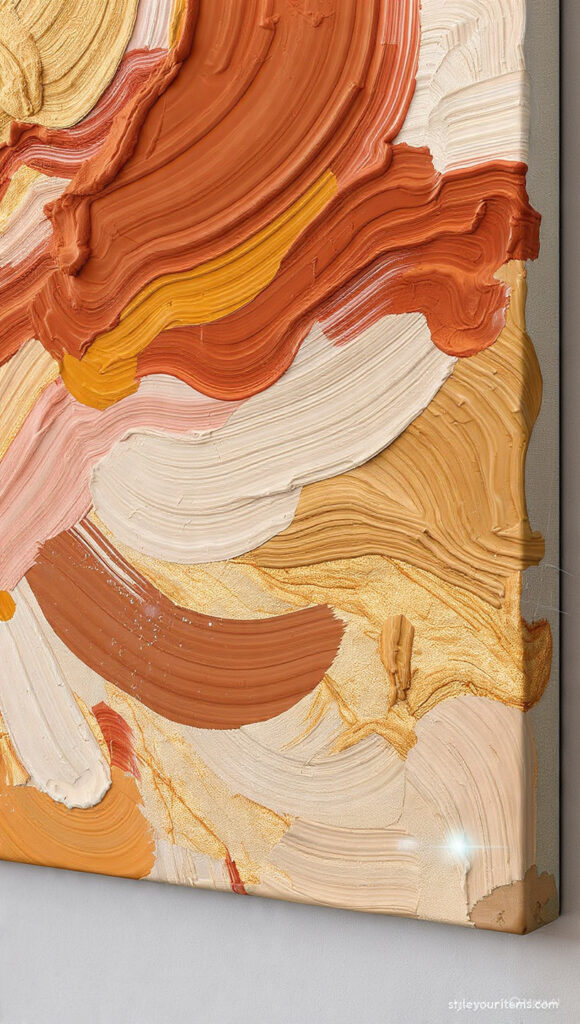
Abstract art never goes out of style — and the main reason is that there are no “mistakes.” A textured canvas painting gives you something that looks expensive and thoughtfully made — even if you created it in a completely free manner.
What You’ll Need:
- Heavy body acrylic paint in 3 to 4 muted, earthy colors
- Palette knife — not a brush, this is the real secret
- Gallery-wrapped canvas, at least 16×20 inches in size
- Hair dryer or heat gun to speed drying between layers
Place the canvas flat. Squeeze paint directly from the tube — don’t mix with water at all. Use the palette knife to spread, blend, and build layers. Let one layer dry, then add the next. The raised layers catch light and create that three-dimensional effect you see in expensive stores.
Also read: 12 Stunning Kitchen Shelf Décor Ideas That Will Transform Your Kitchen’s Look
A key point: Keep your color palette simple. One warm color, one cool color, and one neutral — that’s your palette. Resist the urge to add more colors. The most impressive paintings are always those created with confidence using fewer colors.
2. Pressed Botanical Frames — Simple Yet Stunning
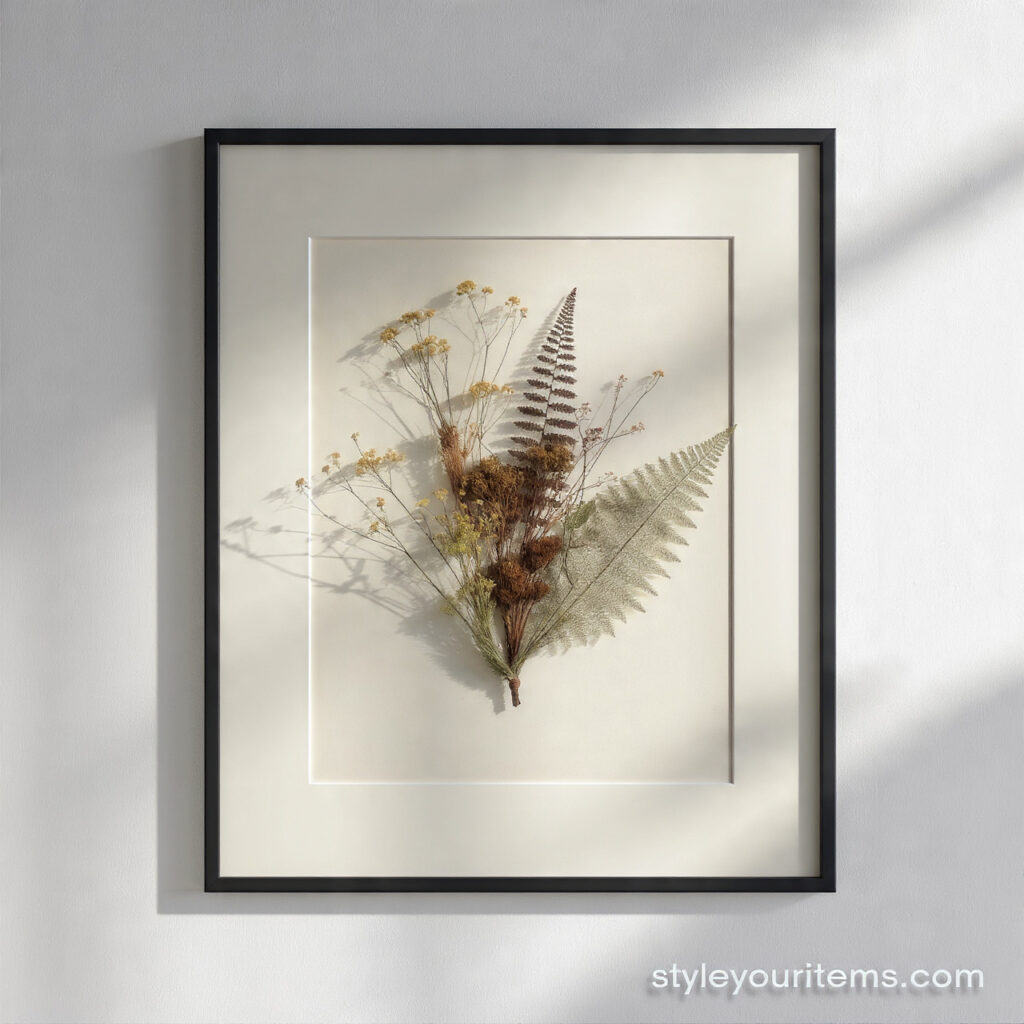
Dried flower frame art is becoming popular again — and it’s no surprise. When done correctly, it looks like it came straight from an expensive design magazine. Done incorrectly, it resembles a school science project. The difference lies in a few subtle details.
The real art is in the arrangement and framing. Most people press flowers, place them on paper, and think they’re done. The truly beautiful ones are thoughtfully arranged — some areas sparse, some dense, with space intentionally part of the design.
Shortcut to a Professional Look:
- Use a single color family: white flowers, or just green leaves, or only lavender shades
- Use acid-free ivory or cream paper — not white printer paper
- A thin black metal frame or a raw wood frame elevates the entire piece
- Hang three frames together, identical frames but different sizes
To press flowers, place them between parchment paper and leave them in a heavy book for 2 to 3 weeks. Take a photo of the arrangement before gluing — this step saves a lot of time.
3. Geometric Wood Wall Sculpture — An Architectural Statement
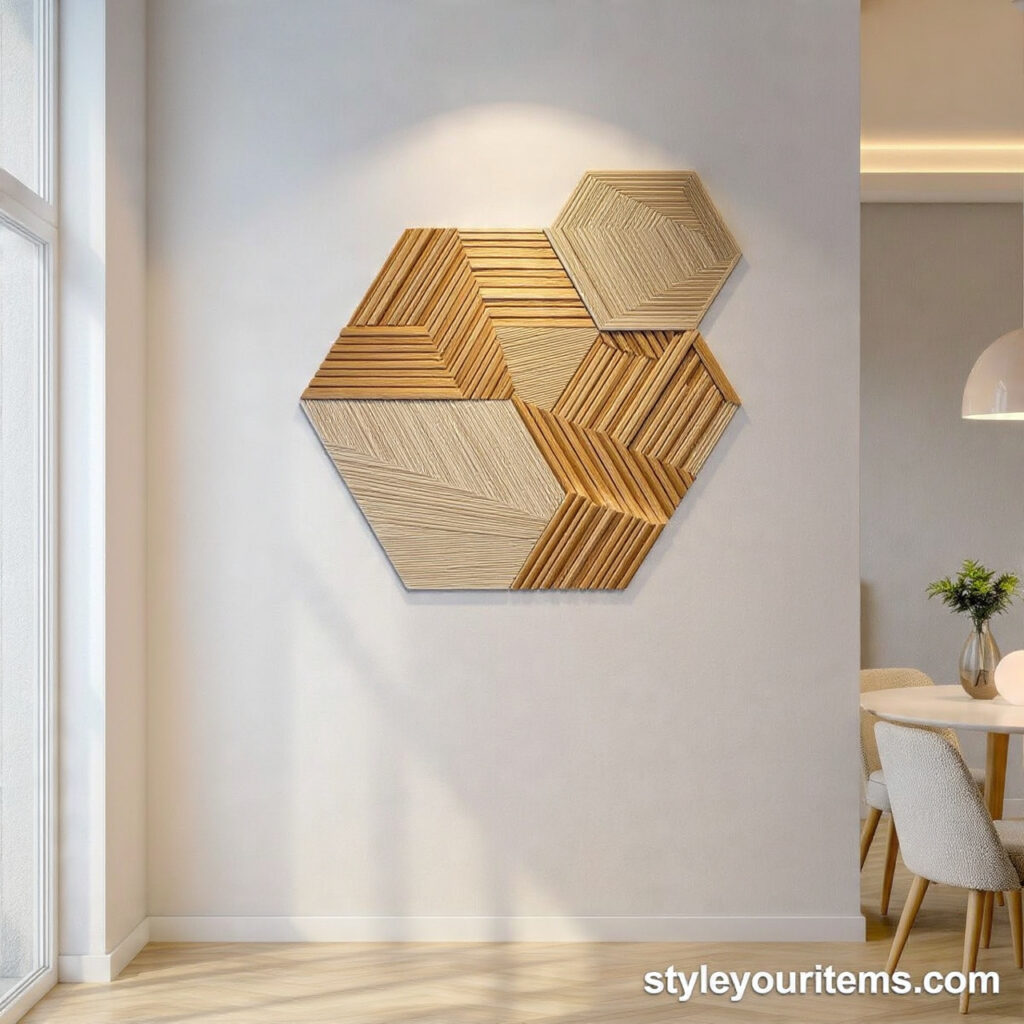
This is for those who want their wall to function as architectural art. A wooden geometric sculpture isn’t just art — it’s a focal point, a conversation starter, and a textural element. The best part? You don’t need power tools.
Balsa wood strips, thin plywood, or wooden skewers arranged carefully create the same effect. The shape itself carries all the visual weight.
Design Approach:
- First, sketch your pattern on paper — hexagon, chevron, and pinwheel all look beautiful
- Use 2 to 3 natural wood tones: raw, stained, and white — together they look intentionally chosen
- Use a large foam board as a base, glue everything onto it, then mount the entire piece on the wall
- Make it large — 36×36 inches makes an impact on the wall; small gets lost
Invest time in precise measurement and straight cuts. Every millimeter of accuracy makes your work look like it costs hundreds, while the actual cost is minimal. That’s the real magic.
4. Hand-Lettered Typographic Art — When Words Truly Matter
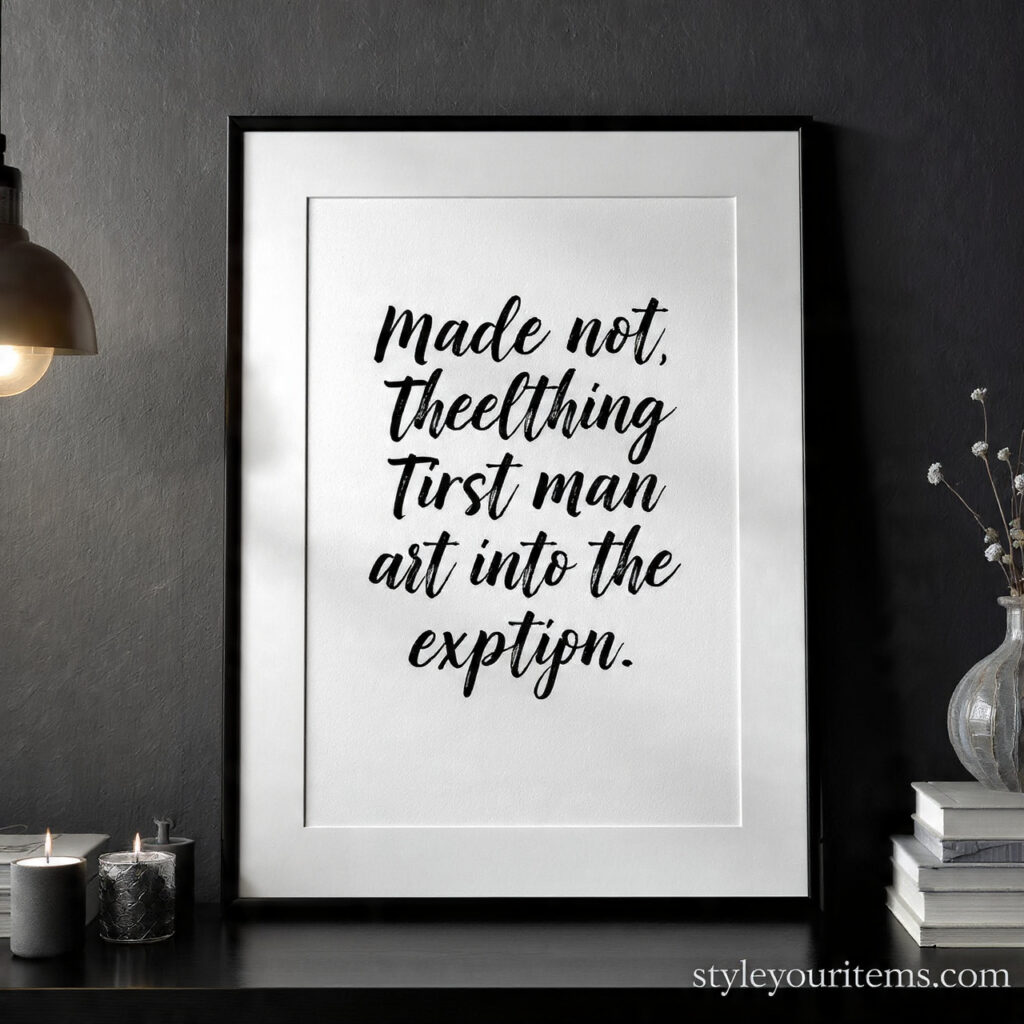
Let’s talk about quote prints — not the ordinary ones found in every other home. The ones you write yourself, with your own hand, for words that genuinely mean something to you. In modern calligraphy, imperfection is considered beautiful — random yet intentional, carrying the warmth of the human hand, which brings life to a room.
What to Write:
- Something personal to you — a line from a favorite book, not a generic motivational poster
- Short is always more powerful — one impactful sentence beats an entire speech
- Writing in another language you speak expresses a unique personality
Also read: Minimalist Bedroom Décor on a Budget — 6 Simple & Stunning Ideas
Before working on the final paper, practice your quote at least 10 to 15 times. The Tombow Dual Brush pen is excellent for beginners. More pressure on downstrokes, lighter on upstrokes — this contrast makes all the difference. Use a simple black or warm wooden frame. No elaborate borders, just simplicity.
5. Macrame Wall Hanging — Warm Boho Decor
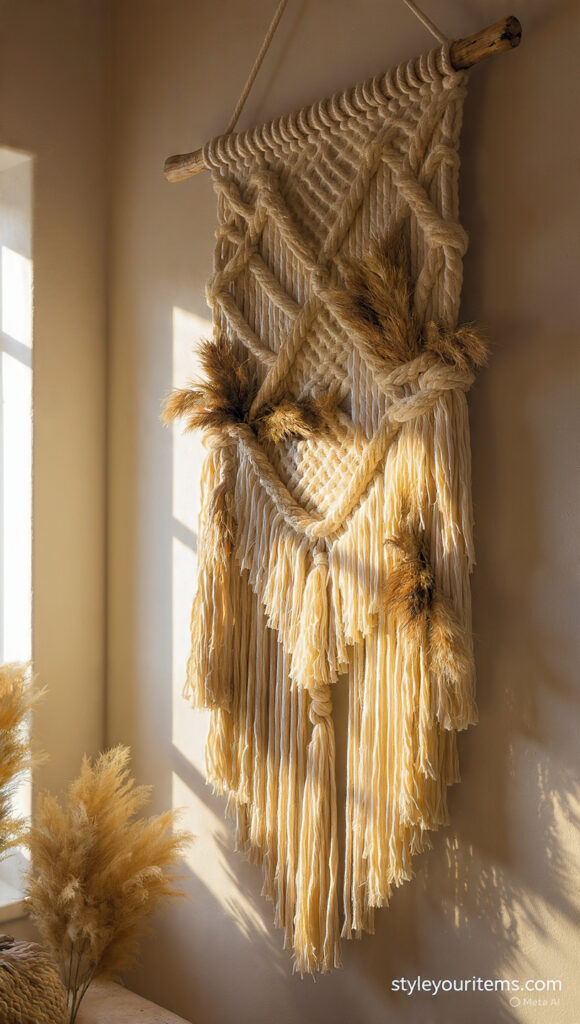
Here we’re talking about tactile decor. Macrame and woven fiber art have a warmth that no print or canvas can provide. It brings real texture into the room, changing how you experience the space — difficult to explain in words until you see it for yourself.
You absolutely don’t need to be an expert. Modern macrame is essentially repeated knots — learn the square knot and lark’s head knot, and you’ve mastered 80% of the work.
How to Start Without Confusion:
- Buy 3mm natural cotton macrame cord — soft, holds shape, and photographs beautifully
- For your first project, start with a 12-inch wooden dowel
- Watch one complete beginner tutorial on YouTube from start to finish
- Add pampas grass, dried lavender, or small wooden beads to take your piece to the next level
The beauty of fiber art is that if a section doesn’t look right, you can undo the knots and redo them. No harm, no permanent mistakes. Trim the fringe evenly with sharp scissors — this final step completes the entire piece.
6. Vintage Map and Travel Theme Gallery Wall — Your Life Story on the Wall
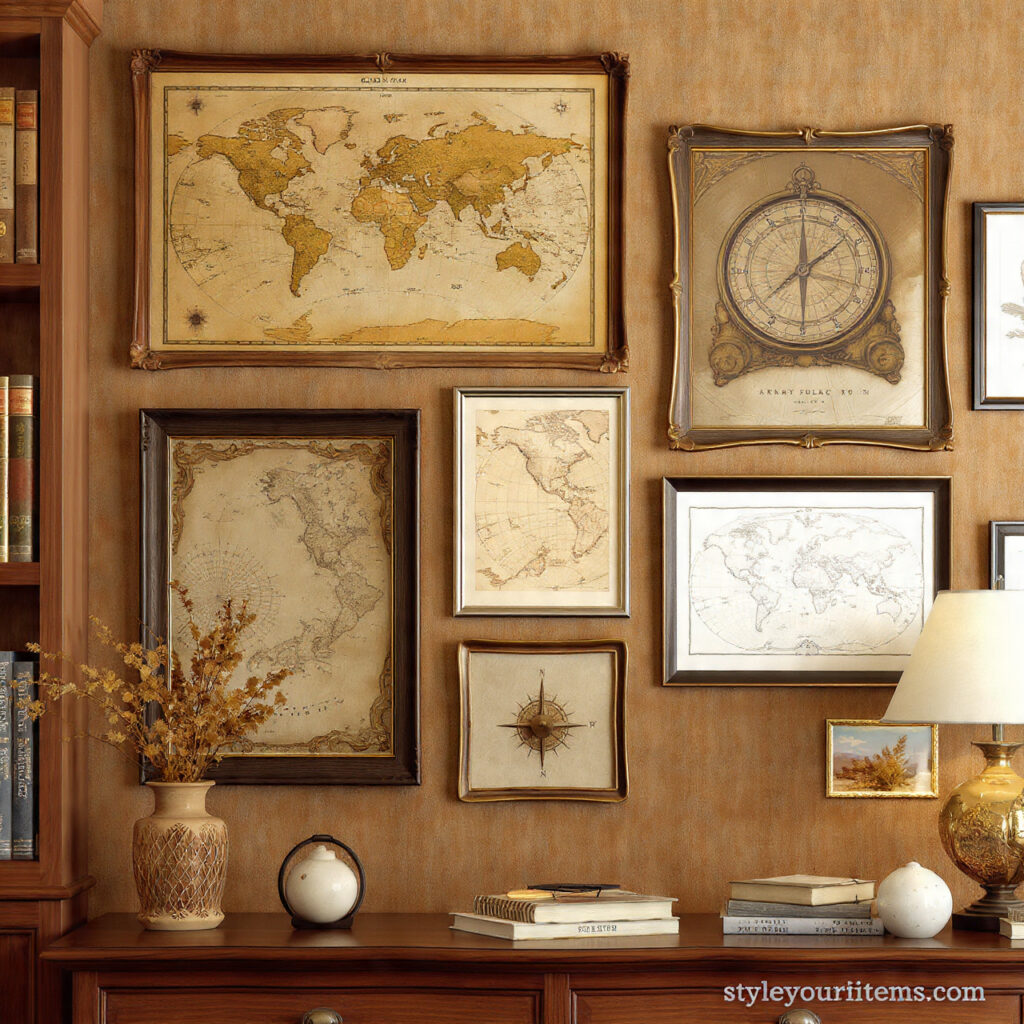
This wall art idea tells your own story — old maps, city prints, handwritten travel notes, and photos of places you’ve actually visited. It’s not just for show — it’s about displaying your life on the wall, which is what truly makes a house a home.
The secret to a gallery wall that doesn’t look random is visual anchoring. Choose one large central piece — an old world map works perfectly for this — and arrange everything else in relation to it.
How to Create a Gallery Wall Without Stress:
- First, arrange everything on the floor, take a photo, before hammering any nails into the wall
- Odd numbers look more natural — 5, 7, or 9 frames work better than even numbers
- Keep frame styles different but colors consistent: all dark wood, all brass, or all black
- Mix different items: maps, line drawings, your photos, and an old ticket
The David Rumsey Map Collection is available online for free and features stunning old maps. Print on parchment-colored cardstock, at least 11×17 inches, and frame with thin mats. Low cost, high impact.
7. Monochrome Photography Grid — The Power of Simplicity
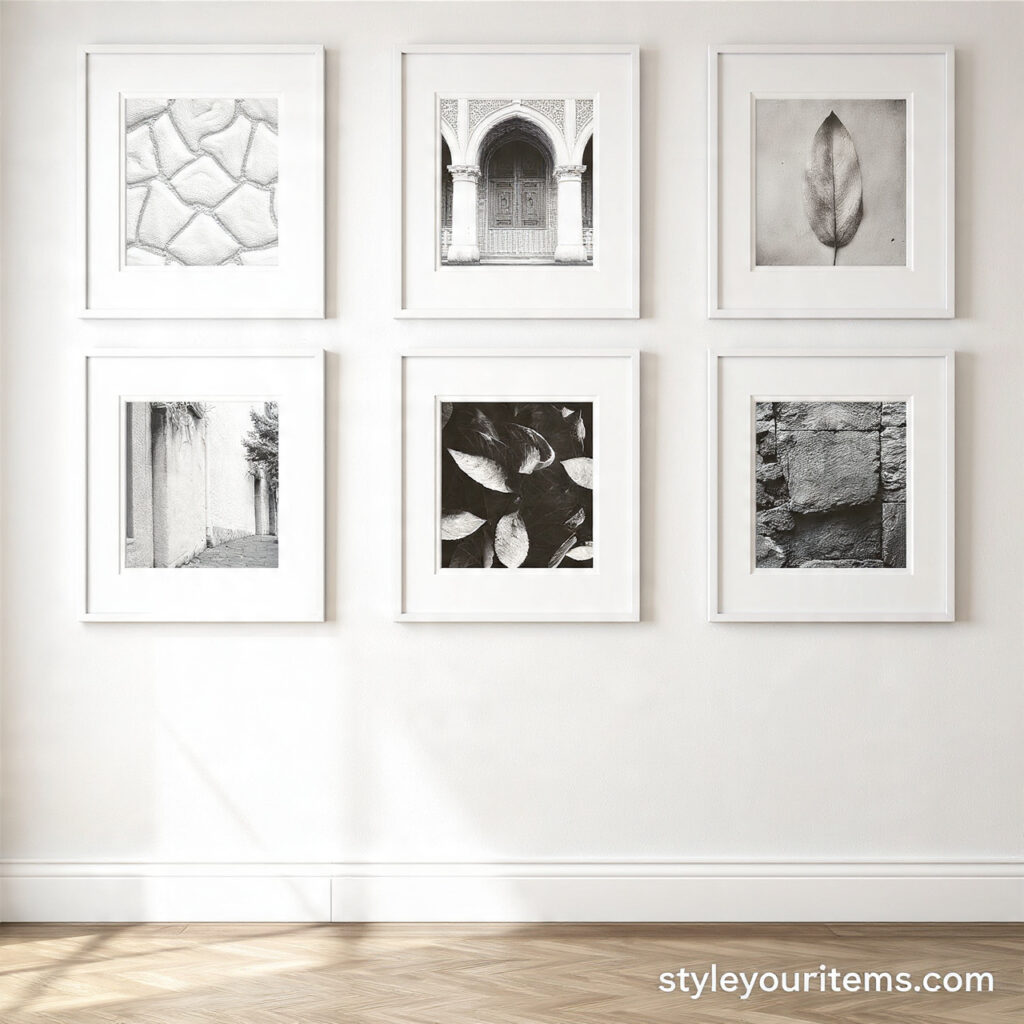
A perfectly executed monochrome photo grid works magic on a wall. Nine identical frames, all black and white, all connected by a single theme — it dominates the wall without saying a word.
The photos don’t need to be professional — but when they’re your own, it’s a different story. Your travel photos, street photography, or close-up texture shots from your garden — converted to black and white, printed at 8×10, and placed in identical frames — look museum-worthy.
To Make It Truly Successful:
- Stick to one theme: architecture, nature, people, or texture — don’t mix
- Print on matte paper instead of glossy — looks more editorial and doesn’t reflect light
- Use identical frames — this uniformity is the design, don’t vary it
- Maintain exactly 2 inches between frames, use a level, and painter’s tape
This project looks simple, but actually demands complete precision. That contrast is what makes it so stunning.
8. Resin Pour Art Panel — A Spectacular Science Experiment
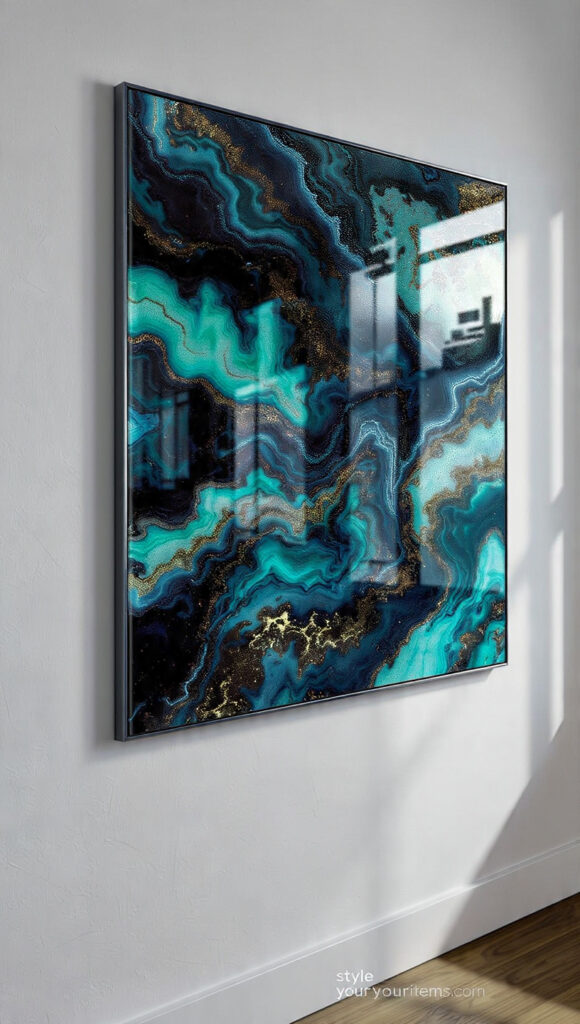
Save this for when you’re in the mood to do something big — and when you don’t mind covering your entire table with plastic sheeting. Resin pour art delivers the most dramatic results of any afternoon DIY project, and watching the process is an experience in itself.
When you mix epoxy resin with colors and pour it onto a panel, you get flowing patterns that look like liquid marble, ocean waves, or precious stones — depending on your color choices. No two pours are ever the same.
Essential Things to Know Before Starting:
- Work in a warm room — resin won’t cure properly below 24 degrees Celsius
- Always wear nitrile gloves and work in a ventilated area — fumes require caution
- Use a perfectly level surface and slightly elevate the panel so excess resin drips off the edges
- Immediately after pouring, pop bubbles with a torch or heat gun
About colors: less is always more. Two or three colors plus one metallic — gold or copper — give the most stunning results. Attempting to use six colors often ends up looking like brown mud. Let the resin flow, tilt the panel slightly, then step back. You can guide, but you cannot control. Leave it for 24 to 48 hours and let chemistry do its work.
Final Thoughts
Eight ideas, eight completely different personalities, no filler content. What they all share in common: each transforms a blank wall into something that speaks about the person living there — and that’s the real purpose of home decoration.
Start with the idea that made you lean forward most while reading it.
Visit styleyouritems.com for more home decor ideas and DIY inspiration