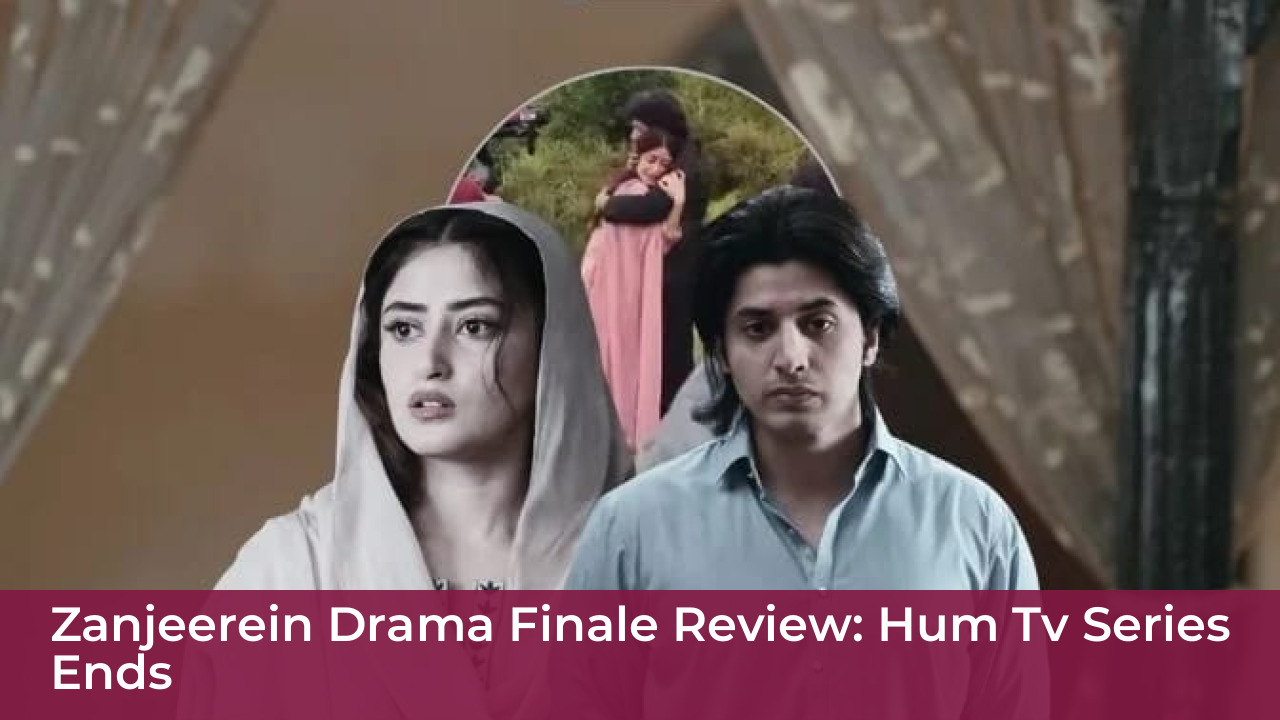
The final broadcast of Zanjeerein delivered a long-awaited resolution to a narrative that captivated prime-time audiences throughout its television run. Written by Farhat Ishtiaq and directed by Shahzad Kashmiri, the production concluded with an emotional finale that resolved its central romantic tension while addressing the heavy burden of trauma carried by its main characters. The story reached its peak by balancing personal independence with mutual affection, leaving viewers with plenty to discuss regarding its structural strengths and narrative missteps.
- Zanjeerein Finale Breakdown: Climax and Emotional Resolution
- Resolving the Central Relationship
- Economic Agency as a Precondition for Romance
- Narrative Structure: Grief, Pacing Issues, and Network Cuts
- The Mid-Season Pacing Paradox
- Editing Controversies and Compressed Secondary Arcs
- Lead Performances That Sustained Audience Interest
- Sajal Aly’s Mastery of Expressionistic Acting
- Danyal Zafar’s Breakout Role as Sarbuland
- Cultural Impact and Audience Reception
- Viewer Discourse on Antagonist Resolutions
- Legacy of Zanjeerein on Hum TV
Broadcast across national airwaves, the ending brought a definite close to the turbulent relationship between Rabiya and Sarbuland. While the middle portion of the drama faced criticism for slow progression and structural cuts, the final episode delivered an emotionally resonant climax that rewarded patient viewers. The series succeeded in transforming a relationship rooted in societal pressure into a partnership defined by genuine emotional connection.
Zanjeerein Finale Breakdown: Climax and Emotional Resolution
The finale centered on the final transformation of Rabiya and Sarbuland’s marriage. What began as a forced union born out of family obligations and tragedy gradually shifted into authentic intimacy. Rather than relying on sudden dramatic twists, the climax focused on quiet character decisions that allowed both leads to address their past losses openly.
The narrative mechanics of the final episode brought every major story thread to a head. The tension built toward a decisive choice: whether Rabiya would remain trapped by the memory of her past or step into a dynamic built on mutual respect. The resolution felt earned because the script allowed the characters to confront their grievances directly rather than sweeping past conflicts under the rug.
Resolving the Central Relationship
The climax began in earnest when Sarbuland set out to find Rabiya after she chose to leave the ancestral haveli. Recognizing that demanding her return would only repeat past mistakes, Sarbuland searched for her with humility. A major catalyst in this push was Bibijaan, whose wise intervention nudged Sarbuland out of his rigid mindset and forced him to take accountability for his past coldness.
Their eventual reunion delivered the emotional highlight of the series. During their mutual confession of love, the script highlighted a vital symbolic shift. Throughout her time in grief, she was Rabiya, the widow bound to the memory of her late husband, Mudassir. In accepting Sarbuland, she stepped into her identity as Zarmala. Viewers noted this distinction online, highlighting that while Rabiya belonged to Mudassir’s tragic past, Zarmala represented the deliberate, chosen love she shared with Sarbuland.
Economic Agency as a Precondition for Romance
A key element of the finale was Rabiya’s decision to reopen and manage her late husband Mudassir’s roadside dhaba business. Before agreeing to reconcile with Sarbuland, she established her financial stability. She chose to work with her own hands rather than rely on the financial privilege of the haveli.
This plot choice subverted traditional drama tropes common in stories set within rural Khyber Pakhtunkhwa. Female characters in these settings are often framed as passive figures awaiting rescue by dominant male leads. By establishing economic self-reliance first, Zarmala altered the power balance of her marriage. Sarbuland did not return as a savior taking in a helpless woman; he returned as a partner asking an independent woman to share her life with him.
Narrative Structure: Grief, Pacing Issues, and Network Cuts
Farhat Ishtiaq’s screenplay demonstrated strong character development, but the overall structure suffered from noticeable pacing flaws. The dramatic hook established in the opening episodes promised a fast-moving exploration of honor, grief, and personal autonomy. However, as the story progressed into its middle stretch, the narrative drive slowed down significantly.
The production struggled to maintain steady storytelling momentum over its extended run. While early episodes built rapid emotional investment through high-stakes conflict, the mid-series setup relied heavily on repeating circular arguments between the lead characters. This structural drag created a sharp contrast between the lively opening phase and the static middle episodes.
The Mid-Season Pacing Paradox
The mid-season drag highlighted a recurring paradox in contemporary television writing. To fill a standard multi-episode broadcast slot, the script repeatedly cycled through identical emotional beats. Characters revisited the same misunderstandings across multiple weeks, stretching conflict thinner than necessary.
Grief served as the primary emotional engine driving the lead characters toward one another. However, relying continuously on shared mourning as the sole driver for romantic attachment created narrative fatigue. While joint loss brought Sarbuland and Zarmala together, the repeated focus on past trauma delayed their actual character progression, creating a sense that the plot was running in place.
Editing Controversies and Compressed Secondary Arcs
Beyond scripting choices, post-production decisions heavily impacted the final product. Network cuts made during broadcast trimmed significant portions of side narratives to keep the main romance front and center. Secondary characters like Bano suffered from these technical edits, leaving their personal arcs feeling abrupt and incomplete.
The resolution of the primary antagonist, Torsam Khan, stood out as a prime example of compressed editing. His transition into full villainy and his subsequent downfall felt rushed in the final act. Viewers who had followed his complex psychological setup throughout the early episodes were left with an abrupt, simplified conclusion that lacked the narrative weight built up earlier in the season.
Lead Performances That Sustained Audience Interest
Despite structural hiccups and heavy editing, the primary cast kept audience retention high throughout the show’s run. Director Shahzad Kashmiri utilized deliberate visual framing to heighten emotional tension. His camera work relied on close-ups and quiet beats, allowing the actors’ subtle expressions to communicate subtle feelings when the dialogue was intentionally sparse.
Kashmiri’s visual design contrasted the stark, rigid atmosphere of the ancestral haveli with open, natural outdoor settings. This environmental framing visually tracked Zarmala’s internal movement from emotional confinement toward personal freedom.
Sajal Aly’s Mastery of Expressionistic Acting
Sajal Aly delivered a layered performance as Rabiya and Zarmala, reaffirming her standing as one of prime-time television’s premier actors. Portraying a character carrying intense trauma required severe restraint. Rather than leaning into theatrical outbursts, Aly relied on quiet shifts in expression, posture, and tone to convey her character’s gradual emotional healing.
Her expressive performance anchored the show during its mid-season script lulls. Even when narrative momentum slowed down, Aly’s depiction of quiet dignity and deep psychological pain kept viewers emotionally invested in Zarmala’s outcome.
Danyal Zafar’s Breakout Role as Sarbuland
Danyal Zafar delivered a breakout dramatic performance as Sarbuland, taking on a role that required substantial emotional range. Sarbuland began as a rigid traditionalist bound by familial expectations and tribal authority. Zafar handled the character’s gradual turn toward empathy with balance and care.
The dynamic between Aly and Zafar grounded the production. Their screen chemistry felt natural, progressing smoothly from cold distance to mutual trust. Zafar successfully captured Sarbuland’s transition from an authoritative male figure into a partner willing to unlearn deep-seated biases.
Cultural Impact and Audience Reception
Following the final episode, public discussions erupted across digital platforms and entertainment forums. Viewers shared detailed breakdowns of the climax, debating the show’s artistic value and cultural themes. Many praised the finale for providing a complete emotional payoff, while others critiqued the uneven pacing of the mid-season episodes.
Within the broader genre of dramas set in regional Khyber Pakhtunkhwa contexts, Zanjeerein carved out a distinct identity. While many tribal-backdrop shows lean into sensationalism, this production attempted to address structural social issues through a character-driven lens.
Viewer Discourse on Antagonist Resolutions
The conclusion of Torsam Khan’s storyline generated active debate among dedicated viewers. While some found his ending fitting for his destructive actions, a vocal portion of the audience argued that his villainous turn deserved a more fleshed-out resolution. Audience members noted that villains like Torsam are ultimately shaped by systemic societal failures and strict patriarchal pressures.
This discussion highlighted the ongoing debate over realism versus dramatic convenience in prime-time television. Audiences increasingly demand nuanced portrayals of morally grey characters rather than swift, black-and-white punishments.
| Character | Initial Status & Motivation | Final Arc Outcome | Narrative Impact |
|---|---|---|---|
| Rabiya / Zarmala | Grieving widow bound by family obligation | Financially independent dhaba owner married to Sarbuland | Subverted passive female tropes in regional settings |
| Sarbuland | Rigid patriarch focused on family duty | Empathetic partner who supported Zarmala’s autonomy | Demonstrated personal growth away from strict traditionalism |
| Torsam Khan | Antagonistic figure driven by societal pressure | Abrupt downfall due to compressed broadcast cuts | Sparked viewer debate on systemic societal corruption |
Legacy of Zanjeerein on Hum TV
Looking back at its full run on Hum TV, Zanjeerein stands out as an ambitious drama that succeeded in its core emotional goals despite technical hurdles. Its primary achievement lies in presenting a romance built on financial independence and mutual respect rather than toxic male control or female submission.
For future prime-time drama productions, the series offers valuable lessons. It demonstrates that compelling lead performances and strong thematic goals can sustain a show through pacing issues. However, it also highlights the need for balanced screenplays and careful network editing, ensuring that side characters and secondary storylines receive the narrative space they deserve from start to finish.