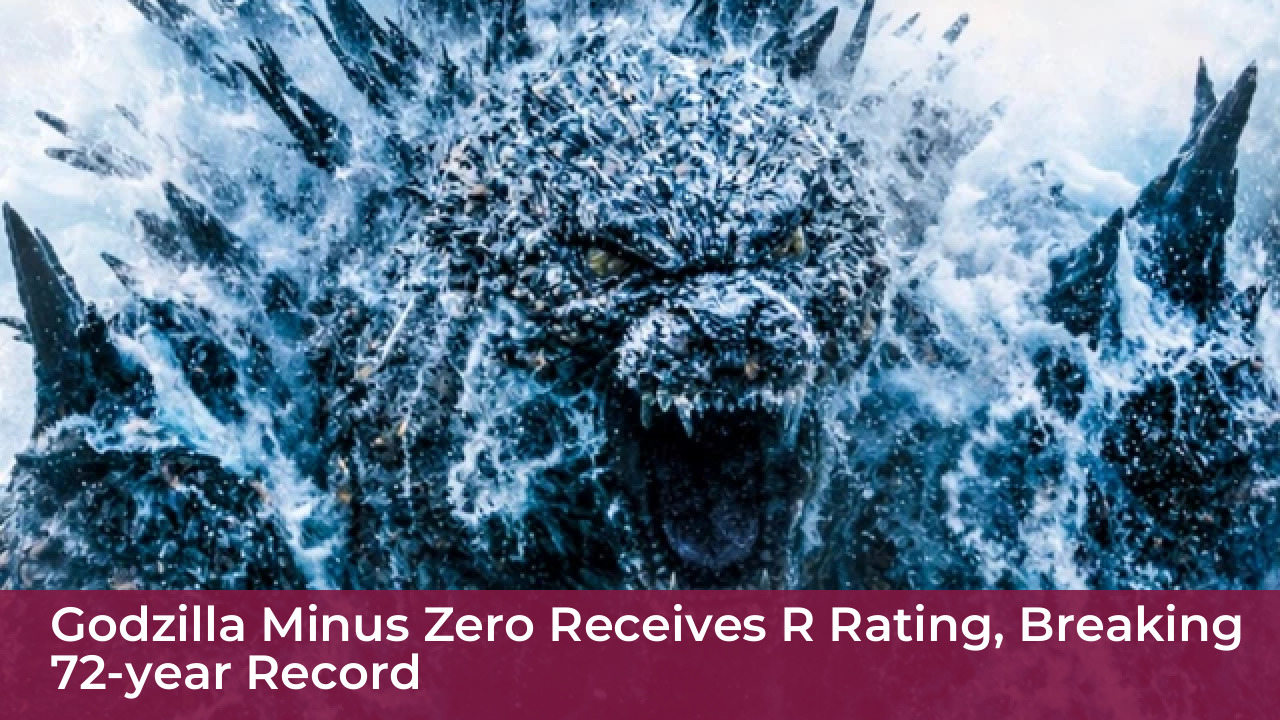
The cinematic history of the giant monster genre has officially crossed a major boundary. Distributors submitted the upcoming feature for official classification, resulting in certificate number 56195 bringing down a historic decision. Godzilla Minus Zero has secured an R rating from the Motion Picture Association due to bloody images and intense sequences of violent content. This classification shatters a strict seventy-two-year precedent across the entire cinematic franchise, marking the first time a primary installment receives a restricted rating for adult audiences.
- Breaking the 72-Year Franchise Precedent
- Plot, Setting, and Returning Cast Details
- Analysis Subsection: The Technical Anatomy of an R-Rated Kaiju Film
- Thematic Shift to Explicit Kaiju Horror
- Frequently Asked Questions
- Why did Godzilla Minus Zero receive an R rating?
- When will the movie be released in North America?
- Does the movie connect to Godzilla Minus One?
- Who is directing the new film?
- Conclusion
Director Takashi Yamazaki returns to helm the project following his historic Academy Award-winning run with the predecessor. North American distribution falls under the purview of GKIDS, ensuring a swift theatrical pipeline following festival appearances. The feature is scheduled to premiere at the New York Film Festival on September 26, 2026, before opening theatrically in Japan on November 3, 2026, and expanding across North America on November 6, 2026, with an official runtime spanning 135 minutes.
Breaking the 72-Year Franchise Precedent
For over seven decades, Toho and its international partners carefully calibrated every cinematic entry to secure family-friendly or PG-13 thresholds. From the 1954 original through the Showa, Heisei, and Millennium eras, filmmakers relied on suggestive destruction and masked terror to maintain broad commercial appeal. Even modern dark political satires like Shin Godzilla managed to retain PG-13 classifications despite dealing with bureaucratic failures and realistic civilian casualties during horrific municipal disasters.
Hollywood entries within the Monsterverse similarly target younger demographic quadrants with sprawling, CGI-heavy spectacles. The motion picture association board evaluates each production based on language, substance use, and the intensity of violence. Previous installments often skirted the line of destruction but pulled back before displaying explicit human carnage or prolonged suffering. The classification for the upcoming release signals a distinct departure, confirming that the content includes graphic details that no longer align with adolescent viewing guidelines.
The escalation stems from a deliberate creative choice rather than an accidental classification bump. Modern audiences expect a higher level of grit when historical realism merges with fantasy elements. By refusing to soften the impact of city-crushing disasters, the production team crossed the threshold that separates stylized popcorn entertainment from unmitigated horror. This rating confirms that the upcoming project treats the monster attack with the gravity of a true historical catastrophe.
Plot, Setting, and Returning Cast Details
The narrative picks up in 1949, placing the story in post-World War II Japan exactly two years after the heartbreaking events of the previous film. Society remains fractured and vulnerable as citizens attempt to rebuild their lives amidst widespread infrastructural ruin. The historical setting amplifies the feeling of helplessness, as the populace lacks the military apparatus required to confront an apex predator of this magnitude.
Principal cast members reprise their foundational roles to maintain continuity through this dark chapter. Ryunosuke Kamiki returns as Koichi Shikishima alongside Minami Hamabe as Noriko Shikishima, anchoring the dramatic core of the story in domestic survival and post-war trauma. The returning leads bring emotional weight to a screenplay that explores the psychological scars left behind by both military conflict and monstrous onslaughts.
The supporting ensemble features an impressive roster of Japanese cinema talent, including Yuki Yamada, Kuranosuke Sasaki, Jun Kunimura, Sakura Ando, Masami Nagasawa, and Hidetaka Yoshioka. This diverse cast populates various layers of society, from government officials and scientists to ordinary civilians struggling to find security. Each character contributes a different perspective on how a devastated nation handles an unstoppable extinction-level threat.
Analysis Subsection: The Technical Anatomy of an R-Rated Kaiju Film
Budgetary expansion plays a pivotal role in achieving this level of cinematic grit. While the predecessor operated on a modest budget under fifteen million dollars, the new production commands significantly higher financial resources. This capital infusion allows the visual effects team to craft detailed, tactile destruction that avoids the clean, plastic aesthetic common in contemporary blockbusters.
Deploying native IMAX camera rigs changes how audiences perceive scale and physical impact. Large-format lenses capture textures, debris, and human reactions with uncompromising clarity. When a massive foot crushes a street, the wide-format cinematography emphasizes the visceral gore and chaotic reality of the event. Every explosion and structural collapse is rendered with precise detail, leaving little to the imagination.
Director Takashi Yamazaki noted during early press disclosures that the visual sequences push boundaries further than anything previously attempted in the genre. Stating that viewers will witness imagery entirely new to the medium, the production relied on practical effects blended seamlessly with high-end digital compositing. This technical dedication ensures that the violence feels grounded, heavy, and psychologically unsettling rather than cartoonish.
Thematic Shift to Explicit Kaiju Horror
Transitioning the narrative to 1949 allows the storytellers to examine psychological damage through uninhibited realism. Post-war existence was already defined by scarcity, grief, and survival anxiety. Introducing an indestructible reptile into this fragile environment transforms the narrative from a standard creature feature into a harrowing survival horror film where safety is an illusion.
The inclusion of classic adversaries such as King Ghidorah elevates the stakes beyond simple territorial disputes. Integrating established monsters into this dark framework requires reimagining them as forces of pure, unstoppable malice. Rather than serving as neutral natural disasters, these entities act as physical manifestations of collective doom, demanding a level of sacrifice that traditional family-oriented blockbusters avoid.
Commercial expectations remain high despite the restricted audience classification. The predecessor achieved massive global success by grossing over one hundred sixteen million dollars worldwide. While an R rating typically limits younger foot traffic, the intense critical buzz, IMAX exclusivity, and unprecedented nature of the release position it as a major event for mature film enthusiasts globally.
| Era / Film | Setting Year | MPA Rating | Primary Visual Focus |
|---|---|---|---|
| Original Era (1954) | Contemporary | Unrated / G equivalent | Metaphorical atomic anxiety |
| Shin Godzilla (2016) | Modern Day | Not Rated / PG-13 equivalent | Political satire and bureaucracy |
| Godzilla Minus One (2023) | 1947 | PG-13 | Post-war reconstruction and survival |
| Godzilla Minus Zero (2026) | 1949 | R (Certificate #56195) | Explicit horror, gore, and trauma |
Frequently Asked Questions
Why did Godzilla Minus Zero receive an R rating?
The motion picture association assigned the rating due to intense sequences of bloody images and graphic violent content, marking a franchise first.
When will the movie be released in North America?
GKIDS will release the film theatrically across North America on November 6, 2026, following its festival premiere.
Does the movie connect to Godzilla Minus One?
Yes, the story picks up in 1949, exactly two years after the events of the previous film, with returning principal cast members reprising their roles.
Who is directing the new film?
Takashi Yamazaki returns as both writer and director, utilizing native IMAX technology and an expanded budget to achieve a darker tone.
Conclusion
Securing the first R rating in seventy-two years changes the trajectory of cinematic monster storytelling. By prioritizing uncompromising realism, graphic horror, and deep historical trauma over sanitized spectacle, the creative team has redefined what audiences can expect from the genre. As the theatrical release approaches, viewers prepare to witness a legendary creature portrayed with unprecedented gravity and terror.