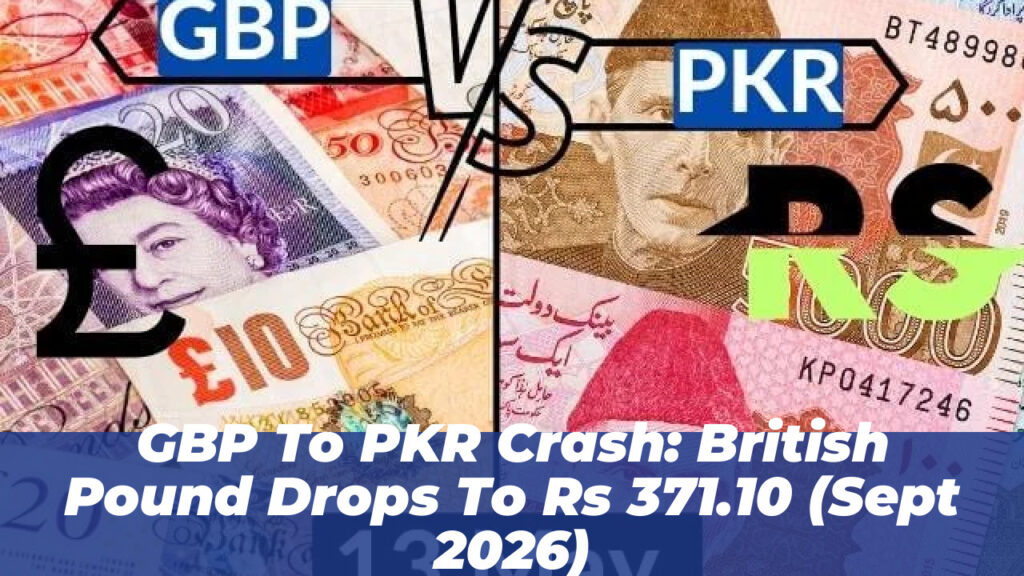
The currency market witnessed a significant shift today, 17 September 2026, as the British Pound (GBP) faced a sharp decline against the Pakistani Rupee (PKR). After weeks of relative volatility, the Pound has finally hit a major resistance level, marking a substantial drop that has caught the attention of investors, overseas workers, and currency traders alike.
Currently, the GBP to PKR rate stands at Rs. 371.10, reflecting a daily decrease of Rs. 2.42. This downward trend is not an isolated incident but a reflection of broader macroeconomic pressures currently impacting the United Kingdom’s economy.
Market Snapshot: GBP Performance on 17 September 2026
The following table outlines the current standing of the British Pound compared to other major global currencies against the Pakistani Rupee.
| Currency | Rate (PKR) | Daily Change | Trend |
|---|---|---|---|
| GBP | 371.10 | -2.42 | Significant Drop |
| USD | 277.26 | -0.008 | Stable |
| EUR | 318.06 | -2.06 | Downward |
| AUD | 197.18 | -0.42 | Downward |
| CAD | 198.22 | -0.75 | Downward |

Why is the British Pound Crashing?
The current GBP/PKR crash is largely driven by a combination of internal and external economic factors. Financial analysts point toward three primary reasons for this sudden dip:
- Energy Commodity Aftershocks: The European and Gulf markets are currently facing energy supply chain disruptions. As the UK remains heavily sensitive to energy import costs, the resulting inflation has weakened the Pound’s purchasing power against emerging currencies like the Rupee.
- Interest Rate Expectations: The Bank of England (BoE) is under immense pressure to balance inflation control with economic growth. Market sentiment suggests that the BoE may hold off on aggressive rate hikes, leading investors to move capital away from Sterling.
- Strengthening of the Rupee: The Pakistani Rupee has shown remarkable resilience, maintaining a stable trajectory against the US Dollar for 242 consecutive days. This inherent strength of the PKR is magnifying the impact of the Pound’s weakness in the interbank market.
Technical Outlook: Will GBP Break Below Rs. 370?
Market observers are closely watching the Rs. 370 support level. If the current selling pressure continues, the Pound is expected to test this psychological barrier within the next 48 to 72 hours.
For those looking to remit money or settle trade payments, the current environment suggests a wait and watch approach. While the drop is beneficial for importers, those holding GBP assets may find the current volatility challenging. Our analysis indicates that unless there is a major positive shift in UK manufacturing or trade balance data, the Pound might struggle to regain its previous highs in the immediate short term.
Essential Considerations for Currency Users
When tracking the British Pound to Rupee exchange rate, it is vital to distinguish between interbank rates and retail rates.
- Mid-Market Rates: The figures mentioned above represent the mid-market rate, which is the midpoint between the buy and sell prices in the global currency market.
- Bank vs. Exchange Companies: Commercial banks and local exchange companies often apply a spread to these rates to cover their operational costs. Consequently, the rate you receive at a physical counter will likely be slightly different from the interbank figures provided here.
- Transaction Timing: For large-scale transfers, executing transactions during peak banking hours often provides more competitive rates. If you are managing your budget while abroad, you might want to check the latest Ufone prepaid packages 2026 to stay connected with family without overspending during this period of currency instability.
Summary of Economic Impact
The recent decline in the British Pound has created a ripple effect across various sectors. Below is a quick review of the current situation for stakeholders.
Pros and Cons of the Current GBP/PKR Rate
| Pros | Cons |
|---|---|
| Importers benefit from cheaper procurement costs. | Overseas workers earn less in PKR terms. |
| Reduced cost for students paying UK tuition fees. | Exporters see a decline in profit margins. |
| Potential for increased demand for UK-bound travel. | Higher inflation risks on imported British goods. |
Specifications Table: Market Dynamics
| Feature | Details |
|---|---|
| Primary Trigger | Energy supply chain volatility |
| Support Level | Rs. 370.00 |
| Resistance Level | Rs. 375.50 |
| Market Sentiment | Bearish |
| Data Source | Interbank Market (17 Sep 2026) |
Disclaimer: This content is intended for informational purposes only and does not constitute financial advice. Currency markets are highly volatile; please consult with your bank or a certified financial advisor before making significant currency exchange decisions.