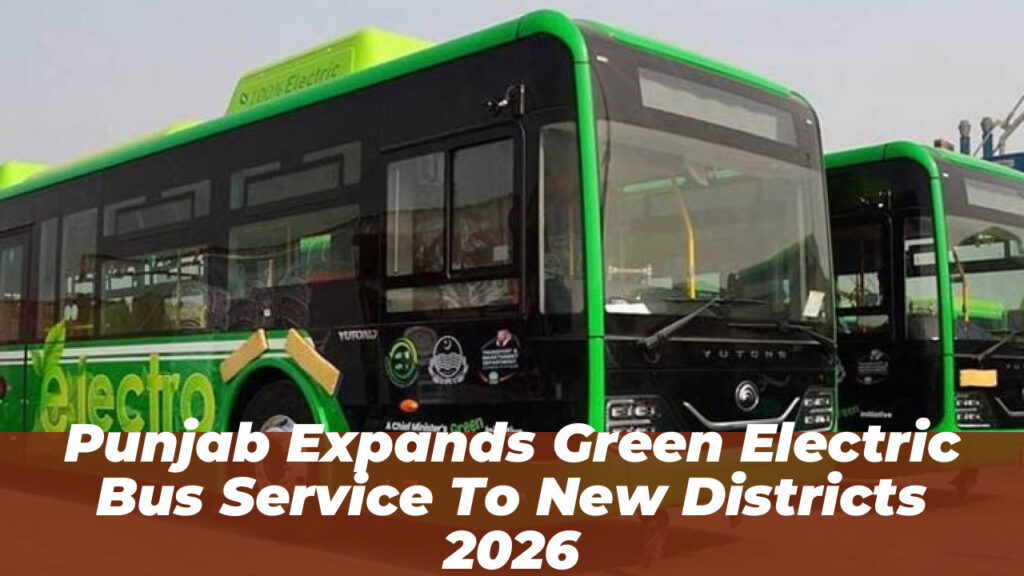
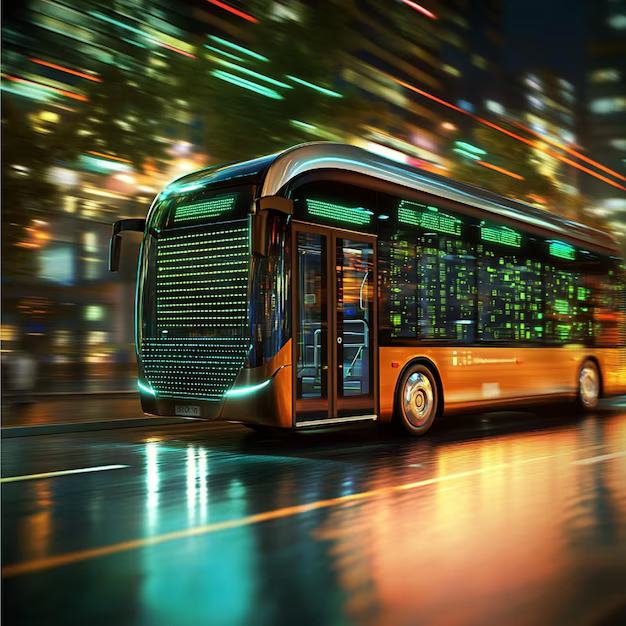
As of September 2026, Punjab is undergoing a significant transformation in its public transport landscape. The Green Electric Bus Service has evolved from a pilot initiative into a cornerstone of the provincial government’s strategy to provide affordable, eco-friendly, and reliable mobility to millions of citizens. By systematically replacing aging, high-emission diesel fleets with state-of-the-art electric buses, the government is addressing two critical priorities: mitigating the rising cost of fuel for the common man and lowering the carbon footprint in densely populated urban centers.
The Vision: Why Electric Buses?
The transition to electric mobility in 2026 is driven by both environmental necessity and economic pragmatism. Traditional diesel buses have long contributed to poor air quality across Punjab’s major cities. By deploying electric alternatives, the government aims to achieve aggressive carbon reduction targets while simultaneously modernizing the transit infrastructure. For those navigating the evolving landscape of industrial solutions in 2026, this shift represents a broader commitment to sustainable infrastructure development.
Beyond the environmental impact, the economic benefits for daily commuters are substantial. With a flat fare of just Rs. 20, the service provides an affordable lifeline for students, office workers, and laborers who previously struggled with the volatility of private transport costs. This initiative is effectively democratizing urban mobility and reducing the reliance on personal vehicles.
Current Coverage: A District-by-District Breakdown
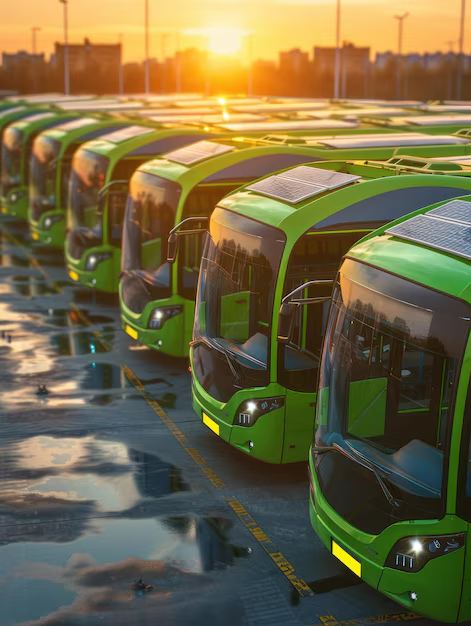
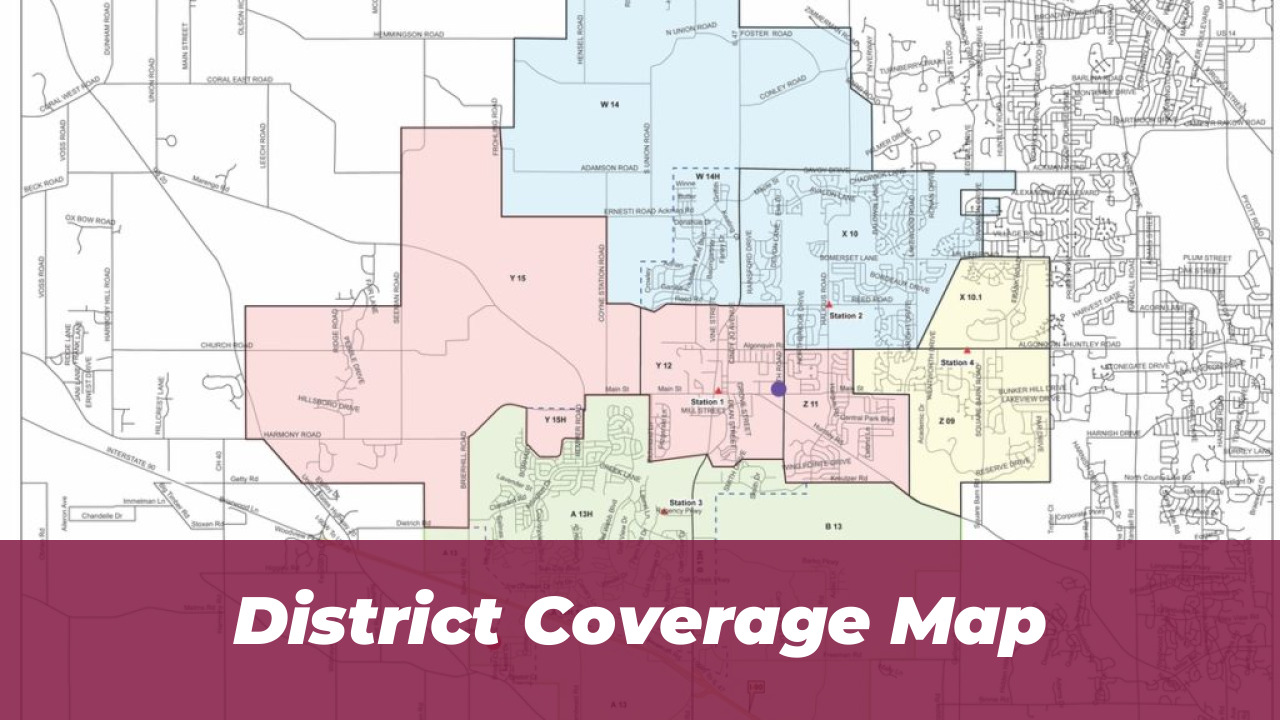
The expansion of the electric bus fleet is being managed through a strategic deployment model, focusing on districts that serve as high-traffic economic hubs. As of September 2026, the reach of the service includes:
- Multan: Serving as the primary hub for operations, Multan currently hosts a fleet of 60 electric buses. These units are fully integrated into the city’s core transit routes, significantly reducing wait times and congestion during peak hours.
- Muzaffargarh: To standardize connectivity, this district has been equipped with 12 electric buses, operating on four high-demand routes that connect residential zones to the commercial city center.
- Narowal: Efficiency is the priority here, with 11 buses currently covering six major routes to ensure suburban residents have reliable, consistent access to the city center.
- Layyah: As the latest addition to the expansion phase, Layyah has received 10 electric buses, with infrastructure assessments already in motion to increase this fleet size as ridership continues to grow.
- Bahawalpur: Recently integrated into the network, this district now utilizes 15 electric buses to serve its historical and educational hubs.
- Sargodha: With 14 buses deployed, the service focuses on linking the university district with the main railway station and business areas.
- Gujrat: To support the industrial workforce, 12 buses have been introduced to cover routes between the city’s major manufacturing zones and residential sectors.
- Sahiwal: 10 buses are currently operational, providing a clean alternative for commuters traveling to the central grain markets and district offices.
- Jhelum: 8 buses have been deployed to improve connectivity across the river-crossing corridors, easing the commute for daily wage earners.
- Sheikhupura: 15 units are now active, focusing on high-density routes to reduce the heavy traffic load on the main highway.
The 2026 Fare & Accessibility Policy
The Punjab government has implemented a highly inclusive pricing model. To ensure that public transport remains accessible to the most vulnerable segments of society, the following structure is strictly enforced across all operational districts as of September 2026.
| Passenger Category | Fare Structure |
|---|---|
| General Public | Rs. 20 (Flat Rate) |
| Students | Free (Subject to ID verification) |
| Women | Free |
| Senior Citizens | Free |
| Persons with Disabilities | Free |
Modern Features: Beyond Just Transport
These buses are designed to offer more than just a ride; they provide a modern, dignified commuting experience. Each unit is equipped with advanced safety and convenience features to ensure the comfort of every passenger.
- Safety Standards: Every bus is integrated with real-time CCTV monitoring, ensuring a secure environment for all commuters throughout their journey.
- Passenger Convenience: Recognizing the needs of a digital-first generation, the buses feature onboard USB mobile charging ports, allowing commuters to stay connected.
- Climate Control: To combat the intense heat of the Punjab summer, all buses are fully air-conditioned, providing a consistent, comfortable transit experience regardless of the external weather.
- Accessibility: Low-floor designs have been implemented across the fleet to ensure that elderly passengers and those with mobility challenges can board and exit with ease.
Future Roadmap: Where is the Service Heading?
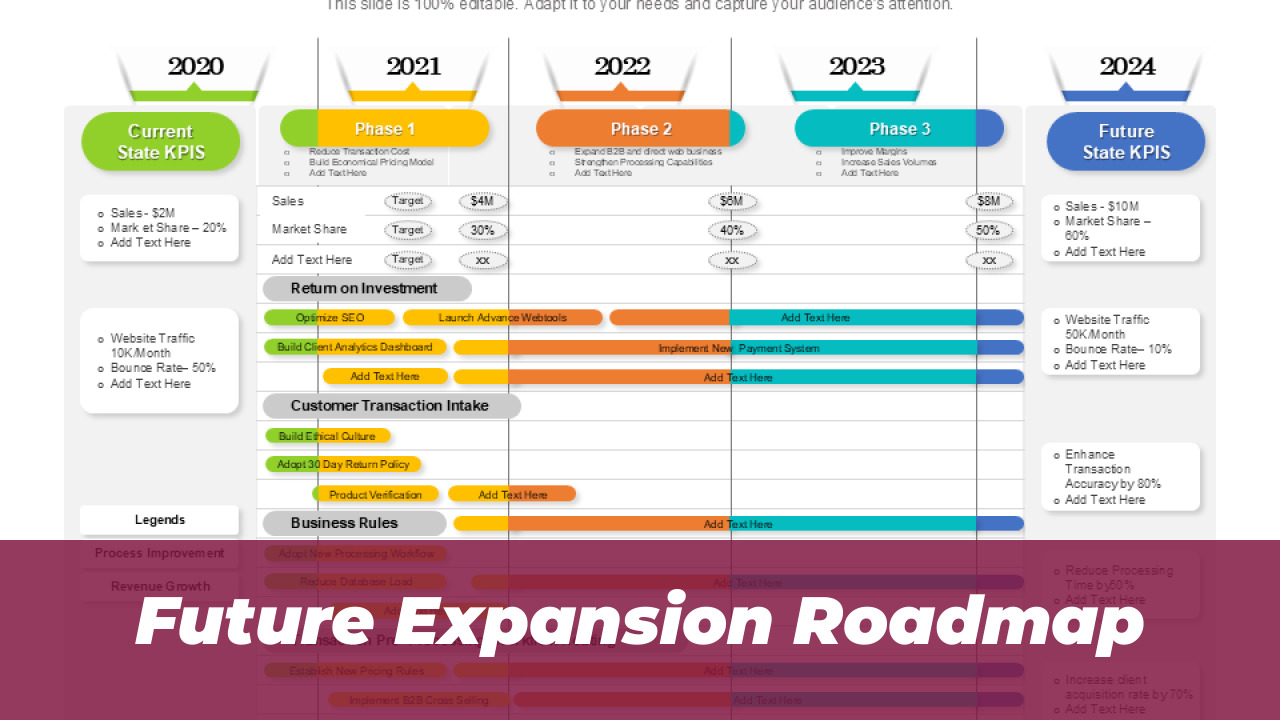
The government’s roadmap for the remainder of 2026 and into 2027 focuses on connectivity between semi-urban districts and major economic centers. Plans are currently in the final approval stages to introduce the service to northern regions, including the challenging but high-traffic routes to Murree and Bariyan. The ultimate goal is to create a seamless, province-wide network that reduces the necessity for personal vehicle ownership.
Conclusion: The Long-term Impact on Punjab’s Economy
The Green Electric Bus Service is more than just a fleet of new vehicles; it is a structural shift in how Punjab approaches urban planning. By lowering the cost of living through affordable transport and improving public health by reducing emissions, the government is laying the groundwork for a more sustainable future. As the network continues to expand, it will likely serve as a model for other provinces, proving that modern transit infrastructure is the key to economic resilience.
Pros & Cons of the Green Electric Bus Service
| Pros | Cons |
|---|---|
| Highly affordable flat fare of Rs. 20 | Limited routes in remote rural areas |
| Zero-emission transport reduces pollution | Charging infrastructure is still under rapid expansion |
| Free travel for women, students, and seniors | High initial investment for fleet maintenance |
| Modern safety features (CCTV) | Potential for overcrowding during peak rush hours |
Specifications Table
| Feature | Specification |
|---|---|
| Fuel Type | Electric (Battery Powered) |
| Air Conditioning | Fully Equipped / Climate Controlled |
| Security | Integrated CCTV Cameras |
| Charging Ports | USB Mobile Charging Ports |
| Average Capacity | 40-50 Passengers |