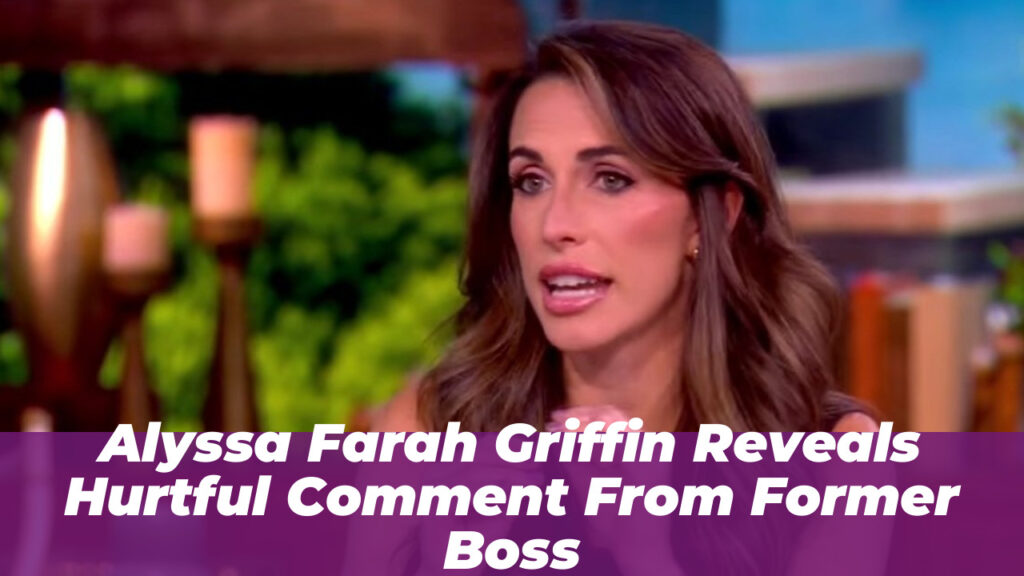
Alyssa Farah Griffin Reflects on Professional Resilience After Harsh Workplace Critique
In the demanding landscape of political media, criticism is often an expected reality. However, for The View co-host Alyssa Farah Griffin, one particular interaction with a former employer left an impact that went well beyond standard professional feedback. The remark a dismissive assertion that she was merely a “pretty girl” lacking intellectual depth serves as a poignant reflection on the persistent challenges women face when navigating male-dominated sectors like Washington D.C. and cable news.
The Weight of Words in the Workplace
During a recent segment on The View, Griffin candidly discussed the stinging comment that lingered with her for years. When a prominent figure in the media industry attempted to diminish her contributions by focusing on her appearance rather than her expertise, it created a significant psychological hurdle. This was not a professional disagreement over policy or strategy; it was an attempt to invalidate her competence.
For many viewers, this narrative resonates because it mirrors the imposter syndrome that professionals often face when underestimated by those in positions of power. By bringing this experience to light, Griffin highlighted a broader, systemic issue regarding how female professionals are frequently viewed through a lens of bias rather than merit.
From Political Staffer to Media Powerhouse
Griffin’s career trajectory from the halls of the White House to the national stage at The View has been defined by a consistent need to demonstrate her intellectual mettle. Her transition from a behind-the-scenes political aide to a permanent co-host required significant resilience; she had to move past reductive labels to focus entirely on the substance of her arguments.
It is essential to view this evolution as a strategic pivot. Griffin has successfully navigated the shift from being a target of workplace toxicity to becoming a voice that commands national attention. Her ability to hold her own against seasoned co-hosts during intense political debates serves as a powerful rebuttal to the dismissive criticism she faced earlier in her career.
Reframing Toxic Feedback: Lessons for the Modern Professional
Why does this story remain relevant beyond the scope of daytime television? It serves as a vital reminder regarding how we process external validation. When an authority figure casts doubt on your intellect, the immediate instinct is often to internalize that skepticism. However, Griffin’s path suggests a more effective approach:
- Detachment from the Source: Recognize that disparaging remarks regarding intelligence are often projections of the speaker’s own biases or insecurities.
- Consistency as a Tool: By remaining focused on high-quality professional output, Griffin effectively rendered the initial insult obsolete.
- The Power of the Platform: Using a public stage to discuss past hurdles transforms a moment of potential victimization into one of authority and mentorship.
Whether you are navigating a corporate office or a high-stakes political environment, the ability to maintain composure under fire is a skill that distinguishes leaders. Understanding your own worth is the primary step toward building a sustainable and successful career.
Conclusion: The Resilience Factor
Alyssa Farah Griffin’s experience with that hurtful comment is no longer a defining moment of her career; it has become a footnote in a larger narrative of professional endurance. By choosing to speak openly about the incident, she has provided a blueprint for handling workplace hostility: acknowledge the hurt, analyze the source, and continue to perform at a level that renders such criticisms increasingly irrelevant. In an industry that often thrives on conflict, Griffin’s story is a reminder that professional excellence remains the most effective response to those who choose to underestimate you.