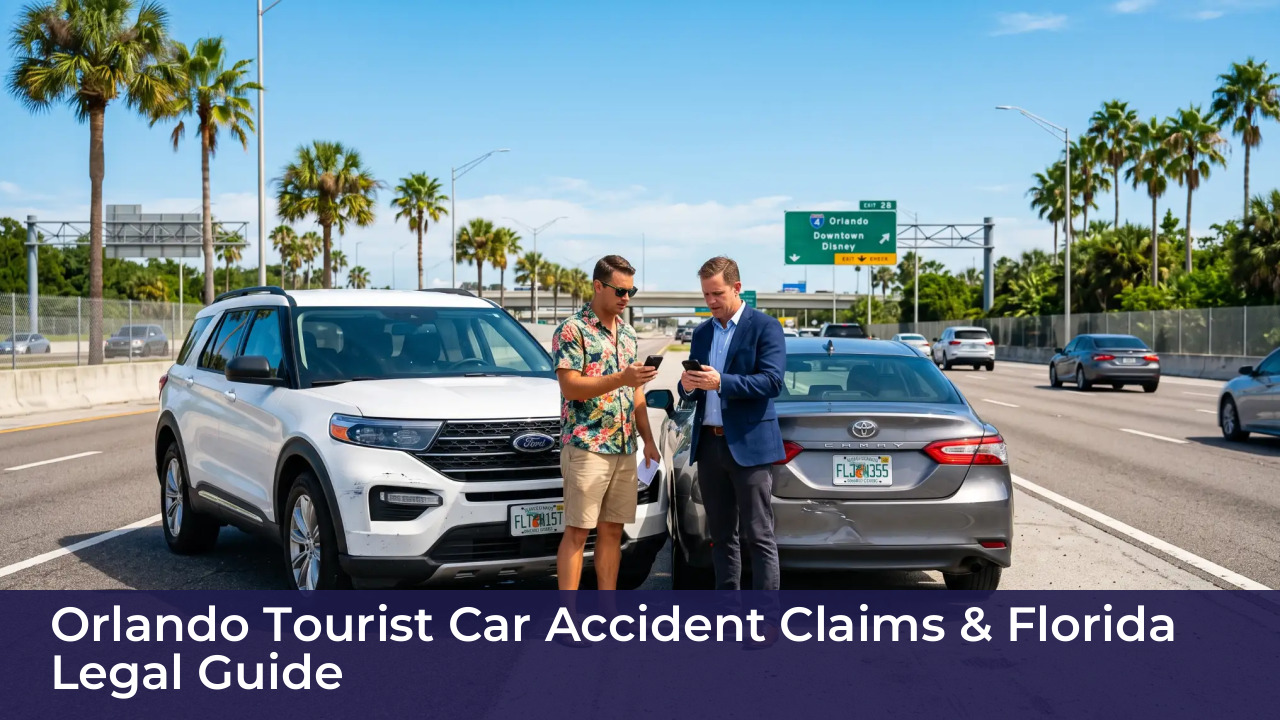
Orlando operates on a scale of transience that few other metropolitan areas experience. Millions of visitors funnel through the region annually, populating the asphalt with drivers who rely entirely on real-time navigation apps, pilot unfamiliar rental cars, and navigate high-speed interchanges under heavy cognitive loads. When a collision occurs along the Interstate 4 corridor or near the International Drive attraction district, the resulting claim rarely mirrors a standard local fender bender. The core complication stems from a mismatch between local legal frameworks and global mobility. Visitors are often thousands of miles away within seventy-two hours of the impact. Rental cars introduce conflicting insurance policies, while witnesses scatter across different states and countries. Understanding why these cases grow convoluted so rapidly requires a close examination of Florida insurance mandates, corporate vehicle ownership structures, and strict procedural deadlines that forgive no delays.
- The 14-Day Trap: Florida PIP and Medical Deadlines
- Overcoming Out-of-State Treatment Hurdles
- The Insurance Maze: Rental Cars, Credit Cards, and Home Policies
- Credit Card Benefits and Corporate Fleet Policies
- The 2023 Tort Reform Shift: Comparative Negligence Changes the Math
- Proving Fault in High-Speed Vacation Corridors
- Unique Angle 1: The Transience Factor and Witness Deposition
- Securing Digital and Physical Evidence Quickly
- Unique Angle 2: The Corporate Shield and Rapid-Response Teams
- Actionable Audit Checklist for Multi-Vehicle Pileups
- Frequently Asked Questions
- Why do Orlando tourist car accident claims take longer to resolve?
- What happens if I miss the 14-day medical treatment rule in Florida?
- How does Florida’s modified comparative negligence law affect my injury claim?
- Can rental car companies be held directly responsible for an accident caused by a renter?
- Conclusion
Theme parks and entertainment hubs generate distinct mechanical signatures of collisions throughout the region. Unfamiliarity with complex multi-lane exits forces drivers to make erratic lane changes, slam on brakes at the last second, or execute dangerous reverse maneuvers on highway shoulders. Rental fleets dominate the traffic flow, easily identified by barcode stickers on windshields and rear bumpers. Low-speed bumper impacts in crowded parking structures, sideswipe incidents near resort entrances, and multi-vehicle pileups at congested interchange ramps form the majority of tourist-related police reports. Because out-of-state drivers operate under the driving habits and expectations of their home jurisdictions, predictable rhythm breaks down. Local commuters accustomed to these patterns still find themselves entangled in sudden braking events caused by distracted tourists searching for parking or hotel entrances.
The 14-Day Trap: Florida PIP and Medical Deadlines
Before any fault is assigned or settlement discussed, Florida law forces every claim through a strict no-fault insurance system known as Personal Injury Protection. This policy structure covers initial medical expenses regardless of who caused the collision. However, the system contains strict operational rules that trip up out-of-state visitors. Florida law mandates that an injured person must receive initial medical services and care within fourteen days of the crash date. For tourists who board a flight home the morning after an accident, finding a doctor immediately upon return often falls off the priority list amid packing and travel stress. Missing this fourteen-day window forfeits the ten-thousand-dollar PIP medical benefit entirely, destroying the primary financial cushion available during early recovery.
, the full benefit is not guaranteed even if treatment begins on time. A qualifying medical provider must formally determine that the patient suffered an Emergency Medical Condition. Without this specific documentation in the medical record, reimbursement caps drop to a maximum of twenty-five hundred dollars. Tourists relying solely on out-of-state primary care physicians who are unfamiliar with Florida statutory definitions frequently fail to secure this designation, leaving them exposed to mounting medical bills. Coordinating with local physicians requires specific documentation protocols that align with Florida insurance statutes, ensuring that medical notes reflect the severity required to unlock full policy limits.
Overcoming Out-of-State Treatment Hurdles
Out-of-state residents face immediate friction when trying to translate Florida medical billing codes and no-fault requirements to local healthcare providers. Many primary care doctors outside Florida refuse to handle auto insurance claims, fearing delayed payments or administrative burdens. Injured tourists must locate practitioners who understand how to bill third-party auto insurers while satisfying the strict documentation thresholds mandated by Florida statute. Delaying this process past the two-week mark permanently closes the window on statutory medical benefits, shifting the total financial burden onto personal health insurance or out-of-pocket reserves.
The Insurance Maze: Rental Cars, Credit Cards, and Home Policies
Multi-layered insurance structures turn tourist-involved collisions into complex financial puzzles. When an accident involves a rental vehicle, responsibility often spans multiple corporate entities and insurance products. A renter’s personal auto policy typically follows them into a rental vehicle, acting as primary coverage in many jurisdictions. However, out-of-state extension rules vary wildly between carriers. Some policies restrict coverage limits when driving outside the home state, while others exclude commercial or rental agreements altogether unless a specific endorsement was purchased beforehand.
Counter-purchased collision damage waivers and supplemental liability protection offered at rental counters add another layer of confusion. These products protect the rental agency from vehicle damage and provide baseline third-party liability coverage, but they rarely address the personal injury needs of the driver who caused the crash. Insurers frequently exploit these overlapping policy definitions to delay payouts, arguing over primary versus secondary responsibility while the injured party waits for financial relief. Navigating this web requires an immediate audit of every available policy, from personal auto coverage to the specific terms embedded in the rental agreement.
Credit Card Benefits and Corporate Fleet Policies
Many travelers rely on credit card rental insurance benefits without realizing these programs generally offer secondary coverage only. This means the credit card issuer will only pay for damages or losses not covered by the renter’s personal auto policy. If the personal policy denies the claim or lacks out-of-state provisions, the credit card coverage steps in, subject to rigid notification windows and documentation requirements. Corporate rental agency liability limitations under federal laws, such as the Graves Amendment, further shield rental companies from direct vicarious liability for the negligence of their renters, forcing claimants to focus entirely on the individual driver’s insurance.
The 2023 Tort Reform Shift: Comparative Negligence Changes the Math
Recent legislative overhauls fundamentally altered how fault affects financial recovery in the state. Under the modified comparative negligence standard, an injured party who is found to be greater than fifty percent at fault for their own harm is completely barred from recovering any damages. Previously, Florida operated under a pure comparative fault system, where an injured person could recover compensation even if they were ninety-nine percent responsible, with their award reduced by their percentage of fault.
This shift raises the stakes significantly in multi-vehicle tourist accidents. Defense attorneys and corporate adjusters now aggressively hunt for any evidence of shared blame, such as a tourist failing to signal a lane change or a local driver speeding slightly above the limit. If a jury or insurance adjuster assigns fifty-one percent or more of the blame to the claimant, the entire claim collapses. Legal strategies must focus heavily on neutralizing comparative fault arguments from the outset, utilizing digital forensics and accident reconstruction to establish clear liability.
Proving Fault in High-Speed Vacation Corridors
Establishing liability in high-density tourist zones demands rigorous analysis of physical and digital evidence. Police reports from local law enforcement agencies provide a baseline, but they often lack the granular detail needed to counter aggressive insurance defense tactics. Modern rental vehicles feature onboard event data recorders, commonly known as black boxes, which capture pre-crash speed, braking force, steering angles, and throttle position in the seconds leading up to impact. Securing this electronic data before the rental car is cleaned, repaired, or reassigned to another customer is critical for establishing exact vehicle dynamics.
Unique Angle 1: The Transience Factor and Witness Deposition
One of the most persistent hurdles in Orlando tourist litigation is the ephemeral nature of the witnesses. Vacationers who witness a collision on International Drive typically fly home within days, disappearing across state lines or international borders. Once these witnesses return home, securing their cooperation becomes difficult. Traditional subpoena powers do not cross state lines easily, and foreign nationals fall completely outside domestic judicial reach unless specific international legal mechanisms are deployed swiftly.
Legal teams must act within hours of the incident to identify every bystander, passenger, and resort employee who witnessed the crash. Contact information must be verified immediately, and recorded statements or formal depositions should be scheduled before travelers depart the state. For international visitors who return to countries outside the Hague Service Convention, specialized international service-of-process playbooks must be executed to preserve vital testimony. Failing to lock in these accounts early often leaves a case dependent solely on the conflicting statements of the drivers involved.
Securing Digital and Physical Evidence Quickly
Physical evidence in high-traffic tourist corridors degrades rapidly. Road debris is cleared, skid marks wash away in afternoon rainstorms, and rental vehicles are quickly towed to salvage yards or corporate hubs. Beyond physical traces, digital evidence holds the key to proving liability. Nearby theme park parking structures, hotels, and retail complexes maintain extensive closed-circuit television networks that frequently capture roadway incidents. However, many commercial properties automatically overwrite their surveillance footage every seven to fourteen days. Issuing immediate spoliation letters and formal preservation demands ensures this vital visual evidence remains intact.
Unique Angle 2: The Corporate Shield and Rapid-Response Teams
Major rental car corporations, hotel shuttle networks, and commercial transport conglomerates do not wait for lawsuits to arrive. Within hours of a serious collision involving a branded vehicle or corporate asset, rapid-response adjustment teams deploy directly to the scene or local medical facilities. These teams act swiftly to protect the corporation’s bottom line, interviewing dazed tourists, gathering physical evidence, and securing early recorded statements before injury victims retain legal counsel.
Insurance adjusters deployed by corporate fleets are trained to ask leading questions designed to elicit admissions of partial fault or minimized injury severity. An off-hand comment from an exhausted tourist about feeling fine immediately following the crash becomes a powerful weapon in settlement negotiations later. Safeguarding claim value requires recognizing these corporate tactics and insulating injured clients from direct communication with corporate adjusters until comprehensive legal representation is established.
Actionable Audit Checklist for Multi-Vehicle Pileups
Navigating a complex tourist collision requires a systematic, step-by-step audit of all potential insurance coverages and documentation requirements. Use the following operational checklist to ensure no critical recovery avenues are overlooked:
- Immediate Medical Audit: Confirm that initial medical evaluation occurred within the strict fourteen-day statutory window and verify that the provider documented an Emergency Medical Condition.
- Rental Agreement Cross-Reference: Inspect the rental contract for counter-purchased collision damage waivers, supplemental liability options, and designated geographic operating restrictions.
- Credit Card Policy Review: Audit all credit cards used to reserve the vehicle to determine secondary versus primary coverage terms and notification deadlines.
- Personal Auto Policy Check: Review the at-fault driver’s and the victim’s personal auto policies for out-of-state coverage extensions and uninsured motorist provisions.
- Evidence Preservation Protocol: Issue immediate spoliation letters to rental agencies, nearby hotels, and municipal traffic departments for dashcam footage, black box data, and surveillance video.
- Witness Locality Tracking: Compile a comprehensive registry of all out-of-state and international witnesses, scheduling remote or in-person depositions before travel dispersal occurs.
Frequently Asked Questions
Why do Orlando tourist car accident claims take longer to resolve?
These claims involve multiple jurisdictions, out-of-state insurance carriers, corporate rental entities, and transient witnesses. Coordinating medical records across state lines and dealing with multi-layered insurance policies naturally extends the timeline compared to local-only accidents.
What happens if I miss the 14-day medical treatment rule in Florida?
Missing the fourteen-day window to seek initial medical care results in the total forfeiture of your ten-thousand-dollar Personal Injury Protection benefits. This statutory deadline is strictly enforced by insurers, making prompt medical evaluation essential.
How does Florida’s modified comparative negligence law affect my injury claim?
Under the fifty-one percent bar rule, if an insurance adjuster or jury determines you share more than fifty percent of the fault for the collision, you cannot recover any financial compensation for your injuries. Establishing clear liability is paramount.
Can rental car companies be held directly responsible for an accident caused by a renter?
Generally, federal laws like the Graves Amendment protect rental car agencies from vicarious liability for the negligence of their renters. Claims must typically target the individual driver’s insurance policy, personal assets, or optional supplemental coverages purchased at the counter.
Conclusion
Car accident claims stemming from tourist traffic in Orlando present a unique set of legal and logistical hurdles that demand immediate, strategic action. From the strict fourteen-day medical treatment window under Florida Personal Injury Protection to the rigid fifty-one percent bar of modified comparative negligence, the margin for error is razor-thin. Out-of-state visitors and local drivers alike must navigate a labyrinth of rental agreements, secondary credit card coverages, and rapid-response corporate adjusters. By securing digital evidence quickly, preserving witness testimony before travelers depart, and auditing every available insurance layer, injured parties can protect their claims and pursue fair compensation despite the chaos of Central Florida’s busy vacation corridors.