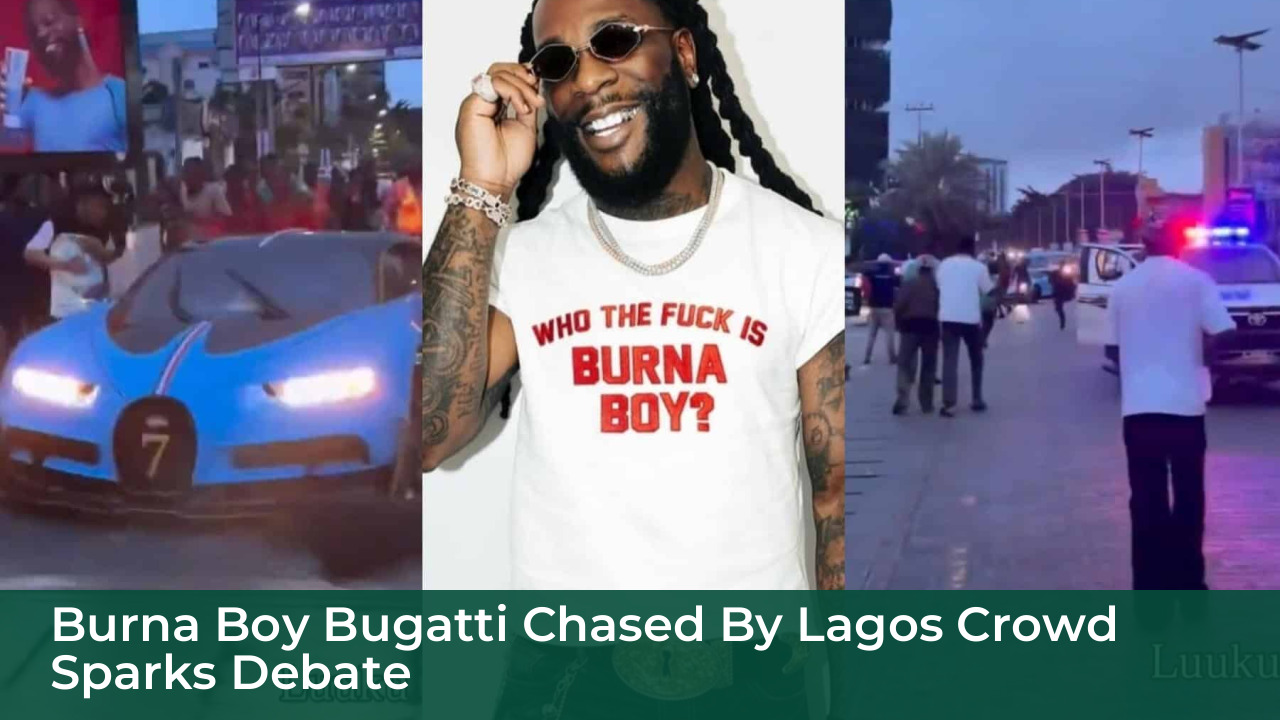
Grammy Award-winning Nigerian music icon Burna Boy recently sparked intense online debate after an early morning appearance at a Lagos nightclub. Footage capturing the artist leaving the venue at 6:30 AM quickly spread across digital platforms, generating millions of views. The core of the controversy centers on a dense crowd of young men sprinting frantically after his newly acquired luxury Bugatti.
- Inside the Viral Video: What Happened Outside the Lagos Club
- Netizens React to the Spectacle of Luxury and Desperation
- The Economics of Afrobeats: Supercar Culture in Lagos
- Supercar Ownership Comparison
- Security Challenges for A-List Celebrities in Nigeria
- Frequently Asked Questions
- What time did the incident occur outside the Lagos nightclub?
- What vehicle was Burna Boy driving in the viral video?
- Why did the video generate such intense controversy online?
- Conclusion
The stark juxtaposition between extreme celebrity wealth and the harsh economic reality of onlookers triggered profound reactions. Observers on social media platforms pointed out the deeper implications of the scene. The viral clip shines a harsh spotlight on urban inequality, street desperation, and the complex relationship between affluent entertainers and their local fan base in Nigeria’s commercial capital.
Inside the Viral Video: What Happened Outside the Lagos Club
As daylight broke over Lagos, the arrival and departure of high-end vehicles at exclusive nightlife spots routinely draw curious onlookers. However, the exit of Burna Boy in his multi-billion Naira supercar transformed into a chaotic sprint. Dozens of able-bodied young men bolted down the street, dangerously close to the accelerating vehicle, attempting to catch a glimpse or secure handouts from the music star. Footage shows the vehicle inching forward while surrounded by a desperate mob.
Commentators on social media did not hold back their assessments. One prominent reaction stated that observers could physically touch and feel poverty in the country. Another user compared the frantic rush of the crowd to scenes from a cinematic zombie apocalypse. The incident reignited long-standing discussions regarding the aggressive begging culture and economic disenfranchisement visible in major urban centers.
Netizens React to the Spectacle of Luxury and Desperation
Public reaction across X, Instagram, and TikTok fractured into diverse viewpoints regarding social responsibility and personal freedom. Many social media users expressed sadness over seeing young, able-bodied individuals reduced to chasing celebrity cars for survival or scraps. Critics of the crowd argued that young people should channel their energy into productive employment, referencing the ongoing struggle for better economic opportunities rather than chasing celebrity vehicles.
Other commentators defended the youths, pointing out that systemic economic pressures and high unemployment rates drive desperate behavior in public spaces. Some users directed criticism toward the elite class, debating whether high-profile artists bear a moral obligation to engage with local communities differently or avoid flashing extreme wealth in distressed environments.
The Economics of Afrobeats: Supercar Culture in Lagos
Burna Boy stands at the pinnacle of the global Afrobeats movement, commanding massive international streaming numbers, sold-out stadium tours, and lucrative endorsement deals. With this unprecedented financial success comes an extravagant lifestyle characterized by multi-million dollar car purchases, high-end jewelry, and sprawling real estate portfolios. In previous statements, the singer addressed public expectations regarding charity and wealth distribution. He noted that despite possessing significant financial resources, the intense pressure and entitlement from online commentators often discourage spontaneous public philanthropy. The latest incident highlights the friction that occurs when global superstar wealth intersects directly with localized economic hardship on the streets of Lagos.
Supercar Ownership Comparison
| Metric | Global Standards | Lagos Context |
|---|---|---|
| Vehicle Value | Multi-million dollar hypercars | Multi-billion Naira imported supercars |
| Public Reaction | Curiosity and photography | Mob chases and economic commentary |
| Security Protocol | Private motorcades and secure exits | Vulnerable to street-level congestion |
Security Challenges for A-List Celebrities in Nigeria
The Lagos nightclub incident also raises serious questions regarding executive protection and crowd control for elite African artists. Nightlife venues in commercial hubs often lack the robust perimeter security necessary to manage large, unpredictable crowds of enthusiastic fans and opportunistic onlookers. When high-net-worth individuals exit venues during early morning hours without adequate security motorcades, safety risks multiply exponentially. Both the artist and the surrounding public face hazards when heavy traffic mixes with an uncontrolled mob surging into the roadway.
Industry analysts suggest that major African entertainment figures may need to adopt stricter logistical protocols to prevent dangerous crowd rushes during public outings. Enhanced private security, private venue exits, and coordinated transport diminish the likelihood of dangerous street encounters.
Frequently Asked Questions
What time did the incident occur outside the Lagos nightclub?
The viral incident took place at approximately 6:30 AM as Burna Boy departed a prominent Lagos entertainment venue.
What vehicle was Burna Boy driving in the viral video?
The artist was exiting the location in his newly acquired luxury Bugatti supercar, which commands a multi-billion Naira estimated value.
Why did the video generate such intense controversy online?
The footage sparked heavy debate due to the stark visual contrast between extreme celebrity wealth and the visible economic desperation of the young men chasing the vehicle.
Conclusion
The viral video capturing the crowd chasing Burna Boy’s Bugatti transcends standard celebrity gossip. It serves as a raw, unfiltered mirror reflecting broader economic realities in modern Nigeria. As the Afrobeats genre continues its meteoric rise on the global stage, the widening gap between superstar affluence and street-level hardship remains a central talking point for the public.