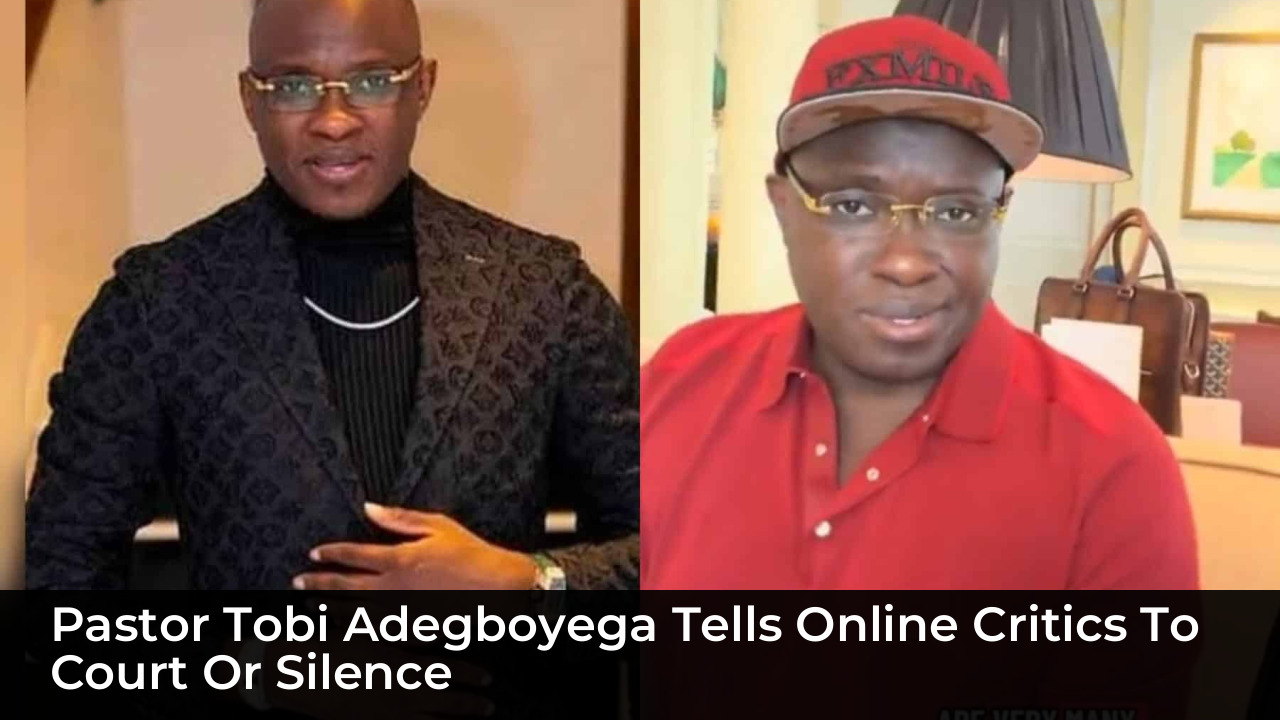
Nigerian-born British clergyman Pastor Tobi Adegboyega has broken his silence regarding ongoing social media backlash directed at him and his religious organization. In a newly released video statement, the founder of the defunct SPAC Nation addressed individuals continuously targeting him across digital platforms. Adopting an uncompromising stance, the controversial pastor issued a blunt ultimatum to his detractors. Instead of engaging in endless digital debates, Adegboyega challenged his accusers to take formal action through the proper judicial channels or remain silent.
- Context of the Recent Video Address
- Demanding Institutional Accountability Over Digital Noise
- The Role of Investigative Content Creators
- Financial History and Regulatory Scrutiny in the United Kingdom
- Frequently Asked Questions
- What prompted Pastor Tobi Adegboyega to release his recent video statement?
- What was the core message of his video?
- Has Pastor Tobi Adegboyega been convicted of any criminal offenses?
- Why are content creators warning influencers about the church?
- What challenges do critics face when considering formal legal action?
- Conclusion
His remarks follow a wave of heightened scrutiny from content creators, investigative commentators, and former associates across digital platforms in both the United Kingdom and Nigeria. By shifting the focus from viral comment sections to institutional accountability, the cleric aims to force his critics to substantiate their claims under oath. Public relations experts note that high-profile figures often use this tactic to regain control of public narratives when comment sections become hostile.
Context of the Recent Video Address
Adegboyega explained that he routinely ignores online commentary and allegations because he views most criticisms as trivial noise. However, he made a rare exception due to intense pressure from close associates. Several friends and senior church members expressed deep concern over the volume of negative publicity circulating online, prompting the clergyman to issue a public clarification to protect his ministry’s image and operational integrity.
During the video address, the pastor questioned the motives of individuals who continuously display documents, make grave accusations, and sensationalize claims on social media without initiating formal proceedings. He emphasized that genuine grievances involving alleged criminal offenses belong in courts of law rather than comment sections and livestream broadcasts. Social media algorithms reward sensationalism, which often creates an environment where nuance is lost and accusations circulate without institutional verification.
Legal observers note that this defensive strategy aims to discredit online commentators who thrive on engagement metrics. By demanding concrete institutional action, the clergyman places the burden of proof squarely back onto his most vocal digital opponents.
Demanding Institutional Accountability Over Digital Noise
The core of Adegboyega’s message centers on institutional accountability. He invited anyone possessing credible evidence of wrongdoing by him or members of his ministry to approach the police or file lawsuits. According to the clergyman, people who truly believe they have been wronged should seek official intervention rather than using his name merely to capture digital attention and boost online algorithms.
Legal representation for the pastor has consistently maintained that despite numerous public controversies and regulatory investigations, no personal criminal convictions have been secured against him in a court of law. His supporters argue that online rhetoric often crosses into malicious sensationalism designed to damage his public standing for clout.
Critics, however, point out that navigating the British legal system requires significant financial resources, which often creates an imbalance between wealthy religious leaders and individual complainants. Despite these financial dynamics, the pastor insists that digital platforms are inappropriate venues for dispensing justice.
The Role of Investigative Content Creators
This latest outburst occurs against a backdrop of mounting public pressure driven by digital investigators. Recent digital investigations by content creators, including media personality Femi Unfiltered, have brought renewed attention to SPAC Nation’s tumultuous history. Observers have scrutinized the church’s past financial practices, charity commission inquiries, and ongoing immigration battles in the United Kingdom.
Tension escalated further following public appearances by popular Nigerian TikTok stars Peller and Jarvis. During a recent visit to the United Kingdom, the young influencers attended services, participated in street processions alongside suited church members, and reportedly received high-profile attention from the cleric. These associations triggered swift warnings from social media commentators, urging the young creators to distance themselves from the controversial network.
Digital advocacy groups argue that influencers carry significant responsibility when engaging with figures who face serious regulatory questions. Fans and commentators frequently express concern that associations with high-risk public figures might normalize past controversies among younger audiences who lack historical context.
Financial History and Regulatory Scrutiny in the United Kingdom
While Pastor Adegboyega demands formal legal action from his critics, his own legal standing has faced severe institutional challenges over the years. British immigration tribunals and the Charity Commission previously scrutinized SPAC Nation, citing serious financial mismanagement and a failure to properly account for over 1.8 million pounds in outgoings before the organization was forced to shut down.
Courts previously dismissed appeals regarding his residency status, with tribunals noting that his claimed community interventions did not outweigh immigration infractions and compliance issues spanning nearly two decades. Despite these adverse rulings, his legal team continues to push back against what they characterize as unfair media narratives.
| Category | Public Allegations | Legal and Institutional Status |
|---|---|---|
| Financial Management | Allegations of unaccounted funds and improper donations within SPAC Nation. | Charity Commission investigations recorded significant unverified outgoings; organization dissolved. |
| Residency & Immigration | Long-term challenges regarding legal status in the United Kingdom. | Deportation appeals faced multiple tribunal dismissals over compliance infractions. |
| Online Conduct | Viral social media dragging and unverified criminal accusations. | No formal criminal charges filed in court; pastor issues legal challenge for accusers. |
The intersection of religious operations and financial transparency remains a hot-button issue across Europe and Africa. Regulatory bodies continue to tighten compliance requirements for faith-based charities, leaving organizations like Adegboyega’s former networks under permanent observation.
Frequently Asked Questions
What prompted Pastor Tobi Adegboyega to release his recent video statement?
The clergyman responded to mounting online pressure, viral dragging, and renewed investigations by content creators concerning his past church network and current operations.
What was the core message of his video?
He challenged his critics and accusers to take their grievances to the police or file formal lawsuits in court, stating that they should otherwise remain silent.
Has Pastor Tobi Adegboyega been convicted of any criminal offenses?
Despite heavy regulatory scrutiny from the UK Charity Commission and immigration tribunals, no personal criminal convictions have been secured against him in a court of law.
Why are content creators warning influencers about the church?
Commentators have raised concerns about SPAC Nation’s controversial history, prompting warnings for young digital stars like Peller and Jarvis to avoid association with the network.
What challenges do critics face when considering formal legal action?
Navigating the British legal system requires substantial financial resources and institutional backing, which can create barriers for individual complainants facing prominent public figures.
Conclusion
Pastor Tobi Adegboyega’s latest public challenge marks a strategic shift from ignoring digital noise to demanding formal institutional engagement. By redirecting his critics from social media comment sections to courts and law enforcement agencies, the clergyman seeks to shift the burden of proof onto his detractors. As the friction between online influence and judicial accountability continues to evolve, this standoff underscores the complex realities of managing public reputation in the digital age.