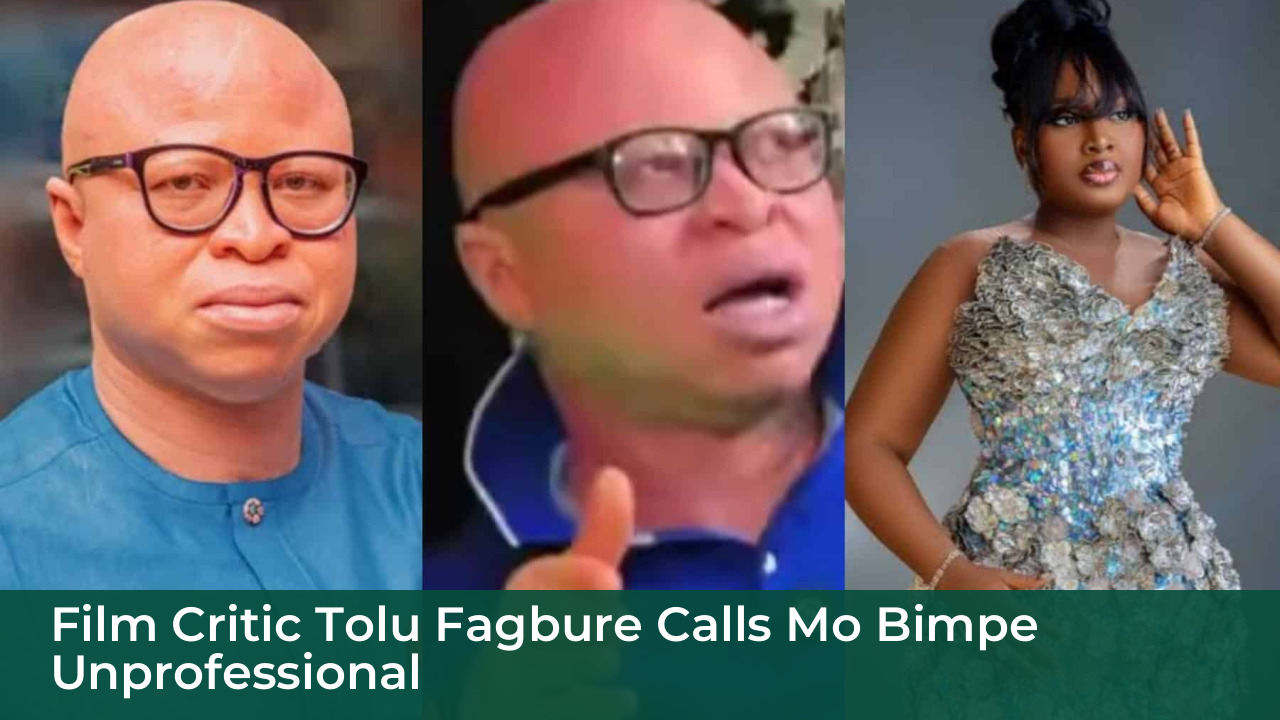
- Tolu Fagbure Publicly Labels Mo Bimpe Unprofessional in Viral Video
- The 2018 Set Encounter and Specific Allegations
- Mo Bimpe’s Career Trajectory from 2018 to Present
- Public Perception and Industry Standing
- Professional Standards and Conduct on Nollywood Sets
- Media Engagement and The Role of Film Critics in Nigerian Cinema
- Frequently Asked Questions
- What did Tolu Fagbure say about Mo Bimpe?
- When did the incident between Tolu Fagbure and Mo Bimpe occur?
- Has Mo Bimpe responded to the claims made by Tolu Fagbure?
- Who is Mo Bimpe married to?
- Why are past Nollywood set experiences resurfacing now?
- Summary of the Controversy
A viral video interview featuring prominent Nollywood film critic and radio broadcaster Tolu Fagbure has sparked widespread discussion across the Nigerian entertainment industry. During the broadcast, Fagbure openly criticized popular Nollywood actress Oyebade Adebimpe, widely known as Mo Bimpe, calling her “unprofessional” during a shared movie production experience. The critique stems from a specific project in 2018, long before the actress secured her current status as a mainstream film star and prominent brand ambassador.
Fagbure’s direct remarks quickly gained traction across social media platforms, including X, Instagram, and TikTok, drawing varying reactions from film fans, industry insiders, and online commentators. While some viewers applauded the broadcaster for speaking candidly about on-set experiences, others questioned the timing of bringing up an eight-year-old incident involving a now highly successful star. The situation has renewed discussions surrounding professional decorum, interpersonal conflict, and production dynamics within West Africa’s largest film ecosystem.
Tolu Fagbure Publicly Labels Mo Bimpe Unprofessional in Viral Video
The controversial clip originated from a wide-ranging media interview in which Tolu Fagbure reflected on his multifaceted career in broadcasting, film evaluation, and on-set production support. When the conversation turned toward personal encounters with talent, Fagbure singled out Mo Bimpe, recounting an interaction that occurred early in her acting career. He stated firmly that her behavior during the 2018 project lacked basic professional standards, describing her approach on set as dismissive and disruptive.
According to Fagbure, the actress engaged in actions designed to draw unnecessary attention to herself rather than maintaining focus on the collective demands of the production. He noted that such conduct created tension among team members who were working under tight schedules and constrained budgets. The broadcast commentary rapidly converted into short-form media clips, circulating across entertainment blogs and online forums within hours of release.
The swift public reaction highlights the ongoing fascination with behind-the-scenes interactions in Nollywood. Industry observers point out that personal grievances between production personnel and actors frequently remain hidden behind polished public relations image strategy. When a respected media personality publicly voices criticism, it breaks unspoken industry etiquette, triggering intense public debate regarding truth, motives, and professional accountability.
The 2018 Set Encounter and Specific Allegations
The specific dispute dates back to 2018, a period when Mo Bimpe was establishing her presence in Yoruba-language cinema following her initial breakthrough roles. Fagbure, who was working in a production and administrative capacity on the same film set, detailed specific instances where he felt the actress compromised work efficiency. He alleged that Bimpe showed an attitude of self-importance that hindered smooth cooperation with the technical crew and fellow cast members.
Fagbure explained that effective film production relies entirely on mutual respect between actors and crew members regardless of billing order. In his account, Bimpe attempted to show off, demonstrating an unwillingness to adhere to standard protocol and schedule instructions provided by the crew. This behavior, he claimed, stretched shoot times and created friction among workers who were balancing multiple operational tasks.
Workplace dynamics on independent film sets often amplify minor disagreements into long-lasting professional grudges. In 2018, many mid-budget Nollywood productions operated under intense time constraints without formal HR channels to resolve interpersonal friction. As a result, unresolved tensions from past sets frequently lie dormant until brought to light during broadcast interviews years later.
Mo Bimpe’s Career Trajectory from 2018 to Present
To understand the full context of the controversy, one must examine Mo Bimpe’s dramatic career evolution since 2018. Starting her screen journey as a model and aspiring performer, Oyebade Adebimpe gained rapid visibility through her performances in Yoruba feature films. Her dedication to refining her craft quickly caught the attention of leading directors, allowing her to transition from supporting roles to lead performances in major box-office titles.
Over the past eight years, Bimpe expanded her influence beyond acting, entering film production and high-profile brand endorsements. Her career reached another major milestone with her high-profile marriage to acclaimed Nollywood actor and producer Lateef Adedimeji. Together, the couple established a formidable creative and commercial partnership, co-starring in major theatrical releases and establishing independent production endeavors that command significant commercial clout.
When claims of past unprofessionalism emerge against an established star, the public contrast can be striking. Viewers are forced to weigh allegations from an actor’s early career against years of subsequent professional output, high-profile awards, and successful corporate partnerships. This dynamic creates a split in public opinion between those who evaluate talent based on past behavior and those who look at long-term professional growth.
| Career Phase | Key Industry Milestones | Production & Brand Footprint |
|---|---|---|
| Early Career (2018) | Breakthrough roles in Yoruba indie cinema; initial set collaborations | Focus on cast-for-hire roles and early modeling contracts |
| Mid Career (2019-2021) | Lead roles in high-budget productions; high-profile industry award nominations | First executive production credits; growing social media presence |
| Established Star (2022-2026) | Box office hits; joint creative ventures with Lateef Adedimeji | Major corporate brand ambassadorships; full production house leadership |
Public Perception and Industry Standing
Despite the resurfaced claims made by Fagbure, Mo Bimpe maintains a strong reputation among many prominent film directors, brand executives, and production houses. Supporters of the actress argue that judging a performer based on isolated incidents from eight years prior ignores professional evolution and personal maturity. They emphasize her consistent delivery in demanding dramatic roles and her professional conduct on recent large-scale sets.
For high-profile actors, managing legacy workplace claims requires a balanced public relations approach. Responding directly to every archival clip can inadvertently prolong negative news cycles, whereas remaining entirely silent might lead audiences to assume guilt. Most established stars rely on ongoing professional achievements and positive endorsements from current collaborators to offset past criticisms.
The viral spread of Fagbure’s interview underscores how contemporary digital archives erase time boundaries. Conversations that occurred nearly a decade ago can resurface overnight, compelling public figures to confront old narratives in the context of their modern branding and current commercial partnerships.
Professional Standards and Conduct on Nollywood Sets
The public commentary surrounding Fagbure and Mo Bimpe highlights long-standing questions regarding workplace standards, ethics, and protocol on Nigerian movie sets. As Nollywood shifts toward global streaming distribution and cinematic theatrical releases, the requirement for standardized workplace conduct has become increasingly urgent. Modern set environments demand clear operational boundaries to protect both cast and crew members.
Historically, informal management structures on Nigerian film sets created room for miscommunication, ego clashes, and unpredictable working conditions. Lead actors sometimes received preferential treatment, creating power imbalances that left technical crew members feeling undervalued. Conversely, crew members working under high stress occasionally clashed with young talent who were still adjusting to the rigid demands of professional film shoots.
Today, professional guilds such as the Theatre Arts and Motion Pictures Practitioners Association of Nigeria (TAMPAN) and the Actors Guild of Nigeria (AGN) emphasize formal grievance procedures. Establishing professional boundaries, clear shooting schedules, and designated set managers helps mitigate personal disputes before they escalate into open conflicts or long-term industry rivalries.
- Standardized Call Sheets: Ensuring all cast and crew members respect arrival times and daily shooting quotas.
- On-Set Grievance Reporting: Providing formal channels for reporting unprofessional conduct without fear of professional retaliation.
- Pre-Production Orientations: Aligning expectations regarding conduct, communication protocols, and set etiquette prior to filming.
- Contractual Professionalism Clauses: Including explicit terms in talent contracts that define professional expectations and conflict resolution steps.
Media Engagement and The Role of Film Critics in Nigerian Cinema
Tolu Fagbure has built a solid career as an outspoken radio broadcaster and film critic, earning a reputation for delivering unvarnished opinions on movie quality, industry trends, and professional ethics. In African cinema, the role of the critic has expanded significantly over the past decade. Beyond reviewing narrative structure and technical execution, critics increasingly critique the operational standards and cultural impact of the film sector.
When critics share firsthand production experiences, they bridge the gap between audience perception and set realities. This form of commentary serves as a check on industry practices, encouraging talent and production companies to prioritize professional standards. However, it also places critics in complex positions, as public commentary can strain personal relationships with influential industry figures.
The interaction between media commentary and actor branding remains a vital force in Nollywood. As public commentary becomes more accessible through digital broadcasting, film professionals must recognize that set behavior, media relations, and public perception remain permanently interconnected throughout their careers.
Frequently Asked Questions
What did Tolu Fagbure say about Mo Bimpe?
Tolu Fagbure publicly characterized Mo Bimpe as “unprofessional” during a broadcast interview. He detailed a negative working experience on a 2018 movie set, claiming she exhibited inappropriate behavior, tried to show off, and created unnecessary disruption during production.
When did the incident between Tolu Fagbure and Mo Bimpe occur?
The specific working encounter described by Tolu Fagbure took place on a Nigerian movie set in 2018, during the early stages of Mo Bimpe’s acting career.
Has Mo Bimpe responded to the claims made by Tolu Fagbure?
Mo Bimpe has not issued an official public statement addressing the specific comments made in Fagbure’s viral interview clip, choosing instead to maintain focus on her current film projects and brand engagements.
Who is Mo Bimpe married to?
Mo Bimpe, legally known as Oyebade Adebimpe, is married to popular Nollywood actor, director, and producer Lateef Adedimeji. The couple tied the knot in December 2021.
Why are past Nollywood set experiences resurfacing now?
With the rise of broadcast podcasts, digital media platforms, and entertainment interview shows, media commentators and industry veterans frequently share archival experiences. These insights gain widespread viral attention as fans analyze the background stories of established stars.
Summary of the Controversy
The ongoing discussion sparked by Tolu Fagbure’s remarks regarding Mo Bimpe reflects the complex realities of working within Nigeria’s rapidly evolving film industry. While the 2018 incident highlights historical challenges surrounding set etiquette and interpersonal communication, Mo Bimpe’s trajectory over the subsequent eight years demonstrates significant career growth and industry impact. As Nollywood continues to institutionalize professional standards, conversations around workplace conduct, media accountability, and professional etiquette will remain central to the development of West African cinema.