
Construction has officially started on the United Kingdom’s most powerful national supercomputer at the University of Edinburgh. Backed by an investment of up to £750 million from the UK Government through UK Research and Innovation, the facility establishes a major foundation for the nation’s scientific and artificial intelligence capabilities. This powerful infrastructure aims to secure Britain’s technological sovereignty while driving breakthroughs across medicine, engineering, and climate science.
- Introduction to the UK National Supercomputer Project
- Milestone Steel Beam Signing and Location
- Technical Specifications and Performance Metrics
- Exascale Computing Power
- Key Scientific and Industrial Applications
- Aerospace and Sustainable Engineering
- Cosmology and Space Research
- Climate Science and Environmental Defense
- Medical and Life Sciences
- Sustainability and Green Infrastructure Design
- Natural Cooling and Energy Optimization
- Waste Heat Management and Local Communities
- Ecosystem Protection
- Economic Impact and Strategic Autonomy
- Economic Return and Sovereign Infrastructure
- Frequently Asked Questions
- Where is the new UK national supercomputer being built?
- When will the supercomputer become operational?
- How much faster is the new supercomputer compared to ARCHER2?
- How did political transitions affect the project funding timeline?
Introduction to the UK National Supercomputer Project
The UK Government through UK Research and Innovation is injecting up to £750 million into advanced processing infrastructure. This funding addresses a critical gap in domestic research capabilities. British scientists previously relied heavily on foreign cloud resources and aging hardware. The new national supercomputer provides domestic researchers with direct access to world class processing power.
Regional academic institutions and industrial partners gain immediate advantages from local data processing nodes. Long-term strategic planning emphasizes collaborative hubs across England, Wales, Scotland, and Northern Ireland. These initiatives distribute analytical workloads efficiently.
Milestone Steel Beam Signing and Location
Artificial Intelligence Minister Kanishka Narayan recently marked a major milestone by signing a commemorative steel beam. The ceremony took place at the construction site near Penicuik and Roslin in Midlothian, Scotland. This event signified the completion of the structural frame for the high performance computing center.
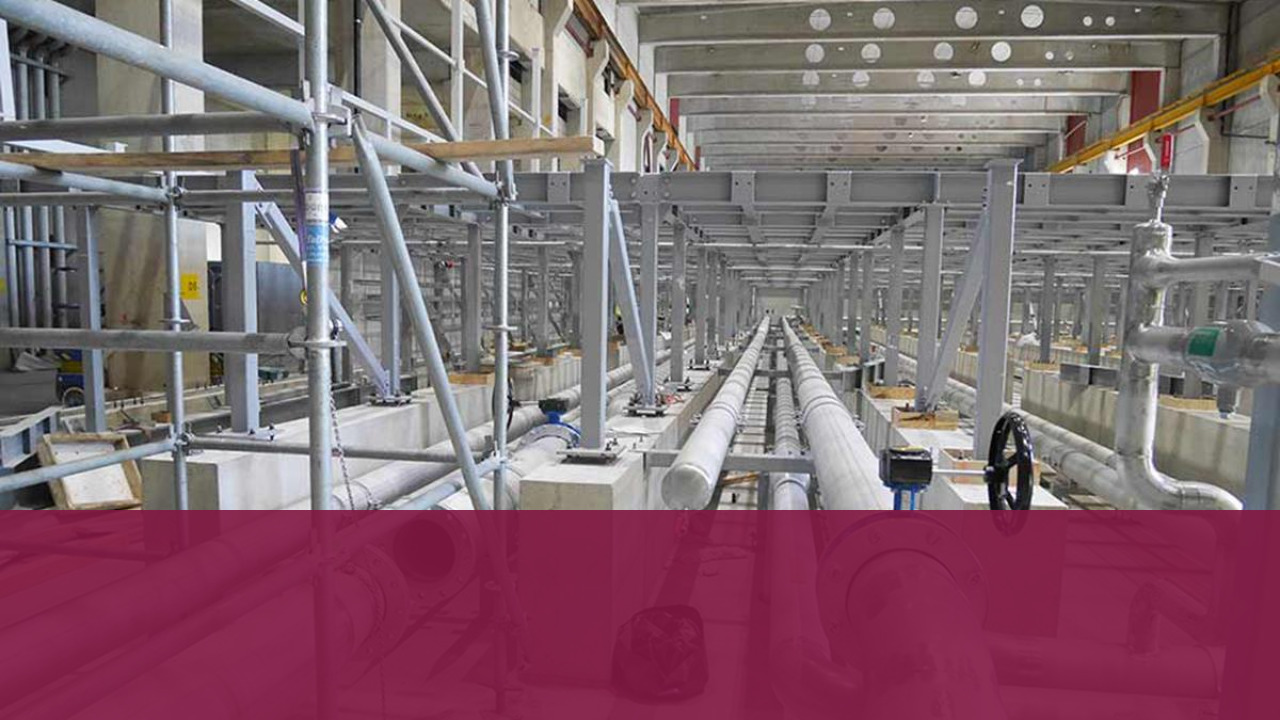
The University of Edinburgh hosts the facility, operating it through its established EPCC center. Robertson Construction Central East handles the physical build, erecting a purpose-built structure roughly the size of a large supermarket. The project follows the UK Compute Roadmap closely.
Building work reaches final completion in late 2027. Following system installation and rigorous testing, the facility targets an operational launch in spring 2028.
Technical Specifications and Performance Metrics
The incoming architecture replaces the aging ARCHER2 system, which has served the academic community for years. Modern computational demands require massive parallelism and raw speed to handle complex mathematical models.
Engineering teams deploy specialized silicon chips optimized for machine learning workloads. These chips accelerate neural network training times significantly across diverse scientific disciplines.
Exascale Computing Power
The new national supercomputer achieves a massive performance scale, operating roughly 50 times faster than the existing ARCHER2 system. While ARCHER2 handles up to 20 million-billion calculations per second, the incoming architecture executes at least one billion-billion calculations every second. This incredible jump enables researchers to complete intricate simulations in hours instead of days.
Thousands of advanced processors form the core of the new system. This setup allows scientists to process massive data arrays simultaneously. The computational leap bridges the gap between theoretical modeling and real-world execution, letting researchers simulate physical systems that were previously impossible to calculate due to hardware limitations.
Key Scientific and Industrial Applications
The facility provides critical computational power across multiple high-priority sectors, driving industrial growth and academic research. High performance computing acts as a multiplier for innovation across both public and private spheres.
Advanced algorithms process petabytes of sensor data generated by national observatories and clinical trials. Cross-sector collaboration ensures that industrial applications benefit directly from foundational academic discoveries.
Aerospace and Sustainable Engineering
High performance computing enables comprehensive simulation of gas turbine engines. Industrial partners like Rolls-Royce use these models to improve fuel efficiency and reduce harmful emissions. Virtual testing cycles shorten product development timelines significantly.
Engineers analyze fluid dynamics under extreme thermal conditions using fine-grained spatial meshes. These virtual prototypes minimize physical wind tunnel testing phases.
Cosmology and Space Research
Astrophysicists process massive influxes of data from advanced instruments like the Vera C. Rubin Observatory in Chile. The supercomputer helps researchers investigate the accelerating expansion of the universe and map distant galaxies with unprecedented clarity.
Dark matter distribution models require extreme parallel processing capabilities to simulate cosmic web formations accurately.
Climate Science and Environmental Defense
The system models extreme weather events, ocean temperature shifts, seismic activity, and community flood risks with high granularity. Accurate modeling gives local authorities better tools for disaster mitigation and long-term climate planning.
High-resolution atmospheric models track carbon sequestration rates across global forest reserves in real time.
Medical and Life Sciences
Researchers utilize the computing capacity to analyze population-scale health data. The platform accelerates drug discovery pipelines for cancer and infectious diseases while decoding antimicrobial resistance on a global scale.
Genomic sequencing pipelines run concurrently to identify rare hereditary markers within anonymized patient cohorts.
Sustainability and Green Infrastructure Design
Environmental design principles dictate the infrastructure of the Edinburgh supercomputer site. Modern data centers consume vast amounts of energy, making efficiency a top priority for engineers and operators.
Carbon accounting frameworks monitor lifetime emissions from hardware manufacturing down to eventual component recycling phases.
Natural Cooling and Energy Optimization
Scotland’s naturally cool climate provides a baseline for ambient cooling, reducing reliance on energy-intensive mechanical refrigeration. Advanced liquid-cooling and optimized airflow technologies further minimize overall energy consumption.
Variable-speed fans adjust dynamically based on real-time thermal output from active compute nodes.
Waste Heat Management and Local Communities
Surplus thermal energy generated by the processors gets channeled to warm University of Edinburgh campus buildings. Researchers are evaluating engineering frameworks to channel excess heat into disused local mine workings, providing a sustainable heating source for nearby homes.
District heating networks capture low-grade thermal exhaust safely through specialized heat exchangers.
Ecosystem Protection
Construction protocols minimized site demolition to protect local ecosystems. Robertson Construction Central East integrated conservation projects, including tree planting initiatives and the protection of ancient woodland surrounding the Midlothian site.
Ecological surveyors monitor local wildlife corridors to ensure minimal disruption during heavy transport phases.
Economic Impact and Strategic Autonomy
The £750 million investment extends beyond scientific discovery, functioning as a primary driver for the UK economy. Sovereign infrastructure safeguards national interests against global supply chain disruptions.
Venture capital funds use these sovereign assets to validate deep tech proposals before committing commercial capital.
Economic Return and Sovereign Infrastructure
An independent evaluation of the preceding ARCHER2 system demonstrated that every pound invested yielded eight pounds in direct economic return. This performance generated more than £4.2 billion in total value for the UK economy. By establishing sovereign computing infrastructure within domestic borders, the UK reduces its reliance on foreign cloud resources.
This strategic independence ensures that British researchers, startup incubators, and established industrial enterprises retain immediate, secure access to tier-one processing assets.
Frequently Asked Questions
Where is the new UK national supercomputer being built?
The facility is located on the outskirts of Penicuik and Roslin in Midlothian, Scotland, hosted by the University of Edinburgh and its high-performance computing center, EPCC.
When will the supercomputer become operational?
Construction of the supermarket-sized facility finishes by the end of 2027. The supercomputer is expected to launch publicly in spring 2028.
How much faster is the new supercomputer compared to ARCHER2?
The new machine is approximately 50 times more powerful than ARCHER2, scaling calculations from 20 million-billion per second to at least one billion-billion per second.
How did political transitions affect the project funding timeline?
The project received initial backing from the Conservative government, experienced a temporary shelf period in August 2024 under the Labour administration due to budgetary reviews, and received formal funding reinstatement in June 2025.