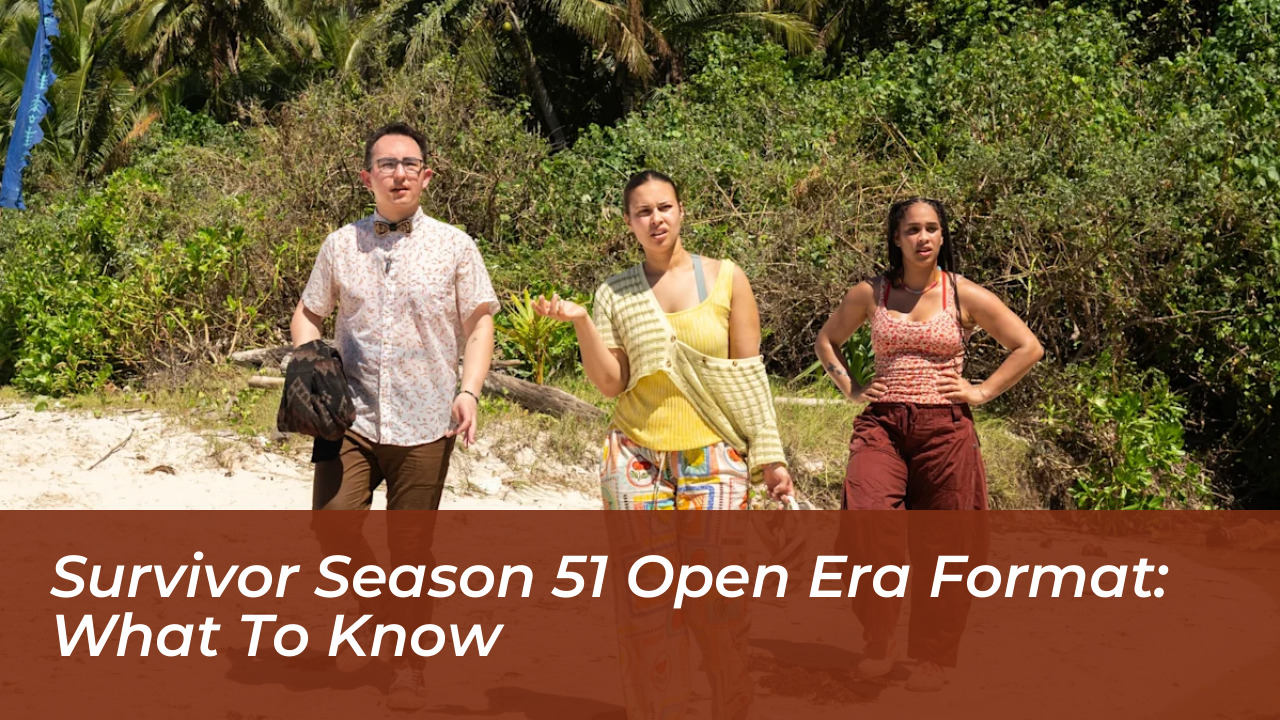
CBS launched the 51st season of its reality-competition series Survivor on Wednesday, September 23, 2026, marking a significant pivot in how the long-running show operates. Following the milestone 50th season, long-time host and executive producer Jeff Probst introduced a brand-new competition framework known as the Open Era. This phase throws out predictable television formulas and establishes a volatile environment designed to test twenty-one first-time players competing for the standard one million dollar grand prize.
- Introduction to Survivor Season 51 and the Open Era
- The Core Philosophy of Permanent Uncertainty
- Redefining Advantage Management
- The Psychological Weight of Dynamic Rules
- Cast Composition: Twenty-One First-Time Players
- Navigating Initial Social Dynamics Without Returnees
- Deconstructing the 26-Day Open Era Format
- Camp Life Pressures and Rapid Decision-Making
- Endurance and Tribal Infrastructure
- Strategic Implications for the One Million Dollar Prize
- Agility Versus Control: A Comparative Breakdown
- Production Evolution and Reality Television Standards
- Frequently Asked Questions
- What is the Open Era in Survivor Season 51?
- How many players are competing in Survivor Season 51?
- How long is the game in the Open Era format?
- Why did production change the rules for Season 51?
Introduction to Survivor Season 51 and the Open Era
Premiering on CBS, the 51st season of Survivor introduces a radical new structure. The production team realized that decades of historical data allowed superfans and astute viewers to anticipate every twist. By upending traditional playbooks, the show aims to restore genuine surprise to the viewing experience.
Jeff Probst and the production team launch the Open Era to disrupt predictable gameplay. This decision strips away the comfort zones that contestants relied on for years. Every episode forces participants to question their fundamental assumptions about how the game works.
Twenty-one first-time players compete for the standard one million dollar grand prize under unprecedented conditions. Without returning players or veterans to lean on, this new cast must write their own rules while navigating extreme psychological and physical pressures.

The Core Philosophy of Permanent Uncertainty
Jeff Probst encapsulated the design philosophy of the Open Era with a single phrase: permanent uncertainty. In prior seasons, astute fans and returning veterans could often anticipate tribal swaps, merge timings, and the lifecycle of special advantages based on historical patterns. The Open Era strips away those predictable signposts.
Stripping away historical patterns allows the game to breathe new life. Safe windows disappear from the ecosystem. Majority alliances can no longer coast through the middle phase of the game expecting a predictable merge at the exact same marker.
Forcing castaways to make high-stakes decisions with incomplete information alters the social landscape. Conversations at camp carry heightened risk because alliances cannot rely on numerical safety or historical precedents from previous seasons.
Redefining Advantage Management
Advantages and twists change criteria on every single journey. Traditional hidden immunity idol hunts take a backseat to dynamic, unannounced rule changes. Players find that hoarding an idol safely in their pocket is no longer a viable long-term strategy.
Players must deploy tools immediately or leverage them tactically rather than hoarding them safely. When a game-altering advantage drops into camp without warning, the finder must act fast. Hesitation often leads to a blindside at the next tribal council.
The Psychological Weight of Dynamic Rules
Mental fortitude serves as the primary currency when standard routines vanish entirely. Castaways experience intense anxiety as production continually alters fundamental game parameters without prior notice.
Sleep deprivation and meager rations amplify this psychological strain across every tribe. Those who manage stress effectively outlast peers who break down under persistent uncertainty.
Cast Composition: Twenty-One First-Time Players
Season 51 completely bypasses the veteran or mixed-roster formats that often define milestone television events. Selecting an all-new roster ensures that every participant experiences the volatile mechanics of the Open Era on equal footing.
Bypassing veteran or mixed rosters places every participant on equal footing. Nobody brings pre-existing franchise relationships, external pre-game alliances, or muscle memory from playing previous iterations of the show.
Removing pre-existing franchise relationships forces social hierarchies to form organically around raw charisma, strategic positioning, and physical utility during the initial grueling challenges.
Navigating Initial Social Dynamics Without Returnees
No familiar targets or shields exist for players to hide behind during the early rounds. Without recognizable veterans to target or lean on for protection, the cast must rapidly evaluate personality types, professional backgrounds, and threat levels.
Rapid evaluation of personality types and professional backgrounds under extreme pressure determines who survives the initial phase. The absence of returnees means social bonds must form purely on current interactions rather than pre-show reputations.
Deconstructing the 26-Day Open Era Format
The compressed 26-day timeline, which became standard in the modern era of the show, takes on a new dimension within the Open Era framework. With fewer total days to build resumes, every single hour carries immense weight.
The compressed 26-day timeline intensifies both physical and mental fatigue. Players cannot afford to coast through early rounds or hide behind a dominant majority alliance for the first two weeks.
Shorter intervals between tribal councils leave no room for comfortable coasting. Paranoia sets in much faster, leading to frequent communication breakdowns among tribes who struggle to maintain trust under duress.
Camp Life Pressures and Rapid Decision-Making
Accelerated physical degradation due to meager rations and constant mental stress compounds the strategic difficulty. Castaways face immediate dilemmas without the luxury of sleeping on a decision for 48 hours.
Random advantages dropping into camp unannounced shatter emerging trust. Shorter windows for minority alliances to organize counter-strategies mean that players who fail to adapt find themselves eliminated quickly.
Endurance and Tribal Infrastructure
Building shelter and securing fresh water demand coordinated physical effort despite severe caloric deficits. Tribes that fail to organize efficient labor distribution quickly burn through essential energy reserves.
Internal conflicts over camp chores often spark early vote splits and emotional outbursts. Personal friction becomes a lethal weapon when rivals exploit minor grievances during camp downtime.
Strategic Implications for the One Million Dollar Prize
Competing for $1 million under the Open Era rules requires an entirely different tactical approach than previous seasons. Traditional control-freak strategies face severe obstacles in such a volatile environment.
Rigid control-freak strategies where a dominant alliance dictates every vote from day one face severe obstacles. When production injects constant structural shifts, traditional majority blocks collapse overnight.
Agility Versus Control: A Comparative Breakdown
Successful contestants in the Open Era must prioritize tactical agility over long-term control. Rigid planning backfires when the rules of the game shift mid-cycle.
| Strategic Element | Traditional Era Approach | Open Era Approach (Season 51) |
|---|---|---|
| Alliance Building | Form rigid majority blocks early and hold numbers. | Maintain flexible, overlapping partnerships to survive sudden shifts. |
| Advantage Management | Hoard hidden immunity idols for safety near the end. | Deploy tools immediately or leverage them dynamically to break up power centers. |
| Tribal Council Execution | Execute straightforward split votes to flush out advantages. | Rely on real-time reads and live tribal scrambles as rules invalidate plans. |
The importance of maintaining overlapping partnerships across multiple potential alliances cannot be overstated. Relying on real-time reads and live tribal scrambles instead of rigid split-vote plans defines who succeeds.
Production Evolution and Reality Television Standards
The introduction of the Open Era in Season 51 signals a broader evolutionary phase for reality-competition television. Networks recognize that modern audiences demand fresh mechanics that defy algorithmic prediction by internet fan communities.
Proving that long-running franchises can discard stale elements to prioritize authentic human conflict remains a key victory for the production team. By breaking traditional templates, Survivor ensures that even the most analytical viewers remain guessing week after week.
Establishing a new benchmark for structural innovation in reality-competition television, this season serves as a case study in maintaining franchise vitality. It proves that a show can honor its heritage while aggressively prioritizing unpredictable strategic gameplay.
Frequently Asked Questions
What is the Open Era in Survivor Season 51?
The Open Era is a new competition framework introduced by Jeff Probst that eliminates predictable television formulas and creates permanent uncertainty for contestants.
How many players are competing in Survivor Season 51?
The season features twenty-one first-time players competing for the standard one million dollar grand prize without any returning veterans.
How long is the game in the Open Era format?
Castaways play across a compressed 26-day timeline that intensifies physical and mental fatigue while accelerating strategic gameplay.
Why did production change the rules for Season 51?
Decades of historical data allowed superfans to anticipate twists, prompting the production team to disrupt traditional patterns and restore genuine surprise.