- Introduction to Milei’s United Nations Critique
- Anatomy of a Scathing Address Against the United Nations
- Labeling the International Body
- Challenging the Administrative Class
- The Historical Roots of the Falkland Islands Dispute
- Colonial Succession Claims
- British Administration and the 1982 Conflict
- Self-Demand Versus Implanted Population Arguments
- The 2013 Sovereignty Referendum
- Milei Rejects Local Voting Rights
- Economic Friction and Offshore Energy Exploration
- The Sea Lion Energy Project
- Sanctions Against Corporate Entities
- Unilateral Action Warnings and Global Diplomatic Fallout
- The British Response
- Shifting US Diplomatic Posture
- Conclusion and Future Outlook for South Atlantic Security
- Frequently Asked Questions
- What did Javier Milei say about the United Nations?
- Why does Argentina claim the Falkland Islands?
- What is the status of the Sea Lion oil project?
- How do Falkland Islanders view their political status?
- Who is the current Prime Minister of the United Kingdom?
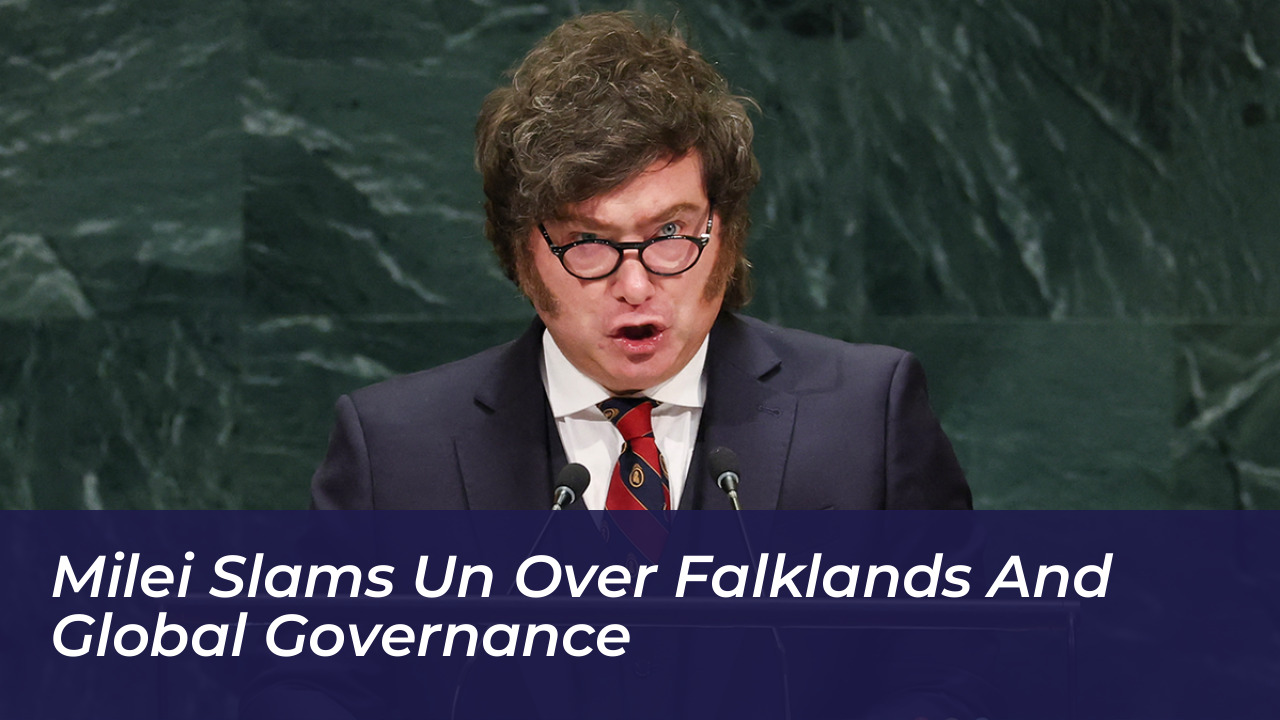
Argentinian President Javier Milei has delivered a blistering address at the United Nations General Assembly, sparking a fresh diplomatic firestorm over the long-standing Falkland Islands sovereignty dispute. By labeling the international body a useless institution run by arrogant bureaucrats, Milei has thrust South Atlantic geopolitics back to the center of global attention while raising the stakes for foreign energy firms operating in contested waters.
Introduction to Milei’s United Nations Critique
The speech at United Nations headquarters in New York represents a dramatic escalation in Argentina’s foreign policy posture. President Milei launched a direct attack on global governance structures, accusing international administrative bodies of institutional paralysis. Instead of maintaining neutral diplomacy, Buenos Aires is pivoting toward an aggressive stance on territorial boundaries.
At the center of this rhetorical assault lies the Falkland Islands, known to Argentinians as the Islas Malvinas. Milei argued that decades of multilateral dialogue have yielded zero progress, exposing the fundamental inability of the United Nations to resolve historical territorial claims. This hardline approach signals a departure from traditional diplomatic norms, leaving international observers questioning the future of regional security.
This article analyzes the diplomatic fallout, economic sanctions, and strategic consequences of Milei’s aggressive UN address. By examining the historical background of the Falkland Islands, offshore energy developments, and shifting Western alliances, we uncover the true gravity of this geopolitical clash.
Anatomy of a Scathing Address Against the United Nations
President Milei utilized his platform at the General Assembly to dismantle the foundational credibility of modern international organizations. His remarks did not target a single policy. Instead, they challenged the entire administrative framework of the United Nations. By framing the institution as an obsolete club of out-of-touch officials, Milei aimed to delegitimize decades of consensus building.
Labeling the International Body
Milei labeled the United Nations a useless organization that fails to execute its founding mandates. He argued that the institution spends excessive time debating abstract theories while ignoring tangible conflicts. According to the Argentine leader, global bodies offer empty resolutions that lack enforcement mechanisms, rendering them completely irrelevant to sovereign disputes.
Challenging the Administrative Class
The speech directly attacked international bureaucrats who maintain comfortable insulation within glass towers while ignoring real-world suffering and territorial injustices. Milei claimed this administrative class fosters a culture of impunity. In his view, career diplomats prioritize institutional self-preservation over actual conflict resolution, leaving nations to fend for themselves in high-stakes geopolitical arenas.
The Historical Roots of the Falkland Islands Dispute
To understand the current hostility, we must examine the historical friction between Buenos Aires and London over the remote South Atlantic archipelago. The territorial contest spans nearly two centuries, involving colonial expansion, military conflict, and competing interpretations of international law.
Colonial Succession Claims
Argentina bases its legal argument on the succession of the former Spanish colonial empire following its independence in the early nineteenth century. Buenos Aires maintains that it inherited administrative rights over the islands directly from Madrid. Consequently, the Argentine government views British presence as an ongoing colonial occupation of sovereign territory.
British Administration and the 1982 Conflict
Great Britain has maintained uninterrupted administrative control over the territory since 1833. Tensions reached a boiling point in 1982 when the ruling Argentine military junta ordered an amphibious invasion of the islands. Then British Prime Minister Margaret Thatcher dispatched a powerful naval task force to reclaim the archipelago. The ensuing 74-day military conflict resulted in hundreds of casualties before Argentine forces surrendered, solidifying British military presence.
Self-Demand Versus Implanted Population Arguments
A fundamental ideological chasm separates Buenos Aires from London regarding the democratic rights of the people who currently inhabit the islands. While Britain champions the principle of self-determination, the Milei administration dismisses local demographics entirely.
The 2013 Sovereignty Referendum
Falkland Islanders overwhelmingly rejected Argentine governance during a 2013 political status referendum. Operating on a robust 92 percent voter turnout, 99.8 percent of participating residents voted to remain a British Overseas Territory. Local leaders maintain that international law protects their democratic right to choose their political alignment and lifestyle.
Milei Rejects Local Voting Rights
President Milei explicitly rejected the concept of self-determination for the island population during his UN address. He argued that the current inhabitants constitute an implanted population placed by an occupying power on contested soil. Buenos Aires insists that the democratic will of the islanders holds no legal weight against historical colonial claims.
Economic Friction and Offshore Energy Exploration
The diplomatic stalemate has transformed into an active regulatory confrontation due to lucrative offshore energy exploration in the North Falkland Basin. Commercial drilling operations have turned abstract maritime boundaries into high-stakes corporate battlefields.
The Sea Lion Energy Project
The Sea Lion offshore oil development represents a major financial venture in the South Atlantic. The project operates under valid British regulatory licenses granted by the Falkland Islands government. Energy exploration is managed through a complex joint venture linking an Israel-based energy firm with a London-listed exploration company.
Sanctions Against Corporate Entities
Buenos Aires views the extraction of South Atlantic resources as an unlawful act within disputed waters. Responding to these developments, the Milei administration initiated formal sanction proceedings against more than 60 corporate entities and individuals linked directly to the drilling project. President Milei warned that Argentina refuses to remain passive while foreign corporations exploit sovereign natural resources.
Unilateral Action Warnings and Global Diplomatic Fallout
The fiery speech generated immediate diplomatic repercussions across Washington, London, and Buenos Aires. Global leaders face mounting pressure to clarify their strategic positions regarding South Atlantic security and maritime trade routes.
The British Response
British officials swiftly rejected Milei’s assertions, emphasizing that the sovereignty of the islands remains non-negotiable. Prime Minister Keir Starmer reiterated the absolute right of Falkland Islanders to self-determination during diplomatic engagements. London maintains that its military and political posture across the South Atlantic remains unshakeable.
Shifting US Diplomatic Posture
Complicating the geopolitical landscape, recent intelligence reports indicate Washington is quietly reviewing its traditional neutrality on the Falklands sovereignty question. Potential shifts in United States foreign policy could alter the strategic balance between South American claimants and European defenders. White House deliberations on the matter remain closely monitored by international defense analysts.
Conclusion and Future Outlook for South Atlantic Security
Argentina’s refusal to wait for multilateral enforcement marks a dangerous turning point for regional stability. By threatening unilateral action, President Milei has raised the stakes for multinational corporations operating in contested waters.
- Milei’s explicit threat of unilateral action signals a transition from diplomatic protest to aggressive maritime enforcement.
- Multinational energy corporations face mounting regulatory and legal risks as Buenos Aires expands its corporate sanction lists.
Frequently Asked Questions
What did Javier Milei say about the United Nations?
President Milei criticized the United Nations as a useless organization populated by arrogant bureaucrats that fails to enforce its own resolutions regarding territorial disputes.
Why does Argentina claim the Falkland Islands?
Argentina bases its sovereignty claim on the legal succession of the former Spanish colonial empire following independence, referring to the archipelago as the Islas Malvinas.
What is the status of the Sea Lion oil project?
The Sea Lion project is an offshore oil exploration venture in the North Falkland Basin operating under British licenses, which Argentina considers unlawful and subject to corporate sanctions.
How do Falkland Islanders view their political status?
Residents overwhelmingly support remaining a British Overseas Territory, demonstrated during the 2013 referendum where 99.8 percent of voters chose to maintain political ties to the United Kingdom.
Who is the current Prime Minister of the United Kingdom?
Keir Starmer serves as the current Prime Minister of the United Kingdom, reaffirming British sovereignty over the Falkland Islands.