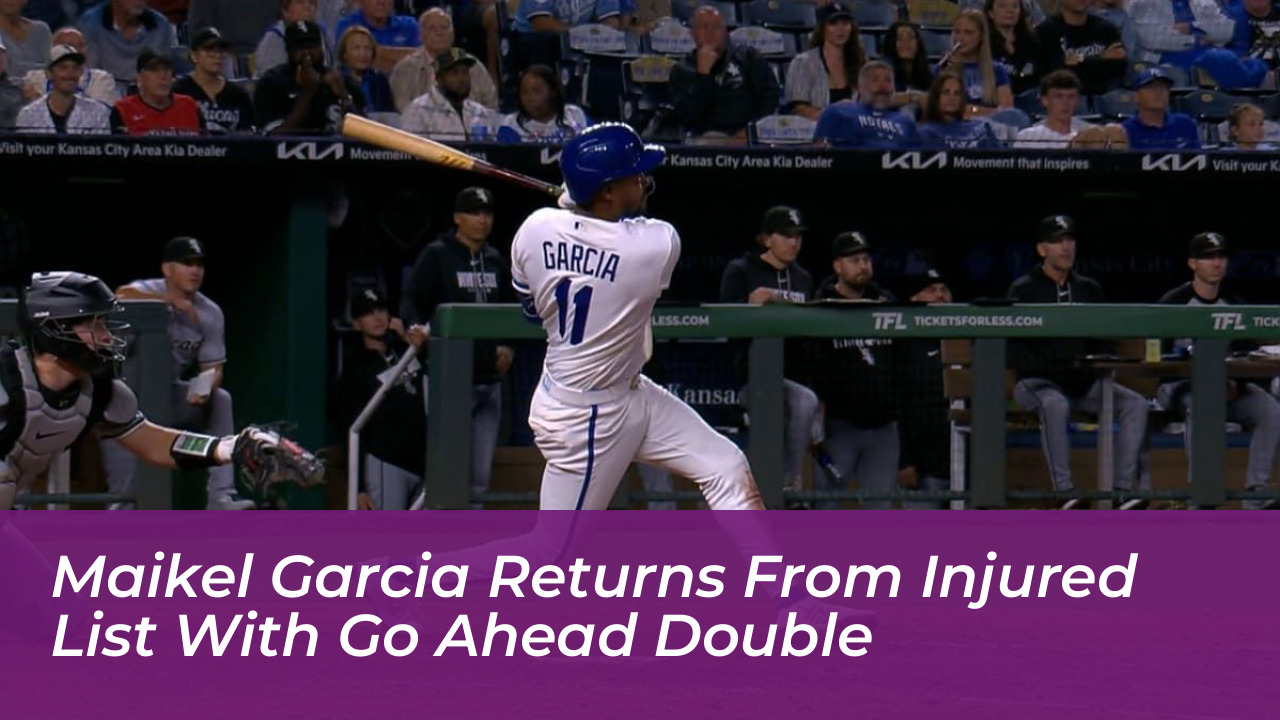
September 23, 2026, brought high tension to Kauffman Stadium as the Kansas City Royals fought through a tight late-season contest. In a moment that encapsulated the unpredictable nature of baseball, third baseman Maikel Garcia delivered a defining swing of the bat. Returning directly from a lengthy recovery process, Garcia smoked a go-ahead RBI double in the bottom of the seventh inning to secure a 5-4 victory. This standout performance highlights his mental toughness, his immense value to the franchise, and his foundational role in shaping the roster for the upcoming 2027 campaign.
- Anatomy of the Go-Ahead Hit
- Breaking Down the Seventh-Inning At-Bat
- Pitch Tracking and Contact Metrics
- Overcoming a Season of Injury Setbacks
- Navigating Multiple Injured List Stints
- Mental Resilience and Rehabilitation
- Managerial Confidence and Team Chemistry
- The Role of Matt Quatraro and the Coaching Staff
- Immediate Trust in High-Leverage Spots
- Impact on the 2027 Roster Outlook
- Late-September Auditions for the Front Office
- Defensive Metrics and Range Recovery
- Offensive Consistency Beyond the Injury Window
- Frequently Asked Questions
- When did Maikel Garcia return from the injured list?
- What were the exact tracking metrics for Garcia’s go-ahead double?
- How many games did Garcia miss due to injuries in 2026?
Anatomy of the Go-Ahead Hit
Breaking Down the Seventh-Inning At-Bat
The bottom of the seventh inning presented a pivotal turning point in the 5-4 victory. Opposing pitchers knew the danger of letting Garcia beat them with runners in scoring position, yet the defensive alignment left a vital gap in the outfield. The weight of the moment fell squarely on the young infielder, who had spent most of the summer watching from the dugout or the training room. Instead of showing rust from his extended layoff, Garcia stepped into the box with absolute clarity and executed a flawless swing against high-leverage pitching.
Kansas City needed a spark to break a late-game stalemate, and the offensive strategy relied on aggressive zone control. Garcia locked onto a pitch in his wheelhouse and drove it with authority. The ensuing extra-base hit did more than just drive home the decisive run. It proved that his timing and pitch selection remained sharp despite missing chunks of the regular season.
Pitch Tracking and Contact Metrics
Statcast metrics validate just how hard Garcia worked during his rehabilitation to maintain elite bat speed. Facing an 83.6 mph slider that featured a sharp 2,456 rpm spin rate, the third baseman generated exceptional contact under immense pressure. Elite breaking balls often baffle hitters returning from injury, but Garcia stayed back on the off-speed offering and barrel-squared the baseball.
The numbers from the swing underline his raw power and barrel control. The ball erupted off his bat at 96.3 mph, shooting away at a 20-degree launch angle. It carried 326 feet into the gap in left field, dropping safely for a powerful line-drive double. Generating these metrics instantly upon activation signals that his swing mechanics require no structural adjustments moving forward.
Overcoming a Season of Injury Setbacks
Navigating Multiple Injured List Stints
Garcia endured a frustrating, stop-and-go 2026 campaign that tested his physical limits. A persistent left hand muscle strain disrupted his rhythm in late June, forcing him to miss 46 games straight through mid-August. Just as he regained his timing and settled back into the everyday lineup, disaster struck again. On August 21, while aggressively rounding third base, he suffered a left hamstring strain that sent him straight back to the injured list.
These recurring interruptions limited Garcia to just 74 total appearances through mid-September. Missing 67 games overall robbed him of valuable developmental plate appearances. For a young player trying to establish himself as an undisputed everyday starter, watching from the sidelines creates a psychological barrier that takes immense effort to overcome upon returning.
Mental Resilience and Rehabilitation
The long hours spent in the training room require a specific brand of mental fortitude. Garcia admitted that the rehabilitation process drained him as much as the physical injuries themselves. Baseball players thrive on routine, and missing everyday competition creates a void that is difficult to fill. He noted that the year tested his mental endurance deeply.
Despite the fragmented nature of his playing time, Garcia stabilized his offensive production at a respectable .266 batting average. Maintaining that level of consistency while constantly fighting through stop-and-go rehab assignments highlights his advanced approach at the plate. He never allowed the physical setbacks to erode his confidence against major league pitching.
Managerial Confidence and Team Chemistry
The Role of Matt Quatraro and the Coaching Staff
Manager Matt Quatraro and the training staff closely monitored Garcia’s grueling workload during his rehabilitation sessions. The coaching staff implemented a strict recovery protocol to protect his hamstring and hand from further stress. However, Quatraro’s trust in his third baseman never wavered.
Behind the scenes, coaches worked extensively with Garcia on mechanical adjustments to compensate for any lingering physical hesitations. This collaborative effort between the medical department and field staff allowed Garcia to fast-track his return without sacrificing safety. The resulting swing on September 23 served as validation for all the long hours spent doing resistance bands and agility drills.
Immediate Trust in High-Leverage Spots
Many managers prefer to ease a returning player back into action through low-leverage pinch-hitting appearances or defensive substitutions. Quatraro bypassed that cautious approach entirely. Deploying Garcia immediately in high-leverage spots demonstrates the immense respect the dugout has for his talent and competitive fire.
Having a proven impact bat back in the lineup changes the entire dynamic of the Kansas City dugout. Teammates feed off his energy, and opposing pitchers can no longer pitch around the middle of the order without consequence. His immediate offensive contribution proved that the coaching staff made the right call by trusting him right out of the gate.
Impact on the 2027 Roster Outlook
Late-September Auditions for the Front Office
With the Royals out of the 2026 postseason picture, the final weeks of the regular season serve a vital developmental purpose. The front office uses this window to evaluate player projections and finalize roster designs for next spring. Securing a healthy Maikel Garcia at the hot corner locks down an essential pillar of the infield alongside elite shortstop Bobby Witt Jr.
Establishing stability on the left side of the infield gives the analytics department a clear baseline for future projections. Front office executives need to know who belongs in the Opening Day plans, and Garcia answered that question emphatically. His late-season heroics provide clear guidance as the franchise plans its offseason acquisitions.
Defensive Metrics and Range Recovery
Hamstring injuries often rob infielders of their lateral quickness and explosive first-step reaction time. Medical evaluations for Garcia focused heavily on his recovery of range and agility following the August strain. September fielding data confirms that Garcia moves fluidly across the dirt without any lingering stiffness.
His ability to patrol third base with elite range safeguards the Royals pitching staff from extra-base hits down the line. Clean defensive metrics, combined with his offensive pop, confirm that his lower half is fully healed. The front office can now plan defensive alignments for 2027 with absolute confidence in his glovework.
Offensive Consistency Beyond the Injury Window
Maintaining a strong hard-hit percentage after missing extended stretches is a rare feat for any hitter. Garcia achieved this because of his advanced pitch recognition and disciplined approach at the plate. His ability to track sharp breaking balls immediately upon returning confirms that his natural timing remains intact.
As the Royals look toward building a more competitive roster next year, having a dependable third baseman who handles elite velocity and spin is invaluable. Garcia projects as a core fixture in the middle of the batting order. His September return proves he is ready to shoulder that offensive load over a full 162-game schedule.
Frequently Asked Questions
When did Maikel Garcia return from the injured list?
Garcia returned to the active Kansas City Royals roster in mid-September after completing his rehabilitation from a left hamstring strain sustained on August 21.
What were the exact tracking metrics for Garcia’s go-ahead double?
The clutch hit left his bat at a blazing 96.3 mph with a 20-degree launch angle, carrying 326 feet into left field off an 83.6 mph slider.
How many games did Garcia miss due to injuries in 2026?
Combined absences from his left hand muscle strain and subsequent left hamstring strain sidelined him for 67 total games during the 2026 regular season.