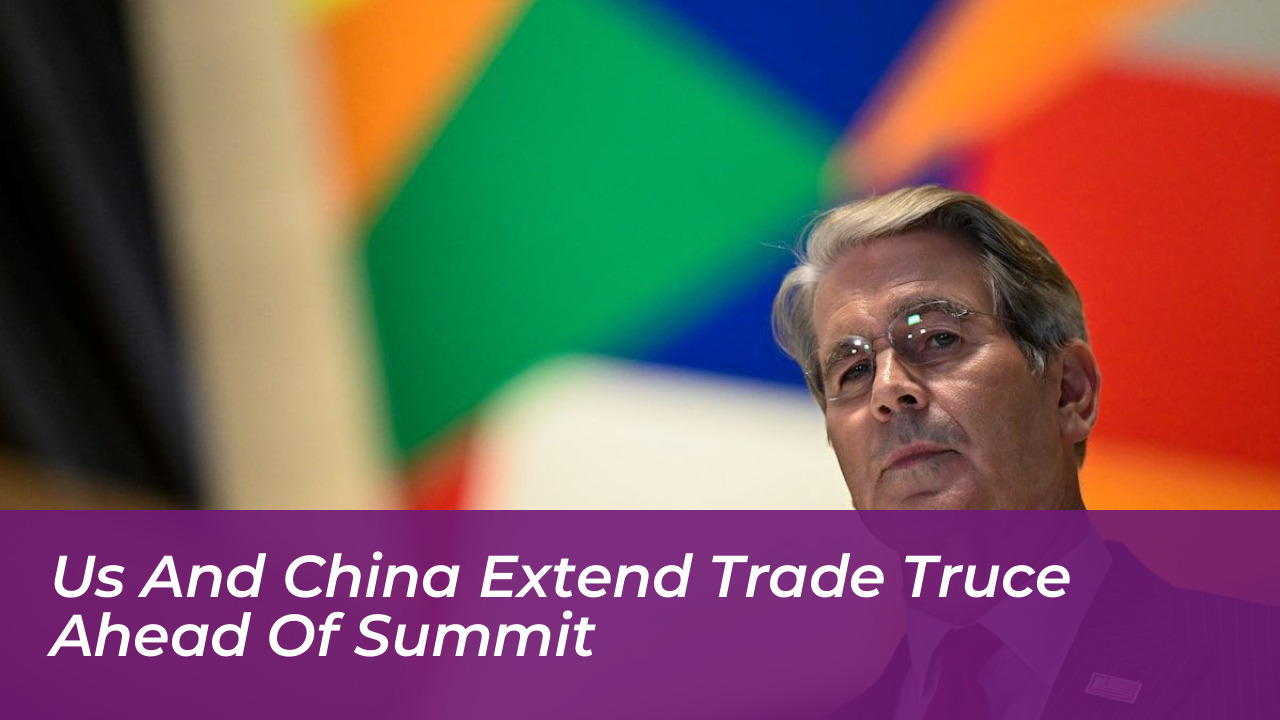
Global economic stability received a welcome boost as the US and China extend trade truce negotiations through January 10, giving policymakers vital breathing room to bridge lingering gaps. US Treasury Secretary Scott Bessent announced this essential development following intensive high-level meetings at the World Bank headquarters in Washington. This two-month extension sets the stage for a comprehensive economic agreement and directly supports upcoming bilateral discussions between US President Donald Trump and Chinese President Xi Jinping. Both economic superpowers want to avoid disruptive tariff escalation, making this extended timeline a major focal point for international supply chain managers and financial markets alike.
- US and China Extend Trade Truce to January 10
- Origins and Evolution of the Busan Agreement
- Rolling Back Triple-Digit Tariffs
- Resuming Rare Earth Mineral Flows
- Inside the Washington and New York Negotiations
- High-Level Bilateral Meetings
- Targeted Tariff Reductions on Consumer Goods
- Addressing Structural Imbalances and Intellectual Property
- Negotiations Led by Jamieson Greer
- Shipbuilding Sector Investigations
- Expanding Diplomatic Channels into Technology Cooperation
- Artificial Intelligence Governance
- Preventing Technological Miscalculations
- Market Reactions and Long-Term Supply Chain Outlook
- Barometer for Global Trade Health
- Corporate Demand for Structural Certainty
- Frequently Asked Questions
- What is the new deadline for the US and China trade truce?
- Who announced the extension of the trade truce?
- What key issues are being discussed alongside tariffs?
- Why is the Busan Agreement relevant to current talks?
US and China Extend Trade Truce to January 10
The decision to push the deadline to January 10 comes after intense negotiations between American and Chinese economic teams. Treasury Secretary Scott Bessent confirmed that the extra sixty days will allow both sides to iron out complex policy details that require presidential sign off. This development prevents an abrupt return to hostile tariff rates, which previously threatened to choke off key import and export channels.
Markets responded with cautious optimism to the announcement. Negotiators now have a defined window to translate preliminary diplomatic goodwill into binding treaty text. This timeline directly supports the upcoming presidential summit, ensuring that leaders arrive at the negotiating table with actionable proposals rather than unresolved disputes.
Origins and Evolution of the Busan Agreement
To understand the current diplomatic posture, market observers must look back at the temporary framework established during the Busan Agreement in South Korea earlier this year. That original pact halted a destructive cycle of reciprocal economic penalties that had crippled global supply chains for months. By stepping back from the brink of extreme fiscal hostility, both nations managed to restore baseline confidence for industrial shipping.
The May agreement achieved two major milestones. First, it rolled back punishing triple-digit tariff rates that made cross-border commerce financially unviable for many manufacturers. Second, it forced a resumption of vital raw material shipments that feed high-tech assembly lines across North America and Asia.
Rolling Back Triple-Digit Tariffs
The Busan framework effectively dismantled the worst of the retaliatory measures implemented during peak trade tensions. By returning tariff schedules to manageable baselines, industrial input costs stabilized. Manufacturers gained the ability to plan inventory purchases months in advance without fear of overnight tax spikes.
This tariff rollback directly restored predictable shipping channels across the Pacific. Container volumes rebounded as logistics firms regained confidence in steady freight movements. Industrial inputs reached assembly plants without the crippling border delays that defined the height of the tariff war.
Resuming Rare Earth Mineral Flows
A critical breakthrough of the initial framework involved Beijing policy shifts regarding the export of rare earth minerals and specialized magnets. These elements remain non-negotiable for advanced manufacturing sectors, defense contractors, and green energy technology developers in North America.
Without a steady flow of rare earths, high-tech production lines face immediate bottlenecks. The resumption of these exports proved that both governments recognized the mutual destruction inherent in resource embargoes. Securing these supply chains remains a top priority as teams work toward the January 10 deadline.
Inside the Washington and New York Negotiations
Diplomatic engagements shifted into high gear across Washington and New York, driven by key administration officials seeking tangible economic wins. These sessions go beyond surface-level compromises, tackling granular details of bilateral commerce.
The physical meetings establish clear operational channels between executive offices and trade ministries. Both delegations understand that public expectations require measurable progress before the upcoming presidential summit.
High-Level Bilateral Meetings
A pivotal moment in the recent talks involved a ninety-minute closed-door session between US Treasury Secretary Scott Bessent and Chinese Vice Premier He Lifeng. This extended dialogue laid the operational groundwork for the upcoming presidential meeting between Donald Trump and Xi Jinping.
Bessent and He focused on aligning macroeconomic targets and establishing dispute-resolution protocols. Their ability to find common ground during this session directly influenced the decision to extend the trade truce.
Targeted Tariff Reductions on Consumer Goods
Negotiating teams are currently evaluating concrete proposals to reduce tariffs on approximately thirty billion dollars worth of non-sensitive consumer and industrial goods. This targeted relief aims to lower costs for everyday shoppers while easing cost pressures on factory floors.
Identifying specific sectors for immediate relief requires balancing domestic political sensitivities with economic pragmatism. Retail goods, electronic components, and specific machinery parts top the list of categories under review for tax rollbacks.
Addressing Structural Imbalances and Intellectual Property
Tariff adjustments represent only one piece of a much larger puzzle. Sustainable economic peace requires addressing deep-seated structural imbalances and robust protections for intellectual property.
US Trade Representative Jamieson Greer leads the charge on these more complex legal and structural demands. Washington insists that any final agreement must protect American innovation and curb state-backed market distortions.
Negotiations Led by Jamieson Greer
Jamieson Greer brings a sharp focus to intellectual property enforcement and systemic trade distortions during talks in New York and Washington. His team presses for verifiable enforcement mechanisms rather than vague promises of reform.
Intellectual property theft and forced technology transfers remain major pain points for American corporations operating abroad. Greer’s involvement ensures that these foundational concerns stay front and center throughout the truce extension.
Shipbuilding Sector Investigations
As a sign of goodwill during the diplomatic push, Washington temporarily suspended responsive actions related to ongoing investigations into China dominant shipbuilding sector. This move removes an immediate flashpoint that could have derailed the broader talks.
The shipbuilding industry holds immense strategic importance for maritime commerce, global logistics, and naval power. Managing friction in this sector keeps supply chains open while diplomats negotiate long-term rules for maritime trade.
Expanding Diplomatic Channels into Technology Cooperation
Modern geopolitics requires cooperation that extends far beyond traditional fiscal policy and cargo shipping. The current talks intentionally cross over into digital infrastructure and artificial intelligence.
Both superpowers recognize that technological misunderstandings carry catastrophic risks. Establishing guardrails for digital assets and automated systems prevents accidental escalation.
Artificial Intelligence Governance
Administrations opened groundbreaking discussions regarding artificial intelligence governance and digital security. As advanced computing models reshape the global economy, establishing ground rules becomes paramount.
Officials explored the creation of formal notification mechanisms designed to flag unexpected AI-related incidents or digital security threats. This proactive communication structure helps both governments maintain visibility over rapidly evolving technologies.
Preventing Technological Miscalculations
Technological friction can easily cascade into broader geopolitical conflict if left unchecked. Establishing direct lines of communication between tech regulators acts as a safety valve.
These specialized communication channels ensure that algorithmic anomalies, cyber incidents, or semiconductor disputes do not trigger knee-jerk economic retaliation. Both nations benefit from a predictable digital operating environment.
Market Reactions and Long-Term Supply Chain Outlook
Global markets treat the extended January 10 deadline as a vital economic barometer. While investors breathe a sigh of relief over averted tariff hikes, corporate leadership demands deeper structural certainty.
Navigating ongoing shifts in trade policy requires agility, but businesses ultimately crave a stable regulatory environment. The coming weeks will determine whether temporary relief evolves into lasting economic stability.
Barometer for Global Trade Health
Financial analysts watch every movement surrounding the January 10 milestone to gauge the health of international commerce. A successful agreement will signal that major economies can resolve systemic disputes through diplomacy.
Conversely, a breakdown in talks would send shockwaves through currency markets and equity indexes. For now, the extended truce provides a stable runway for fourth-quarter earnings and holiday inventory planning.
Corporate Demand for Structural Certainty
Supply chain logisticians and corporate executives need more than temporary pauses. Long-term predictability regarding export controls and tariffs remains the ultimate goal for risk management.
Mitigating operational risk in an era of shifting trade policy requires diversified sourcing and resilient logistics networks. Until a comprehensive pact is signed on or before January 10, businesses will continue to plan cautiously for all potential outcomes.
Frequently Asked Questions
What is the new deadline for the US and China trade truce?
The trade truce has been extended through January 10, giving negotiating teams additional time to finalize a comprehensive economic agreement ahead of upcoming presidential meetings.
Who announced the extension of the trade truce?
US Treasury Secretary Scott Bessent announced the extension following high-level negotiations held at the World Bank headquarters in Washington.
What key issues are being discussed alongside tariffs?
Beyond traditional tariffs, negotiations cover intellectual property protections, systemic trade imbalances, shipbuilding sector investigations, and artificial intelligence governance frameworks.
Why is the Busan Agreement relevant to current talks?
The Busan Agreement served as the foundational temporary framework established in South Korea that successfully rolled back triple-digit tariff rates and restored rare earth mineral flows.