Updated Content
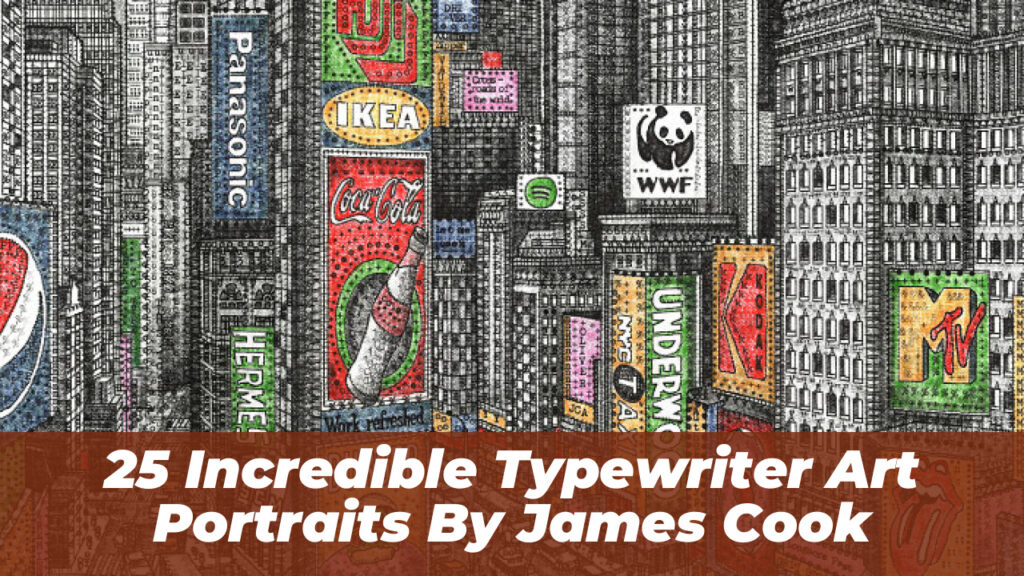
In an era defined by instantaneous digital creation, London-based artist James Cook is championing a slower, more deliberate form of expression. Using nothing more than vintage typewriters and thousands of rhythmic keystrokes, he transforms blank sheets of paper into hyper-detailed landmarks and nuanced portraits. For Cook, the typewriter is not a relic of the past; it is a precision instrument for the modern age.
The Evolution of an Unconventional Medium
James Cook’s journey began in 2014 as a humble school art project. Inspired by the late Paul Smith a pioneer who mastered typewriter art despite living with cerebral palsy Cook saw potential where others saw obsolete office equipment. Today, his portfolio boasts over 350 completed works, each meticulously crafted on one of the 100+ vintage machines he maintains in his collection. While many modern figures, such as those highlighted in the 2026 career evolution updates of industry professionals, are constantly navigating the rapid shifts of digital trends, Cook has chosen to move in the opposite direction, finding profound beauty in the tactile friction of metal on paper.
The Mechanical Palette: Painting with Punctuation
What distinguishes Cook’s work is his mastery of the mechanical palette. He does not simply type; he orchestrates. By layering symbols like the @ sign, slashes, and periods, he creates intricate textures that rival the complexity of a photograph.
- Deep Shadows: Achieved by over-striking keys in high-density areas to build layers of ink.
- Highlights: Created by leaving strategic areas of the paper untouched, allowing the negative space to define form.
- Structural Integrity: Using letters and numbers to map the geometric precision of architectural landmarks, such as Big Ben or the Golden Gate Bridge.
The Sound of the Art
Beyond the visual, there is a distinct sensory experience to Cook’s studio. The rhythmic clatter of the keys creates a meditative soundscape a stark, organic contrast to the silent, sterile tapping of a smartphone screen. This auditory feedback is an essential part of his process, acting as a metronome that keeps the artist in a flow state for hours at a time.
The High-Stakes Reality of the “No-Undo” Process
Perhaps the most compelling aspect of Cook’s art is the inherent risk. Unlike digital artists who rely on layers and the “undo” function, Cook works in a medium where a single misplaced character can compromise weeks of progress. This high-stakes environment demands a level of patience and focus that is increasingly rare in contemporary art. A single portrait can take anywhere from one week to three months of continuous, rhythmic typing.
Why This Art Matters Today
James Cook’s work serves as a necessary antithesis to the relentless speed of modern life. When he sits down at his machine, he is not just producing an image; he is documenting time. Each piece acts as a physical record of millions of precise movements, serving as a testament to what happens when human intent meets the mechanical resistance of a vintage tool.
Final Thoughts
As we navigate a landscape increasingly dominated by automated imagery and AI-generated content, the typewriter art of James Cook reminds us of the enduring power of the human hand. His work is not merely a visual treat; it is a study in precision, patience, and the timeless beauty of mechanical engineering. Whether you are an art enthusiast or a fan of vintage technology, Cook’s portfolio is a profound reminder that some of the most complex results are born from the simplest of tools.
For those interested in his process, James Cook regularly shares footage of his work on his official channels, offering a rare glimpse into the rhythmic, meditative atmosphere of his studio.