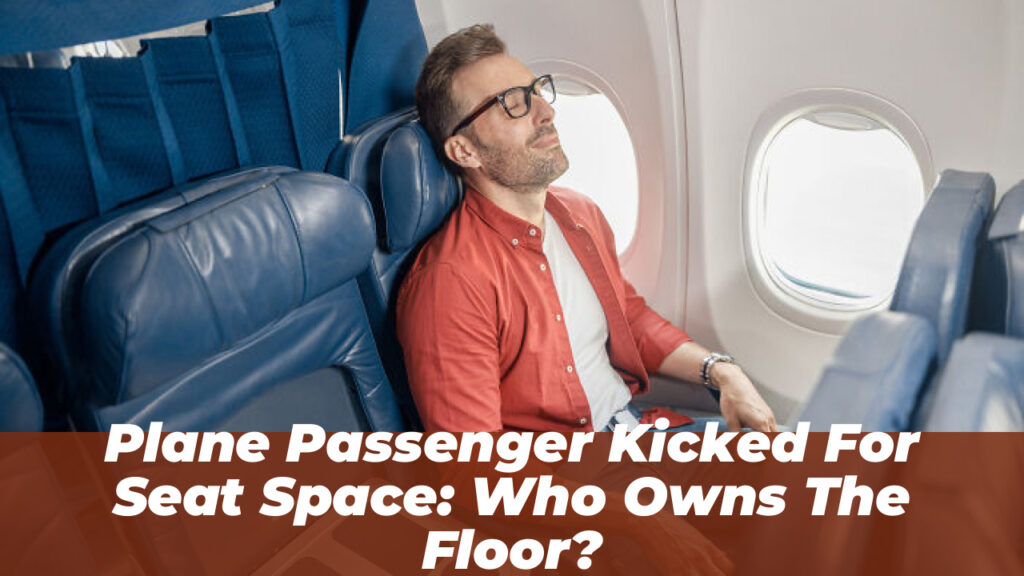
Air travel is, by nature, a test of patience. Between increasingly cramped cabins and limited personal space, minor inconveniences can quickly escalate into full-blown confrontations. Recently, a viral incident involving a passenger repeatedly kicking the seat in front of them based on the misguided belief that the floor space under the preceding seat was exclusively theirs has reignited a fierce debate about boundaries at 30,000 feet.
When sharing such a confined environment, the question of “who owns what” is not merely a matter of opinion; it is a fundamental issue of air travel etiquette and mutual respect.
The Incident: An Unexpected Confrontation
The scenario is one many frequent flyers recognize all too well. A passenger settles into their seat, places their personal bag in the designated space in front of them, and prepares for takeoff. Suddenly, a foot begins invading that space, kicking the bag and the passenger’s ankles. When confronted, the passenger behind insists that because they purchased a ticket, they are entitled to the entire floor area in front of them, regardless of whether that space is physically located beneath the seat of the person ahead.
This sense of entitlement is a growing trend in modern travel, stemming from a fundamental misunderstanding of aircraft cabin configurations. While the stress of tight seating can make these interactions feel like a surreal script, the physical realities of the aircraft remain constant.
The Rules of the Air: Defining Personal Space
To settle the argument, it is helpful to clarify the logic of airline design:
- The Seat Footprint: The space directly under the seat in front of you is intended for your personal belongings. However, it is not an extension of your own legroom. If the passenger in that row has placed a bag there, that space is occupied.
- The No-Go Zone: You do not have the right to physically displace another passenger’s belongings. Kicking, pushing, or aggressively demanding that someone move their bag to accommodate your legs is a violation of personal space and cabin etiquette.
- The Flight Attendant’s Authority: In cases of dispute, the cabin crew’s word is final. Passengers are expected to keep their limbs within their own designated footprint. Resorting to physical aggression is not just rude it is disruptive to the safety and comfort of the entire flight.
Why This Story Resonated with Millions
This incident went viral not just because of the physical disruption, but because it highlights a deepening lack of empathy in shared public spaces. When the passenger claimed the floor space was “theirs,” they were asserting ownership over another person’s comfort. The public reaction was clear: purchasing a ticket does not grant a passenger the right to infringe upon the physical boundaries of those around them. Modern travelers have little patience for behavior that ignores the basic rules of social conduct.
A Call for Better Air Travel Etiquette
As we navigate the complexities of modern travel, it is worth remembering that every passenger is dealing with the same stressors. The person in front of you is not an adversary; they are a fellow traveler sharing the same journey.
How to handle a similar situation:
- Stay Calm: Avoid escalating the conflict. Responding to aggression with aggression rarely leads to a productive outcome.
- Use the Call Button: If a passenger is being invasive or aggressive, alert a flight attendant. They are trained to mediate these disputes and maintain cabin order.
- Know Your Bounds: Respect the physical perimeter of your seat. If you require additional legroom, that is a matter to address with the airline during the booking process, not a battle to be fought with the person in the row ahead.
Final Thoughts
The “entitled passenger” phenomenon serves as a reminder that while we are paying for a service, we are still participating in a shared human experience. The space under the seat is a shared boundary, not territory to be conquered. Respecting that boundary is the difference between a smooth flight and an unnecessary, disruptive confrontation.