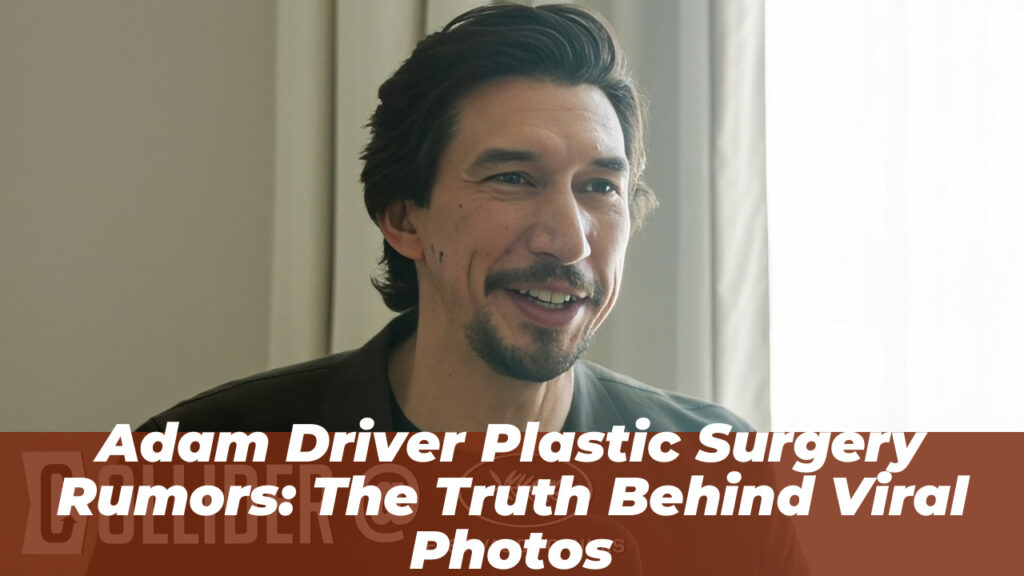
Adam Driver plastic surgery speculation has ignited a viral debate this week after recent candid photographs sparked intense online scrutiny. The actor, now 42, has seen social media platforms flooded with side-by-side comparisons as observers fixate on the perceived change in his ear prominence. While the internet is quick to label these shifts as surgical, the reality of celebrity imagery is far more complex than a simple snapshot.
What Triggered the Speculation
The discourse began on September 15, 2026, when high-resolution images circulated online, prompting a trend of ear-watching. Users compared these frames to earlier career photos, suggesting his ears appeared less prominent.
This curiosity migrated from fan forums to mainstream media, turning a subjective observation into a debate about the ethics of celebrity cosmetic enhancement. A single viral post can dictate public perception despite a lack of official confirmation or medical evidence.
The Illusion of Surgery: Technical Factors
It is necessary to distinguish between actual surgical procedures and optical illusions inherent in modern photography. High-definition cameras, combined with specific lighting, can drastically alter facial features through shadow and depth of field.
Professional grooming and hair styling also create the appearance of altered ear projection by changing the frame of the face. For an actor who spends his career undergoing physical transformations for roles, his baseline appearance is rarely static. Modern digital images often strip away the context of professional styling.
Background Context on Physical Scrutiny
Driver has maintained a long-standing, often humorous relationship with public discourse regarding his features. Unlike stars who curate a polished aesthetic, he is frequently the target of intense physical analysis.
His role in Ferrari required significant prosthetic work that altered his facial structure, reminding audiences that his look is often a deliberate production choice. This history suggests that public perception is often disconnected from the reality of an actor whose job necessitates constant physical reinvention.
The Ethics of Remote Medical Analysis
A notable development in this cycle is the rise of medical professionals providing speculative commentary on social media. While some experts suggest the change is consistent with otoplasty, they admit it is impossible to confirm such a procedure from a two-dimensional image.
This trend raises ethical questions regarding whether a medical professional should diagnose public figures. When experts weigh in on celebrity physical scrutiny, it grants a veneer of scientific legitimacy to gossip, fueling further misinformation.
The Double Standard of Body Policing
This incident highlights a broader trend in celebrity culture: the invasive policing of an actor’s physical evolution. Driver has previously expressed frustration with interviewers who fixate on his appearance rather than his craft.
By centering the conversation on Adam Driver plastic surgery rumors, the public reduces a seasoned performer to a set of features. This ignores that aging, weight fluctuations, and professional lighting play far larger roles in appearance than the internet acknowledges.
The Verdict on Digital Narratives
As of late September 2026, no official word has come from the actor’s representatives, and the claims remain entirely speculative. The debate serves as a case study in how quickly digital communities build narratives around thin evidence.
With high-definition photography being the norm, the most likely explanation for a changing appearance is the simplest: a shift in lighting, a new haircut, or the natural passage of time. The discourse remains a reflection of the public desire to categorize the physical lives of those they only know through a screen.
URL Slug: adam-driver-plastic-surgery-rumors-truth