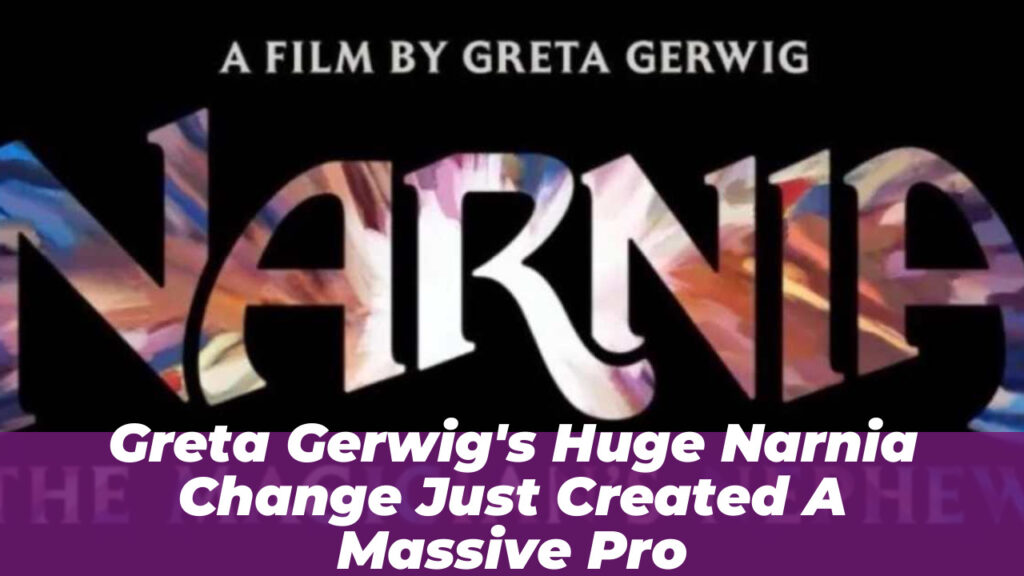
Analysis: The Narrative Friction of Gerwig’s Narnia Timeline Shift
As the February 12, 2027, release date for The Magician’s Nephew approaches, the discourse surrounding Greta Gerwig’s reimagining of C.S. Lewis’ The Chronicles of Narnia has shifted from casting curiosity to structural concern. By moving the franchise’s origin story from the turn of the 20th century to the 1950s, Gerwig has initiated a “domino effect” that threatens the established internal logic of the Pevensie children’s arc.
The Structural Conflict
In the traditional literary canon, the temporal distance between The Magician’s Nephew (early 1900s) and The Lion, the Witch and the Wardrobe (1940s) allows Digory Kirke to age into the elderly, scholarly Professor who serves as the children’s mentor.
By pulling the prequel forward to the 1950s, Gerwig creates a logistical paradox:
- The Aging Problem: If Digory Kirke is a child in the 1950s, he would be significantly younger than the Professor encountered by the Pevensies in the 1940s.
- The Historical Anchor: The Pevensies’ evacuation during the London Blitz is not merely a setting; it is a thematic necessity. The trauma of WWII provides the psychological foundation for their resilience and royalty in Narnia. Relocating their story to the 1960s or 70s to maintain chronological consistency would require a complete overhaul of their character motivations.
The “Stylistic Gamble” vs. Narrative Integrity
Gerwig’s pivot toward a 1960s/70s rock-inspired aesthetic suggests that Netflix is prioritizing a distinct, auteur-driven visual language over strict adherence to the source material’s mid-century historical grounding.
This creates a split in the potential audience experience:
- The “Aesthetic Success”: If the film succeeds as a self-contained, psychedelic fantasy, the timeline shift will be viewed as a bold, necessary trade-off for creative freedom.
- The “Cohesion Failure”: If the series fails to reconcile the Pevensies’ journey with this new timeline, the franchise risks feeling disjointed. The audience’s reception of Narnia will hinge on whether this aesthetic evolution feels like a betrayal or a breakthrough.
Industry Outlook
The industry is currently treating this as a high-stakes test of “franchise flexibility.” Netflix’s willingness to allow such a drastic departure suggests they are leaning into a “Reinvention Strategy.” As of September 2026, the question remains: Can a franchise anchored in 1950s rock-inspired origins successfully transition into the high-stakes wartime drama of the Pevensie era, or will the timeline shift leave the series feeling fundamentally unmoored from its roots? The answer will likely dictate the future of literary adaptations on streaming platforms for years to come.