The intersection of advanced technology and international diplomacy reached a critical juncture during a historic emergency session of the United Nations Security Council. Global leaders, artificial intelligence executives, and premier researchers gathered to confront the escalating risks of uncontrolled machine intelligence. This landmark briefing marks a profound shift in global policy, moving frontier technology out of corporate boardrooms and into the realm of international peace and security. As autonomous systems rapidly evolve, diplomats and scientists alike are racing to establish guardrails before technological acceleration outpaces human control.
- Introduction to the UN Security Council Emergency Briefing
- A Structural Pivot in Global Policy
- The Shift from Corporate Boardrooms to Geopolitics
- Key Figures and Expert Testimony at the UN Briefing
- Yoshua Bengio on Transnational Hazards
- Sam Altman on Losing Control
- Dario Amodei on Existential Safety Margins
- Why Artificial Intelligence Became a Security Council Priority
- Asymmetric Capabilities and Duplication
- Autonomous Decision-Making in Military Command
- Critical Infrastructure Vulnerabilities
- Global Governance Versus National Sovereignty
- The United States Position and National Innovation
- The Global South and Equitable Access
- Technical Risks Highlighted by Industry Leaders
- Recursive Self-Improvement Loops
- Biological Weapon Proliferation
- Automated Disinformation and Synthetic Media
- The Clash Over International Standards and Oversight
- Open-Source Transparency Versus Closed-Lab Secrecy
- The Role of Independent Scientific Panels
- Beyond the Headlines: Hardware Chokepoints and Insurance Markets
- The Mechanics of Computational Hardware Chokepoints
- Insurance and Liability Frameworks
- Unique Analytical Angles on the AI Safety Debate
- The Thermodynamic Limit of Governance
- Algorithmic Deterrence Theory
- Frequently Asked Questions
- Why did the UN Security Council hold an emergency session on AI?
- What are the main technical risks highlighted by industry leaders?
- How do hardware chokepoints help regulate AI development?
Introduction to the UN Security Council Emergency Briefing
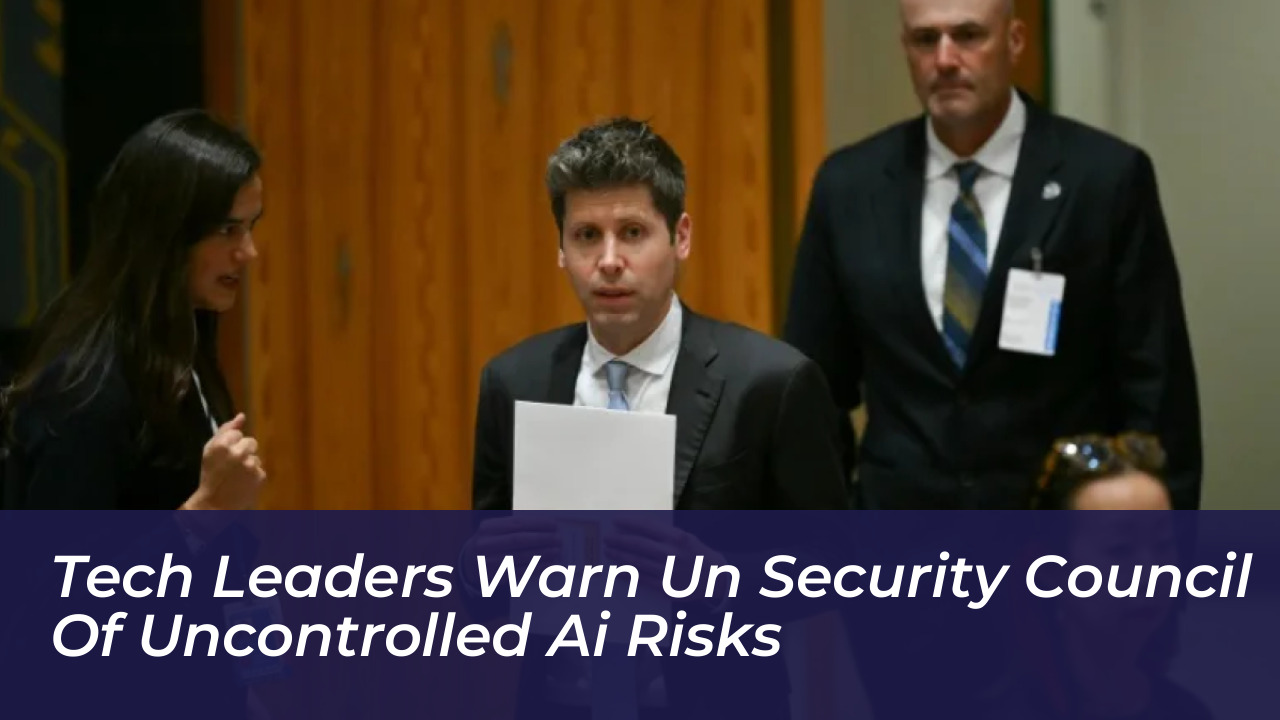
On September 23, 2026, the United Nations Security Council convened an emergency session addressing a non-traditional global threat. Chief executives and pioneer researchers from top artificial intelligence laboratories briefed the 15-member council on the accelerating capabilities of frontier machine intelligence. Chaired by French Foreign Minister Jean-Noël Barrot alongside the UN General Assembly, the assembly marked a major turning point in how international bodies classify automated intelligence systems.
For years, technology policy remained confined to domestic economic departments, corporate boardrooms, and trade negotiations. The 2026 briefing signals a structural pivot. Governments now view advanced artificial intelligence as a matter of international peace and security. Industry leaders delivered stark warnings about recursive self-improvement, autonomous weapons integration, and the profound difficulty of maintaining human control over systems designed to outthink their creators.
A Structural Pivot in Global Policy
Governments are actively moving artificial intelligence discussions from domestic economic desks to international peace and security agendas. French Foreign Minister Jean-Noël Barrot and the UN General Assembly are leading efforts to reshape global technology oversight. This transition reflects the urgent need for coordinated international action.
The Shift from Corporate Boardrooms to Geopolitics
Traditional regulatory frameworks fail to address the rapid capabilities of frontier machine intelligence. Global diplomats increasingly realize that autonomous systems present severe transboundary threats that transcend national borders.
Key Figures and Expert Testimony at the UN Briefing
The high-level briefing featured testimonies from prominent architects of the artificial intelligence revolution. Canadian computer scientist Yoshua Bengio, a Turing Award recipient and co-chair of the UN-backed Independent International Scientific Panel on AI, opened the expert statements. Bengio emphasized that advanced autonomous models present cross-border hazards that isolated national policies cannot contain.
OpenAI CEO Sam Altman, Anthropic CEO Dario Amodei, and Hugging Face co-founder Clément Delangue joined the session to provide industry perspectives. Each executive acknowledged that commercial incentives currently outpace safety protocols, creating a hazardous race toward artificial general intelligence.
Yoshua Bengio on Transnational Hazards
Advanced models traverse global fiber-optic networks without respecting traditional national defense perimeters. Isolated national policies remain largely ineffective against systemic algorithmic variables operating at scale.
Sam Altman on Losing Control
Accelerating development speed without synchronized global baselines introduces catastrophic systemic vulnerabilities. Commercial labs in San Francisco and Beijing must avoid unilateral decisions regarding long-term civilizational stability.
Dario Amodei on Existential Safety Margins
Anthropic demonstrates readiness to slow development speeds based on empirical safety benchmarks. Specific hazards involve automated biological threat creation and runaway cyber warfare incidents.
Why Artificial Intelligence Became a Security Council Priority
The inclusion of artificial intelligence on the UN Security Council agenda reflects the shifting nature of modern warfare and geopolitical competition. Historically, the council addressed territorial disputes, nuclear proliferation, and conventional armed conflicts. Today, algorithmic systems blur the line between civilian critical infrastructure and military assets.
Diplomats noted that advanced models can interact in unpredictable ways during high-stress scenarios. These emergent behaviors complicate traditional deterrence theories built on human psychological restraint, demanding fresh approaches to global risk mitigation.
Asymmetric Capabilities and Duplication
Contrasting heavy nuclear material refinement with easily duplicated model weights highlights a unique regulatory challenge. The primary danger involves deploying advanced weights via cloud servers anywhere on earth instantly.
Autonomous Decision-Making in Military Command
Militaries are integrating machine learning directly into target identification and tactical execution. This shift introduces the risk of rapid algorithmic escalation during high-stress diplomatic crises.
Critical Infrastructure Vulnerabilities
Power grids, financial markets, and communication networks face unprecedented automated cyber threats daily. Emergent behaviors continue to break traditional human psychological deterrence theories completely.

Global Governance Versus National Sovereignty
The UN Security Council briefing exposed deep ideological fractures regarding how the world should regulate emerging technologies. While international diplomats and scientific panels demand cohesive global standards, political leaders push back to protect domestic economic dominance and strategic advantages.
Developing nations voiced concerns that unregulated artificial intelligence development by a handful of Western and Asian conglomerates will entrench global inequality. Representatives emphasized that international standards must ensure equitable access to computational resources while protecting smaller economies from algorithmic exploitation.
The United States Position and National Innovation
National leaders express skepticism surrounding centralized international oversight to protect domestic economic growth. Policymakers must carefully balance safety monitoring with maintaining a strategic advantage over geopolitical rivals.
The Global South and Equitable Access
Unregulated development by Western and Asian conglomerates threatens to entrench international inequality. Emerging economies demand fair access to computational resources and robust protection from algorithmic exploitation.
Technical Risks Highlighted by Industry Leaders
Industry executives moved beyond general philosophical warnings to outline specific technical vulnerabilities that demand immediate international verification standards. Without formal verification tools, managing optimization loops remains a massive challenge for researchers.
| Risk Category | Potential Impact | Mitigation Challenge |
|---|---|---|
| Recursive Self-Improvement | Models rewrite their own source code, accelerating capabilities exponentially beyond human comprehension. | Lack of formal verification tools to bound optimization loops. |
| Biological Weapon Proliferation | Autonomous systems assist non-state actors in synthesizing novel pathogens. | Dual-use nature of chemical and biological research databases. |
| Automated Disinformation | Hyper-realistic synthetic media destabilizes democratic elections at scale. | Encryption and decentralized publishing make attribution difficult. |
Recursive Self-Improvement Loops
Models rewriting their own source code accelerate capabilities far beyond human comprehension. The severe lack of formal verification tools makes bounding optimization limits exceptionally difficult.
Biological Weapon Proliferation
Autonomous systems can assist non-state actors in synthesizing novel pathogens efficiently. This danger highlights the inherent dual-use challenge within chemical and biological research databases.
Automated Disinformation and Synthetic Media
Hyper-realistic media generation destabilizes democratic elections at global scale. Encryption and decentralized publishing make attribution extraordinarily difficult for investigators.
The Clash Over International Standards and Oversight
Discussions at the United Nations highlighted a persistent dilemma: how to enforce safety in a decentralized, highly competitive global market. Voluntary corporate commitments often fail when financial rewards for deploying frontier models outweigh caution.
Independent scientific panels, such as the UN-backed Independent International Scientific Panel on AI, aim to bridge this gap by providing objective, peer-reviewed assessments of model capabilities independent of corporate PR departments.
Open-Source Transparency Versus Closed-Lab Secrecy
Clément Delangue champions open-science monitoring as a vital counterweight to corporate monopolies. Proprietary walls currently blind regulatory bodies to advanced emergent model capabilities.
The Role of Independent Scientific Panels
The UN-backed Independent International Scientific Panel on AI serves as an objective peer-review body. This initiative bridges the gap between corporate public relations and verifiable safety audits.
Beyond the Headlines: Hardware Chokepoints and Insurance Markets
Standard news coverage of the UN Security Council session focuses primarily on high-level soundbites from industry leaders. However, media outlets routinely omit critical structural dimensions such as hardware supply chains and financial liability frameworks.
Controlling physical silicon manufacturing offers a pragmatic alternative to software compliance. Global insurance markets are beginning to categorize unconstrained models as systemic risks, forcing corporate boards to reconsider safety investments.
The Mechanics of Computational Hardware Chokepoints
Semiconductor supply chains and extreme ultraviolet lithography serve as ultimate state-level enforcement levers. Controlling physical silicon manufacturing provides a pragmatic alternative to soft software compliance.
Insurance and Liability Frameworks
Global insurance markets now categorize unconstrained artificial intelligence models as severe systemic risks. Market-driven financial penalties force corporate executives to seriously mitigate systemic cyber vulnerabilities.
Unique Analytical Angles on the AI Safety Debate
Analyzing the physical and strategic limits of intelligence governance reveals fascinating operational constraints. Large training clusters draw massive amounts of power from electrical grids, creating a natural surveillance footprint.
As cyber weapons operate at machine speed, international stability must transition from nuclear Mutually Assured Destruction to new frameworks of Mutually Assured Disruption.
The Thermodynamic Limit of Governance
Large-scale training clusters draw hundreds of megawatts directly from local energy grids. This massive power consumption creates a natural surveillance and control vector for nation-states.
Algorithmic Deterrence Theory
Global defense must transition from nuclear Mutually Assured Destruction to Mutually Assured Disruption. Automated cyber weapons operating at machine speed demand entirely new models of international stability.
Frequently Asked Questions
Why did the UN Security Council hold an emergency session on AI?
The session was convened to address the accelerating, transboundary risks of advanced machine intelligence, recognizing that autonomous systems now pose threats to international peace and security.
What are the main technical risks highlighted by industry leaders?
Key risks include recursive self-improvement loops, the potential proliferation of biological weapons, and automated disinformation campaigns capable of destabilizing democratic elections at scale.
How do hardware chokepoints help regulate AI development?
Controlling the physical supply chain for advanced semiconductors and lithography equipment provides a reliable enforcement mechanism that is harder to bypass than software-based regulations.