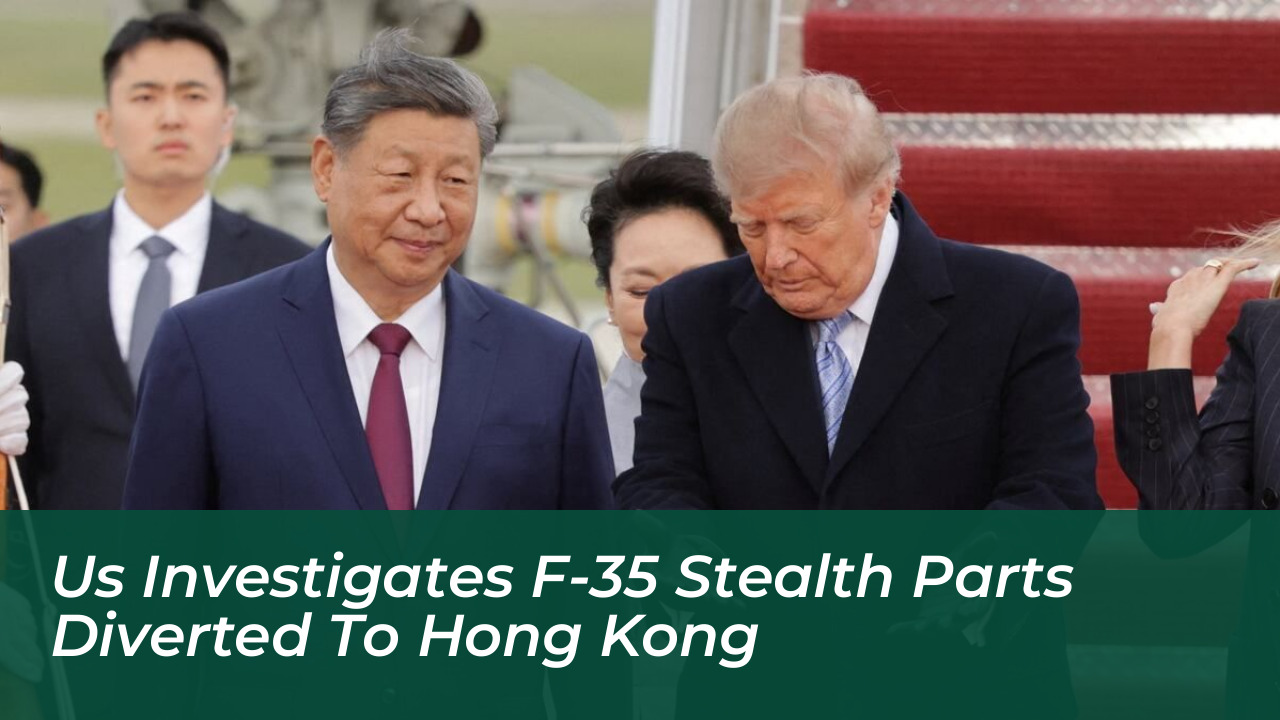
The global defense supply chain faces intense scrutiny following an unexplained logistics failure that routed sensitive F-35 Lightning II stealth fighter components to Hong Kong. Surfacing in September 2026, the incident involves high-value hardware equipped with radar-absorbing properties originally dispatched from Australia en route to the United States. Congressional committees, the Pentagon, and Australian defense officials have launched formal inquiries to determine how the cargo was redirected and whether classified military technology has fallen into unauthorized hands.
- Anatomy of the F-35 Supply Chain Diversion
- Why the Diverted Components Matter: Radar-Absorbing Technology
- Congressional Pressure and Oversight Hearings
- International Response: Australia and Lockheed Martin
- Historical Context of Espionage Targeting the F-35 Program
- Logistical Vulnerabilities in Global Defense Supply Chains
- Future Safeguards and Policy Recommendations
- Frequently Asked Questions
- How did F-35 parts end up in Hong Kong?
- What specific parts were diverted?
- Why are radar-absorbing materials a security risk?
This coalition investigation highlights deep-seated vulnerabilities in commercial defense logistics networks. When advanced military hardware travels through standard commercial freight channels, the risk of misrouting or interception multiplies exponentially. The primary thesis centers on the severe threat of reverse engineering, where the physical loss of stealth components allows foreign adversaries to study proprietary manufacturing techniques and bypass modern aerial defense advantages.
Anatomy of the F-35 Supply Chain Diversion
The logistical breakdown began in late May 2026 when a commercial freight shipment departed the F-35 Aircraft Sustainment Hub at Williamtown in New South Wales, Australia. Maintained by BAE Systems under the oversight of prime contractor Lockheed Martin, this facility acts as the primary regional distribution center for the Asia-Pacific F-35 fleet. It services aircraft operated by Australia, Singapore, Japan, and South Korea, alongside carrier-based assets deployed throughout the Indo-Pacific theater.

The cargo container held unserviceable components scheduled for evaluation, repair, or disposal within the United States. Official reports confirm that the manifest included a critical cockpit canopy and a weapons-bay door. While standard transport protocols rely on commercial logistics providers such as United Parcel Service to move spare parts through international hubs, this particular consignment deviated from its planned route during a transit stop in South Korea, ultimately landing in Hong Kong.
Months elapsed before defense officials acknowledged that the hardware was missing and unaccounted for within the territory. The F-35 Joint Program Office released a formal statement acknowledging a shipment issue with unserviceable components. They noted active collaboration with federal authorities and industry partners to locate the items, investigate the root cause, and implement robust safeguards.
Why the Diverted Components Matter: Radar-Absorbing Technology
Military analysts emphasize that not all aircraft spare parts carry strategic value. Routine components such as hydraulic seals or structural fasteners present minimal security risks if misplaced. However, the items aboard this specific flight represent critical vectors of the F-35 low-observable profile. The F-35 cockpit canopy features a specialized Radar-Absorbing Material coating designed to minimize the aircraft radar cross-section.
Uncoated aircraft cavities like cockpits act as natural radar traps, where electromagnetic waves enter, undergo multiple internal reflections, and return powerful signatures to hostile defense radars. The historical vulnerability of stealth platforms, such as the downing of an F-117 Nighthawk during the 1999 Kosovo conflict due to an open bomb-bay door, demonstrates the operational necessity of maintaining stealth material integrity.
Gaining physical access to an intact F-35 canopy and weapons-bay door provides foreign entities with a tangible asset for reverse engineering. Defense experts note that possessing physical hardware allows engineers to analyze chemical compositions, layer thicknesses, and manufacturing techniques, validating or refining existing intelligence gathered through historical cyber espionage.
Congressional Pressure and Oversight Hearings
News of the diversion triggered immediate alarm on Capitol Hill. The House Committee on Armed Services received multiple classified briefings from defense officials regarding the security implications of the incident. Committee investigators are focusing on the vulnerabilities inherent in commercial logistics networks used to transport sensitive military hardware.
Lawmakers have expressed frustration over ongoing inventory tracking deficiencies within the F-35 enterprise. For six consecutive years, the Pentagon Comptroller and Inspector General cited failures in tracking spare parts as a material weakness contributing to financial audit failures. A prior Government Accountability Office report from 2023 revealed that more than one million F-35 components went missing over a five-year window, highlighting chronic oversight challenges within Lockheed Martin inventory management framework.
International Response: Australia and Lockheed Martin
Australian defense leadership faced intense questioning from domestic media and parliamentarians following the disclosure. Deputy Prime Minister and Defence Minister Richard Marles confirmed that Canberra is cooperating fully with the United States and Lockheed Martin to investigate potential procedural breakdowns at the Australian departure point.
While Marles attempted to calm public concern by stating that the shipment consisted of unserviceable and non-sensitive equipment, independent defense analysts maintain that the presence of RAM-coated structures elevates the incident to a major security concern. Lockheed Martin issued a corporate statement declining to discuss the operational status of specific shipments due to security protocols, while emphasizing that corporate teams adhere to strict safeguards to protect allied supply chain integrity.
Historical Context of Espionage Targeting the F-35 Program
Foreign intelligence agencies maintain a long record of attempts to acquire F-35 design data. The Joint Strike Fighter program has remained a primary target for cyber espionage and intellectual property theft since its inception.
- 2007 Pentagon Breach: Chinese hackers penetrated contractor computer networks, extracting several terabytes of data relating to aircraft design and electronic warfare systems, though classified stealth data remained isolated on offline terminals.
- 2014 Su Bin Conviction: A Chinese national was convicted for orchestrating a multi-year conspiracy to steal engineering data on the F-22, F-35, and C-17 transport aircraft for transfer to state-owned defense enterprises.
- 2015 Snowden Leaks: Disclosed documents indicated that foreign intelligence operatives accessed extensive technical files covering F-35 radar configurations, engine schematics, and infrared exhaust-cooling methodologies.
These persistent security breaches have fueled continuous debate regarding the developmental similarities between American fifth-generation platforms and Chinese domestic aircraft, such as the Chengdu J-20 and the Shenyang J-35A. While state-owned manufacturer Aviation Industry Corporation of China maintains that the J-35A represents an independently developed stealth fighter powered by domestic WS-21 engines, Western intelligence agencies continue to monitor technology transfer vectors closely.
Logistical Vulnerabilities in Global Defense Supply Chains
The Hong Kong diversion exposes structural flaws in relying on commercial shipping lines to manage sensitive military freight. Unlike dedicated military transport fleets governed by chain-of-custody protocols managed directly by armed services personnel, commercial carriers manage massive global freight volumes where high-priority defense cargo shares transit lanes with consumer goods.
Supply chain security experts outline several systemic vulnerabilities in current military logistics:
- Intermediary Hand-Offs: Multiple third-party logistics providers often handle cargo across international borders, creating visibility gaps between origin hubs and final destinations.
- Customs Loopholes: Transshipment ports in jurisdictions with lax oversight routinely process transit containers without deep physical inspections, enabling cargo diversion.
- Manifest Mislabeling: Unserviceable or scrap components frequently receive vague descriptions on commercial export documentation, masking their true defense classification.
Future Safeguards and Policy Recommendations
Preventing future supply chain failures requires an overhaul of current Department of Defense transit protocols. The F-35 Joint Program Office must institute dedicated military-escorted transport for all depot-level repair shipments containing low-observable materials or structural components.
Eliminating commercial carrier usage for items containing classified materials or radar-absorbent coatings remains vital for future security. Extending end-to-end supply chain visibility from the factory floor directly to the final disposal facility will ensure that every critical part remains accounted for at all times.
Frequently Asked Questions
How did F-35 parts end up in Hong Kong?
The parts were dispatched from an Australian sustainment hub via commercial logistics providers. During a transit stop in South Korea, the cargo shipment deviated from its manifest schedule and arrived in Hong Kong due to tracking failures and intermediary handling oversights.
What specific parts were diverted?
Official reports confirm that the shipment included an unserviceable cockpit canopy and a weapons-bay door, both of which feature sensitive radar-absorbing material coatings.
Why are radar-absorbing materials a security risk?
Physical access to radar-absorbing components allows foreign entities to conduct chemical analysis, measure layer thicknesses, and perform reverse engineering, which can compromise the low-observable stealth profile of the aircraft.