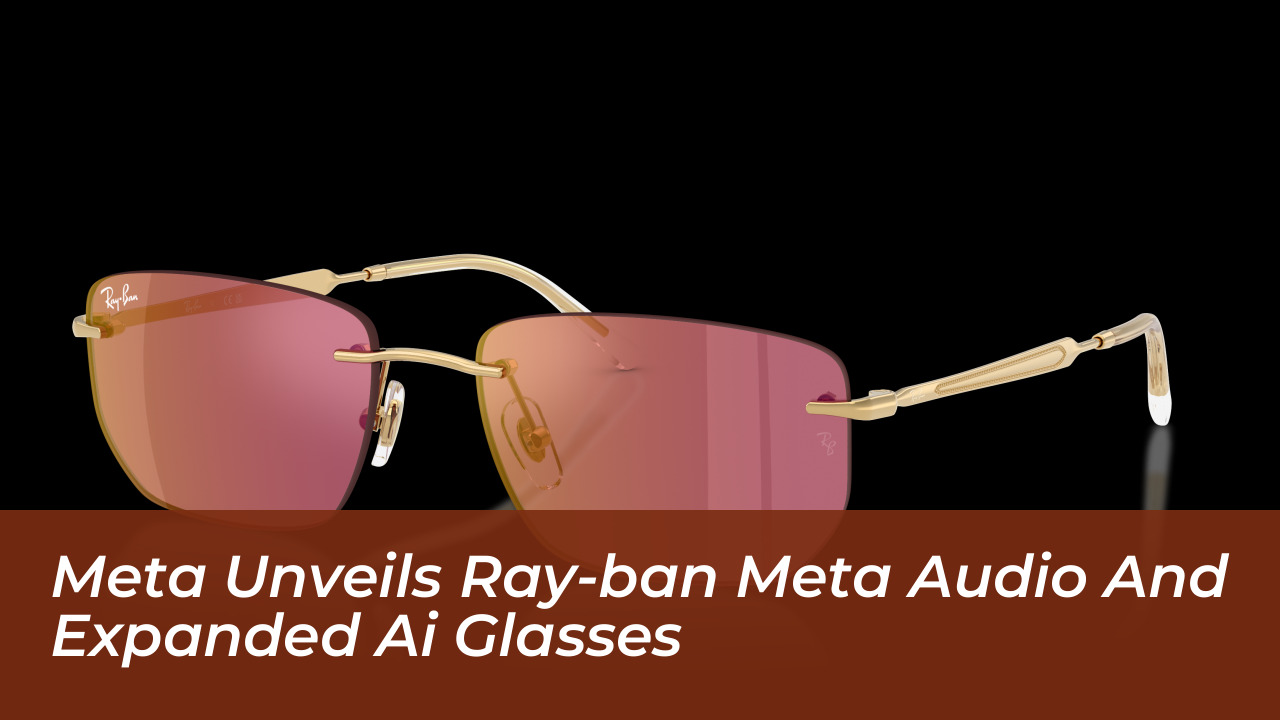
Meta introduced the Ray-Ban Meta Audio smart glasses during its annual Connect event on September 23, 2026, marking a significant evolution in wearable technology strategy. Developed in partnership with EssilorLuxottica, this release centers on a camera-free model designed to prioritize all-day comfort, extended battery metrics, and seamless audio integration. Alongside this device, Meta outlined plans to expand its total eyewear ecosystem to over 100 different style configurations across the Meta, Ray-Ban, and Oakley brands.
- Introduction to the New Ray-Ban Meta Audio Lineup
- Design and Ergonomic Engineering of Ray-Ban Meta Audio
- Dropping the Camera for a Lighter Physical Footprint
- Customizable Fit and Frame Variations
- Power Efficiency and Extended Battery Metrics
- Audio Integration and Privacy Dynamics
- Addressing Public Surveillance Concerns
- User Utility and Audio Dominance
- Accessibility Breakthrough: The Hearing Enhancement Feature
- Pricing, Availability, and Global Rollout
- Expansion of the Muse AI Assistant and Ecosystem
- Advanced Capabilities of Muse AI
- Ecosystem Synergies and Retail Partnerships
- Comparative Overview of Meta Smart Eyewear Options
- Strategic Outlook for Audio-First Wearables
- Frequently Asked Questions
- What is the weight of the Ray-Ban Meta Audio smart glasses?
- How long does the battery last on a single charge?
- Does the Ray-Ban Meta Audio include a built-in camera?
- How much does the audio-first smart glasses model cost?
Introduction to the New Ray-Ban Meta Audio Lineup
The wearable tech market is shifting away from bulky, feature-heavy gadgets toward streamlined everyday accessories. Meta recognized that a significant segment of consumers wants AI assistance and audio streaming without the social friction or legal concerns associated with wearable cameras. This realization led directly to the development of the camera-free Ray-Ban Meta Audio model.
By streamlining the internal components, the company targeted users who prioritize audio performance and conversational AI over visual capture. This hardware push diversifies the product portfolio, ensuring that buyers can choose a form factor that aligns with their specific daily routines and comfort preferences.
Market analysts note that removing the camera significantly lowers production costs while appealing to corporate offices and schools where cameras face strict bans. This strategic pivot opens doors to entirely new demographics who previously avoided smart glasses due to privacy apprehensions.
Design and Ergonomic Engineering of Ray-Ban Meta Audio
Dropping the Camera for a Lighter Physical Footprint
By omitting the camera hardware, engineering teams successfully reduced the physical footprint of the glasses. The Ray-Ban Meta Audio weighs a mere 43 grams, making it the lightest and slimmest smart spectacle in the Meta lineup to date. This compares favorably against older camera-equipped variants that typically hover around 50 grams or higher.
This reduction in mass directly impacts user comfort during extended wear sessions. Users no longer experience the nose bridge fatigue common with heavier electronics housed inside traditional acetate or metal frames.
Customizable Fit and Frame Variations
The device introduces customizable and ergonomic enhancements for all-day wear. Swappable and adjustable nose pads secure the glasses across various facial structures. Professional-adjustable temple tips ensure personalized pressure distribution behind the ears.
Overextension hinges improve durability and flexibility during daily handling. , the hardware launches in classic frame shapes, including Clubmaster and Burbank designs, with full support for prescription lenses.
EssilorLuxottica brings decades of optical expertise to ensure that structural modifications never compromise traditional eyewear aesthetics. Customers can walk into standard optical stores to fit prescription lenses directly into their smart frames.
Power Efficiency and Extended Battery Metrics
Battery performance remains a core focus for the 2026 eyewear lineup. The Ray-Ban Meta Audio delivers up to 12 hours of continuous audio playback, phone calls, and AI interactions on a single charge. This jump in longevity addresses one of the primary historical pain points of smart eyewear.
Additionally, the included portable charging case supplies an additional 48 hours of reserve power, ensuring multi-day autonomy for frequent travelers and active users. Users can drop the glasses into the case overnight and wake up to a fully restored power supply.
Fast-charging protocols embedded in the case achieve a 50 percent charge in just twenty minutes. This quick turnaround helps users stay connected even during hectic travel schedules where wall outlets remain scarce.
Audio Integration and Privacy Dynamics
Addressing Public Surveillance Concerns
The decision to drop the camera addresses growing public and regulatory scrutiny regarding unauthorized visual recording in public spaces. However, the removal of the camera introduces a nuanced privacy discussion. While visual capture is impossible, the device still records audio via its six-microphone array to support voice commands and phone calls.
Unlike camera-equipped smart glasses that feature a bright LED indicator light during active recording, the audio-only variant operates without a prominent visual tally light. Industry analysts note that while this design mitigates visual surveillance worries, questions regarding ambient audio capture and consent persist among privacy advocates.
Regulatory bodies continue reviewing audio-based wearables to establish clear boundaries for passive listening devices in public venues. Manufacturers must implement robust on-device data processing to ensure voice snippets are never stored without explicit user consent.
User Utility and Audio Dominance
Despite these ongoing public debates, internal usage data shows that audio streaming and voice communication remain the most frequently utilized functions among smart glasses owners. Users overwhelmingly rely on the built-in directional speakers for podcasts, music, and hands-free phone calls.
By optimizing the acoustic architecture, Meta ensures that audio delivery remains crisp and private. Sound leakage is minimized, allowing wearers to enjoy media in public transit or quiet office environments without disturbing people nearby.
Custom equalizer settings available in the companion mobile application let users fine-tune treble and bass profiles to match their personal listening preferences. This personalized audio tuning elevates the hardware from a simple notification tool into a primary media consumption device.
Accessibility Breakthrough: The Hearing Enhancement Feature
A major highlight of the 2026 Connect keynote is the introduction of the accessibility-focused Hearing Enhancement feature. Slated to roll out later this year, this software addition utilizes the glasses built-in directional microphones and six-speaker array to amplify surrounding dialogue for individuals with hearing impairments.
During live demonstrations in noisy environments, the feature successfully isolated conversation voices from background noise. Meta positions this capability as a cost-effective alternative to traditional medical hearing aids, which frequently exceed 800 dollars.
The company plans to offer Hearing Enhancement for a single fee of 150 US dollars or through a Meta One software subscription, complete with a 30-day free trial. This software-driven approach democratizes assistive audio technology for a broader consumer demographic.
Audio engineers collaborated closely with audiologists to ensure that sound amplification remains safe and distortion-free during sudden loud noises. This rigorous testing phase guarantees that users receive reliable auditory assistance in complex acoustic environments.
Pricing, Availability, and Global Rollout
The Ray-Ban Meta Audio carries a starting price of 349 US dollars, which translates to approximately 429 Canadian dollars. Official pre-orders opened immediately following the keynote presentation on September 23, 2026, with retail availability scheduled for October 13, 2026.
This price point positions the audio-first model 100 dollars below the standard camera-equipped Ray-Ban Meta variants. Such pricing creates an accessible entry point into AI-powered eyewear for budget-conscious consumers who prefer skipping built-in cameras.
Initial retail distribution includes major optical chains and online flagships across North America and Western Europe. Expansion into Asian markets is slated for early 2027 pending local telecommunication certifications.
Expansion of the Muse AI Assistant and Ecosystem
Advanced Capabilities of Muse AI
Meta is scaling its proprietary Muse AI assistant across the entire smart eyewear portfolio. Muse now serves as the primary conversational interface, moving beyond simple voice queries to incorporate computer-use capabilities.
Users can execute complex tasks via voice commands alone. The assistant handles tasks ranging from placing shopping orders to scheduling appointments and managing daily calendars completely hands-free.
Natural language processing models running on updated edge chips reduce latency to near-zero levels. Wearers experience fluid, conversational interactions that feel just like talking to a human companion standing right beside them.
Ecosystem Synergies and Retail Partnerships
Key ecosystem integrations announced at the event include direct connections with major retail and service platforms such as Walmart, Best Buy, and Gap. These partnerships allow users to interact with retail inventories directly through natural conversation.
, cross-device synergy links the glasses with newly announced hardware, including the 5G-enabled Meta Charm keyring gadget and upcoming virtual reality hardware slated for early 2027.
Unified user accounts allow seamless handoffs between smart glasses and desktop computing environments. A query started on the street using the glasses instantly syncs with home hubs upon arrival.
Comparative Overview of Meta Smart Eyewear Options
| Feature / Metric | Ray-Ban Meta Audio (2026) | Standard Ray-Ban Meta (Camera) |
|---|---|---|
| Camera Presence | None (Camera-Free) | Dual Camera Setup |
| Weight | 43 grams | 50+ grams |
| Battery Life (Single Charge) | Up to 12 Hours | Up to 4 Hours |
| Total Battery (With Case) | 60 Hours (12 + 48) | 36 Hours |
| Starting Price (US) | $349 | $449 |
| Release Date | October 13, 2026 | Available Now |
Strategic Outlook for Audio-First Wearables
By splitting the product lineup into camera-equipped and audio-first variants, Meta targets distinct consumer segments. The Ray-Ban Meta Audio directly competes with traditional audio accessories like premium wireless earbuds while offering advanced AI assistant utility.
As EssilorLuxottica and Meta scale their combined catalog past 100 frame variations by the end of 2026, lightweight smart eyewear transitions from a niche tech novelty into a mainstream consumer electronics category. This hardware diversification secures long-term market adoption across fashion and technology sectors alike.
Industry observers predict that audio-first wearables will outpace camera glasses in total shipment volume within the next two years. Consumer preference for privacy and prolonged battery life continues driving this monumental shift.
Frequently Asked Questions
What is the weight of the Ray-Ban Meta Audio smart glasses?
The camera-free Ray-Ban Meta Audio weighs a remarkably light 43 grams, offering enhanced all-day comfort.
How long does the battery last on a single charge?
The device delivers up to 12 hours of continuous audio playback, voice calls, and AI interactions.
Does the Ray-Ban Meta Audio include a built-in camera?
No, this model is completely camera-free to prioritize privacy, reduce weight, and extend battery metrics.
How much does the audio-first smart glasses model cost?
The starting price is 349 US dollars, sitting 100 dollars below the standard camera variant.