Meta Connect 2026 introduced a major shift in wearable technology, moving away from heavy face-mounted headsets toward lightweight eyewear and modular architectures. This comprehensive hardware refresh aims to redefine how consumers interact with digital content by combining ergonomic design with advanced spatial computing. The introduction of these devices addresses the core limitations of past generations, offering fresh solutions for daily productivity and entertainment.
- Engineering the 100-Gram Meta VR Glasses
- Two-Part Architecture and Weight Distribution
- Qualcomm Snapdragon Reality Elite and Display Tech
- Entertainment and Productivity Capabilities
- Cinematic and Streaming Partnerships
- Professional Workflows and Spatial Computing
- Ray-Ban Meta Audio: Solving the Privacy Backlash
- Camera-Free Audio Design
- Gen 3 Smart Glasses and Global Expansion
- Key Upgrades in Gen 3 Camera Models
- Global Market Expansion
- Pricing, Availability, and Market Outlook
- Frequently Asked Questions
- Are the new Meta VR glasses completely wireless?
- Can the Ray-Ban Meta Audio glasses take photos?
- What is the battery life of the Ray-Ban Meta Audio model?
- Which countries receive the Gen 3 smart glasses first?
CEO Mark Zuckerberg detailed devices designed to solve ergonomic, thermal, and privacy challenges that previously limited long-term consumer adoption. By separating processing power from display optics, Meta created a hardware ecosystem that prioritizes comfort without sacrificing computational muscle.
Engineering the 100-Gram Meta VR Glasses
Traditional VR headsets place heavy batteries and processors directly against the face, causing neck strain during extended work or entertainment sessions. These bulky designs often resulted in physical fatigue after just thirty minutes of use. Meta tackled this issue by completely rethinking weight distribution and thermal management.
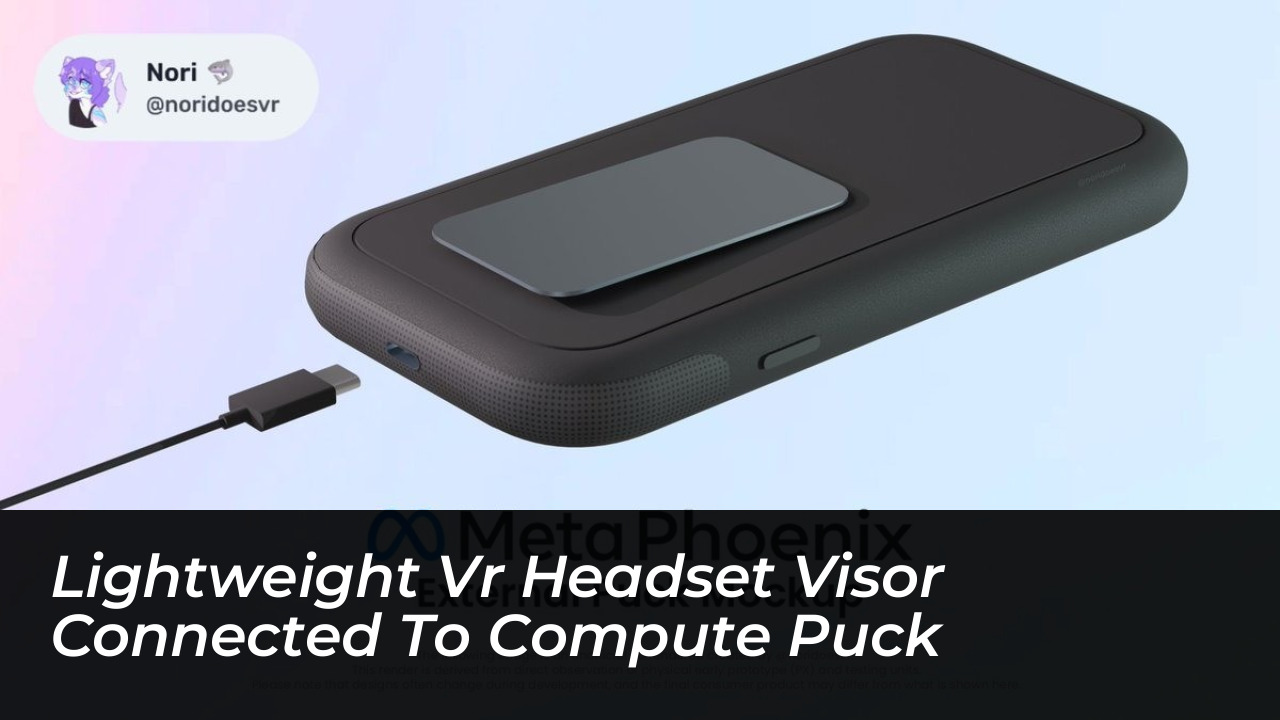
The new architecture splits the heavy lifting into two distinct components. This division allows the display unit to remain featherlight while housing the demanding hardware safely away from sensitive facial skin.
Two-Part Architecture and Weight Distribution
- Magnesium-alloy visor weighing only 100 grams, resting comfortably without top headstraps.
- Thin fiber-optic cable tethering the display to a 300-gram pocketable compute puck.
- Puck houses thermal management components and main processors, keeping heat away from the eyes.
- Engineered balance points eliminate facial pressure marks during marathon usage periods.
- Enhanced tether flexibility allows unrestricted head movement in compact environments.
Qualcomm Snapdragon Reality Elite and Display Tech
- Compute puck powered by the Qualcomm Snapdragon Reality Elite chipset, 12GB of RAM, and 128GB of storage.
- Dual 120Hz micro-OLED panels delivering 5K total resolution with 37 pixels per degree.
- Field of view spanning 70 degrees horizontal by 66 degrees vertical with full-color pass-through cameras.
- Four-camera eye tracking and advanced hand-gesture recognition replacing physical controllers.
- Advanced foveated rendering significantly boosts graphical performance while preserving battery life.
Entertainment and Productivity Capabilities
Meta positioned the new VR hardware as a versatile entertainment hub and private workstation rather than a pure gaming console. Users can seamlessly transition from high-octane gaming to immersive cinematic viewing within seconds. The integration of advanced spatial audio further enhances these experiences.
Professional applications receive a massive boost through multi-monitor setups that operate entirely in virtual space. Office workers no longer need physical multiple screens when traveling or working from compact home offices.
Cinematic and Streaming Partnerships
- First IMAX Enhanced certified virtual reality device supporting 3D movies and Dolby Atmos spatial audio.
- Disney+ integration offering 3D streaming inside immersive themed environments like Tatooine and Avengers Tower.
- ESPN and TNT Sports providing access to over 100 live sports events annually in 8K streams.
- Custom acoustic profiling matches audio delivery to individual ear canal geometry for supreme clarity.
- Offline caching options let users download heavy IMAX files directly to internal storage.
Professional Workflows and Spatial Computing
- Generation of multiple resizable virtual monitor screens in any physical workspace.
- Virtual keyboard and touchpad functionality utilizing hand-tracking on flat desk surfaces.
- Hologram Calling projecting photorealistic digital avatars for real-time video conferences across Zoom and WhatsApp.
- Enterprise security protocols safeguard sensitive corporate documents inside encrypted virtual containers.
- Real-time translation overlays convert foreign speech into floating subtitles during international business calls.
Ray-Ban Meta Audio: Solving the Privacy Backlash
Public scrutiny and regulatory pushback regarding camera-equipped wearables prompted Meta to release a privacy-first variant. Many consumers and businesses hesitated to adopt smart glasses due to unauthorized recording concerns in sensitive areas like gyms, offices, and private venues. This audio-only model provides the convenience of smart accessories without the recording hardware.
By removing the camera lenses entirely, Meta opens up new markets where recording devices are strictly prohibited. Users gain continuous access to voice assistants, phone calls, and media streaming while maintaining complete social transparency.
Camera-Free Audio Design
- Total removal of photographic and video recording hardware to address surveillance concerns.
- Lightweight 43-gram frame profile available in 23 distinct retro and modern styles like Clubmaster and Burbank.
- Battery performance delivering up to 12 hours of continuous audio playback, extending to 48 hours with the charging case.
- Open-ear directional speakers direct sound inward to the user while keeping surrounding conversations private.
- IPX4 water-resistance rating ensures reliable performance during sweaty workouts or unexpected light rain.
Gen 3 Smart Glasses and Global Expansion
For consumers prioritizing capture capabilities, Meta updated its flagship lineup with improved optics and international availability. Creators and tech enthusiasts will find substantial hardware upgrades in these latest camera-enabled variants.
Global availability marks a major milestone for Meta as regulatory approval clears the path for broader international distribution. Users outside the United States can finally access advanced heads-up display features.
Key Upgrades in Gen 3 Camera Models
- 12-megapixel sensors supporting 3K Dolby Atmos video capture.
- Six-microphone array isolating voice commands and reducing background wind noise.
- Integrated software features amplifying ambient speech for individuals requiring hearing assistance.
- Extended battery life reaching up to nine hours of continuous operation.
- Smart stabilization algorithms eliminate jitter from fast-paced action shots.
Global Market Expansion
- Display-equipped smart glasses officially launching in the UK, Canada, France, Germany, and Italy.
- Localized voice models support native dialect recognition across diverse European regions.
- Partnerships with regional optical chains provide custom prescription lens fitting at retail locations.
- Regulatory compliance teams secured expedited approval for public usage in major metropolitan zones.
- Dedicated regional support centers ensure rapid warranty servicing for international buyers.
Pricing, Availability, and Market Outlook
Meta established clear pricing tiers across consumer categories to target distinct user segments upon release. These varied price points ensure accessibility for casual audio listeners while serving enterprise spatial computing professionals.
| Device Model | Key Feature | Price (USD Equivalent) | Release Date |
|---|---|---|---|
| Meta VR Glasses | 100g visor, compute puck, 5K micro-OLED | $1,299.99 | Spring 2027 |
| Ray-Ban Meta Audio | Camera-free, 12-hour battery life | $349.00 | October 2026 |
| Ray-Ban Meta Gen 3 | 12MP camera, 3K Dolby Atmos video | $449.00 – $579.00 | Available Now |
| Meta Display Smart Glasses | Integrated right-lens virtual display | ~$950.00 – $1,150.00 | Rolling out globally |
This diverse hardware portfolio positions Meta strongly against emerging competitors in the mixed reality and wearable technology sector. The strategic blend of privacy-focused audio frames, updated capture glasses, and lightweight spatial visors ensures broad market penetration across multiple demographics.
Frequently Asked Questions
Are the new Meta VR glasses completely wireless?
The display visor connects via a thin fiber-optic cable to a pocketable compute puck that manages processing and power.
Can the Ray-Ban Meta Audio glasses take photos?
This specific model removes all cameras and recording hardware to comply with strict privacy policies in sensitive locations.
What is the battery life of the Ray-Ban Meta Audio model?
The frames offer up to 12 hours of continuous audio playback, which extends to 48 hours using the included charging case.
Which countries receive the Gen 3 smart glasses first?
Initial global rollout includes the United Kingdom, Canada, France, Germany, and Italy alongside continued US availability.