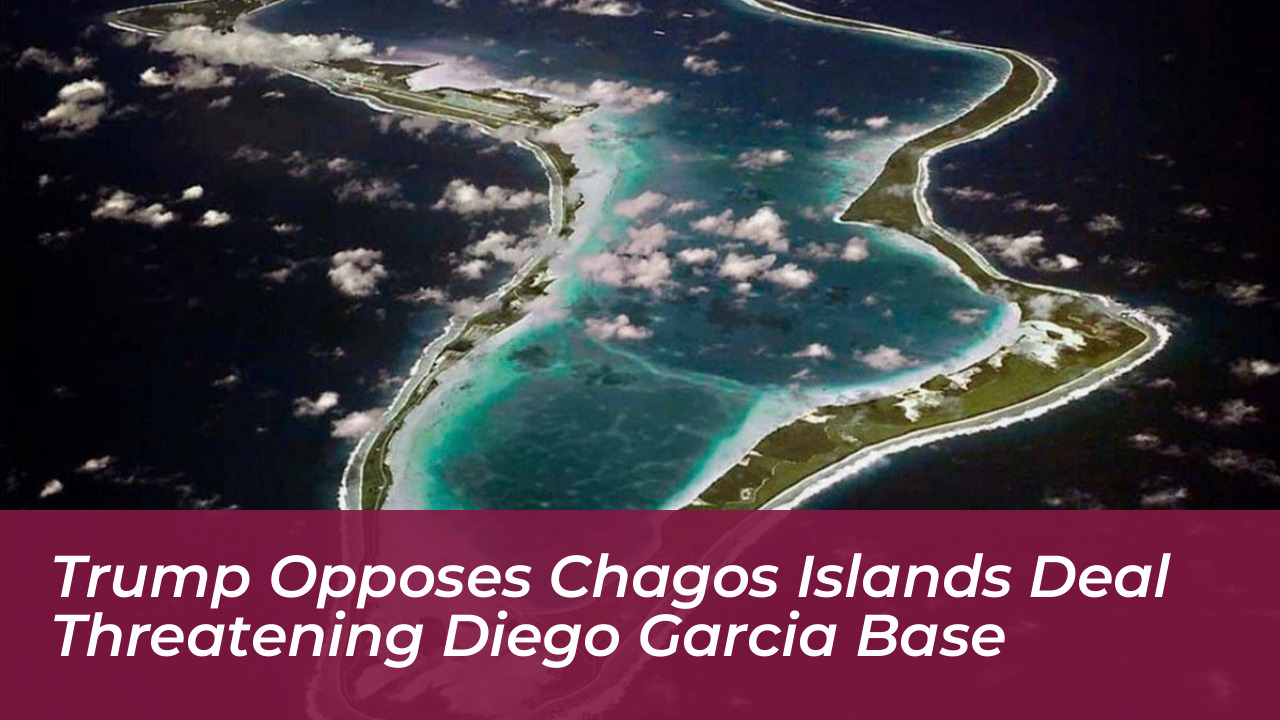
Diplomatic tension is rising after Donald Trump criticized the proposed transfer of the Chagos Islands from the UK to Mauritius. This standoff escalated during a meeting between Trump and British Prime Minister Keir Starmer at the United Nations General Assembly. Trump labeled the agreement a mistake, pausing momentum on a treaty that had faced intense domestic scrutiny. The dispute centers on Diego Garcia, the largest atoll in the archipelago, which serves as a vital joint UK-US military base. While past leaders championed the treaty to resolve legal challenges, American opposition has frozen the multi-billion-dollar deal and put the future of the base into serious question.
- The Chagos Islands Impasse and Trump’s Intervention
- The UN General Assembly Standoff
- Freezing British Financial Commitments
- Strategic Significance of Diego Garcia in Modern Defense
- A Critical Indo-Pacific Power-Projection Hub
- Geopolitical Anxiety Over Beijing Influence
- Financial Architecture and Lease Commitments of the Treaty
- Multi-Decade Expenditure Breakdown
- Parliamentary Skepticism and Fiscal Reality
- Legal and Humanitarian Dimensions Concerning the Chagossian Population
- Historical Displacement and Legal Challenges
- The £40 Million Trust Fund and Exclusion of Resettlement
- Diplomatic Fallout and Future Outlook for UK Foreign Policy
- The 1966 Bilateral Defense Agreement Barrier
- Navigating the Stalemate
- Frequently Asked Questions
- Why does the United States oppose the Chagos Islands deal?
- What happens to the financial payments promised to Mauritius?
- Can the UK proceed with the treaty without US approval?
The Chagos Islands Impasse and Trump’s Intervention
The UN General Assembly Standoff
The diplomatic collision occurred directly during talks between Donald Trump and Prime Minister Keir Starmer. Trump did not mince words regarding the proposed sovereignty transfer, branding it as a dangerous miscalculation that undermines Western defense posture in the Indian Ocean. By openly opposing the handover, the former US president immediately reversed the diplomatic momentum that had sustained the treaty through initial hurdles.
This intervention caught Downing Street completely off guard. British ministers previously operated under the assumption that Washington viewed the sovereignty transfer as a pragmatic compromise to satisfy the International Court of Justice. Trump’s vocal pushback transformed the issue into a major trans-Atlantic flashpoint, leaving British leadership scrambling to reassess their strategic commitments.
Freezing British Financial Commitments
The immediate domestic fallout materialized swiftly when Defense Secretary Wes Streeting confirmed the suspension of financial transfers intended for Port Louis. This freeze includes the initial £120 million package currently on hold pending clear American approval. British fiscal authorities recognize the legal reality that without explicit Washington endorsement, the entire handover framework remains stalled indefinitely.
Prime Minister Starmer now faces a delicate balancing act. He must manage relations with a resistant White House while responding to intense pressure from Mauritian officials who demand the immediate implementation of the ratified treaty. Downing Street cannot disburse funds or finalize administrative transfers without violating the operational parameters of joint defense agreements.
Strategic Significance of Diego Garcia in Modern Defense
A Critical Indo-Pacific Power-Projection Hub
Diego Garcia remains one of the most critical power-projection platforms for Western military operations across the Indo-Pacific and Middle Eastern regions. The isolated atoll features an extensive airfield capable of accommodating heavy long-range bombers, deep-water port facilities for carrier strike groups, and advanced electronic surveillance arrays. Recent regional conflicts have highlighted the absolute necessity of uncompromised military access for Anglo-American forces.
During strategic deterrence and strike missions targeting hostile regional assets, aircraft stationed at Diego Garcia provided vital refueling and logistical support. Military planners maintain that any alteration to the legal status of the island risks introducing administrative vulnerabilities that adversarial states could easily exploit.
Geopolitical Anxiety Over Beijing Influence
A primary driver of American opposition stems from Mauritius cultivating deep economic and diplomatic ties with China. Washington and London critics express profound fear that future Mauritian administrations could yield to external economic pressure, potentially restricting allied military access or allowing foreign intelligence collection near sensitive Anglo-American defense installations.
Allowing a third-party state with close ties to Beijing to hold nominal sovereignty over an archipelago hosting top-secret military infrastructure represents an unacceptable risk to Western defense analysts. The strategic anxiety over potential intelligence leaks or restricted access makes bipartisan American opposition nearly insurmountable.
Financial Architecture and Lease Commitments of the Treaty
Multi-Decade Expenditure Breakdown
The financial architecture of the Chagos Islands agreement involves substantial multi-decade expenditures funded directly by British taxpayers. Under the terms negotiated previously, the UK agreed to transfer full sovereignty of the archipelago to Mauritius while leasing back the military installations on Diego Garcia for an initial duration of 99 years. The fiscal schedule outlines significant upfront costs designed to appease the Mauritian government and settle historical grievances.
| Timeline Phase | Annual Financial Commitment | Key Conditions |
|---|---|---|
| Years 1 to 3 | £165 million annually | Upfront payments to satisfy immediate Mauritian demands. |
| Years 4 to 13 | £120 million annually | Interim reduction subject to treaty milestones. |
| Year 14 Onward | Variable (Inflation-linked) | Long-term adjustments pushing total nominal costs past £3.4 billion. |
Independent fiscal analysts suggest that inflation adjustments over the 99-year lifespan could push total expenditures past the £34 billion mark. These enormous financial obligations have drawn fierce criticism from lawmakers who question the logic of paying billions for territory the UK previously controlled without encumbrance.
Parliamentary Skepticism and Fiscal Reality
Criticism from lawmakers continues to mount regarding massive financial liabilities tied to the treaty. Independent economic forecasts highlight significant inflation risks embedded within the multi-decade payment schedule. Committing public funds to a foreign power for legacy military access creates a politically volatile situation in Parliament.
Lawmakers argue that the fiscal burdens outweigh the diplomatic benefits, especially given the lack of secure guarantees regarding long-term base stability. The freezing of funds by Defense Secretary Wes Streeting reflects this growing domestic skepticism.
Legal and Humanitarian Dimensions Concerning the Chagossian Population
Historical Displacement and Legal Challenges
Beyond geopolitical calculations, the Chagos controversy involves significant human rights issues stemming from the displacement of the native Chagossian population during the late 1960s and early 1970s. Britain forcibly removed approximately 2,000 residents from the archipelago to clear the islands for the construction of the military base, relocating them primarily to Mauritius, the Seychelles, and Crawley in the UK.
Mauritius leveraged international legal forums, including an advisory opinion from the International Court of Justice, to successfully challenge British administration of the islands. This legal pressure formed the primary justification used by previous British administrations to pursue the sovereignty transfer.
The £40 Million Trust Fund and Exclusion of Resettlement
The proposed treaty includes a £40 million trust fund designed to support displaced islanders in Mauritius, the Seychelles, and Crawley. However, community leaders face deep frustration because the treaty explicitly prohibits the resettlement of Diego Garcia, leaving displaced residents and their descendants sidelined in negotiations.
Many Chagossian activists argue that financial compensation fails to replace their fundamental right of return to their homeland. The exclusion of resettlement rights remains a major point of contention for humanitarian groups monitoring the treaty negotiations.
Diplomatic Fallout and Future Outlook for UK Foreign Policy
The 1966 Bilateral Defense Agreement Barrier
A critical legal constraint requires formal American consent under the 1966 defense pact governing joint base usage on Diego Garcia. Prime Minister Starmer finds himself caught between a resistant White House and Mauritian demands for immediate treaty implementation. Moving forward without American support violates the foundational premise of the security arrangements governing the base.
Diplomatic channels remain active as British officials attempt to restructure the agreement to satisfy American security anxieties without triggering a walkout from Port Louis. However, the hardline stance from the Trump administration complicates every proposed compromise.
Navigating the Stalemate
Navigating this diplomatic stalemate requires immense skill from current British foreign policy architects. Abandoning the treaty entirely risks severe diplomatic friction with Mauritius, which threatens renewed legal action in international courts. Conversely, ignoring Washington’s security concerns damages the special relationship and threatens the operational integrity of Diego Garcia.
This situation establishes a profound precedent for how sovereign states manage legacy colonial territories during an era of intense great power competition.
Frequently Asked Questions
Why does the United States oppose the Chagos Islands deal?
The United States opposes the deal due to severe security risks tied to Mauritian economic ties with China. Washington fears potential vulnerabilities for the Diego Garcia military base if a nation with close ties to Beijing holds sovereignty over the surrounding archipelago.
What happens to the financial payments promised to Mauritius?
All financial payments promised to Mauritius, including the initial £120 million package, remain entirely frozen until the diplomatic impasse with Washington is fully resolved by the British government.
Can the UK proceed with the treaty without US approval?
No. A legally binding 1966 bilateral defense agreement governs the joint use of Diego Garcia, making explicit American consent mandatory for any modification to the sovereignty or administration of the territory.