

Hearing “DIY curtains” might sound like a complicated project – but honestly? It’s one of the most budget‑friendly and satisfying ways to transform a room. And I can say this with full confidence because I’ve seen so many people walk out of stores heartbroken. Either the size doesn’t fit, the fabric looks good, but the price touches the sky, or the design is just boring and doesn’t give that “expensive look”.
That’s where DIY curtain ideas become magic. Whether you’ve never touched a needle or you already sew well, I’ll walk you through step‑by‑step techniques that let you create custom window treatments on a budget – exactly to your taste, with materials you actually like. And yes, you’ll be surprised how easy it is.
In this guide, we stay practical. Material hacks, common mistakes, hardware alternatives, no‑sew methods – everything covered. Plus, the FAQs that are probably already on your mind. So, let’s pull aside those old drapes and get started.
The Real Cost of Ready‑Made Curtains – And Why DIY Changes Everything,

If you’ve ever bought ready‑made curtains, you’ve noticed a single panel can cost anywhere from $20 to over $100. But what’s actually hiding behind that price tag?
What you’re really paying for – cheap fabric, size limits, and trend markups
Most “designer look” curtains are mediocre polyester that loses shape after a few washes. Standard panels come in 54‑inch width and 84- or 96-inch length. But your windows? They rarely fit those box sizes.
So, people either buy too long curtains and pay extra alterations, or they live with an unsatisfactory fit. On top of that, whatever is trending – like pinch pleats or heavy linen drape – gets a huge premium even though the actual cost isn’t that high.
How DIY custom curtains solve the “one size fits none” problem
When you make curtains at home, you design everything exactly to your window’s dimensions. Height, width, header style, drape – everything under your control. And material cost? Usually not even one‑third of the market price if you source wisely. Plus, you get to use whatever fabric you love – bedsheets, drop cloths, or even that old cotton cloth from your grandma’s closet. Customization like this? Ready‑made will never give you that.
What You Need Before Starting – Tools, Fabric Calculation & Workspace Prep
Take a moment before jumping in. Good preparation saves headaches later.
Beginner’s Tool Kit (Absolutely No Sewing Machine Needed)
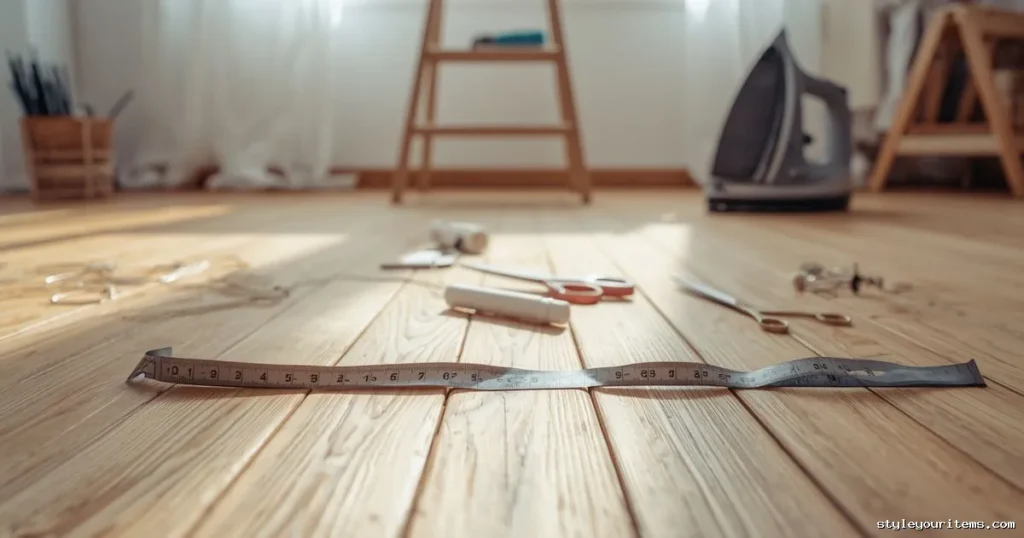
First, forget the fear of machines. At minimum, you’ll need:
- Measuring tape (metal one is more precise than cloth tape)
- Good scissors (fabric shears are best, but regular scissors work – just keep them separate for fabric)
- Iron and ironing board (this is the soul of no‑sew projects)
- Fabric chalk or washable marker
- Pins or clips (to hold fabric in place)
- Step ladder or sturdy chair
- Safety goggles (if cutting any hardware)
Pro Tip: Both steam and dry settings on your iron will be useful. For fusible tape, dry heat works better.
How to Take Correct Window Measurements – So Curtains Actually Fit
This is where most people mess up. First decision: where will your curtain rod go – outside the window frame, inside the frame, or close to the ceiling? I always recommend installing the rod 4‑6 inches above the window frame and extending at least 6‑8 inches past each side. This makes the window look bigger and gives curtains room to hang properly.
Width & Length Formulas for Different Header Styles
- Rod pocket or back tab: Fabric width should be at least 1.5 to 2 times your window width. For full drapes, go up to 2.5x.
- Length calculation: Take measurement from rod position down to floor + top hem (4 inches) + bottom hem (4‑8 inches, double fold). For a floor‑kiss look, finish 1 cm above the floor to avoid dragging.
- Grommet or ring top: Extra heading allowance (usually 4 inches) needed so fabric stands above the rings.
Choosing the Right Fabric Weight & Drape on a Tight Budget
Not every fabric works for every style. General rule:
- Lightweight (cotton voile, sheer linen): Best for airy looks, but you’ll need lining for privacy. Manageable for no‑sew.
- Medium weight (cotton duck, linen blends, light canvas): Very versatile. Drapes naturally and works for most DIY styles.
- Heavy weight (velvet, upholstery fabric): Looks gorgeous but beginners should stay away – the weight can stress no‑sew tape.
Important: Always pre‑wash fabric before cutting. New fabric shrinks. If you don’t pre‑shrink, your curtains will become uneven after the first wash.
No‑Sew Curtain Ideas You Can Finish in One Afternoon
Now let’s get into actual projects. These require no needle and thread.
Iron‑On Tape Hemming – Fastest Rod Pocket or Tab Top Curtains
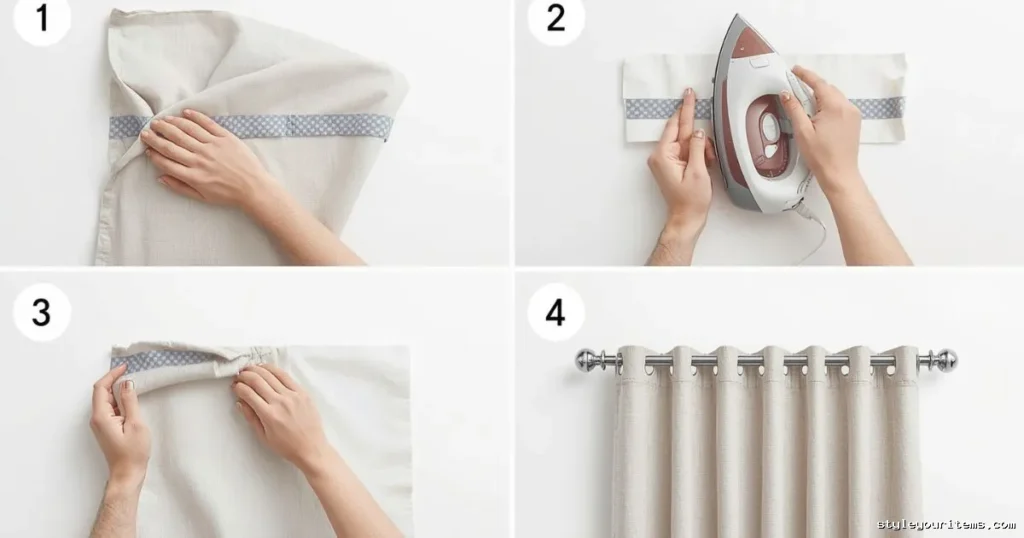
Fusible bonding web (like Heat n Bond) turns curtain making into child’s play. All you need is fabric, iron‑on tape, and an iron to make a double‑fold hem – with a clean finish.
Step‑by‑Step – A Hem That Won’t Open
- Lay fabric wrong side up. Make first fold (e.g., 1 inch or 0.5 inch). Press.
- Place iron‑on tape inside that fold (cut tape slightly shorter than the fold).
- Now make the second fold so the raw edge is completely hidden. With steam off and medium‑high heat, place iron on the tape area for 8‑10 seconds. Don’t move the iron.
- Let cool, then check if it’s firmly fused. If not, press 2 more seconds.
You can make a rod pocket the same way – just leave space for the rod. For tab tops, fold a 4‑inch strip, fuse with tape, then make smaller strips and attach them to the top using tape.
Ring Clips & Raw Edges – The Linen‑Curtain Look Without a Single Stitch
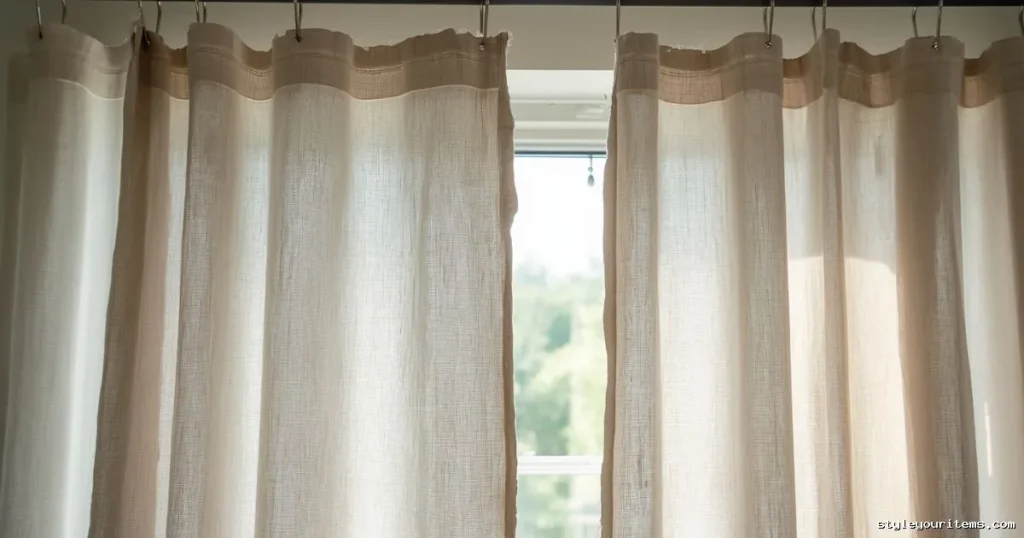
Love that effortless, casual elegance with slightly frayed edges? This is for you. Take any medium‑weight cotton or linen blend (drop cloth works beautifully). Cut to your calculated width and length. Apply fray‑stop liquid (available at any sewing store) along the raw edges with a small brush. Let dry. Then clip ring clips every 6‑8 inches along the top edge. Slide rings onto the rod – done.
This style is modern and forgiving. If fabric shrinks later, you can easily adjust the clips.
Adhesive Velcro & Tension Rods – Rental‑Friendly “Faux Roman” Shades
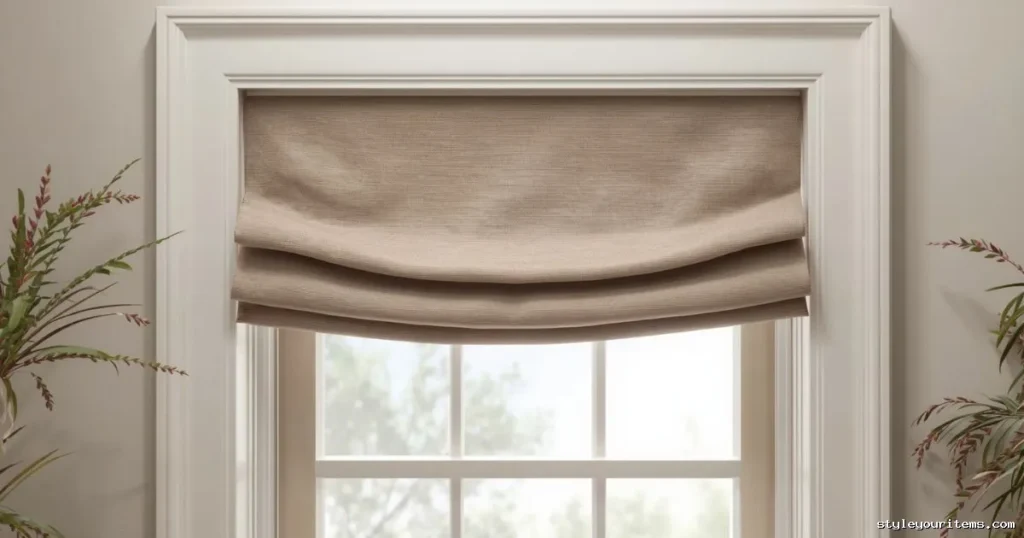
Renting? Can’t drill? Use a tension rod inside the window frame. Take lightweight fabric (canvas for larger windows, cotton for smaller). Keep length a bit longer than needed. Attach the soft side (loop) of adhesive‑backed Velcro to the top edge.
Wrap fabric over the tension rod and secure with the hook side of Velcro. Now you can fold the fabric like a Roman shade – no rings or cords needed. When you want it up, just fold neatly and tie with a ribbon or use Velcro. Instant facelift.
Easy Sew Curtain Projects (When You’re Ready to Use a Machine)
If you have a basic sewing machine and can sew a straight line, these projects will give you tailor‑made results.
Fold‑Over Panel Curtain – Just One Straight Stitch, Endless Style
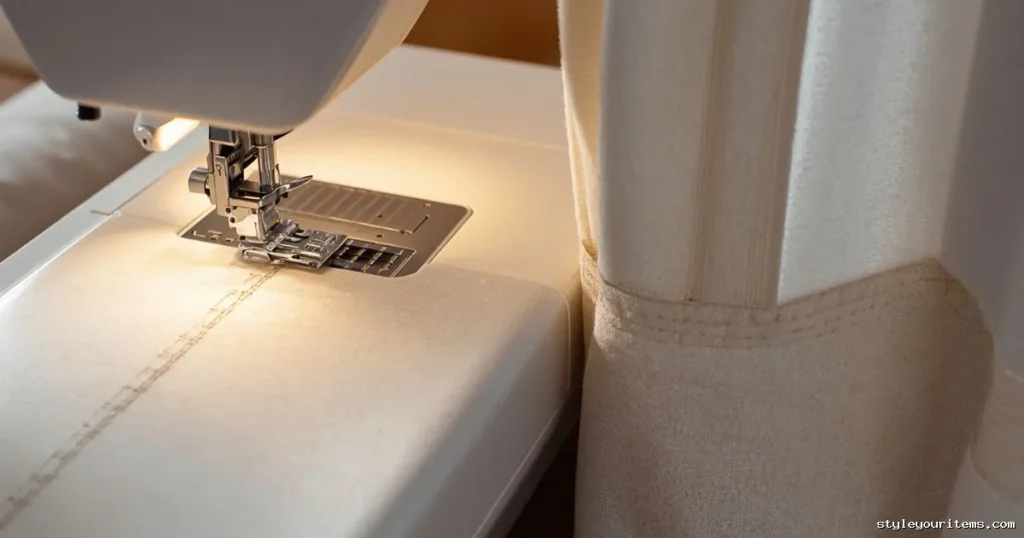
This is the easiest version of a rod pocket. Cut fabric to your calculated length. Fold the top edge 4‑5 inches and press. Sew one straight line across, leaving room for the rod. Done. But the stylish twist: leave the folded edge above the rod to create a contrast cuff.
Grommet Curtains Without a Grommet Press
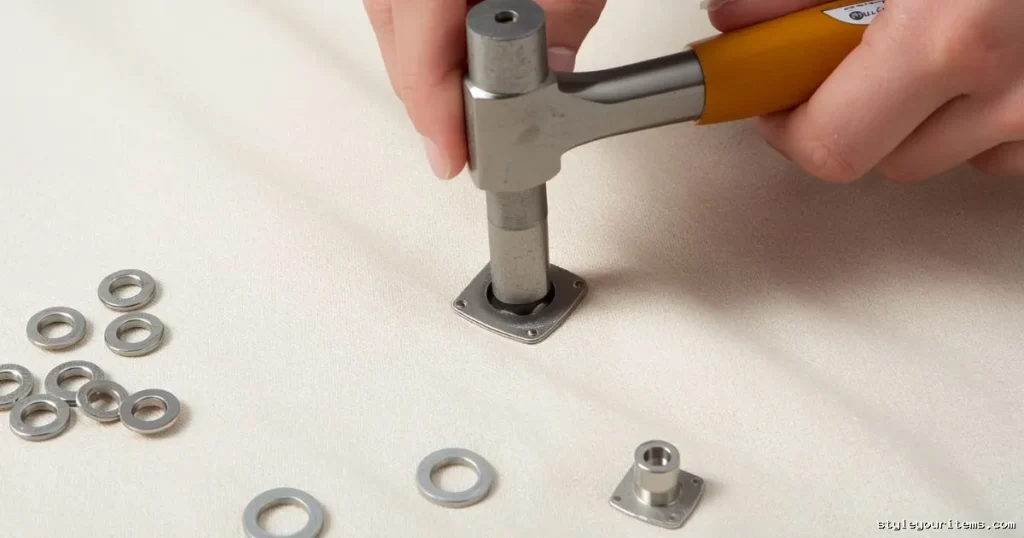
Grommet presses are expensive. But you can do it at home manually: mark grommet placements on the top of your fabric (using the inner circumference of the ring). Apply fusible interfacing on both sides to strengthen the area. Cut a small X where each grommet will go, then place the two parts of the grommet around the fabric and tap gently with a hammer to lock. Takes patience, but it works.
Beautiful Pinch Pleats with Buckram & Basic Stitching
Pinch pleats look professional but aren’t as hard as they seem. You’ll need buckram (stiff heading tape). Attach it to the top edge of your fabric (either sew or use fusible buckram). Then fold the fabric into pleats: make a three‑finger pleat and stitch at the bottom. Leave flat space between pleats. This project takes more time, but the result is very rewarding.
Unconventional Materials That Make Stunning DIY Curtains
This is where your wallet gets happiest and your creativity shines.
Turning Flat Bedsheets into Flowy Statement Panels
Many people think bedsheets are only for beds. But a good quality cotton or percale flat sheet is a perfect curtain base – already hemmed on three sides! You only need to work on the top. For example, a queen flat sheet is roughly 90″x102″, enough for many standard windows. Add a rod pocket with iron‑on tape or use clip rings. Next time there’s a white sale, grab two matching sheets.
Cotton Drop Cloths – The $15 Linen Alternative Found in Every Hardware Store
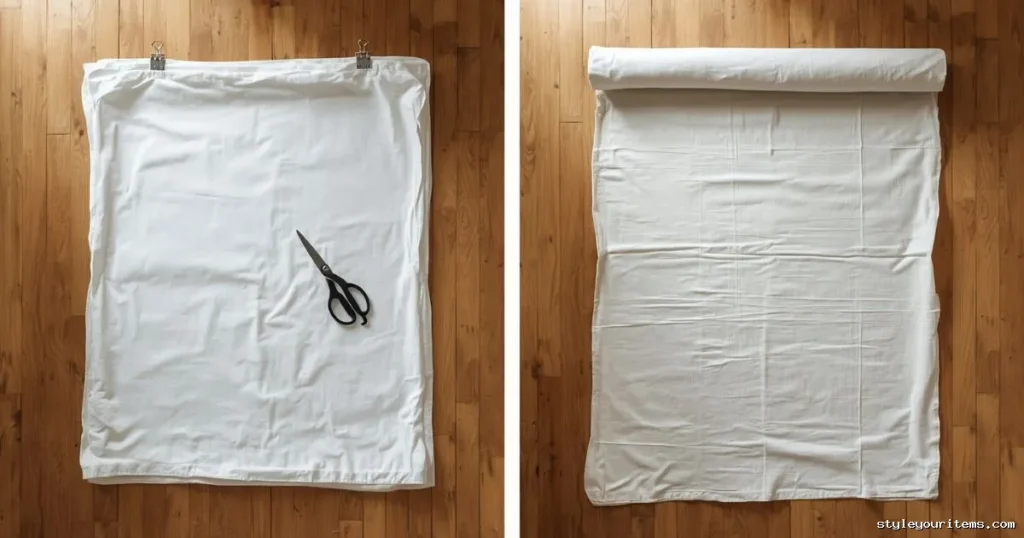
In Pakistan, India, the US, the UK – anywhere with a paint section – cotton canvas drop cloths are a hidden gem for DIYers. The natural off‑white color, texture, and weight look surprisingly like Belgian linen. A 6×9 foot cloth can be bleached or dyed for a custom color. Grommets or tab tops look very professional on drop cloths. Just be sure to wash and iron it well first – it’s very stiff otherwise.
Upcycling Tablecloths, Shower Curtains & Vintage Scarves
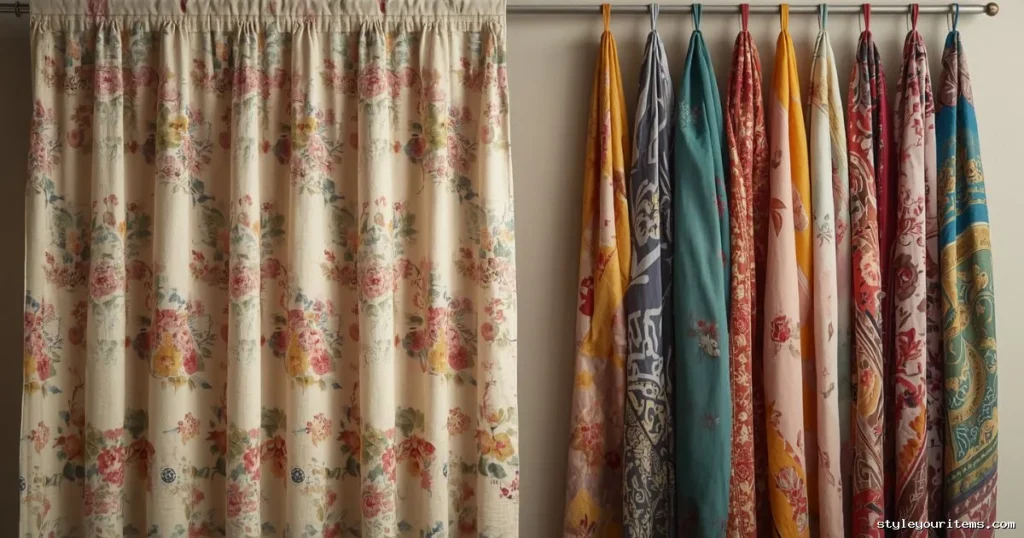
That old heavy cotton tablecloth from your grandmother or a striped linen table cover? Run a rod pocket or sew it into a unique window treatment. Similarly, a plastic shower curtain can be used in the kitchen or balcony with a fabric liner for moderate privacy. Vintage silk scarves can be stitched together (or attached with small clips) into patchwork café curtains for small windows.
How to Prep & Hem Recycled Fabrics So They Look Intentional
- Always wash recycled fabric first. Treat any stains.
- If edges are already finished, leave them as is. For new hems, fold and stitch or fuse.
- Where two fabrics join, a flat‑felled seam (or a no‑sew tape imitation) looks aesthetic – not like a ziptie.
DIY Curtain Rods & Hardware Hacks That Save Big Money
Curtain rods can cost double digits easily. But DIY rods add character – and save cash.
Copper Pipes, Wooden Dowels & Electrical Conduit – Industrial Chic on a Budget
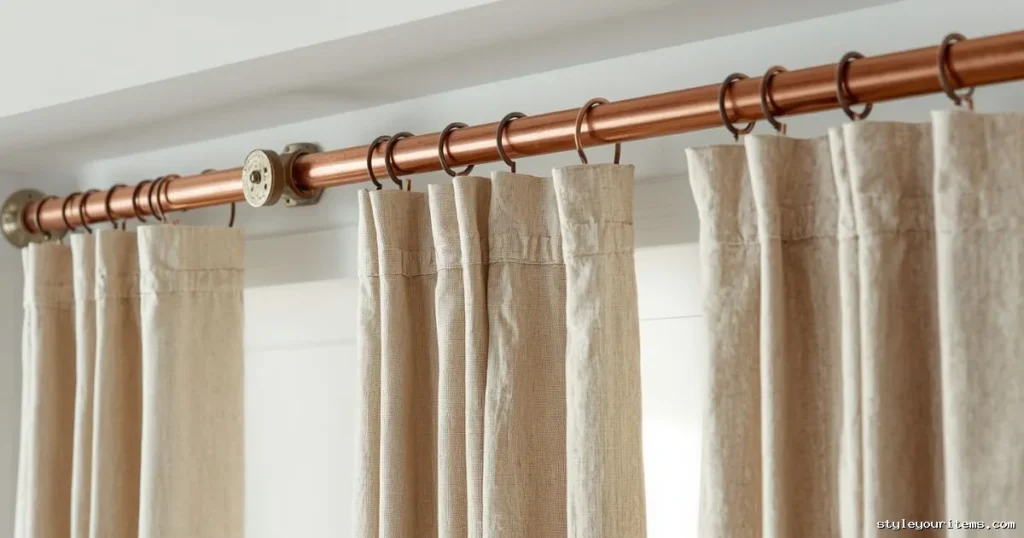
Head to the plumbing section. Get a ½” or ¾” copper pipe. Clean it, and if you want, spray with lacquer to prevent dulling. Cut to your desired length. Use copper pipe straps as brackets or make your own wooden brackets. Similarly, a 1.25” wooden dowel stained or painted makes a classic farmhouse rod. Electrical conduit (EMT pipe) costs just $4‑$6 for 10 feet – spray paint it brass or matte black. For finials, use wooden drawer knobs, door stops, or even clay shapes.
Cup Hooks, Wire & Eye Hooks – Minimalist Concealed Mounts
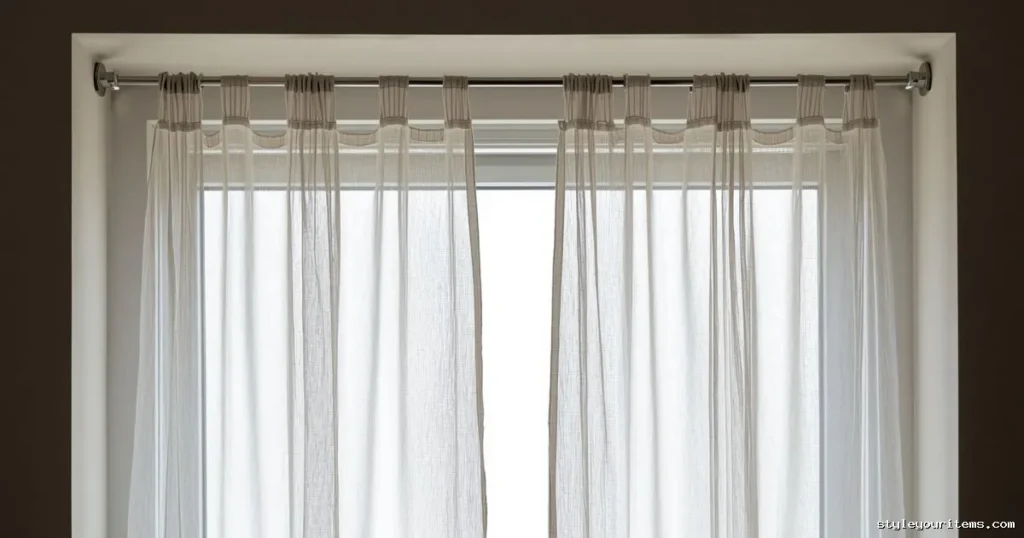
Want the rod invisible? Install two cup hooks outside the window frame (if you can drill). Stretch thin steel wire or cable tightly between them. Then slide your curtain’s top pocket onto the wire, or make small eyelets and hook directly. Just check the weight capacity.
Reinvent Instead of Replace – Spray Paint & Finial Makeovers
Have old curtain rods but hate the color? Use spray paint (oil‑rubbed bronze, gold, matte black). Remove finials and spray separately. A $5 can of spray paint can make a $70‑looking rod.
Choosing the Right DIY Curtain Style for Your Room & Skill Level
Here’s a quick visual comparison to help you decide.
| Header Style | Skill Level | Tools Needed | Best Fabric Type | Look & Feel |
|---|---|---|---|---|
| Rod Pocket | Absolute Beginner | Iron, iron‑on tape or basic sewing | Light to medium | Casual, gathered, traditional |
| Tab Top | Beginner to Medium | Sewing machine (or fabric glue for tabs) | Medium weight, stiff drape | Looped, country, visible rod |
| Back Tab | Beginner | Sewing machine or fusible tape for tabs | Light to medium | Clean front, hidden rod, tailored |
| Grommet Top | Medium to Hard | Grommet kit, hammer, interfacing | Medium to heavy | Modern, crisp pleats |
| Ring Top (Clip) | Easiest Beginner | Ring clips (store bought) | Any weight, even raw edges | Relaxed, adjustable |
| Pinch Pleat | Advanced Beginner | Buckram, hooks, sewing machine, precision measuring | Medium to heavy, drapes well | Formal, luxurious, custom‑made |
Blackout vs Sheer vs Layered – Practical Light Control
Think about function, not just looks.
- Blackout: Bedrooms or media rooms. Either buy blackout lining fabric and attach it, or use blackout fabric directly. Without lining, no blackout.
- Sheer: Brings light into living rooms. But at night, zero privacy. So layering works best.
- Layered: Use a double bracket on one rod – sheer first, then heavier curtain in front. Or use two separate rods. During the day use sheer, at night switch to solid.
Which Projects Work Best for Bedrooms, Living Rooms & Kitchens
- Bedroom: Blackout pinch pleat or grommet, floor length. Dark colors control light and privacy.
- Living Room: Pinch pleat for formal, tab top or drop cloth with ring clips for casual. Layering recommended.
- Kitchen: Café curtains (short rod at mid‑window) or faux Roman shades. Use washable, grease‑resistant fabric like cotton duck.
Anatomy of a DIY Fail – Mistakes That Make Curtains Look “Gar‑Home‑Made”
I’ve seen many first projects that looked bad despite good material. Learn from these mistakes.
Uneven Hems & Wonky Lengths – Fix with Proper Measuring & Cutting
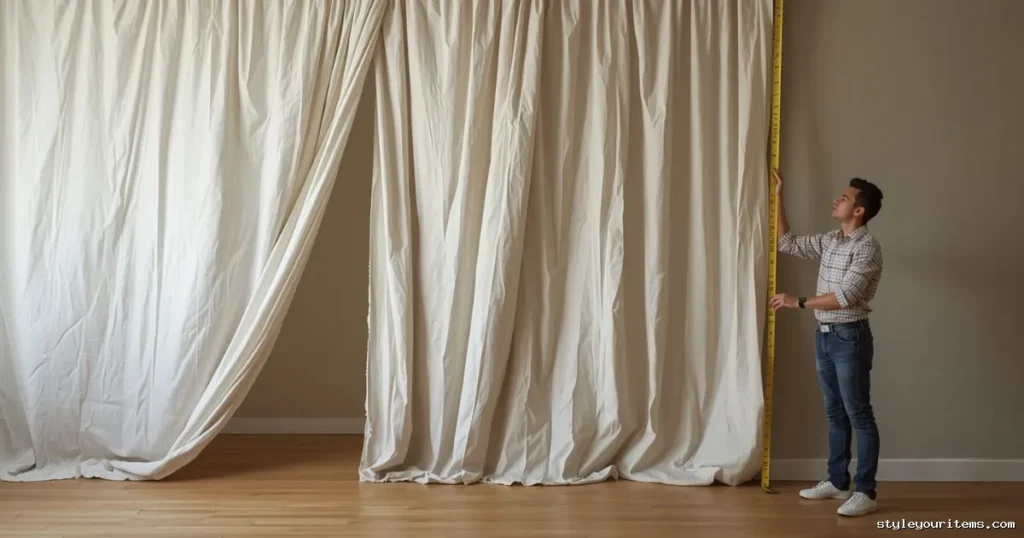
Biggest mistake: floor gap or unintentional puddle. So: install rod first, then measure. Mark length on the floor, not while hanging. If you already cut and realized miscalculation, instead of adding extra hem at the bottom, adjust from the top by folding inside the heading. Small hack: before applying iron‑on hem tape, hang fabric to check.
Fabric That Droops, Sags or Fades – The Importance of Pre‑Washing & Lining
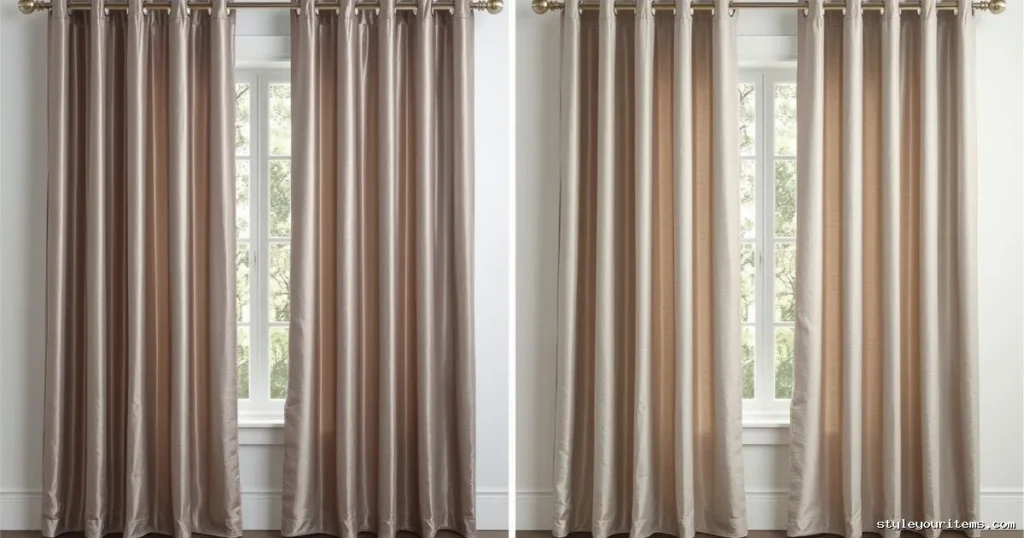
Unwashed fabric shrinks on first wash. Then your curtain corners become crooked. Also, without lining, direct sunlight fades fabric quickly. Always pre‑wash. And if fabric is cheap, adding inexpensive cotton lining improves both sun protection and drape.
When “Cheap” Actually Looks Cheap – Avoid Dollar Store Wrinkle‑Forever Fabrics
Stay away from polyester organza or cheap chiffon that always looks crushed and has plastic shine in sunlight. Use natural blends: cotton, linen‑rayon mix, heavy canvas. They give an expensive look without expensive price.
Pro Tip: Before buying, take a small fabric sample, leave it in sunlight for a day to check fading, and crumple it in your fist to see how quickly wrinkles disappear.
Realistic Timelines & Cost Breakdowns for Each DIY Idea
Let’s talk time, money and effort – transparently.
Time Estimates – No‑Sew vs Sew Projects
- No‑sew clip ring curtains (bedsheet/drop cloth): Measuring 20 min + cutting 15 min + hanging 15 min → ~1 hour
- No‑sew iron‑on tape rod pocket: Cutting + ironing hems → 1.5‑2 hours (with patience)
- Simple sew rod pocket panel: Cutting + stitching one panel → 1 hour (beginner)
- Grommet curtains (sew): Prep + sewing + grommet setting for 2 panels → 3‑4 hours
- Pinch pleat (sew): Two panels, meticulous → 4‑6 hours spread over a day
Material Shopping List with Typical Budget Ranges (Three Tiers)
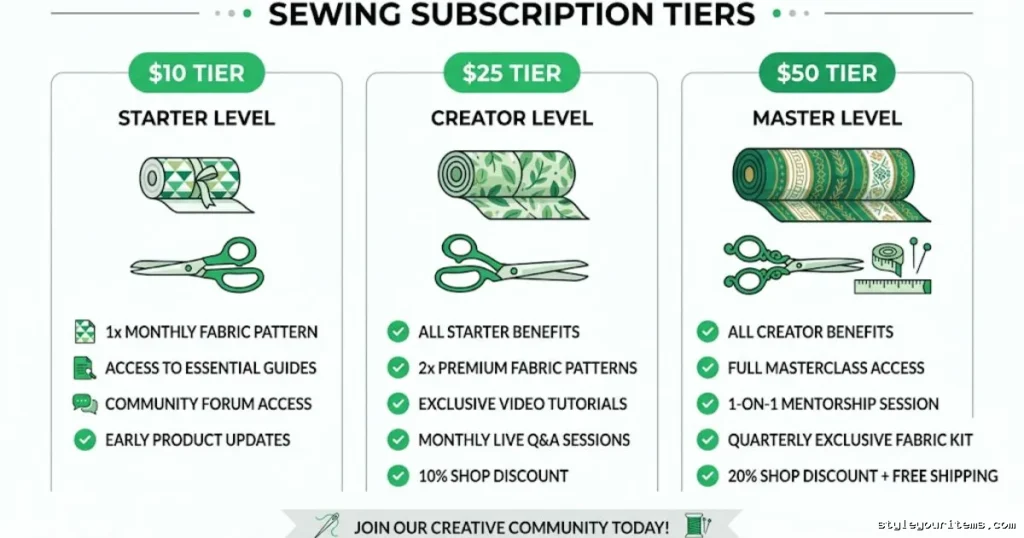
| Budget Tier | Material Example | Approx Cost per Panel | Best Use Case |
|---|---|---|---|
| $10 Tier | Cotton drop cloth (1 panel) | $12 | Casual, living room, kids room, raw look |
| Flat bedsheet (thrifted) | $5 or less | Boho, bedroom, guest room | |
| $25 Tier | Discount decorator cotton fabric | $15 per yard, 2 yards = $30 | Formal living, pinch pleat |
| Ring clips set (10 clips) | $8 | Any style | |
| Iron‑on tape | $4 | No‑sew hems | |
| $50 Tier | Linen‑blend fabric + blackout lining | $30 + $20 | Master bedroom, insulated curtains |
| Hardware: wooden dowel + brackets | $15 | Farmhouse rod look |
Remember: ready‑made linen curtains average $60‑$120 per panel. Your $50 tier gives even better quality.
Frequently Asked Questions (FAQs)
Can I really make curtains without any sewing?
Yes, absolutely. With clip rings you can hang fabric directly. Iron‑on hemming tape handles hems, pockets and tab tops. Just don’t use very heavy fabric – the tape might weaken.
What’s the cheapest fabric that still looks good?
Cotton drop cloth. Found in paint/hardware stores. Its natural creamy off‑white looks expensive and mimics linen. Also flat bedsheets are very cheap.
How do I make DIY blackout curtains?
Buy blackout lining fabric (around $5‑$8 per yard). Attach it to your main fabric. If you sew, stitch the lining and main fabric together at the perimeter and make a shared rod pocket. No‑sew option: fuse blackout lining to the back of your main fabric using iron‑on tape.
If I don’t sew, how do I prevent fabric edges from fraying?
Use fray‑stop liquid (like Fray Check). Or do a double‑fold iron‑on hem. For some fabrics, pinking shears (zig‑zag scissors) also control fraying.
What’s the easiest DIY curtain idea for a complete beginner?
Clip rings method. Just fabric (cut to size), ring clips, and a rod. Clip the fabric top into the rings, put rings on the rod. No sewing, no ironing, no tape.
I can’t drill into my walls. How do I hang DIY curtains?
Use tension rods. They tighten inside the window frame without holes. But remember: weight capacity is limited – best for small windows.
Is curtain lining necessary for every project?
No. If privacy isn’t a big concern (e.g., daytime living room) and you don’t mind sunlight fading the fabric, lining is optional. But for bedrooms and windows with direct sun, lining is best.
How do I measure floor‑length curtains for a “kiss” look?
After installing rod brackets, measure from the rod down to the floor. Then subtract 1 cm. This lets the curtain lightly touch the floor without dragging.
Can I use hot glue instead of sewing or iron‑on tape?
Possible, but not recommended. Hot glue makes fabric stiff and can crack or melt in sunlight. Okay for small crafts, but not for daily‑use window treatments.
How do I make my DIY curtains look expensive and custom, not home‑made?
- Iron well – no creases.
- Proper length – floor kiss or ½ inch above, but never uneven.
- Use lining – gives body.
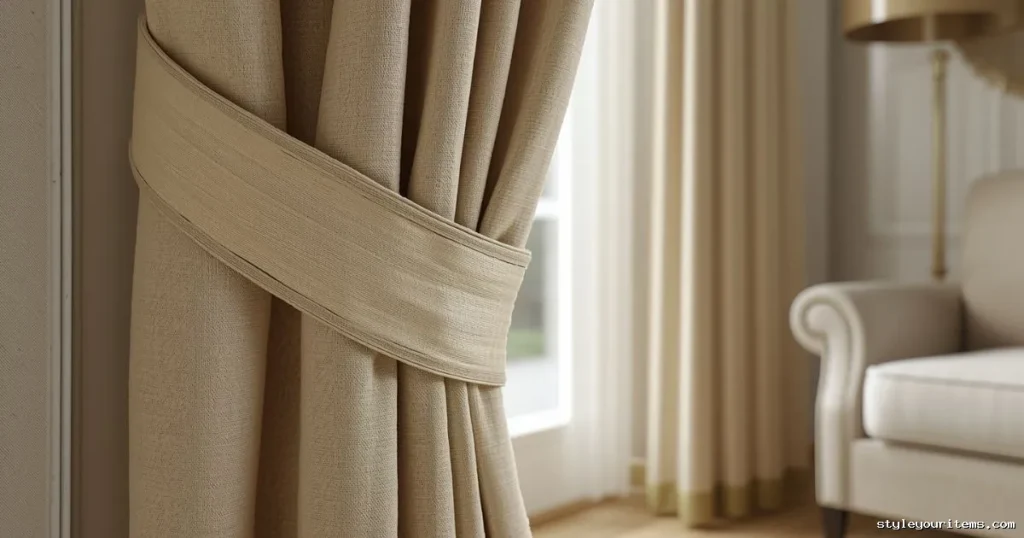
- Add accents: trim, tassels, tie‑backs (leather belt, rope, ribbon).
- Use stainless steel or brass ring clips – avoid plastic finishes.
You now see that the world of DIY curtain ideas has so many possibilities. Whether you’ve never even picked up scissors, a cheap drop cloth and clip rings can give you that custom look that makes visitors think you hired an interior designer. Pick one window, block off your next weekend, and give your windows the makeover they deserve.