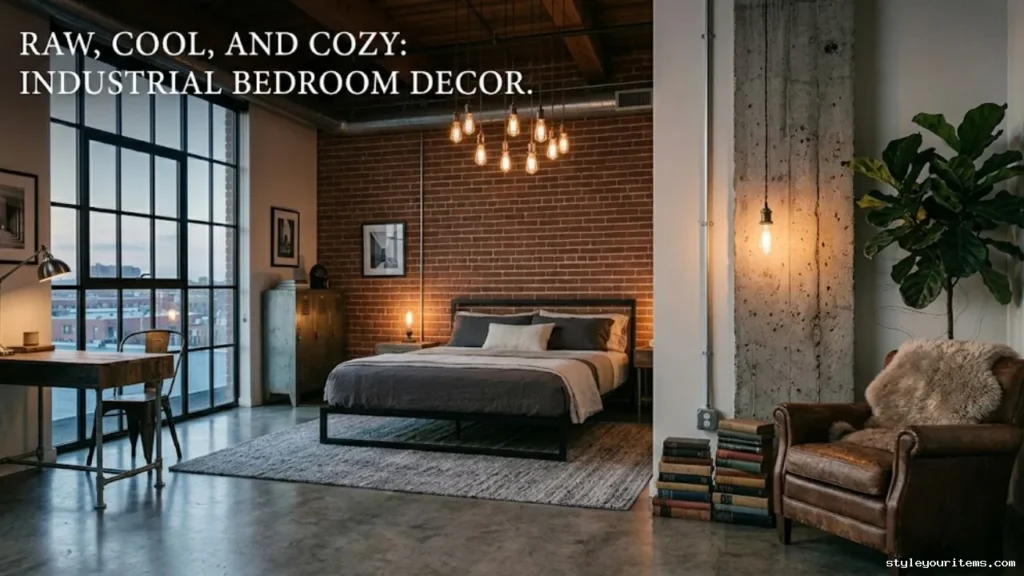
Industrial bedroom decor combines raw architectural elements like exposed brick, concrete, and metal with warm textiles to create a stylish, urban aesthetic. You can achieve this look by blending neutral color palettes, utilitarian furniture, and strategic soft lighting to balance edgy design with a comfortable living space.

Many people assume that industrial interior design feels cold and uninviting. Originating from the conversion of old factories and warehouses into residential lofts, the aesthetic heavily features exposed pipes, concrete floors, and bare brick walls.
However, in my experience working with bedroom transformations, modern homeowners have successfully adapted this utilitarian style to fit everyday living, proving that an industrial space can be incredibly welcoming.
Creating a successful industrial bedroom requires a careful balance between hard architectural elements and soft furnishings. When executed correctly, the room becomes a relaxing sanctuary that retains a distinctly cool, urban edge.
This guide breaks down exactly how to master the industrial aesthetic in a bedroom setting. You will learn how to select the right materials, choose appropriate color palettes, and incorporate cozy textures to ensure the space feels like a home rather than a factory floor.
Core Elements of Industrial Bedroom Design
The foundation of an industrial bedroom relies on three main components: exposed architectural materials, neutral color palettes, and utilitarian furniture. These elements work together seamlessly to mimic the authentic aesthetic of early 20th-century factories and warehouses.

The industrial interior style relies heavily on raw, unfinished materials like exposed brick, poured concrete, weathered wood, and distressed metal. Using these materials establishes the core warehouse vibe.
Rather than hiding structural elements behind drywall or paint, this style celebrates them. For example, exposed ceiling beams and visible ductwork serve as dramatic focal points rather than building flaws.
The Ideal Industrial Color Palette
To replicate the natural shades found in raw building materials, the best color palette features warm neutrals, deep grays, and muted earth tones. Base colors usually include charcoal, slate, brown, and off-white.
To prevent the room from feeling entirely monochromatic, subtly introduce richer accents of burnt orange, rust, or navy blue. These richer hues perfectly complement the coolness of metal and concrete.
Selecting Purposeful Furniture
Prioritize function, clean lines, and sturdy construction when choosing industrial bedroom furniture. Platform beds featuring matte black iron frames or reclaimed wood headboards anchor the space effectively.

Avoid ornate carvings or heavily upholstered Victorian-style pieces. Instead, opt for minimalist nightstands made from metal piping or vintage steamer trunks used for storage. The furniture should look durable, purposeful, and slightly weathered.
Mastering the Raw Architectural Look
You can achieve a raw industrial look by highlighting structural imperfections and incorporating utilitarian finishes. The goal is to strip the room back to its bare essentials and celebrate the building’s underlying architecture.
Incorporating Exposed Brick and Concrete
Exposed brick and concrete provide the ultimate backdrop. If your home naturally features brick walls, leave them unpainted to showcase their natural texture and color variations.
For modern apartments without authentic brick, high-quality brick veneer panels on a single accent wall behind the bed work beautifully. Concrete floors or concrete-look microcement on the walls add a slightly cooler, minimalist edge.
The Role of Rugged Metal Accents
Metal accents ground the industrial design by introducing factory-inspired textures. Matte black steel, brushed nickel, and distressed copper are the most effective choices.
Incorporate these through wrought-iron bed frames, exposed shelving brackets, or metal grid room dividers. Always select metals with a matte or brushed finish, as highly polished chrome looks too glamorous for a true industrial space.
Softening the Space for Maximum Coziness
Balancing the harshness of concrete and metal with inviting textures is crucial. A bedroom must remain a comfortable sleeping environment, regardless of the design theme.
Essential Textiles for Visual Warmth
Natural, heavily textured fabrics soften the room by providing physical comfort. Layer the bed with chunky knit throw blankets, washed linen sheets, and faux fur accent pillows.
For the floor, a large vintage overdyed rug or a plush wool carpet placed under the bed instantly warms up cold concrete or hardwood flooring. Choose textiles in warm earthy tones to contrast the cool grays of the room’s hard surfaces.
Perfecting Industrial Lighting
The right lighting can make or break this aesthetic. Opt for warm-toned bulbs housed in minimalist, metal fixtures. Edison bulbs with visible filaments are an absolute staple, offering a soft, amber glow that reduces the harshness of the room.

Wall-mounted sconces made from brass or matte black iron provide excellent reading light while saving nightstand space. Steer clear of overly bright, cool-toned LED lights, which can make a raw space feel clinical.
Introducing organic shapes and vibrant colors breaks up the rigid lines of brick and metal. Indoor plants like snake plants, monsteras, or trailing pothos breathe life into the room and improve air quality.
Place these plants in distressed terracotta pots or galvanized metal buckets to maintain the overall utilitarian theme while boosting the room’s welcoming atmosphere.
Smart Solutions for Small Industrial Bedrooms
Small bedrooms can easily feel cluttered, which disrupts the streamlined industrial aesthetic.
Maximize space by utilizing vertical storage and choosing multi-functional, minimalist furniture. Use open metal shelving units that reach the ceiling to store books and display decor without taking up floor space.
Choose a bed frame with built-in storage drawers underneath to hide extra bedding. Wall-mounted lighting and floating wooden nightstands keep the floor clear, making the room appear larger.
DIY Projects to Elevate Your Decor
Creating your own decor often yields better results than buying mass-produced items, adding custom pieces that look authentically vintage.
Consider building a custom shelving unit using reclaimed wood planks and industrial plumbing pipes purchased from a local hardware store. Another popular project involves distressing a modern metal dresser with sandpaper and a dark wax finish to give it an aged, factory-used appearance.
Next Steps for Building Your Cozy Industrial Retreat
Transforming a standard bedroom requires a deliberate curation of raw materials and soft accents. Start by evaluating your current space to see if any natural architectural features can be exposed.
Establish a neutral color palette heavily rooted in grays and browns, and gradually swap out overly traditional furniture for pieces made of matte metal and reclaimed wood. By heavily layering the space with linen bedding, vintage rugs, and warm lighting, you successfully merge warehouse edge with residential comfort.
(If you are looking to blend this aesthetic with warmer wood tones, be sure to explore our complete guide on rustic bedroom aesthetics for seamless integration ideas.)
Frequently Asked Questions
How much does it cost to create an industrial bedroom?
The cost varies widely, typically ranging from $500 for budget-friendly cosmetic updates (like paint, new bedding, and lighting) to over $5,000 for structural renovations. You can save money by sourcing vintage metal furniture from thrift stores and building your own pipe-and-wood shelving. High costs usually stem from installing authentic brick veneers or purchasing high-end reclaimed wood furniture.
Can you mix industrial decor with other interior design styles?
Yes, industrial decor mixes exceptionally well with other styles, particularly modern, rustic, and bohemian aesthetics. Blending styles prevents the bedroom from looking like a movie set. For example, combining industrial elements with rustic design pairs raw metal fixtures with warm, distressed farmhouse wood to create a highly approachable look.
What is the best flooring for an industrial bedroom?
The best flooring is either polished concrete or distressed hardwood. Polished concrete offers the most authentic factory appearance and is highly durable. Distressed or reclaimed hardwood provides a slightly warmer alternative while still maintaining a rugged, unfinished texture that suits the theme perfectly.