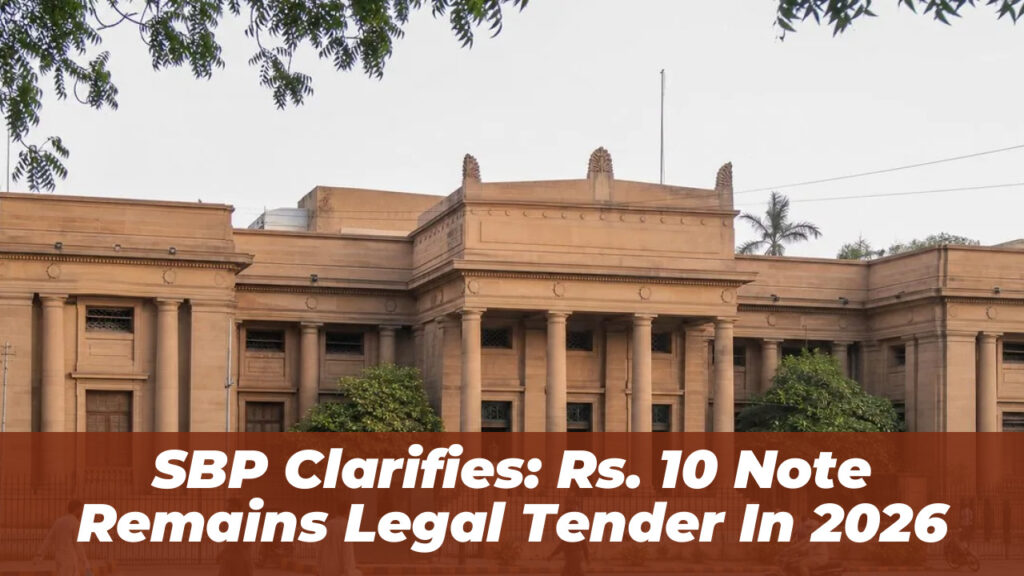
If you have recently encountered social media posts claiming that the State Bank of Pakistan (SBP) has discontinued the Rs. 10 banknote, you can rest easy. As of September 2026, these reports are entirely false. The Rs. 10 note remains a valid and active legal tender, and there is no government-backed plan to withdraw it from circulation at this time.
The SBP has officially labeled these viral claims as baseless and without substance. In an era where misinformation spreads rapidly across digital platforms, it is crucial to rely on verified, primary sources rather than unconfirmed social media chatter.
The Viral Misinformation: What You Need to Know
The rumors began circulating due to a misunderstanding of ongoing financial policy discussions. While there has been significant public interest in the SBP’s proposal for a brand-new banknote series, these discussions have been misinterpreted by social media accounts seeking engagement through alarmist content. To be clear:
- Status: The Rs. 10 note is currently in circulation and fully valid for all transactions.
- Fact Check: No notification has been issued by the Federal Cabinet or the State Bank regarding the demonetization of this denomination.
- Action Required: None. You do not need to exchange or deposit your Rs. 10 notes.
- Market Stability: The currency remains a core component of daily retail transactions across the country.
- Regulatory Oversight: All legal tender status is governed exclusively by the SBP and the Ministry of Finance.
- Public Security: No security features of the Rs. 10 note have been flagged for immediate replacement.
Why the Confusion? Understanding the New Banknote Series Proposal
The root of this confusion lies in the SBP’s recent submission of a proposal to the Federal Cabinet regarding a new banknote series. This is a standard administrative process aimed at upgrading the security features and design of Pakistan’s currency.
However, the introduction of a new series does not equate to the immediate removal of existing ones. Historically, the transition to new currency designs is a phased, multi-year process. The Federal Cabinet has yet to finalize a decision on the scope or timeline of this proposed series, meaning that even if a change were to occur, it would not happen overnight or without extensive public notice. As the country navigates evolving economic challenges, the focus remains on long-term fiscal stability rather than the sudden removal of small denominations. In fact, many citizens are currently more focused on affordable transportation shifts as the automotive landscape in Pakistan undergoes its own transition in 2026.
Official SBP Protocol: How Currency Changes Actually Happen
The State Bank of Pakistan follows a strict, transparent protocol when phasing out any currency denomination. If the government ever decides to discontinue a note, the process is designed to protect the public’s financial interests:
- Formal Notification: The SBP releases a formal circular via its official website and major national newspapers.
- Grace Period: Citizens are provided with a generous, clearly defined timeline to exchange old notes at designated commercial banks.
- Public Awareness Campaigns: Official channels run dedicated campaigns to ensure the public is fully informed, leaving no room for ambiguity.
- Legislative Approval: Any demonetization requires approval from the Federal Cabinet, which is a matter of public record.
- Bank Integration: Commercial banks receive specific instructions to facilitate the collection of legacy currency.
- Phased Withdrawal: Currency is removed from circulation gradually to prevent economic shocks.
- Final Cut-off: A specific date is set after which the old currency ceases to be legal tender, typically months or years after the initial announcement.
If you do not see an announcement on the official SBP portal, you can safely assume that any “breaking news” regarding currency withdrawal is a fabrication.
How to Verify Official Financial News in Pakistan
To avoid falling prey to financial hoaxes, always cross-reference sensational headlines using these steps:
- Check the Source: Is the information coming from a verified SBP press release or an unverified social media page?
- Look for Dates: Scammers often recirculate old, out-of-context news. Always check if the news is dated for 2026.
- Consult Commercial Banks: If you are ever in doubt, a quick inquiry at your local bank branch will confirm the current status of any banknote.
- Cross-Reference Media: Verify if major, reputable news outlets are reporting the same information.
- Avoid Panic: Financial institutions rarely make sudden, unannounced changes to currency validity.
Final Verdict: Your Rs. 10 Notes Are Safe
The Rs. 10 banknote continues to be a staple of Pakistan’s cash economy. As of September 2026, the State Bank of Pakistan has provided no indication that this note will be pulled from circulation. We advise the public to ignore viral rumors and continue using the currency as normal. For the most accurate and up-to-date information, always bookmark the official SBP website and rely on established, reputable financial news outlets.
Currency Status Summary Table
| Denomination | Legal Status | Validity | Action Required |
|---|---|---|---|
| Rs. 10 Note | Legal Tender | Active (2026) | None |
Pros & Cons of Digital Currency Verification
Pros:
- Prevents unnecessary financial panic among the public.
- Ensures accurate economic data circulation.
- Protects personal assets from potential scam artists.
Cons:
- Requires active effort to verify sources against digital noise.
- Social media algorithms often prioritize viral misinformation over dry, official facts.
- The speed of social media makes debunking a continuous challenge for authorities.
Specifications Table
| Feature | Detail |
|---|---|
| Denomination | Rs. 10 |
| Legal Status | Active / Legal Tender |
| Official Issuer | State Bank of Pakistan |
| Verification Date | September 2026 |
| Source of Truth | Official SBP Circulars |