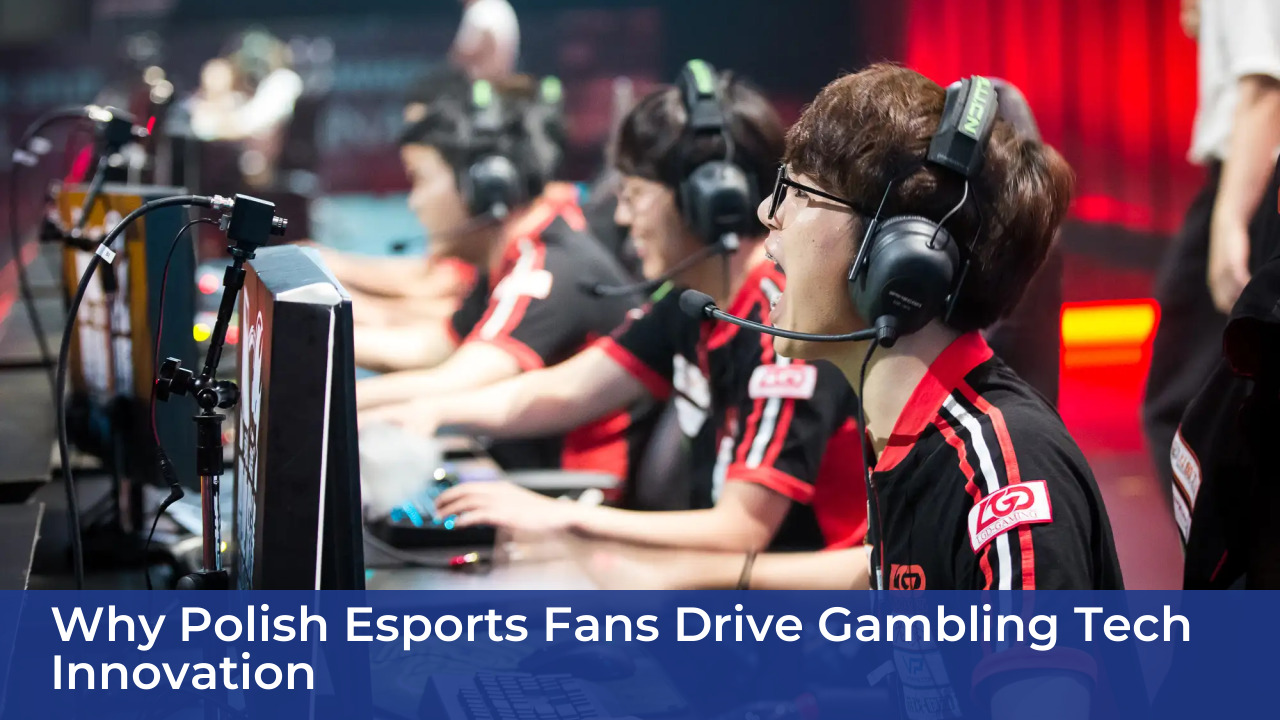
Poland has emerged as a premier powerhouse for competitive gaming, transforming from a scattered network of basement LAN parties into a dominant cultural and economic force. Millions of active enthusiasts now tune into regional tournaments, fill major stadiums, and consume gaming content at unprecedented rates. This explosive growth has caught the attention of global software developers and fintech enterprises. Technology companies view the region not just as a market of consumers, but as a testing ground for next-generation digital platforms.
- The Digital Maturity of Polish Esports Enthusiasts
- Technological Innovations Fueling the Sector
- Regulatory Frameworks and Market Compliance
- Licensing and Consumer Safety
- The Intersection of Polish Tech Talent and Software Development
- Future Outlook for Esports Betting Technology
- Frequently Asked Questions
- Why are gambling tech companies focusing on Polish esports fans?
- What is micro-betting in competitive gaming?
- How do platforms ensure compliance with local regulations?
Gambling technology firms are rapidly shifting their focus toward this demographic because traditional sports betting models no longer satisfy modern digital consumers. Interactive entertainment demands speed, immersion, and constant engagement. Polish gaming enthusiasts represent an audience that expects seamless digital experiences, prompting betting software developers to redesign their entire architectures around the speed and excitement of competitive video games.
The Digital Maturity of Polish Esports Enthusiasts
The average Polish competitive gaming fan possesses a high level of digital literacy, often adopting advanced software tools, communication platforms, and financial technologies faster than counterparts in Western Europe. This demographic reads complex game patches, analyzes frame data, and utilizes multi-monitor setups with ease. Their technical fluency shapes how they interact with online services, leaving little patience for clunky interfaces, delayed loading times, or poorly optimized mobile applications.
Regional tournament viewership experiences double-digit year-over-year growth, driven by major international events hosted in cities like Katowice. This high engagement rate creates a captive audience that spends hours interacting with digital streams. Instead of passively watching matches, fans actively participate in community chats, fantasy leagues, and real-time community discussions. This behavior establishes a fertile environment for interactive betting platforms that reward quick thinking and deep game knowledge.
A significant cultural shift is underway as younger demographics move away from legacy sports betting channels like horse racing or football accumulators. Traditional betting shops hold little appeal for digital natives who prefer decentralized, app-based interactions. Esports betting satisfies their preference for fast-paced, digital-first entertainment that mirrors the rhythm and complexity of the games they play daily.
Technological Innovations Fueling the Sector
To capture the attention of this digitally mature audience, software architects rely heavily on ultra-low latency live data feeds. Traditional betting relies on delayed television broadcasts, but competitive video games require real-time execution. Modern betting algorithms ingest game state data via direct API integrations with tournament organizers, reducing latency to milliseconds. This technical capability allows platforms to offer dynamic odds that shift the second a player secures a critical objective or wins a crucial round.
Micro-betting markets have exploded in popularity as a direct result of these rapid data feeds. Fans can now place wagers on hyper-specific in-game events, such as which team secures the next map pistol round or which player scores the first headshot. This transforms viewing from a passive activity into an active financial engagement. Users find deep satisfaction in applying their intimate knowledge of team strategies and individual player statistics to short-cycle betting outcomes.
| Feature | Traditional Sports Betting | Modern Esports Betting |
|---|---|---|
| Data Latency | Seconds to minutes (TV broadcast delays) | Milliseconds (Direct API game state feeds) |
| Betting Frequency | Pre-match or periodic live intervals | Continuous micro-events (per round, per kill) |
| User Interface | Static text and basic odds tables | Gamified, real-time interactive overlays |
| Payment Rails | Standard credit cards and bank wires | Cryptocurrency, skin trading, instant digital wallets |
Blockchain transactions and cryptocurrency integration further streamline the user experience within these gaming ecosystems. Digital assets allow for instant deposits and withdrawals without the friction of legacy banking hours or international currency conversion fees. , gamified user interfaces utilize dark-mode aesthetics, neon accents, and sound design that mimics popular multiplayer titles. This visual alignment ensures that the betting platform feels like a natural extension of the gaming client rather than a traditional financial institution.
Regulatory Frameworks and Market Compliance
Operating within this digital frontier requires strict adherence to local and international legal standards. Polish gambling laws impose rigorous licensing requirements on digital platforms seeking to offer services to local users. International operators must navigate complex compliance hurdles regarding data privacy, anti-money laundering protocols, and mandatory age verification checks to ensure minors cannot access wagering software.
Consumer protection remains a top priority for regulators and ethical software developers alike. Modern platforms integrate responsible gambling software tools directly into the user dashboard. These features include automated spending limits, reality check notifications that track session duration, and self-exclusion mechanisms. By embedding these safeguards into the core software architecture, developers protect vulnerable users while maintaining compliance with European regulatory bodies.
Licensing and Consumer Safety
Securing a legal footprint demands transparent corporate governance and localized server infrastructure. Regulators mandate that user funds remain segregated from operational accounts to guarantee payout security. Compliance teams continuously audit random number generators and algorithmic fair-play metrics to maintain trust across the digital community.
The Intersection of Polish Tech Talent and Software Development
Poland is home to a massive pool of world-class software engineers, data scientists, and UI/UX designers who drive global advancements in real-time data processing. Local tech hubs in Warsaw, Krakow, and Wroclaw produce exceptional technical talent that powers international betting giants. These engineers build the complex backend architectures necessary to process millions of concurrent game events without crashing or introducing latency.
Regional startups frequently partner with multinational gambling corporations, serving as innovation incubators. These collaborations yield proprietary algorithms capable of predicting match outcomes and detecting suspicious betting patterns associated with match-fixing. The synergy between local technical expertise and global capital positions the region as a primary exporter of cutting-edge betting technology.
Future Outlook for Esports Betting Technology
As technology advances toward 2027, the focus shifts entirely toward immersive betting experiences and virtual reality integrations. Developers currently test spatial computing interfaces that allow users to view live matches inside 3D virtual stadiums while placing micro-bets via hand gestures or voice commands. These innovations will blur the lines between playing, watching, and wagering.
Market consolidation will likely accelerate over the coming years as smaller platforms merge with industry giants to handle rising compliance costs and infrastructure demands. Platforms that fail to adopt ultra-low latency feeds or gamified interfaces will quickly become obsolete. Ultimately, the region will continue serving as the blueprint for global gambling tech standards, proving that modern entertainment requires absolute speed, deep interactivity, and uncompromising technical precision.
Frequently Asked Questions
Why are gambling tech companies focusing on Polish esports fans?
Polish fans exhibit high digital literacy, deep engagement with competitive gaming, and a strong preference for fast-paced digital platforms over traditional sports betting models.
What is micro-betting in competitive gaming?
Micro-betting allows users to wager on rapid, highly specific in-game events such as winning a single round or securing a specific objective using real-time data feeds.
How do platforms ensure compliance with local regulations?
Platforms utilize strict age verification, secure payment segregation, automated anti-money laundering checks, and integrated responsible gambling tools like session timers and spending limits.