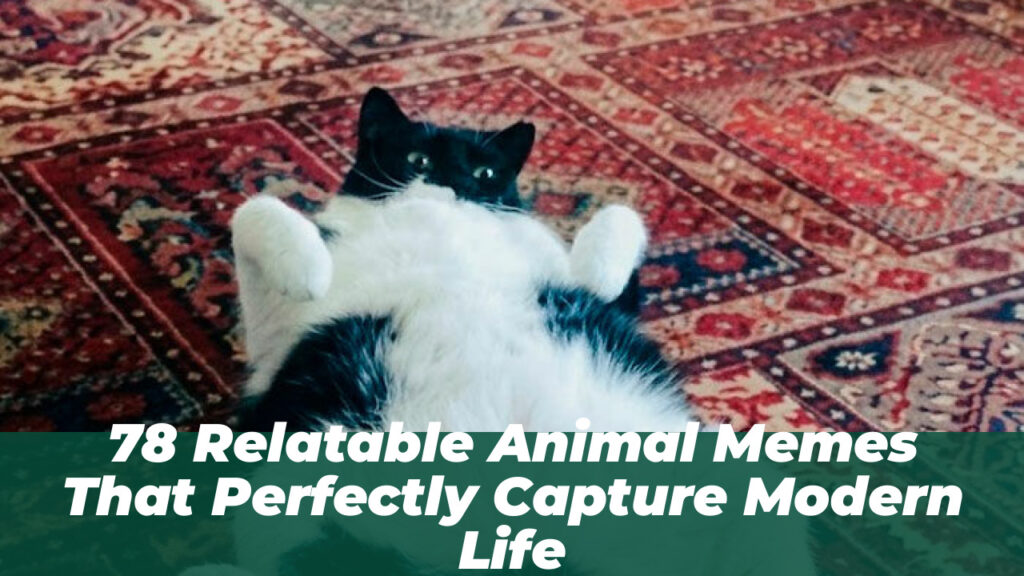
The digital landscape is constantly evolving, yet one constant remains the undisputed king of internet culture: the animal meme. From the early days of pixelated cat photos to today’s high-definition viral clips, these images serve as a universal language. When a user scrolls through a feed, an animal meme provides an instant, low-stakes emotional connection that bridges cultural and linguistic divides.
Recent data confirms that 78 distinct animal memes have captured the collective attention of the internet this year. These curated collections do more than entertain; they function as a digital mirror, reflecting the nuances of the human experience through the eyes of our pets. It is clear that the internet was built, at least in part, to sustain this specific form of wholesome, relatable joy.
Beyond the simple act of scrolling, these memes act as a collective shorthand for the modern condition. We live in an era where digital fatigue is common, and the ability to find a moment of levity in a picture of a confused pug or a dramatic squirrel is a necessary survival skill. This phenomenon has turned the internet into a global scrapbook of shared empathy, where the barrier to entry is nothing more than a smartphone and a sense of humor.
The Science Behind the Animal Meme Craze
The obsession with animal memes is not merely a byproduct of boredom. Scientists suggest that viewing images of animals triggers an immediate neurochemical response. When we see a puppy or a kitten, our brains release dopamine, the neurotransmitter associated with pleasure and reward, which explains why we often feel a sudden mood lift after scrolling.
This phenomenon is often called the cuteness response. It is an evolutionary mechanism designed to make us care for vulnerable creatures. When that cuteness is combined with a humorous caption, the brain experiences a dual-reward system. We are essentially hacking our own biology to find comfort in a high-speed digital world.
How Cuteness Triggers Dopamine Responses
Cuteness acts as a visual shortcut to happiness. The specific physical traits common in baby animals, such as large eyes and round faces, signal a need for nurturing. This triggers a protective instinct in humans, resulting in a release of oxytocin, which helps lower blood pressure and reduce cortisol levels.
When memes leverage these images, they capitalize on our innate need for connection. The humor provides a cognitive bridge, allowing us to process the cuteness through a lens of irony or relatability. This combination is the primary reason why animal content remains the most shared media format across all major social platforms.
The Psychology of Anthropomorphism
Anthropomorphism is the act of projecting human traits onto non-human entities. In the context of memes, we project our internal monologues onto our pets. If a cat is sitting with a grumpy expression, we immediately interpret that as a bad day at the office or a lack of morning coffee.
This projection serves as a coping mechanism. By attributing human stress to an animal, we gain a sense of distance from our own problems. It allows us to laugh at our struggles without feeling overwhelmed by them. It is a psychological safeguard that makes the human condition feel slightly more manageable.
Why We See Ourselves in Our Pets
The core appeal of the modern animal meme is its intense relatability. We use these creatures as avatars for our own personalities and daily frustrations. Whether it is a dog refusing to get out of bed or a hamster looking confused, we recognize the behavior because it mirrors our own domestic lives.
This is why the “I can relate to the core” sentiment has become a staple of social media comments. When we see an animal acting out a human behavior, it validates our own experiences. It transforms a lonely moment of frustration into a shared experience, proving that we are not the only ones feeling a specific way.
Mapping Human Stressors to Animal Expressions
Modern life is filled with abstract stressors, from digital burnout to social anxiety. It is difficult to capture these feelings in a photograph of a person, but an animal provides a blank canvas. An animal does not have a complex job or a mounting list of bills, yet its facial expressions can perfectly capture the weight of those things.
By mapping our stressors onto an animal, we simplify the narrative. A dog looking guilty after chewing a shoe is the perfect metaphor for a person who forgot an important deadline. This simple visual shorthand allows us to communicate complex feelings quickly and effectively in a way that words often fail to achieve.
The Role of Humor in Modern Mental Health
Humor is a proven tool for emotional regulation. In the face of global uncertainty, people are increasingly turning to wholesome content for stress relief. Animal memes provide a safe space where the stakes are nonexistent, allowing the nervous system to downshift from a state of high alert to one of relaxation.
This “digital comfort food” is essential for maintaining a balanced mental state. By engaging with lighthearted content, we are able to take short, necessary breaks from the intensity of the news cycle. These brief moments of laughter act as a reset button, helping us return to our daily responsibilities with a clearer head.
The 78-Meme Collection: A Curated Journey
The collection of 78 memes serves as an exhaustive study of human behavior. By organizing these images into categories, we can see the full spectrum of our daily lives represented. From the exhaustion of Monday mornings to the unpredictable chaos of weekend projects, each image serves as a chapter in a larger story.
These memes are curated to ensure that every reader finds at least one image that feels like a personal attack on their own habits. The high volume of content creates a sense of saturation, ensuring that the user remains engaged throughout the entire scroll. It is a masterclass in digital storytelling through brevity.
Category One: The Monday Morning Struggle
This category focuses on the universal disdain for the start of the work week. Images in this section typically feature animals looking disheveled, groggy, or actively hiding from the camera. They represent the collective desire to stay in bed and ignore the demands of the clock.
These memes are particularly potent on Sunday nights and early Monday mornings. They provide a sense of solidarity among workers who are all dreading the same alarm clock. By sharing these images, we signal to our peers that we are all in this together, making the struggle slightly more bearable.
Category Two: Social Battery Depletion
Social battery depletion is a hallmark of modern life, and animal memes capture it perfectly. Images of animals hiding under blankets, staring blankly at walls, or avoiding eye contact are staples here. They resonate with anyone who has ever had to cancel plans to recharge in solitude.
This category validates the need for introversion and personal space. It transforms the act of being socially exhausted into something humorous rather than shameful. By laughing at a cat that wants to be left alone, we give ourselves permission to prioritize our own mental well-being without guilt.
Category Three: Unfiltered Joy and Chaos
Not every meme is about stress; some are about the pure, unadulterated chaos of living. These images feature animals caught in mid-air, making strange faces, or engaging in inexplicable behavior. They remind us that life does not always need to be productive or serious to be enjoyable.
These memes serve as a necessary counterpoint to the more somber entries in the collection. They capture the spontaneity of the moment and the joy of letting go. They are the digital equivalent of a belly laugh, reminding us to seek out fun and absurdity in our own daily routines.
Category Four: The Perfectionist Pet
The perfectionist pet category highlights the humor in our own high standards. Whether it is a dog meticulously organizing its toys or a cat staring intensely at a small mess, these memes mirror our own tendencies toward order and control. They show us how silly our pursuit of perfection can truly be.
These images are particularly popular among professionals who struggle with perfectionism. They allow us to laugh at our own rigid behaviors. By seeing an animal attempt to control its environment, we realize the futility of our own efforts, which can be an incredibly liberating and grounding realization.
Why Relatability Drives Social Media Virality
Relatability is the currency of the social media age. Algorithms prioritize content that keeps users on a platform, and nothing keeps a user engaged like content that makes them say, “This is so me.” Animal memes are the ultimate vehicle for this kind of engagement, as they are universally understandable.
When a post is relatable, it encourages the user to share it with their own social circle. This creates a chain reaction of engagement that drives virality. The more personal the connection, the more likely the post is to travel across the internet, building a community around a single shared laugh.
The Anatomy of a Shareable Post
A highly shareable meme usually has three components: a clear visual, a concise caption, and a strong emotional hook. The visual needs to be high-quality and immediately readable. The caption should be short enough to read in a second, and the emotional hook should be something everyone feels.
These posts are designed to be consumed in seconds. Because they do not require deep thought, they are perfect for mobile users on the go. When someone shares a meme, they are not just sharing an image; they are sharing a piece of their own identity and a message to their friends about how they feel.
Building Community Through Shared Laughter
Shared laughter is a powerful social glue. When a group of friends shares a meme, they are reinforcing their bond through a common experience. This builds a digital community where humor is the primary language. It creates a sense of belonging that is essential in an increasingly fragmented world.
These communities provide a sense of safety and inclusion. By participating in the meme culture, users feel like they are part of a larger conversation. This sense of belonging is one of the most significant benefits of internet culture, proving that even the most trivial content can have a profound impact.
How to Create Your Own Viral Pet Content
Creating viral pet content does not require professional gear; it requires a keen eye for human behavior. The best content is often captured in the most mundane moments of a pet’s life. The key is to be ready with a camera when your pet does something that feels distinctly human.
Focus on authentic reactions rather than staged poses. A pet reacting to a sound, a strange object, or a simple change in environment is often more compelling than a posed portrait. The goal is to capture a moment that feels raw, honest, and hilariously relatable to a human audience.
Finding the Perfect Candid Moment
Candid moments are the lifeblood of viral content. Keep your phone accessible and observe your pet’s natural rhythms. Look for patterns in their behavior that reflect your own daily routines, such as their morning stretch, their post-meal lethargy, or their intense curiosity about a closed door.
Do not worry about perfect lighting or composition. The most viral memes are often slightly blurry or oddly framed. What matters is the expression or the action of the animal. If you can capture a moment that makes you laugh, there is a high probability that it will make others laugh too.
Crafting Captions That Hit Home
The caption is where the magic happens. It should be short, punchy, and directly related to a common experience. Avoid being too literal; instead, try to capture the internal monologue of the animal as if it were a human dealing with a specific, relatable situation.
Test your captions on friends before posting. If they laugh immediately, you have a winner. Use language that feels conversational and informal. Remember that the goal is to make the reader feel seen, so focus on themes like work stress, social awkwardness, or the simple joy of a weekend morning.
The Evolution of Digital Humor
As we look toward the future, the format of the animal meme will continue to shift. We are seeing a move toward more dynamic content, such as short-form video loops that capture a specific quirk of an animal. These videos allow for a deeper layer of storytelling, as the movement of the animal adds context to the humor.
Despite these changes, the core principles remain the same. The content must be accessible, authentic, and emotionally resonant. Whether it is a static photo or a ten-second clip, the goal is to bridge the gap between our complex human lives and the simple, joyous existence of our animal companions.
This evolution ensures that memes remain relevant even as our technology changes. We might move from static images to augmented reality, but the need to laugh at a cat wearing a hat will persist. It is a fundamental part of how we communicate in a digital-first society.
Frequently Asked Questions
Why do we find animal memes so comforting?
Animal memes offer a unique combination of cuteness and humor that triggers positive neurochemical responses in the brain. They provide a brief, low-stakes escape from the complexities of daily life, allowing us to reset our emotional state through laughter and connection.
Are these memes based on real animal behavior?
Most memes are based on real, albeit often fleeting, animal behaviors. While the captions project human meaning onto these actions, the underlying movements or expressions are authentic. This authenticity is exactly what makes the memes so effective at resonating with human viewers.
How does humor impact stress levels?
Humor is a powerful physiological tool that can lower cortisol levels and stimulate the release of endorphins. By providing a moment of lightheartedness, memes help the nervous system recover from stressful events, improving our overall mood and ability to cope with daily pressures.
Can animal memes improve workplace morale?
Yes, sharing lighthearted content can foster a more positive and collaborative work environment. When colleagues share a laugh over a meme, it creates a sense of camaraderie and helps to break down social barriers, making the workplace feel more human and connected.
Conclusion: The Lasting Impact of Digital Wholesomeness
The enduring popularity of animal memes is a testament to our fundamental need for connection and joy. In a world that often feels divided and stressful, these small, digital moments of wholesomeness provide a vital service. They remind us that we are not alone in our struggles and that there is always room for laughter in our daily lives.
As we move forward, the role of these memes will likely continue to grow. They are more than just entertainment; they are a vital part of our digital culture that helps us navigate the highs and lows of the human experience. By continuing to share and create this content, we ensure that the internet remains a place of empathy, humor, and collective comfort for everyone.