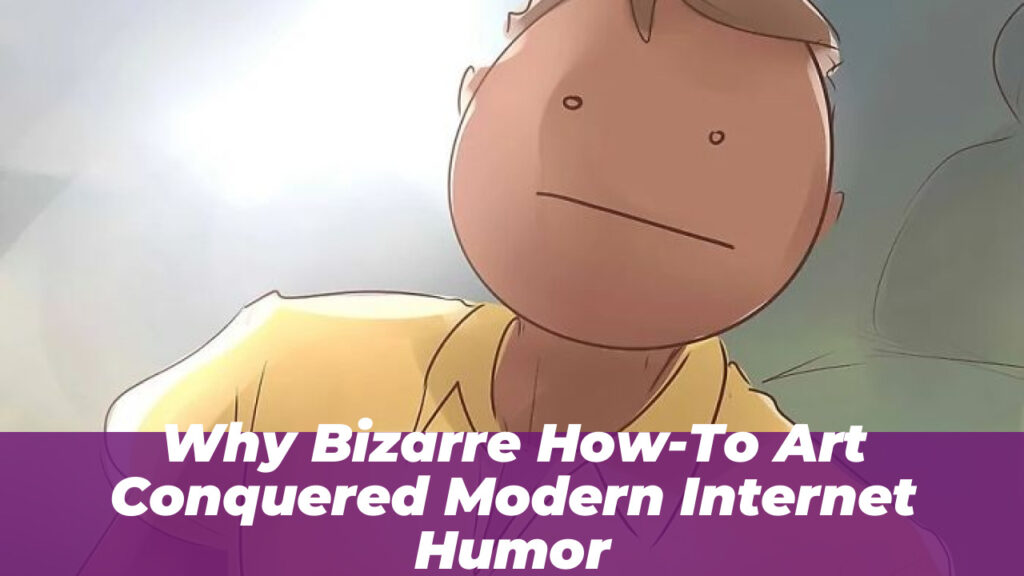
The internet has long harbored an obsession with the bizarre, unintentional comedy found within the vast archives of instructional how-to platforms. What was originally intended to serve as helpful, utilitarian guidance has morphed into a digital goldmine for humor, where clinical illustrations become surrealist art. These images, often characterized by their stiff line work and detached emotional expressions, provide a unique window into the absurdity of human communication.
This phenomenon thrives on the tension between the serious, often life-altering advice provided in the text and the uncanny, hyper-literal imagery accompanying it. As these illustrations circulate through social media, they undergo a transformation from instructional tools to foundational internet memes. This analysis explores how a decentralized system of freelance illustration inadvertently created one of the most enduring and beloved comedic archives in modern digital history.
The evolution of this aesthetic reflects a broader shift in how users interact with digital content. Rather than passively consuming information, audiences now deconstruct and repurpose imagery to derive secondary value. This participatory culture transforms sterile, corporate-mandated visuals into vessels for irony, satire, and collective catharsis, ensuring that even the most mundane tutorial retains a lasting cultural footprint.
The Mechanics Behind an Accidental Meme Empire
Distributed Freelance Production and Vector Tracing
The visual identity of these instructional guides was born from a need for massive, rapid content scaling. By employing a global network of freelance illustrators, the platform ensured that every step of a guide, no matter how niche, received a visual accompaniment. This decentralized approach, while effective for volume, led to a lack of stylistic cohesion that ultimately fueled the platform’s comedic reputation.
Many of these illustrators relied on tracing stock photography to create their vector art. This process often resulted in stiff, unnatural poses that lacked the fluidity of hand-drawn art. Because the reference material was often staged in a sterile studio environment, the final vector illustrations inherited a robotic, detached quality that makes the subjects appear as if they are existing in a vacuum.
The reliance on this tracing method created a unique visual shorthand. Because the illustrators were paid per image, they prioritized speed and basic anatomical accuracy over artistic flair. This resulted in a consistent, albeit eerie, aesthetic that functions like a digital uncanny valley, where the figures look human but possess none of the warmth or spontaneity of real life.
The Incongruity Between Serious Text and Flat Line Art
The true comedic power of these illustrations lies in the jarring tonal clash between the instructional text and the visual output. When a guide offers advice on deep psychological trauma or complex interpersonal conflict, the reader expects a nuanced visual aid. Instead, they are often met with flat, expressionless figures performing actions that look more like a glitch in a simulation than a helpful demonstration.
This emotional detachment is exactly what elevates the content to meme status. The deadpan nature of the characters, coupled with the hyper-literal interpretation of the subject matter, creates a surrealist effect. By stripping away the nuance of human emotion, the illustrations highlight the awkwardness of the scenarios they depict, turning mundane advice into something deeply strange and inherently funny.
The juxtaposition often borders on the absurd. A guide discussing how to manage grief might feature a character staring blankly at a wall while holding a single, unidentifiable object. This lack of context transforms the image into a Rorschach test for the internet, where users project their own anxieties and humor onto the blank stares of the protagonists.
The Reddit Subculture: Documenting the Absurd
Fabricated Captions and r/disneyvacation
The internet community has turned these illustrations into a playground for satire through the subreddit dedicated to fabricated captions. In this space, users take genuine, out-of-context drawings and pair them with completely rewritten, absurd titles. The goal is to invent a scenario that fits the bizarre body language of the characters, often resulting in dark or nonsensical humor.
This subculture treats the original images as blank slates for creative writing. By stripping the artwork of its original context, users reveal how versatile and strange the illustrations truly are. The humor here is entirely dependent on the disconnect between the image and the new text, proving that these vectors are so inherently odd that they can be repurposed for almost any comedic narrative.
The creativity displayed by these communities is staggering. Users often find ways to link disparate images into long-form, multi-part narratives that span dozens of instructional steps. This collaborative storytelling transforms the original, dry content into a sprawling, interconnected universe of dark comedy and existential dread.
Verifiable Truth and r/notdisneyvacation
In contrast to the fabricated approach, the community dedicated to authentic documentation focuses on the pure, unfiltered absurdity of the original guides. This subreddit operates on the premise that the truth is often stranger than fiction. By posting real images alongside their actual, unedited titles, the community highlights the bizarre choices made by the original content creators.
The comedic rule here is simple: if the image is real, it does not need a fake caption to be funny. The absurdity of a professional guide suggesting a highly specific or illogical action is enough to generate viral engagement. This commitment to verifiability serves as a testament to the fact that the platform’s original instructional content is often so surreal that it requires no parody to be considered peak internet comedy.
The community functions as an informal archive of internet history. By cataloging the most baffling examples of instructional art, they preserve a specific era of digital content creation that is slowly disappearing. Each post acts as a time capsule, reminding viewers of a time when the internet was still finding its visual language.
Core Thematic Archetypes of Instructional Chaos
Hyper-Literal Metaphors for Emotional States
Illustrators frequently struggle with the challenge of depicting abstract psychological concepts. When a guide suggests cutting toxic people out of one’s life, the resulting illustration often depicts a person literally severing a tether or using a pair of scissors on an acquaintance. This hyper-literal translation of idioms is a hallmark of the genre.
These depictions turn complex human emotions into physical slapstick. By reducing psychological nuance to a series of literal, often violent, actions, the art creates a comical dissonance. The audience is left to reconcile the serious nature of the advice with the cartoonish, almost aggressive visual representation of the concept, leading to a unique form of deadpan humor.
This literalism extends to the depiction of internal states. Characters are frequently drawn with exaggerated facial expressions or symbolic manifestations of their thoughts. Instead of conveying sadness, an illustrator might draw a character with a literal raincloud hovering over their head, a trope that feels archaic and unintentionally comedic in a modern context.
Hyper-Specific Social and Domestic Scenarios
The platform is famous for its guides on incredibly niche human interactions. Whether it is a step-by-step process for avoiding a neighbor or a guide on how to act natural during a high-stakes conversation, the illustrations often fail to capture the subtlety required for these social nuances. The characters are frequently drawn with stilted, uncomfortable body language that reflects the inherent awkwardness of the topic.
This category of content resonates because it captures the universal fear of social failure. By attempting to codify human behavior into a rigid, step-by-step format, the guides inadvertently highlight the impossibility of acting natural in awkward settings. The resulting images are a perfect reflection of the anxiety and confusion that define the human experience in public spaces.
Often, these guides provide advice that is functionally useless. They might suggest complex, multi-step solutions to problems that have simple, intuitive answers. This disconnect between the complexity of the guide and the simplicity of the task creates a sense of profound irony that users find endlessly entertaining.
Uncanny Animal Encounters and Surreal Survival Steps
Domestic pet care and survival guides represent some of the most surreal entries in the archive. When illustrators are tasked with depicting animals, the results often suffer from distorted anatomy or bizarre facial expressions that border on the uncanny. These animals frequently look less like pets and more like creatures from a strange, parallel dimension.
Survival guides are similarly prone to absurdity. Characters are often depicted facing extreme danger such as wild animal attacks or natural disasters with a level of stoicism that is entirely inappropriate for the scenario. This clash between the severity of the threat and the calm, blank-faced reaction of the subject makes these guides a primary source for internet humor and meme creation.
The absurdity is compounded by the lack of environmental detail. A character surviving a blizzard might be drawn in a featureless white void, making the danger feel abstract and detached. This minimalist approach to storytelling forces the viewer to focus on the character’s reaction, which is almost always hilariously inadequate for the situation at hand.
The Psychology of the Uncanny Line Art
Stock Photography Remnants and Emotional Dissonance
The lingering artifacts of the stock photography used for reference are clearly visible in the final vector art. Because the original models were directed to hold specific, artificial poses, the resulting drawings retain a sense of staged unreality. This creates an emotional dissonance, as the characters appear to be performing human actions without actually feeling human.
Artificial eye contact and blank, frozen smiles contribute to the eerie feeling that these characters are not quite right. When these visual traits are applied to scenarios involving intense human emotion, the contrast is stark. The audience laughs because the art fails to convey the humanity of the scene, instead presenting a hollow, mechanical version of reality that feels inherently funny.
The psychological impact is amplified by the repetition of these visual tropes. After viewing hundreds of these images, the brain begins to recognize the patterns of the “instructional character.” This creates a shared cultural understanding where the mere sight of a specific, stiff pose triggers a comedic response, regardless of the accompanying text.
Visual Economy and the Minimalist Punchline
The use of sparse, white backgrounds forces the viewer to focus entirely on the unusual micro-actions of the foreground characters. Without the distraction of a detailed setting, the bizarre gestures and nonsensical poses become the center of attention. This visual economy acts as a frame for the punchline, highlighting the absurdity of the instructional step.
This style shares similarities with traditional editorial cartoons, but it lacks the intentionality of a professional cartoonist. In a webcomic, the humor is carefully crafted by the artist. In these instructional guides, the humor is an accidental byproduct of the minimalist approach. By stripping away everything but the action, the platform inadvertently creates a series of isolated, out-of-context gags that are ripe for viral sharing.
The minimalist aesthetic is, ironically, the source of its longevity. Because the images are so simple, they are easy to edit, remix, and share across various platforms. They are the perfect digital building blocks, requiring almost no technical skill to manipulate into new, humorous configurations.
Archiving and Preserving Disappearing Internet Oddities
Editorial Cleanups and the Vanishing Classics
As platforms undergo content refreshes, many of these vintage illustrations are being replaced by more polished, modern vector art. While this improves the professional appearance of the guides, it threatens the existence of the classic, meme-worthy imagery that has defined the platform’s digital identity for years. These “classics” are disappearing from the live site, often without a trace.
Community members have taken it upon themselves to archive this content, logging the original artwork before it is deleted. These digital preservation efforts are essential for maintaining the cultural history of the internet. By saving these files, the community ensures that the most bizarre and hilarious examples of early instructional art remain available for future generations to enjoy and study.
The preservationist impulse is driven by a desire to keep the “soul” of the internet alive. These images are not just bad art; they are artifacts of a specific moment in time when the web was transitioning from a utilitarian tool to a creative playground. Losing them would be akin to losing a chapter of digital folklore.
Recontextualization on Modern Short-Form Platforms
The legacy of these illustrations has migrated to short-form video platforms, where they are frequently used in reaction posts and video memes. Younger audiences, who may never have visited the original instructional sites, are now encountering these images as part of a larger, evolving meme ecosystem. The art is being recontextualized as a form of visual shorthand for awkwardness or confusion.
This migration proves the staying power of the original illustrations. Even as the medium of internet humor shifts toward video and rapid-fire content, the static, uncanny nature of these drawings remains a potent tool for comedy. By adapting to new platforms, these legacy images continue to find new life, proving that their inherent weirdness is a timeless asset in the digital age.
The shift to video has allowed for new layers of humor. Creators now animate these static figures, adding voiceovers and sound effects that amplify the inherent creepiness of the original art. This evolution ensures that the legacy of these instructional guides will continue to grow, even as the original context fades into the background of internet history.
Frequently Asked Questions
Why do early online tutorial illustrations look so distinctive?
The distinctive look stems from a reliance on freelance artists who used stock photography as a base for vector tracing. This process produced a uniform, stiff, and often uncanny visual style that lacks the fluidity of traditional illustration, creating an aesthetic that is instantly recognizable as a product of early crowdsourced content production.
Are illustrations on these guides drawn by artificial intelligence or humans?
These illustrations are created by human freelance artists, not artificial intelligence. The uncanny, sometimes distorted quality of the art is a result of human error, strict time constraints, and the limitations of tracing stock photography rather than any automated generation process. The “AI-like” appearance is simply a byproduct of the specific production methods used.
What is the difference between DisneyVacation and NotDisneyVacation?
The subreddit r/disneyvacation focuses on satire, where users take real images and apply completely fabricated, absurd captions for comedic effect. In contrast, r/notdisneyvacation focuses on the raw, unaltered reality of the platform, sharing genuine images and their original, often bizarre titles to prove that the truth is frequently more ridiculous than any parody.
Can users submit their own artwork to major instructional repositories?
Most major instructional repositories do not allow users to submit their own artwork directly to official articles. These platforms rely on a managed team of freelance illustrators to ensure a consistent, if sometimes surreal, visual style across their thousands of guides. The content is carefully curated through professional channels rather than open-source contributions.
Conclusion: The Unmatched Legacy of Deadpan Vector Humor
The enduring popularity of these illustrations highlights a fascinating aspect of internet culture: the ability of the community to find humor in the most mundane and utilitarian corners of the web. What began as a functional requirement for instructional clarity evolved into a vast, unintentional catalog of surrealist art. These images have transcended their original purpose, becoming a shared language of the absurd that resonates with millions of users worldwide.
The transition from functional tutorial aids to foundational web artifacts is a testament to the power of accidental visual storytelling. By providing a blank, deadpan canvas, these illustrations allow for endless reinterpretation and satire, ensuring their place in the digital zeitgeist for years to come. As we continue to navigate the complexities of the online world, the humor found in these stilted, uncanny figures will remain a comforting, if strange, constant in our digital lives.
Ultimately, the triumph of this art form lies in its refusal to be taken seriously. It serves as a reminder that even in a world obsessed with polish and perfection, there is always room for the messy, the weird, and the unintentional. These illustrations will likely continue to inspire laughter as long as there are people willing to look past the surface and find the comedy hidden in the lines.