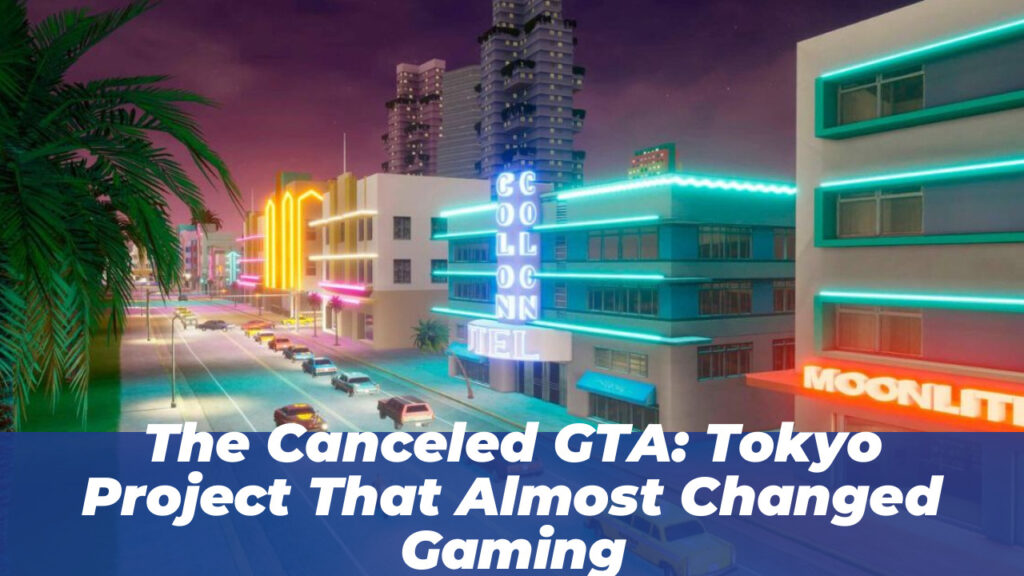
The history of open-world gaming is littered with ambitious projects that never saw the light of day, but few hold as much intrigue as the scrapped plan to bring a Grand Theft Auto title to the streets of Tokyo. Long before the series settled into its definitive modern identity, developers explored the possibility of exporting their signature brand of chaos to Japan.
Recent revelations from former technical leadership at Rockstar Games have shed light on this lost chapter. The project, which existed in the conceptual phase shortly after the massive success of the series’ third entry, serves as a fascinating look at what might have been a radical departure for the franchise.
The Origins of GTA: Tokyo
Post-GTA III ambition
Following the paradigm-shifting success of the series’ transition to a 3D environment, the studio felt empowered to experiment with global expansion. The team was eager to capitalize on their newfound technical prowess by applying the proven open-world formula to new, vibrant international settings.
Internal discussions at the time were characterized by a sense of limitless possibility. The developers were not yet constrained by the massive, multi-year production cycles that define the industry today, allowing for rapid brainstorming of potential locations that could sustain the series’ signature gameplay loops.
The vision for Japanese street culture
The proposed Tokyo project aimed to lean heavily into the unique aesthetic and cultural touchstones of Japan. Conceptually, the game was set to feature a distinct focus on underground street racing circuits and the integration of traditional weaponry, such as samurai swords, into the combat mechanics.
By blending the high-octane energy of Japanese car culture with the gritty underworld themes familiar to the franchise, the team hoped to create a unique atmosphere. This vision was intended to provide a fresh visual palette that stood in stark contrast to the American urban environments of previous titles.
Why the project never launched
Logistical hurdles in international contracts
Despite the creative enthusiasm surrounding the Tokyo concept, the project ultimately faltered due to complex operational realities. The plan involved outsourcing the development to a Japanese studio, a strategy that proved difficult to formalize during the early 2000s.
Negotiations for these international partnerships faced significant roadblocks, and the necessary contracts were never finalized. The lack of a secure agreement meant that the project could not move beyond the conceptual stage, forcing the team to abandon the idea before any meaningful assets were produced.
The shift toward American-centric satire
Beyond the logistical failures, a deeper strategic realization began to take hold within the studio. The team recognized that a significant portion of their brand identity was rooted in the biting, often cynical satire of American culture, which might not translate effectively to a foreign environment.
The developers realized that the series’ humor and narrative depth relied heavily on their intimate understanding of American social norms. Moving to Tokyo risked diluting this core satirical edge, leading the leadership to prioritize locations that allowed for a more authentic critique of the Western experience.
Exploring the road not taken
Other contenders like Bogota and Moscow
Tokyo was not the only city on the studio’s shortlist during this era of exploration. Internal archives reveal that the creative team seriously evaluated several other global cities, including Rio de Janeiro, Moscow, Istanbul, London, and Paris, as potential backdrops for future installments.
The studio even went as far as registering trademarks for various regional titles, such as Bogota, to protect their intellectual property as they vetted these options. This period of intense research highlights the global scope of the developers’ early ambitions for the franchise.
Why Tokyo was the primary candidate
Tokyo emerged as the frontrunner primarily due to its distinct visual and cultural identity, which offered a stark departure from the Western cities previously explored. The city’s dense, multi-layered urban landscape promised a unique playground for the series’ driving and exploration mechanics.
Furthermore, the fascination with Japanese street racing culture provided a clear gameplay hook that aligned perfectly with the franchise’s emphasis on vehicle-based missions. It was viewed as the most promising candidate for a successful, high-energy expansion outside of the North American market.
The technical limitations of the PS2 era
Hardware constraints and open-world density
Developing a sprawling, dense metropolis like Tokyo on the PlayStation 2 hardware presented massive technical challenges. The console’s limited memory and processing power made it difficult to capture the verticality and complexity of a city as intricate as the Japanese capital.
The team struggled to balance the need for a convincing open world with the technical realities of the time. Achieving the level of detail required to make a city like Tokyo feel authentic would have necessitated significant compromises in other areas, such as NPC density and draw distance.
Challenges of outsourcing development
The plan to outsource development to a third-party studio in Japan added another layer of technical risk. Coordinating between two different creative teams, especially across different time zones and cultural work environments, was an immense challenge for a studio accustomed to centralized control.
Ensuring that the game retained the specific “feel” of the franchise while being built by an external team was a major concern. Without a unified development pipeline, the risk of producing a title that felt disjointed or technically inferior to its predecessors remained a constant threat.
Impact on Rockstar’s long-term strategy
Solidifying the American satire model
The cancellation of the Tokyo project served as a pivotal moment that solidified the studio’s commitment to the “fictionalized America” model. By focusing on settings like Liberty City, Vice City, and San Andreas, the developers were able to refine their satirical voice to perfection.
This decision allowed the studio to build a consistent, recognizable brand that resonated deeply with global audiences. The focus on American pop culture became a defining pillar of the series, ensuring that every subsequent release felt like a cohesive part of a larger, satirical universe.
Evolution from localized to global production
While the early attempt to outsource a game to Japan failed, the experience provided valuable lessons that would eventually shape the studio’s modern production workflow. The shift from a single-studio focus to a global, multi-studio collaboration model is a direct result of these early growing pains.
Today, the studio utilizes a sophisticated, integrated network of teams across the globe to develop their massive titles. This evolution allows them to maintain the high quality and creative control that was once threatened by the logistical difficulties of the early 2000s.
Lessons from a canceled classic
How this shaped the modern open-world genre
The failure of the Tokyo project inadvertently set the stage for the genre’s current trajectory. By choosing to master the American setting, the studio created a blueprint for open-world design that balanced narrative depth with systemic freedom, a standard that other developers have chased for decades.
The lessons learned about the importance of cultural context and logistical alignment helped the studio refine their development processes. This ensured that when they eventually expanded their scope, they were equipped to handle the complexities of modern, large-scale game production.
Fan reception and historical significance
Fans have long speculated about the “lost” Tokyo game, viewing it as a legendary piece of gaming history. The recent confirmation of these details has only deepened the fascination, as players wonder how a Japanese-set entry might have influenced the evolution of the series.
This historical footnote serves as a testament to the studio’s early ambition and the complex decision-making processes that define the industry. It remains a compelling “what if” that highlights the delicate balance between creative vision and the realities of game development.
Frequently Asked Questions
Was the game ever playable?
The project never reached a playable prototype stage. Development was halted during the conceptual phase because the necessary contracts for outsourcing the work to a Japanese studio were never finalized, preventing the team from producing any active gameplay assets.
Why was Japan chosen over other global cities?
Tokyo was selected because of its unique aesthetic and the cultural appeal of its underground street racing and combat traditions. The team felt it offered the most distinct departure from Western settings while providing a compelling environment for the series’ established gameplay mechanics.
Could a future GTA return to Japan?
While Rockstar has never officially ruled out any location, their current strategy focuses on satirical depictions of American life. Any future departure from this model would require a significant shift in the studio’s creative philosophy and a deep commitment to capturing the cultural nuances of a new region.
How does this impact modern development?
The early failure of the Tokyo project influenced the studio’s shift toward a centralized, global production model. By learning from the logistical hurdles of the past, the studio developed the infrastructure necessary to manage complex, multi-year projects across their various international offices.
Conclusion: Reflecting on the evolution of the franchise
The story of the canceled Tokyo project is more than just a historical curiosity; it is a reflection of the franchise’s journey toward total dominance in the open-world genre. Through the process of elimination and strategic refinement, the studio discovered that their greatest strength lay in their ability to satirize the culture they knew best.
While the prospect of a Tokyo-based entry remains a tantalizing dream for many fans, the path taken by the developers has undoubtedly led to the creation of one of the most iconic series in entertainment history. The lessons learned from this early failure continue to resonate in the massive, polished, and culturally biting titles that define the modern gaming landscape.