
Meta is radically shifting away from heavy all-in-one headsets by introducing an ultra-lightweight form factor designed for all-day comfort. The upcoming hardware marks a massive design pivot for the company, focusing on an engineering philosophy that sheds facial bulk in exchange for a tethered computing architecture. Scheduled for a spring 2027 launch window, the baseline starting price is set at $1,299.99 USD, targeting professionals, media enthusiasts, and early adopters who demand high-end visual fidelity without the physical strain of traditional head-mounted displays.
- Architectural Breakthrough: The 100-Gram Visor and Tethered Puck
- Decoupling Processing from the Face
- Magnesium-Alloy Construction and Thermal Management
- Display Performance and Optical Architecture
- Micro-OLED Visuals and Pixel Density
- Field of View Considerations
- Under the Hood: Processing Power and Hardware Specs
- Snapdragon Reality Elite and Spatial Compute
- Foveated Rendering and Power Management
- Navigation and Input: Hands-Free Interaction
- Meta AI, Eye Tracking, and Gestures
- Alternative Controller and Peripheral Support
- Productivity and Workstation Integration
- Multi-Monitor Virtual Workspaces
- Direct DisplayPort Connectivity
- Immersive Entertainment and Streaming Partnerships
- IMAX Enhanced Certification and Spatial Audio
- 3D Media Catalogs and Disney Integration
- Live Sports and Gaming Ecosystem
- Live Immersive Broadcasts
- Gaming Compatibility and Hand-Tracked Modes
- Hologram Calling and Photorealistic Avatars
- Real-Time Facial Expression Capture
- Roadmap to Volumetric 6DoF Rendering
- Pricing, Release Window, and Global Availability
- Launch Timeline and Cost
- Technical Specifications Comparison Table
- Frequently Asked Questions
- When will the Meta VR Glasses be released?
- How much will the Meta VR Glasses cost?
- Why does the headset require a tethered puck?
- Are controllers included in the box?
Architectural Breakthrough: The 100-Gram Visor and Tethered Puck
Decoupling Processing from the Face
Engineering a comfortable wearable device requires removing heavy components from the front of the user’s face. Meta achieved this by separating the processing unit, battery, and storage from the headset housing. All the heavy computational lifting happens inside a pocket-sized computing puck that users can easily slip into a jacket pocket or rest on a desk.
An advanced optical fiber cable connects the visor directly to this compact puck. This high-speed tether ensures zero-latency data transmission between the hardware components while keeping the face-mounted portion remarkably light. By offloading the thermal and power demands to an external device, the visor remains cool and feather-light throughout extended use sessions.
Magnesium-Alloy Construction and Thermal Management
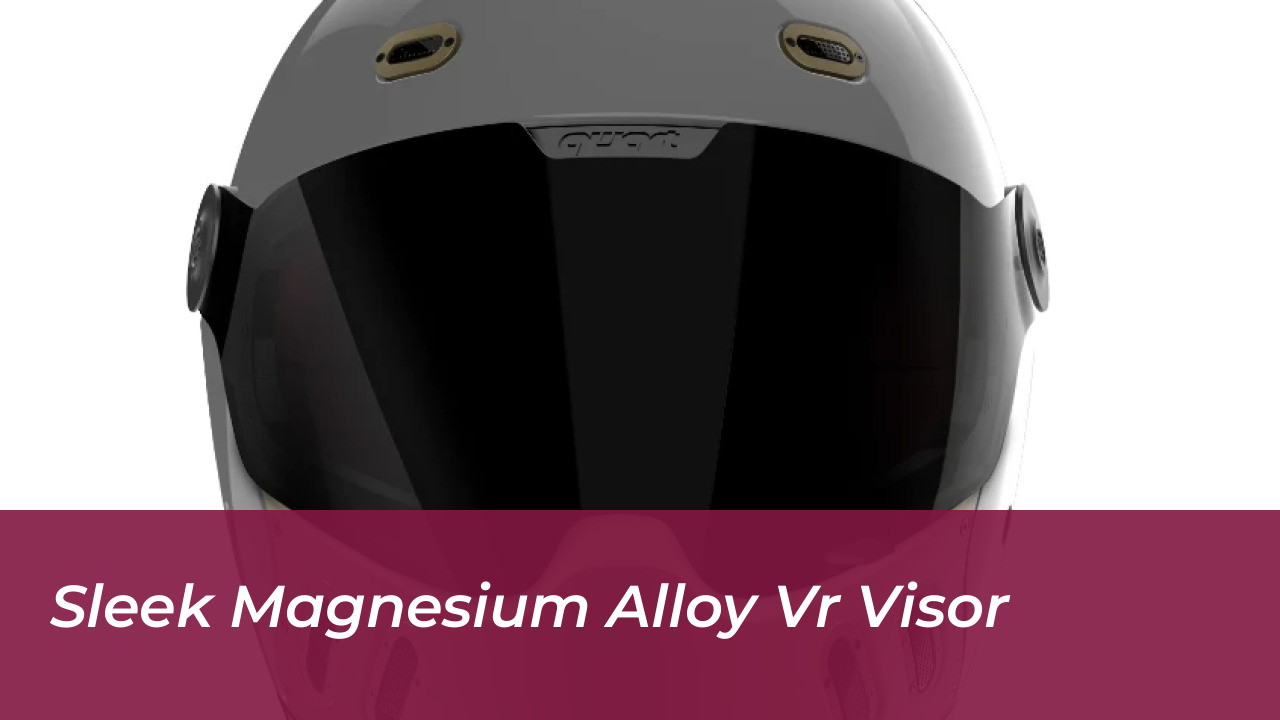
The magnesium-alloy visor houses solely the dual micro-OLED panels, optical sensors, and passthrough cameras. Utilizing lightweight metal allows for a fanless, passively cooled architecture that operates completely silently without requiring noisy internal cooling fans.
Unlike conventional standalone headsets that clamp tightly against the face, this device utilizes an open-periphery design. Users maintain natural peripheral awareness of their physical room, office desk, or airplane cabin. For movie viewings or focused gaming sessions, magnetic light blockers snap onto the frame instantly to block out external light and provide complete immersion.
Display Performance and Optical Architecture
Micro-OLED Visuals and Pixel Density
Visual fidelity relies on advanced micro-OLED display technology. Dual 2.4K micro-OLED panels deliver 2412 by 2288 pixels per eye at a smooth 120Hz refresh rate. Custom ultra-sharp pancake lenses yield 37 pixels per degree, which significantly sharpens text rendering for multi-monitor virtual workspaces.
The panels support high dynamic range color reproduction via Dolby Vision, marking Meta’s long-awaited return to non-LCD displays for its premium hardware lines. Deep black levels and vibrant color saturation elevate everything from spreadsheets to cinematic blockbusters.
Field of View Considerations
The optical system makes a deliberate trade-off regarding the field of view. Advertised dimensions span 70 degrees horizontally and 66 degrees vertically, resulting in an approximate 87-degree diagonal field of view. This specification sits below the 110-degree horizontal field of view found on the standard Meta Quest 3.
Engineers accepted this limitation to maintain a compact, glasses-like profile that prioritizes comfort and mixed-reality passthrough clarity over maximal peripheral occlusion. The result is a device that feels less like wearing a scuba mask and more like wearing a pair of high-end designer frames.
Under the Hood: Processing Power and Hardware Specs
Snapdragon Reality Elite and Spatial Compute
Qualcomm’s Snapdragon Reality Elite processor powers the computing puck, delivering high-performance mobile compute capabilities tailored for demanding spatial computing workloads. The standard configuration includes 12GB of high-speed RAM and 128GB of onboard storage.
A built-in microSD card slot on the external puck allows users to expand their local storage capacity effortlessly for media files and large application installs. This ensures users never run out of space when downloading offline movies or expansive productivity tools.
Foveated Rendering and Power Management
Eye-tracked foveated rendering optimizes graphical output by reducing GPU load in non-focal areas. This technique ensures silky smooth frame rates while rendering high-resolution assets across demanding applications without stuttering.
The internal battery within the compute puck provides up to three hours of continuous high-resolution media playback. The device supports 45-watt fast charging standards, allowing users to replenish power quickly via standard USB-C power delivery bricks.
Navigation and Input: Hands-Free Interaction
Meta AI, Eye Tracking, and Gestures
Physical handheld controllers are completely absent from the default retail package. Navigation depends entirely on integrated Meta AI processing, which interprets voice commands, precise eye tracking, and natural hand gestures seamlessly.
Users open applications, manage virtual browser windows, and initiate media playback using simple finger pinches and spatial gestures. The system tracks hand movements instantly, making digital interaction feel completely natural and effortless.
Alternative Controller and Peripheral Support
Users who require traditional controller input for specific gaming genres can purchase separate Touch Plus controllers in a matte-black finish. Universal Bluetooth compatibility also allows users to connect standard gamepads or wireless keyboards directly to the computing puck.
Productivity and Workstation Integration
Multi-Monitor Virtual Workspaces
Productivity features allow users to project multiple virtual screens into their physical environment while maintaining full-color passthrough visibility of their desk, keyboard, and coffee cup. Any flat physical surface converts into a virtual keyboard and trackpad through optical hand tracking.
Working on the go becomes exceptionally easy, as professionals can replace physical multi-monitor setups with infinite floating virtual displays that scale to any room size.
Direct DisplayPort Connectivity
A major connectivity upgrade lets users plug any USB-C DisplayPort device directly into the computing puck. Smartphones, Windows laptops, MacBooks, and portable gaming handhelds project high-definition virtual displays without requiring external capture cards.
Immersive Entertainment and Streaming Partnerships
IMAX Enhanced Certification and Spatial Audio
Meta positions the hardware as a portable personal cinema backed by major streaming and entertainment partnerships. The device is the first virtual reality hardware certified as IMAX Enhanced, granting users access to select films in exclusive expanded aspect ratios.
Dolby Atmos spatial audio integrated directly into the frame arms delivers cinema-grade soundscapes without requiring external headphones. Streaming applications available at launch include Prime Video, YouTube, DIRECTV, AMC+, Crunchyroll, Plex, and Tubi.
3D Media Catalogs and Disney Integration
Platforms such as Peacock, Max, and Paramount+ introduce 3D media catalogs to the ecosystem. Disney+ integration brings 3D films in select countries, accompanied by immersive virtual environments based on locations like Avengers Tower and Tatooine.
Specialized apps like the Disney Immersive Cinema by ILM app feature VR-enhanced versions of blockbuster movies, providing a completely fresh way to experience cinematic history.
Live Sports and Gaming Ecosystem
Live Immersive Broadcasts
Sports programming forms a core pillar of the entertainment ecosystem. ESPN provides 8K streaming feeds and 180-degree immersive camera angles starting with college football broadcasts.
Partnerships with Major League Baseball, NBC Sports, TNT Sports, and the Ultimate Fighting Championship deliver over 100 live immersive sporting events annually right to your virtual living room.
Gaming Compatibility and Hand-Tracked Modes
Gaming support includes full compatibility with the existing Meta Quest library of thousands of titles. Over 75 games feature native hand-gesture controls at launch, including a specialized hand-tracked mode for Beat Saber named Flux.
Xbox Cloud Gaming enables subscribers to stream hundreds of high-end titles using a standard Bluetooth controller linked to the compute puck.
Hologram Calling and Photorealistic Avatars
Real-Time Facial Expression Capture
Communication features introduce Hologram calling, replacing traditional cartoon-style avatars with photorealistic digital representations. The system captures real-time facial expressions and reactions, positioning callers via spatial audio directly within the user’s field of view.
Integration with standard communication platforms like WhatsApp and Zoom allows users to join flat-screen video calls while appearing as a photorealistic face-tracked avatar.
Roadmap to Volumetric 6DoF Rendering
At launch, the spatial Hologram feature renders as a stereoscopic video stream viewed from a fixed front-angle perspective. Meta plans to evolve this technology into a fully volumetric 6DoF spatial rendering system in subsequent software updates.
Pricing, Release Window, and Global Availability
Launch Timeline and Cost
Meta scheduled the official retail launch of the Meta VR Glasses for spring 2027 at a starting price of $1,299.99 USD in the United States. International market rollouts for Canada, Europe, and the UAE will follow shortly after initial domestic shipments.
Technical Specifications Comparison Table
| Feature / Specification | Meta VR Glasses | Meta Quest 3 |
|---|---|---|
| Weight (Visor Only) | ~100 grams | 515 grams |
| Display Technology | Dual 2.4K Micro-OLED | Single 4K+ LCD |
| Field of View | 87° Diagonal (~70° H / 66° V) | 110° Horizontal / 96° Vertical |
| Compute Architecture | Tethered External Puck | Self-Contained On-Device Processor |
| On-Processor | Qualcomm Snapdragon Reality Elite | Qualcomm Snapdragon XR2 Gen 2 |
| Default Controllers | None (Hand/Eye/Voice Navigation) | Touch Plus Controllers Included |
| Base Launch Price | $1,299.99 USD | $499.99 USD |
Frequently Asked Questions
When will the Meta VR Glasses be released?
The headset is scheduled for release in spring 2027, with exact day-one shipping dates and pre-order schedules announced closer to the official launch window.
How much will the Meta VR Glasses cost?
The baseline starting price is confirmed at $1,299.99 USD in the United States, with international pricing varying by regional taxes and import fees.
Why does the headset require a tethered puck?
Separating processing, battery, and storage into a pocket-sized puck reduces visor weight down to 100 grams, ensuring maximum all-day comfort without facial strain.
Are controllers included in the box?
The default package relies on hand gestures, eye tracking, and voice commands. However, Touch Plus controllers are available separately or in specific retail bundles.