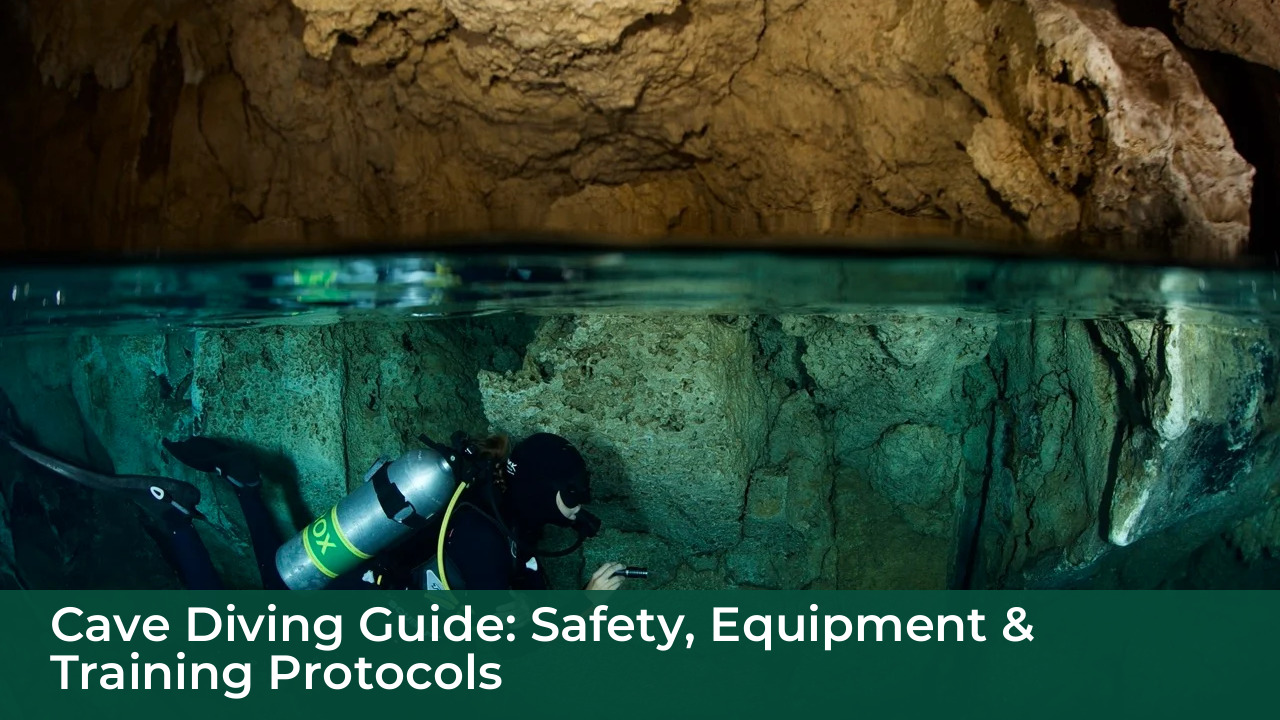
Entering a subterranean aquatic chamber creates an immediate psychological and physiological shift. Recreational open water diving relies on an open vertical column, where a direct swim upward provides immediate access to the surface and atmospheric air. Subterranean environments remove this fundamental safety valve. An overhead rock ceiling introduces absolute zero-surface access, changing every aspect of breathing gas management, propulsion techniques, and emergency response. Transitioning into this extreme domain demands specialized technical training, rigid mental discipline, and absolute respect for physical boundaries.
- Cavern Versus Cave: Understanding Environmental Classifications
- Core Safety Philosophies and the Legacy of Sheck Exley
- Essential Equipment Configurations for Overhead Environments
- Gas Management Mathematics and the Rule of Thirds
- Navigation Systems, Guidelines, and Reel Management
- Zero-Visibility Silt-Outs and Emergency Procedures
- Fluid Dynamics in Specialized Subterranean Settings
- Global Cave Diving Destinations and Geological Wonders
- Frequently Asked Questions
- What is the difference between cavern and cave diving?
- What is the Rule of Thirds in cave diving?
- How many lights are required for cave diving?
- What causes a silt-out and how do divers handle it?
- Which global locations are famous for technical cave diving?
Pioneering explorers over the past half-century mapped these silent labyrinths through trial, error, and devastating tragedy. Early attempts at underground penetration often ended in disaster because participants treated subterranean chambers like deeper ocean reefs. Modern survival standards emerged directly from the painful lessons of early losses. These guidelines transformed an inherently fatal pastime into a structured technical discipline governed by strict engineering principles, physics, and redundant life support.
Cavern Versus Cave: Understanding Environmental Classifications
Understanding the strict separation between cavern and cave diving prevents fatal miscalculations by untrained visitors. The cavern zone represents the transitional threshold of a subterranean system. Regulatory bodies define this zone by three non-negotiable parameters: maintenance of natural sunlight visibility, a maximum depth of seventy feet, and a strict linear distance limit of one hundred thirty feet from the surface entrance. This daylight zone provides immediate visual orientation and a straight-line exit path to open air.
Crossing the boundary where natural sunlight fades entirely moves a diver into the true cave zone. This dark environment requires artificial illumination and advanced navigation equipment. The physical boundaries shift instantly. Depth restrictions expand based on technical certification limits, but exit visibility drops to zero without high-output dive lights. Divers must navigate intricate rock formations, hanging silt layers, and multi-passage intersections. Respecting these boundaries requires humility, rigorous equipment checks, and constant monitoring of personal stress levels.
The transition zone between light and dark acts as a psychological filter. Many open-water certified divers experience unexpected panic when natural light shrinks to a distant blue pinprick. Technical training programs build psychological resilience through progressive exposure in controlled cavern environments before allowing any penetration into the dark zone. Divers learn to trust their gauges, their buddy teams, and their continuous guidelines rather than relying on instinctive, panic-driven ascents that lead directly into solid rock ceilings.
Core Safety Philosophies and the Legacy of Sheck Exley
Modern subterranean exploration owes its safety architecture entirely to legendary explorer Sheck Exley. During the formative decades of underwater exploration, Exley codified the core survival rules that remain foundational across global technical training agencies. His analytical approach treated every dive as a physics problem where emotional responses, ego, and hubris invited fatal outcomes. Exley realized that cave diving leaves zero margin for error, requiring a complete rejection of recreational complacency.
Risk management in this space relies heavily on ego control and self-restriction. A diver must possess the mental fortitude to turn back at the exact moment a piece of equipment fails, a partner shows signs of stress, or a gas calculation hits a pre-determined limit. Pushing deeper simply because a site looks inviting violates the core tenets of technical safety. Survival depends on strict adherence to personal limits, environmental constraints, and the absolute elimination of unnecessary variables.
Redundancy forms the bedrock of Exley’s philosophy. Every single piece of critical life support hardware requires an independent backup. If a regulator fails, a backup second stage provides gas instantly. If a primary light floods, two independent backup lights maintain visibility. This philosophy extends to psychological readiness, gas supply calculations, and navigation lines. Expecting equipment to fail at the worst possible moment ensures the diver carries the necessary backups to handle emergencies without hesitation.
Essential Equipment Configurations for Overhead Environments
Managing life support hardware inside tight subterranean restrictions requires meticulous gear streamlining. Divers typically choose between Sidemount and Backmount dual-tank configurations. Backmount rigs place twin high-pressure cylinders on the diver’s back, connected via an isolated manifold valve system that allows access to both tanks through a single valve failure-isolation drill. This setup offers massive gas volumes but creates challenges when navigating low profile bedding planes or narrow vertical restriction points.
Sidemount configurations mount independent cylinders along the diver’s flanks. This setup shifts the profile entirely, allowing divers to unclip individual tanks and push them forward through extremely tight constrictions before sliding through. Sidemount diving provides superior redundancy management, as each tank operates on an entirely separate first and second-stage regulator with zero shared manifold vulnerabilities. Streamlining hoses, routing pressure gauges tightly against the body, and securing dangling clips prevents catastrophic snagging on fragile formations or guideline reels.
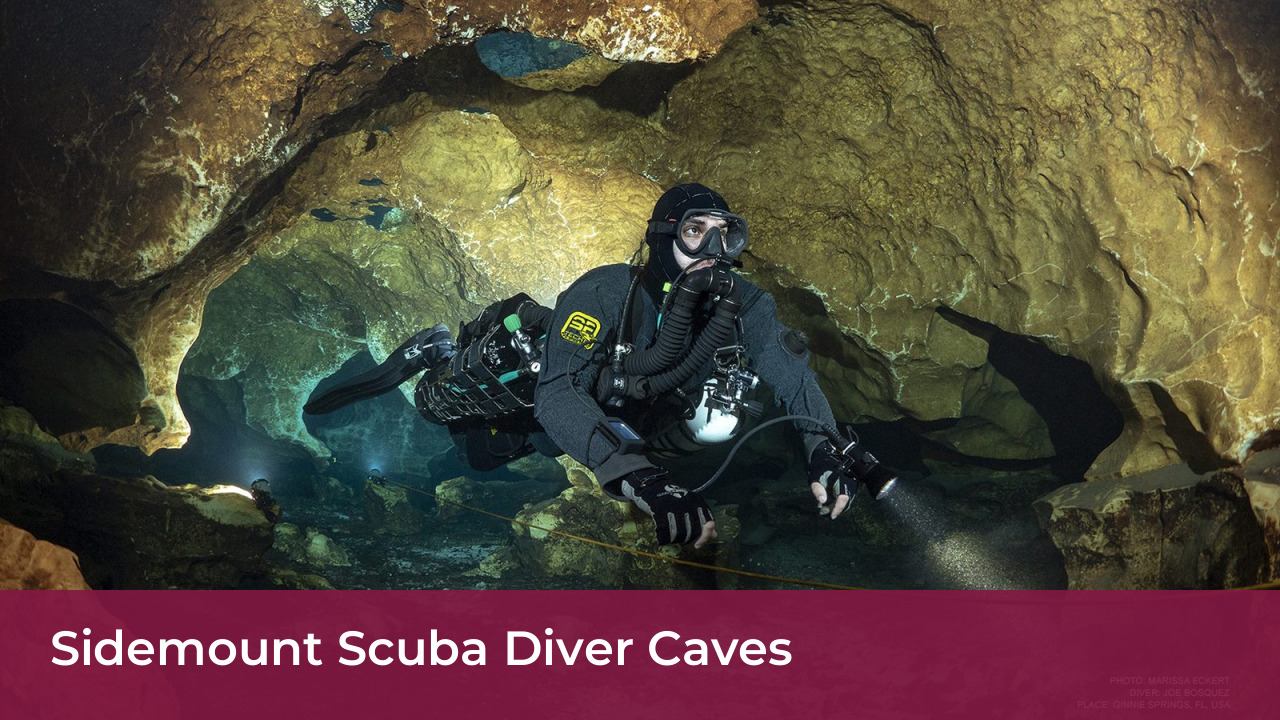
Illumination standards in overhead environments require a minimum of three independent lights per diver. One primary canister light delivers high-lumen output with a heavy-duty battery pack mounted on the harness waist. Two independent backup lights mount securely on the upper chest D-rings, ready for immediate deployment if the primary unit fails. Buoyancy control mastery and propulsion techniques dictate whether a dive succeeds or ends in disaster. Standard kicking styles throw up blinding silt clouds, forcing divers to master modified frog kicks, helicopter turns, and pull-and-glide techniques.
Gas Management Mathematics and the Rule of Thirds
Breathing gas calculations in overhead environments leave no room for emotional guessing. The universal Rule of Thirds governs all standard technical penetration dives. Divers divide their total starting gas volume into three distinct mathematical portions: one-third for the journey inward, one-third for the return journey out, and one final third held strictly in reserve for emergencies, such as sharing gas with an out-of-gas partner during a long exit.
Turning points must be calculated before ever descending below the surface. A diver reaches the pre-determined pressure threshold, signals their partner, and immediately reverses direction. External factors require dynamic adjustment of these math principles. High water flow, strong currents, heavy silt conditions, or elevated psychological stress increase respiratory rates, consuming breathing gas faster than anticipated. Advanced technical profiles utilizing Nitrox and Trimix stage bottles demand complex gas planning matrices to manage decompression obligations and nitrogen narcosis limits.
| Gas Management Metric | Standard Allocation | Operational Purpose |
|---|---|---|
| Outbound Third | 33.3% of Total Gas | Used for penetrating the system and reaching destination objectives. |
| Inbound Third | 33.3% of Total Gas | Consumed during the exact return swim back to the cavern entrance. |
| Reserve Third | 33.3% of Total Gas | Held safely in reserve for partner emergencies, long exits, and contingencies. |
Complex multi-bottle technical dives introduce sophisticated decompression gas algorithms. Divers carrying stage bottles filled with oxygen-rich mixtures must calculate maximum operating depths to avoid oxygen toxicity while accelerating off-gassing during final ascent phases. Every cylinder requires precise gas analysis, clear labeling with maximum operating depths, and careful tracking of individual consumption rates. Gas management errors underwater eliminate safety margins instantly, transforming a controlled exploration into a critical survival scenario.
Navigation Systems, Guidelines, and Reel Management
A continuous physical guideline serves as the absolute umbilical cord linking a diver back to open water. Deploying, securing, and retrieving this line requires absolute mechanical precision. The lead diver feeds out line from a primary reel, wrapping the line securely around permanent rock tie-offs or heavy stalagmites to prevent any slack from forming. Slack line invites loops, tangles, and catastrophic entanglement hazards that trap divers in total darkness.
Subterranean navigation relies on primary lines, jump reels, and permanent survey markers. When exploring side passages branching off a main line, divers deploy a jump reel to bridge the gap securely without losing continuity. Permanent survey lines installed by mapping teams require respectful handling to protect fragile scientific markers and directional arrow placements. These arrows always point toward the nearest exit, providing vital directional orientation when visibility drops or adrenaline spikes.
Preventing entanglement demands flawless equipment configuration. Loose hoses, dangling consoles, and unclipped straps catch stray guideline loops instantly. Divers practice line-following drills in zero-visibility conditions, training their hands to track a guideline continuously while maintaining proper buoyancy and body trim. If a line breaks or a tangle occurs, the diver must remain calm, halt all forward movement, signal their partner, and systematically untangle the line using touch alone.
Zero-Visibility Silt-Outs and Emergency Procedures
Disturbing fine floor sediment transforms a crystal-clear subterranean chamber into an opaque, zero-visibility soup within seconds. This phenomenon, known as a silt-out, strips away all visual reference points and induces immediate spatial disorientation. Panic represents the primary hazard during a silt-out. Divers must instantly halt all forward motion, establish neutral buoyancy, and make physical contact with their buddy or the continuous guideline.
Touch-contact communication protocols take over when vision fails completely. Divers utilize standardized hand signals executed directly against each other’s bodies or forearms. When a diver loses contact with the guideline entirely, structured search patterns become mandatory. The team deploys a designated lost-line search procedure, anchoring a backup reel at the last known position and sweeping in widening circles until the line is relocated.
Air-sharing protocols during zero-visibility emergencies test the absolute limits of technical training. If a partner runs completely out of gas, the donor instantly presents their long-hose secondary regulator while maintaining physical contact. The team begins a slow, controlled exit while breathing from a single gas source in pitch-black water. Executing this drill smoothly requires thousands of hours of repetitive muscle memory practice during surface training sessions.
Fluid Dynamics in Specialized Subterranean Settings
Subterranean waters present complex fluid dynamics that challenge even seasoned technical divers. In Mexican cenotes, freshwater lenses float directly on top of dense saltwater layers. Crossing this chemical boundary creates an optical illusion known as a halocline. The water shimmers and bends light refraction dramatically, temporarily distorting depth perception and visual clarity. Divers must maintain strict buoyancy control through these layers to avoid crashing into delicate limestone formations.
High-flow river caves introduce crushing hydraulic forces. Navigating bottlenecks, underwater waterfalls, and strong constrictions requires immense physical exertion and precise positioning. Divers must utilize rock crevices, natural eddies, and wall contours to inch forward against rushing torrents. Sump diving takes these fluid dynamics further, alternating between flooded subterranean tunnels and air-filled dry cave chambers that require shedding heavy scuba gear and crawling across wet limestone.
Dry-cave connections during multi-environment expeditions demand specialized equipment handling. Divers remove their cylinders, push them through narrow sumps, and don them on the other side in dry chambers. These complex multi-environment profiles require extensive logistical planning, deep physiological stamina, and unwavering trust within the expedition team. Understanding water flow velocities and tidal influences prevents divers from getting pinned against restrictions or swept away by sudden subterranean floods.
Global Cave Diving Destinations and Geological Wonders
The global map of subterranean exploration features breathtaking geological wonders and monumental technical challenges. In Mexico’s Yucatan Peninsula, Sistema Sac Actun spans an astonishing mapped network of underground passages, featuring fossilized Pleistocene megafauna bones and ancient Mayan artifacts. Nearby Cenote Angelita offers a surreal dive through a hydrogen sulfide cloud that mimics an underwater river flowing through a deep forest floor.
Florida represents the historic birthplace of American technical cave diving. Ginnie Springs provides crystal-clear freshwater systems favored for training, while Eagle’s Nest features a massive vertical sinkhole dropping down through deep technical chambers that test the extreme limits of mixed-gas diving. These sites demand absolute adherence to safety protocols due to their depth, labyrinthine layouts, and strict conservation regulations.
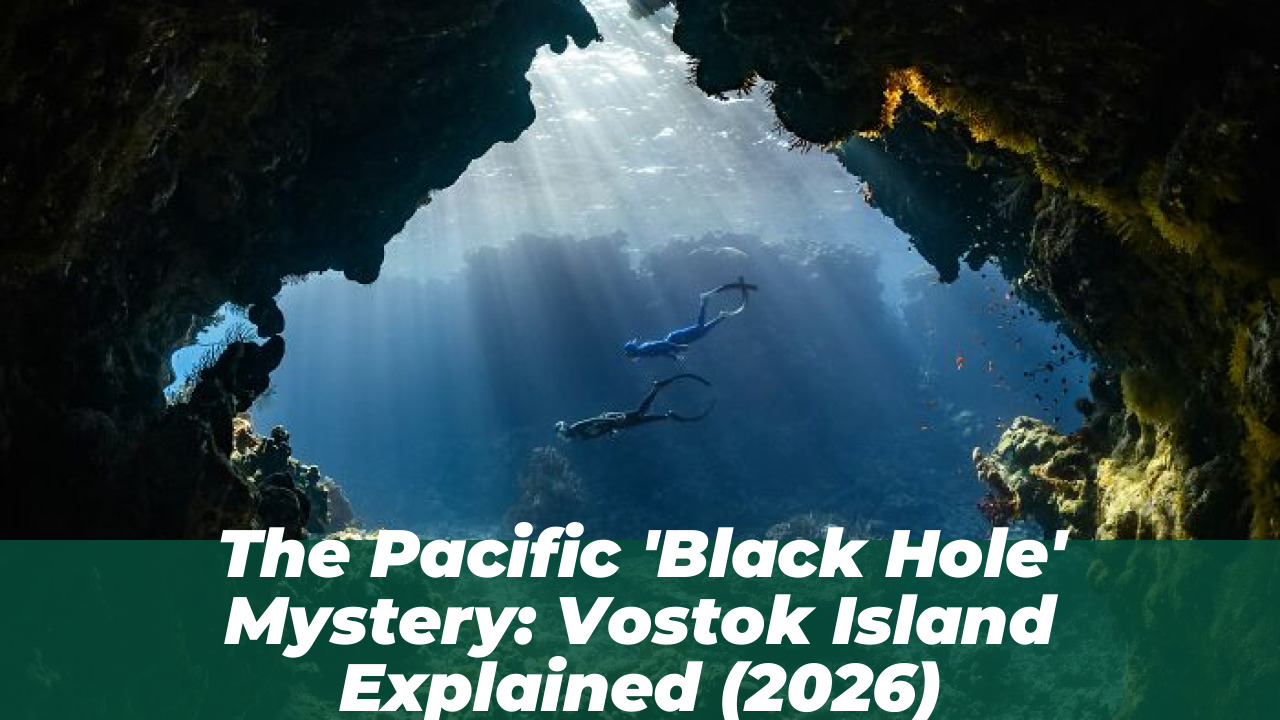
International subterranean frontiers offer diverse geological formations across every continent. Chandelier Cave in Palau features stunning marine limestone chambers adorned with massive stalactites formed during lower sea level epochs. Grotta di Nereo in Sardinia showcases expansive Mediterranean sea caves bathed in brilliant blue light beams. Kilsby’s Sinkhole in Australia offers unique diving inside a massive volcanic collapse sinkhole situated in an agricultural farming landscape. Each global location reinforces the core reality that subterranean exploration rewards disciplined preparation with sights witnessed by only a tiny fraction of humanity.
Frequently Asked Questions
What is the difference between cavern and cave diving?
Cavern diving restricts participants to natural sunlight zones, a maximum depth of seventy feet, and a strict linear distance limit of one hundred thirty feet from the surface entrance. Cave diving allows deep penetration into total darkness, requiring specialized technical training, continuous guidelines, artificial lighting, and advanced gas management protocols.
What is the Rule of Thirds in cave diving?
The Rule of Thirds is a mathematical gas management standard. Divers divide their total breathing gas supply into three equal portions: one-third for the journey inward, one-third for the return journey out, and one-third held in permanent reserve for emergencies or out-of-gas partner sharing.
How many lights are required for cave diving?
Technical diving standards require a minimum of three independent lights per diver. This configuration includes one high-output primary canister light and two independent backup illumination devices mounted securely on the harness.
What causes a silt-out and how do divers handle it?
A silt-out occurs when fine sediment on the cave floor or ceiling gets disturbed by improper fin kicks or poor buoyancy, completely eliminating visibility. Divers handle this by halting all movement, establishing neutral buoyancy, making physical contact with their guideline, and relying on touch-contact communication.
Which global locations are famous for technical cave diving?
Prominent global cave systems include Sistema Sac Actun and Cenote Angelita in Mexico, Ginnie Springs and Eagle’s Nest in Florida, Chandelier Cave in Palau, Grotta di Nereo in Italy, and Kilsby’s Sinkhole in Australia.