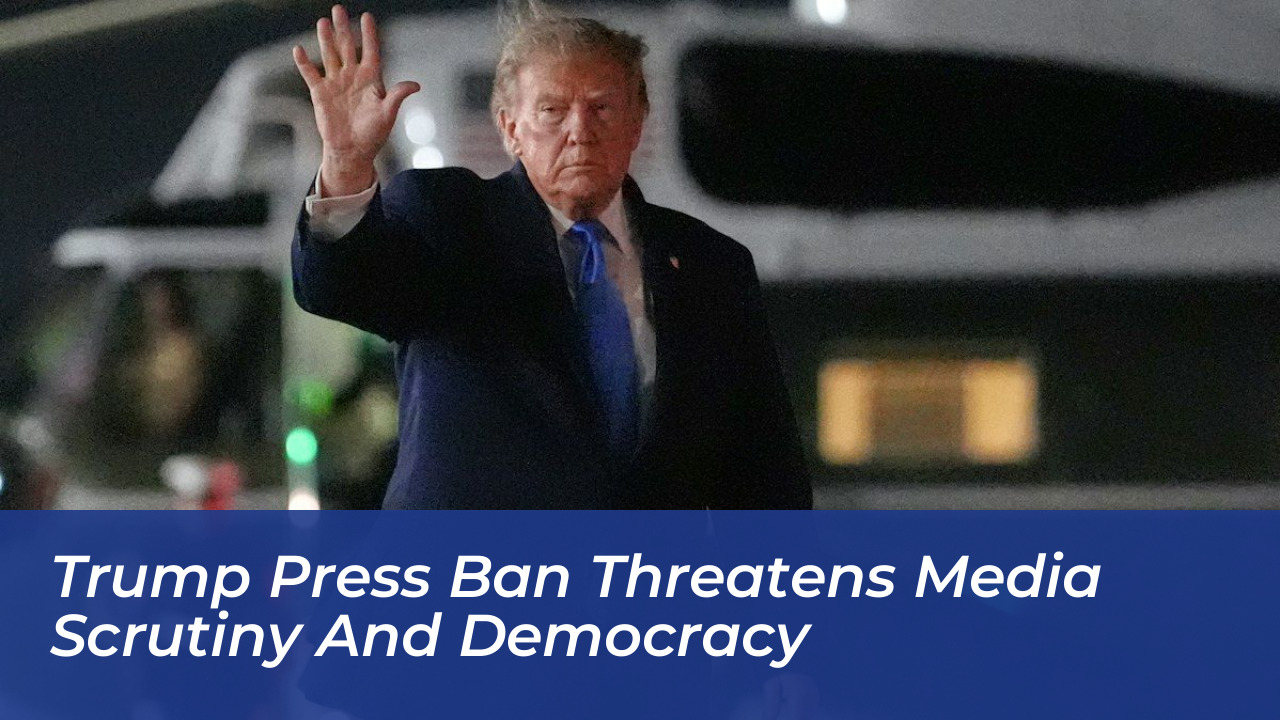
The recent White House press ban affecting CNN, MS NOW, and Politico has ignited a fierce national debate concerning executive power, government transparency, and constitutional rights. As the federal government attempts to silence critical reporting, the foundations of traditional democratic accountability face an unprecedented stress test. This sweeping exclusion of major newsrooms challenges the absolute boundaries of executive discretion and threatens the free flow of information required in an open society.
- The Anatomy of the White House Press Ban
- Timeline of Events and Exclusions
- The Department of Justice Defense
- Legal Precedents and the First Amendment Battleground
- Sherrill v. Knight and Press Pass Protections
- The Role of the Judiciary
- The Fallout: Media Solidarity and Alternative Broadcasts
- Journalistic Solidarity and Pool Boycotts
- The Digital Pivot and Direct Communication
- Implications for Democratic Accountability and Public Information
- Information Monopoly Versus Independent Oversight
- Precedent for Future Administrations
- National Security Claims Versus Censorship
- Evaluating Security Exemptions
- Frequently Asked Questions
- Can the White House legally ban specific news organizations?
- What legal grounds did the Department of Justice use to defend the ban?
- How have other journalists responded to the press ban?
- Who is presiding over the lawsuit filed against the administration?
The Anatomy of the White House Press Ban
Timeline of Events and Exclusions
The escalation began on September 18 when the administration publicly announced a sweeping ban against CNN, MS NOW, and Politico. Officials labeled these outlets as fake news and cited anonymous sources alongside unfair reporting practices as the justification for the directive. Just one day later, on September 19, physical access to the executive complex was denied to reporters and producers from these organizations.
Faced with a direct threat to operational freedom, legal teams representing the affected networks moved quickly. On September 21, an immediate federal lawsuit was filed in the District of Columbia challenging the administration’s authority to revoke press credentials based on editorial content. This swift legal action set the stage for a showdown between the executive branch and the judiciary.
The Department of Justice Defense
Government lawyers submitted formal defense filings to U.S. District Judge Timothy Kelly, outlining the legal rationale used by the administration. The Department of Justice argued that physical access to the White House grounds is a privilege rather than a constitutional right. According to this view, the executive branch maintains absolute discretion over who enters the working spaces of the presidential complex.
Beyond the privilege argument, the DOJ introduced national security claims into the legal proceedings. Government filings alleged that the banned organizations published sensitive details regarding the construction of the East Wing bunker and Secret Service security funding. Legal analysts noted that weaponizing security protocols represents a novel strategy to justify what critics describe as viewpoint-based discrimination.
Legal Precedents and the First Amendment Battleground
Sherrill v. Knight and Press Pass Protections
At the center of the ongoing litigation lies the tension between executive privilege and constitutional guarantees protecting a free press. The lawsuit filed by CNN, MS NOW, and Politico relies heavily on foundational legal precedents, most notably the 1970s landmark ruling in Sherrill v. Knight. In that case, a federal appeals court determined that the White House cannot arbitrarily deny press passes to reporters based on the content of their coverage once press facilities are voluntarily opened to the media.
First Amendment scholars emphasize that the current ban differs significantly from previous minor restrictions. While past administrations occasionally sparred with individual outlets, such as the Associated Press over a geographic naming dispute, those actions were narrow and targeted. In contrast, the sweeping ban on three major news networks creates a broader constitutional question regarding viewpoint-based discrimination. Roy Gutterman, director of the Tully Center for Free Speech at Syracuse University, points out that denying access simply because an administration dislikes an outlet crosses a distinct legal line.
The Role of the Judiciary
U.S. District Judge Timothy Kelly presides over the request for a temporary restraining order against the administration. Judge Kelly brings relevant experience to the bench, having previously ordered the White House to restore a reporter press badge in a similar 2018 dispute. The judiciary must carefully evaluate the balance between executive privilege and the constitutional rights of the press under intense public scrutiny.
The Fallout: Media Solidarity and Alternative Broadcasts
Journalistic Solidarity and Pool Boycotts
The exclusion of major news organizations has triggered immediate solidarity across the broader journalistic community. The White House Correspondents’ Association protested the administration actions by refusing to continue operating the shared television media pool. This collective pushback underscores the severity with which industry leaders view the White House directive, as cooperative reporting infrastructure relies on unhindered access for all credentialed members.
The Digital Pivot and Direct Communication
Concurrently, the administration has doubled down on alternative communication channels to bypass traditional media intermediaries entirely. Alongside the press restrictions, the White House launched a dedicated YouTube channel designed to distribute unfiltered messages directly to the public. However, the channel struggles to attract significant mainstream viewership.
This digital pivot runs parallel to mounting friction with networks like MS NOW, which frequently interrupts live presidential broadcasts to correct factual inaccuracies. Meanwhile, aggressive questioning from journalists such as CNN chief White House correspondent Kaitlan Collins highlights the ongoing breakdown in official press relations.
Implications for Democratic Accountability and Public Information
Information Monopoly Versus Independent Oversight
Restricting access to the executive branch alters the flow of verified information available to the American public. When an administration blocks specific newsrooms based on editorial content, it curtails independent oversight of government operations. Democratic accountability relies on adversarial questioning and rigorous scrutiny from reporters who challenge official narratives without fear of administrative retaliation.
By sidelining critical outlets, the administration attempts to curate a singular, unchallenged narrative within the executive complex. Citizens depend on independent journalists to uncover administrative overreaches, budget allocations, and security protocols that affect the national interest.
Precedent for Future Administrations
A legal victory for sweeping, viewpoint-based bans grants future executive branches unprecedented power to silence unfavorable reporting. Establishing a precedent where an administration can pick and choose which news organizations are allowed inside government buildings undermines the core tenets of an open democracy. The current litigation will determine whether executive discretion supersedes the constitutional right of citizens to receive independent reporting.
National Security Claims Versus Censorship
Evaluating Security Exemptions
The Justice Department defense hinges heavily on allegations of compromised national security. Government lawyers asserted in court filings that CNN, MS NOW, and Politico violated standards of professionalism and decorum by publishing sensitive details. Specific incidents cited include reporting on the construction of the East Wing bunker and investigations into security funding.
However, media advocates argue that labeling routine investigative reporting as a national security threat serves as a convenient pretext for suppressing unfavorable journalism. True national security exemptions require concrete evidence of compromised operations, rather than generalized frustration over critical coverage. As Judge Kelly evaluates the request for a temporary restraining order, the judiciary must determine where legitimate executive protection ends and unconstitutional censorship begins.
Frequently Asked Questions
Can the White House legally ban specific news organizations?
While presidents possess broad discretion over who receives interviews or private meetings, federal precedents like Sherrill v. Knight establish that the White House cannot arbitrarily revoke hard press passes based on the viewpoint or content of a reporter coverage.
What legal grounds did the Department of Justice use to defend the ban?
The DOJ argued that physical access to the White House complex is a privilege rather than a right. They also cited national security concerns, claiming that the banned outlets published classified or sensitive security information regarding executive infrastructure.
How have other journalists responded to the press ban?
In a rare display of industry solidarity, the White House Correspondents’ Association protested the exclusions by refusing to operate the shared television media pool, demonstrating unity among credentialed media members.
Who is presiding over the lawsuit filed against the administration?
U.S. District Judge Timothy Kelly, an appointee who previously ruled against the White House in a similar press access case in 2018, is overseeing the current litigation in the District of Columbia.