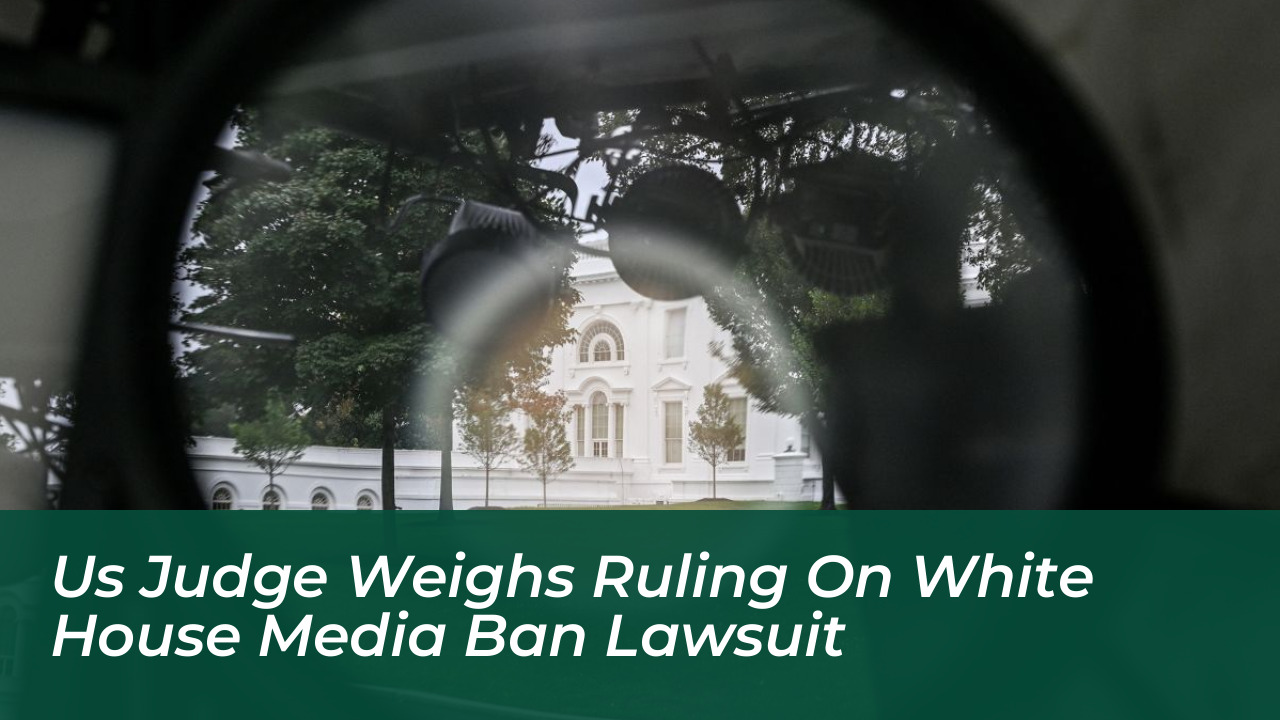
Federal court proceedings have intensified regarding the recent White House press credential revocations targeting CNN, Politico, and MS NOW. U.S. District Judge Timothy Kelly presided over a high-stakes telephonic hearing on September 23, 2026, to evaluate an emergency motion for a temporary restraining order. This legal showdown places executive branch authority directly against First Amendment protections and procedural due process. The outcome of this case will define the boundaries of journalistic access inside the executive complex for years to come.
- The Courtroom Showdown: Judge Kelly Expresses Skepticism
- Key Arguments During the 45-Minute Hearing
- Government Defense and National Security Claims
- Constitutional Framework and Due Process Violations
- Fifth Amendment Safeguards and Post-Revocation Failures
- The Precedent of Sherrill v. Knight and the Acosta Case
- Industry Solidarity and Collective Action
- Broadcaster Boycotts and Amicus Briefs
- Operational Gaps: Security Tier Reclassifications and Regional Impacts
- Broader Legal Ramifications for Presidential Media Access
- Digital-First Media Streams and Traditional Press Briefings
- Anticipated Judicial Timeline and Next Steps
- Frequently Asked Questions
- What triggered the current White House media ban lawsuit?
- What role does Judge Timothy Kelly play in this case?
- What constitutional amendments are central to this lawsuit?
- How have other news networks responded to the credential revocations?
The Courtroom Showdown: Judge Kelly Expresses Skepticism
Key Arguments During the 45-Minute Hearing
The legal battle began when a coalition of major media organizations filed an emergency motion for a temporary restraining order to stop the White House from blocking their reporters. During the 45-minute telephonic hearing, Judge Timothy Kelly focused heavily on the total absence of pre-deprivation notice before access was terminated. The executive branch stripped reporters of their hard passes overnight without offering an initial opportunity to respond to allegations.
The legal team for the plaintiffs, led by prominent First Amendment attorney Theodore Boutrous, argued that these actions constitute clear viewpoint-based discrimination. Boutrous pointed directly to public statements made by President Donald Trump on Truth Social and in the Oval Office. The president explicitly tied the credential bans to ongoing frustrations with critical news coverage, giving the plaintiffs strong ammunition to argue that the bans targeted specific viewpoints rather than administrative infractions.
Government Defense and National Security Claims
Department of Justice attorney Michael Kenneth Velchik defended the administration actions by framing the credential revocation as an urgent necessity. Velchik cited national security reporting concerns and alleged breaches of executive ground rules by the affected organizations. The government argued that recent reporting regarding sensitive military readiness matters and infrastructure modifications on executive grounds justified restricting physical access.
The executive argument frames White House press access as a privilege rather than an absolute constitutional right. The Justice Department maintained that the executive branch holds broad administrative powers to manage security within the presidential compound without interference from the judiciary. However, this defense faced immediate pushback regarding the suddenness of the enforcement and the lack of transparent administrative channels.
Constitutional Framework and Due Process Violations
Fifth Amendment Safeguards and Post-Revocation Failures
The core of the legal dispute examines the post-revocation letters sent to affected media organizations after their badges were deactivated. These letters offered a brief and restricted window to contest the ban after the fact. Legal experts note that notification after credential seizure violates established administrative law standards and fails the baseline requirements of the Fifth Amendment.
Due process requires notice and an opportunity to be heard before the government deprives an individual or entity of a protected interest. By seizing credentials first and explaining the reasoning later, the administration inverted standard administrative protocols. The binding weight of historical precedent heavily favors the media coalition on this specific procedural flaw.
The Precedent of Sherrill v. Knight and the Acosta Case
This legal challenge carries significant historical weight for Judge Kelly, who previously presided over a strikingly similar press access dispute in November 2018. In that case involving former CNN correspondent Jim Acosta, Kelly ordered the White House to restore revoked press credentials. He determined then that the administration failed to follow fair and transparent procedures.
That ruling relied heavily on the landmark 1977 D.C. Circuit ruling in Sherrill v. Knight, which established that the White House cannot arbitrarily revoke press passes without due process. While courts recognize the legal distinction between traditional public forums and nonpublic government property within the White House complex, executive discretion is not absolute. Even in nonpublic spaces, rules cannot be weaponized to suppress disfavored viewpoints.
Industry Solidarity and Collective Action
Broadcaster Boycotts and Amicus Briefs
Beyond the courtroom, the legal battle triggered an unprecedented collective response from the broader journalistic community. Major television networks, including ABC, CBS, NBC, and Fox News, withheld internal pool video footage of presidential events in solidarity with CNN and the other banned outlets. This unified front disrupted standard broadcasting routines.
Simultaneously, influential advocacy organizations filed supportive legal briefs to strengthen the plaintiffs position. The Reporters Committee for Freedom of the Press and the White House Correspondents Association submitted amicus briefs supporting the preliminary injunction. This cross-industry collaboration demonstrates how television and digital print entities view the bans as a threat to the entire press corps.
Operational Gaps: Security Tier Reclassifications and Regional Impacts
Current reporting often misses how the administration altered internal security protocols to bypass traditional oversight. The White House utilized Secret Service-administered access tiers to bypass traditional review boards, creating a fast track for credential revocations. This administrative workaround avoids normal checks and balances.
These disruptions place a heavy economic and logistical strain on regional bureaus. When dominant networks withhold pool feeds in protest, small-market regional outlets lose access to vital video content. This creates a trickle-down financial penalty for local newsrooms trying to cover national politics.
Broader Legal Ramifications for Presidential Media Access
Digital-First Media Streams and Traditional Press Briefings
The litigation intersects with the rise of digital-first presidential media streams, such as the newly launched TrumpTV platform, which operate outside institutional norms. As the executive branch shifts toward direct-to-consumer digital broadcasting, traditional press pools face new hurdles. Executive staff increasingly rely on automated aggregation tools and unverified digital summaries to evaluate journalist compliance.
This reliance on automated monitoring introduces new questions regarding administrative liability. If algorithms flag a journalist based on biased keyword filters, the resulting credential ban lacks human oversight. Federal judges are now forced to evaluate how modern digital communication tools interact with constitutional press freedoms.
Anticipated Judicial Timeline and Next Steps
Judge Kelly took the temporary restraining order request under advisement at the conclusion of the Wednesday hearing. Legal experts anticipate an expeditious written ruling given the urgent nature of daily diplomatic visits and ongoing press operations. If the court grants the preliminary injunction, the administration must immediately restore the hard passes while full litigation proceeds.
A denial would temporarily keep the restrictions in place, prompting an immediate appeal to the D.C. Circuit. Regardless of the immediate outcome, this case establishes critical boundaries for executive branch transparency. The future of White House reporting depends on whether courts will enforce strict procedural safeguards against executive overreach.
Frequently Asked Questions
What triggered the current White House media ban lawsuit?
The lawsuit stems from the Trump administration revoking hard press credentials for journalists representing CNN, Politico, and MS NOW without providing prior notice or a hearing.
What role does Judge Timothy Kelly play in this case?
U.S. District Judge Timothy Kelly is presiding over the legal challenge. He previously handled a similar press credential case involving Jim Acosta in 2018.
What constitutional amendments are central to this lawsuit?
The lawsuit primarily focuses on the First Amendment regarding freedom of the press and viewpoint discrimination, alongside the Fifth Amendment regarding procedural due process.
How have other news networks responded to the credential revocations?
Major television networks staged a collective protest by withholding internal pool video footage, while media advocacy groups filed amicus briefs supporting the plaintiffs.