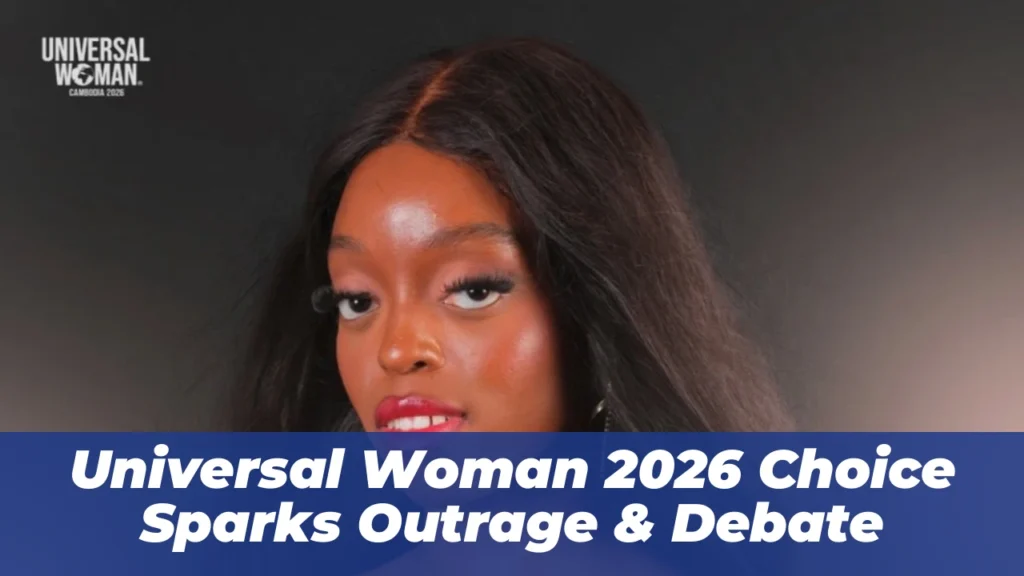
Britain’s Universal Woman 2026 Choice Sparks Debate: Has the Pageant World Lost Its Way?
The crowning of the Universal Woman Great Britain 2026 winner has ignited a significant debate across digital platforms. As images of the newly crowned titleholder, Rebecca Afolabi, circulated online, the response was sharply polarized. While some critics utilized social media to voice their disapproval of the selection, a substantial number of supporters have defended the contestant, prompting a deeper examination of beauty, representation, and the evolving purpose of modern pageantry.
The Social Media Storm: A Divided Public
The discourse surrounding the selection has highlighted a stark clash between traditional aesthetic expectations and the shifting criteria of international pageant organizations. Much of the online commentary centered on whether pageants should adhere to historical beauty standards or adapt to a more inclusive definition of representation. While some users expressed frustration with the result, others argued that the intensity of the criticism directed at Afolabi shifted from constructive feedback to personal attacks, raising concerns about the tone of public discourse.
This reaction reflects a broader cultural friction. As global pageants pivot toward inclusivity, the gap between traditional expectations and contemporary values has become a focal point for public debate. This friction suggests a fundamental disagreement: should pageants remain tethered to a specific, historical aesthetic, or should they mirror the diverse reality of the modern world?
Who is Rebecca Afolabi?
To understand the context of the selection, it is necessary to look beyond viral snapshots and examine the credentials of the winner. Rebecca Afolabi is a high-achieving professional, currently serving as a Programmatic Manager. Her journey is defined by resilience; she has openly navigated personal challenges, including a speech disability, and has consistently utilized her platform to advocate for self-belief and empowerment.
Her supporters frame her victory not as a rejection of tradition, but as an alignment with the “Universal Woman” ethos. This organization prioritizes ambition, intelligence, and the capacity for advocacy over narrow physical metrics. By highlighting her professional background and her ability to overcome personal obstacles, proponents argue that she represents the type of role model the modern industry seeks to promote.
Redefining the Pageant: What is Universal Woman?
While the controversy has dominated headlines, the structural shifts within the organization are often misunderstood. Unlike pageants that focus on younger demographics, the Universal Woman Great Britain contest specifically focuses on women aged 25 to 45.
- Focus on Professionalism: The organization emphasizes empowering women who have established identities in professional and philanthropic sectors.
- Impact-Driven Leadership: With a history of raising over £800,000 for charity through the Pageant Girl Ltd network, the organization prioritizes measurable social impact.
- Holistic Criteria: Judges evaluate candidates based on their ability to serve as ambassadors, balancing career achievements with charitable commitment.
Why the Backlash Misses the Mark
The narrative of outrage often overlooks the changing nature of the industry. Modern pageantry is increasingly moving away from the traditional runway-only model toward finding ambassadors who reflect the diversity of the nation. By prioritizing a candidate who embodies professional success and personal resilience, the judges are signaling that the Universal Woman title is intended for those capable of serving as effective role models.
The backlash frequently fails to engage with the actual credentials of the winner. Reducing a woman’s achievement to a debate about traditional standards overlooks the meritocratic process that led to her crowning. It suggests that for some, the concept of beauty has become so rigid that it struggles to accommodate the multifaceted reality of modern British women.
The Verdict: A New Era for British Pageantry
The controversy surrounding the 2026 choice serves as a snapshot of a society in transition. As Britain navigates its identity on the global stage, the pageant industry is undergoing a similar evolution. Whether one agrees with the final decision or not, the conversation has moved the focus toward a more inclusive definition of success.
Ultimately, the Universal Woman pageant is moving toward a future where a contestant’s career, charitable contributions, and personal narrative carry as much weight as her appearance. While this transition may feel jarring to those who prefer that pageants remain static, it represents a necessary evolution that challenges public perceptions regarding who is qualified to represent the nation on an international platform.