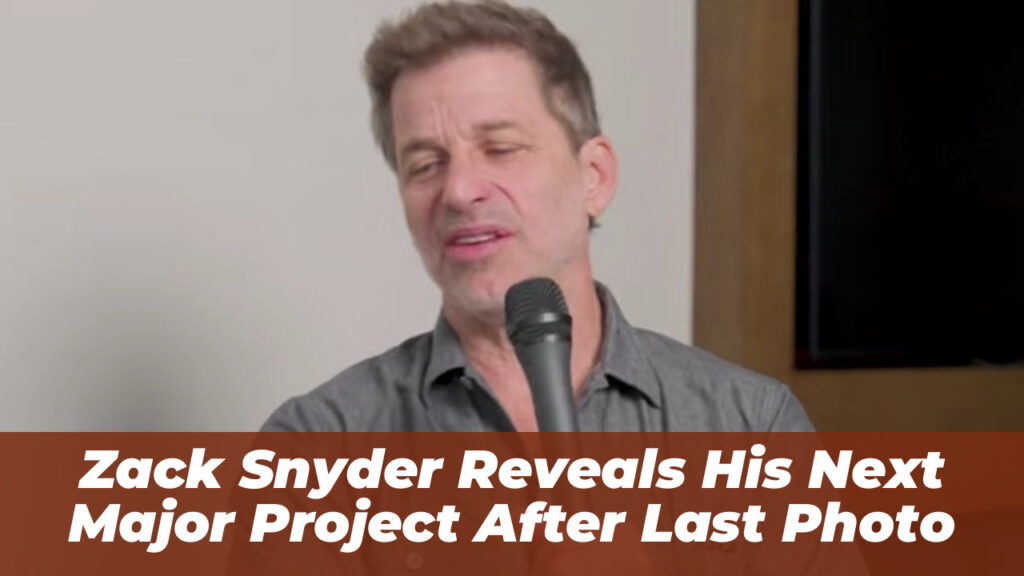
Zack Snyder’s career has long been defined by his signature visual audacity and penchant for grand cinematic scale. However, his recent trajectory signals a shift toward prioritizing long-gestating passion projects over traditional studio blockbusters. Following the successful release of The Last Photograph a project that spent nearly two decades in development Snyder has turned his focus to his next major endeavor: a limited series adaptation of Ayn Rand’s The Fountainhead.
This pivot from the gritty, character-driven narrative of his latest film to a polarizing literary classic underscores a consistent theme in Snyder’s work: he is a filmmaker who refuses to abandon a vision, regardless of how long it takes to materialize. For more insights into evolving creative paths, explore our recent feature on James Marsden: Career Evolution & Highlights 2026.
The Persistence of Vision: From War Stories to Architectural Ideology
The development of The Last Photograph, which evolved from a war-torn drama into a refined revenge-focused narrative, serves as a blueprint for understanding Snyder’s creative process. It demonstrates that for the director, time is not an obstacle to storytelling; it is a tool for refinement.
With The Last Photograph now behind him, Snyder is channeling that same relentless energy into The Fountainhead. While many filmmakers might avoid a project historically labeled as “unfilmable” or professionally risky, Snyder appears to be embracing the inherent friction of the material.
The Fountainhead: A Creative Mountain to Climb
Snyder’s commitment to The Fountainhead is substantial. He has confirmed that he has already penned 10 of the planned 12 episodes for the limited series. Notably, his methodology involves using Ayn Rand’s original 1949 screenplay as a foundational guide for his own drafts. By returning to the source material’s roots, he intends to capture the essence of the novel in a way previous adaptations have struggled to achieve.
The path to production, however, remains complex. The novel’s intense focus on individualism versus collectivism continues to make it a challenging sell in the current industry climate. Yet, for Snyder, this resistance is part of the appeal. His public assertion that the book’s controversial nature is a compelling reason to adapt it suggests he has no intention of softening the narrative to suit modern sensibilities.
Defining the Next Chapter
The transition from the visceral intensity of The Last Photograph to the philosophical rigidity of The Fountainhead marks a significant evolution in Snyder’s portfolio. He is clearly moving away from the CGI-heavy franchise epics that once defined his public persona, opting instead for projects that prioritize intellectual challenge over spectacle.
By grounding his future work in these long-term passion projects, Snyder is effectively reclaiming his creative agency. He is no longer tethered to the expectations of major intellectual property mandates, choosing instead to build a body of work that reflects his personal interests, even when those interests sit at the center of cultural debate.
The Verdict: Persistence as a Creative Trademark
Whether The Fountainhead secures a green light from a major streamer or remains a “what if” in Hollywood development, the trajectory is clear: Zack Snyder is playing the long game. His ability to sustain interest in a project for over a decade as proven by the eventual release of The Last Photograph suggests that his work on the Howard Roark adaptation is likely far from over.
For audiences and critics alike, this period marks a fascinating shift. Snyder is proving that he is not merely a director of spectacle, but a curator of his own creative history, willing to endure years of development to see his most challenging visions come to life. As he moves forward, the industry will be watching to see if his most controversial project yet can finally find its home on screen.