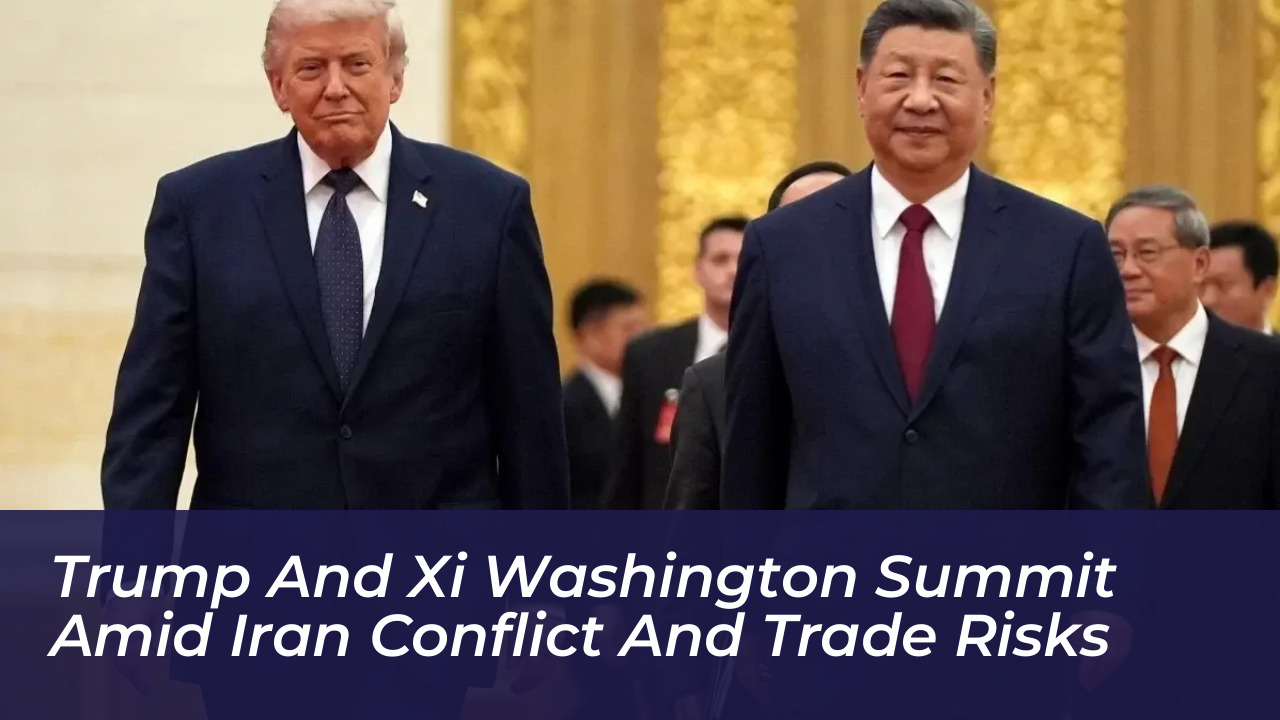
President Donald Trump and Chinese leader Xi Jinping meet at the White House for a high-stakes state visit as active military conflicts and severe economic pressures shape global diplomacy. This diplomatic gathering occurs under the heavy shadow of escalating financial burdens from the ongoing conflict with Iran and a fragile, ticking-clock trade truce. The summit brings together the world’s two largest economic powers against a backdrop of domestic inflation, severe supply chain bottlenecks near the Strait of Hormuz, and intense competition in artificial intelligence infrastructure. The stakes for both leaders could not be higher. Trump faces sliding domestic approval ratings tied directly to cost-of-living concerns and voters’ frustration with persistently high energy prices. Meanwhile, Xi navigates a slowing domestic economy and seeks to prevent the implementation of harsher U.S. export controls and secondary sanctions tied to Beijing’s commercial and diplomatic ties with Tehran. Despite the pomp and circumstance of a State Floor ceremony, a Rose Garden troop review, and a lavish East Room dinner attended by Silicon Valley billionaires, substantive policy deliverables remain scarce as both sides focus primarily on conflict avoidance and buying time.
- The Escalating Financial Toll of the Iran Conflict
- Military Expenditures and Congressional Budgets
- Domestic Economic Fallout and Energy Inflation
- The Fragile U.S.-China Trade Truce and November Expiration
- From Peak Tariffs to Temporary Detente
- The November 10 Expiration Date and Bank of America Projections
- Geopolitical Friction: Sanctions and the Shadow of Tehran
- Operation Economic Outcast and Beijing in the Crosshairs
- Behind-the-Scenes Diplomacy
- Artificial Intelligence Guardrails and National Security
- AI Infrastructure as the New Global Supremacy Pillar
- Bilateral Notification and Crisis Management Systems
- Taiwan Policy as a Core Diplomatic Leverage Point
- The Arms Sale Friction Point
- Navigating Nuclear-Armed Superpower Red Lines
- Corporate Titans at the Table and Underwhelming Deliverables
- The Silicon Valley and Wall Street Guest List
- Strategic Calculations Behind Strategic Inaction
- Frequently Asked Questions
- What caused the timing of the Washington summit between Trump and Xi?
- How much has the Iran conflict cost U.S. taxpayers according to budget estimates?
- What is the significance of the November 10 trade truce expiration?
- Conclusion: Managing Conflict and Buying Time
The Escalating Financial Toll of the Iran Conflict
Military Expenditures and Congressional Budgets
The primary fiscal pressure weighing on the Washington summit stems from the protracted military campaign against Iran. Updated Congressional Budget Office estimates submitted to lawmakers reveal that direct U.S. military expenditures in the Iran conflict reached $43.6 billion as of September 2026, climbing rapidly from previous baselines. These mounting outlays span several categories of military necessity, including the rapid replenishment of high-cost interceptors and expended precision munitions.
Additionally, the fiscal drain includes the replacement and repair of tactical equipment damaged or lost in active combat zones. Sustained operational expenses across theater commands continue to drive national debt concerns among fiscal conservatives. Significantly elevated military fuel costs driven by regional instability add another layer of strain to the federal budget.
Domestic Economic Fallout and Energy Inflation
Beyond direct government spending, the military campaign triggers acute domestic economic pain. The U.S. Bureau of Labor Statistics reports that annual U.S. gasoline inflation hovered between 18 percent and 41 percent since hostilities broke out in early 2026. This sustained surge in energy prices stems directly from persistent supply disruptions and security threats near the Strait of Hormuz, a critical global energy chokepoint.
Voter frustration over sliding domestic approval ratings tied directly to these cost-of-living pressures creates a volatile political environment for the administration. As motorists face steep prices at the pump, congressional leaders face mounting demands to stabilize energy markets. Unfortunately, military measures in the Middle East offer no quick solutions for domestic price relief.
The Fragile U.S.-China Trade Truce and November Expiration
From Peak Tariffs to Temporary Detente
Trade relations between Washington and Beijing remain precariously balanced on a temporary detente established after months of retaliatory escalation. During the peak of the previous trade dispute, U.S. levies on Chinese imports soared to 145 percent, while Beijing retaliated with duties reaching 125 percent. Subsequent negotiations in Switzerland, followed by an agreement in Busan, South Korea, scaled back those aggressive measures.
However, the baseline economic relationship continues to contract significantly. Total U.S.-China goods trade fell nearly 30 percent, and data from the current year confirms a continued downward trajectory. Despite the decline, the U.S. goods trade deficit with China remains massive, sitting at approximately $91.2 billion YTD.
The November 10 Expiration Date and Bank of America Projections
The temporary trade agreement underpinning the current quiet is set to expire on November 10, just days after the U.S. midterm elections. This timing introduces severe political calculations for both administrations. Financial analysts from Bank of America Global Research note that a one-year extension remains the base case scenario for both governments.
This potential extension would maintain the current status quo on tariffs, bar the immediate implementation of new export controls, and potentially commit Beijing to additional agricultural and commercial purchases. Trade delegations continue to discuss concrete figures regarding Boeing aircraft orders and soybean shipments to sweeten the diplomatic package.
Geopolitical Friction: Sanctions and the Shadow of Tehran
Operation Economic Outcast and Beijing in the Crosshairs
The U.S. Treasury Department’s enforcement offensive, dubbed Operation Economic Outcast, aims to penalize all international entities maintaining financial and commercial ties with Iran. Because China serves as Tehran’s primary trading partner and energy buyer, the enforcement mechanism places Beijing directly in Washington’s crosshairs. Several democratic lawmakers recently dispatched a letter to the White House demanding that Trump confront Xi directly regarding Beijing’s role in arming and financially enabling the Iranian government.
Intelligence reports indicating that China supplied satellite imagery and logistical support to Tehran have further inflamed tensions among congressional hawks. These security concerns complicate broader diplomatic efforts, forcing negotiators to wall off sensitive defense matters from commercial discussions. Beijing denies direct military involvement, maintaining that its economic relationship with Iran adheres to international law.
Behind-the-Scenes Diplomacy
Despite public rhetoric, the Trump administration has largely downplayed direct punitive actions against Beijing during the summit. Treasury Secretary Scott Bessent confirmed that U.S. and Chinese officials held quiet, behind-the-scenes discussions regarding sanctions during weekend preparatory meetings. By managing the friction privately, both sides avoid a public confrontation that could derail fragile negotiations on trade and technology.
This dual track of public posturing and private negotiation allows both leaders to appease domestic constituents without triggering a broader economic rupture. Treasury officials continue to calibrate sanctions enforcement to minimize collateral damage to global supply chains while signaling seriousness to regional allies.
Artificial Intelligence Guardrails and National Security
AI Infrastructure as the New Global Supremacy Pillar
Artificial intelligence emerges as a central, highly contentious item on the summit agenda. Both the United States and China recognize advanced AI infrastructure as the foundational pillar of future global economic and military supremacy. President Trump maintains a generally laissez-faire stance regarding domestic AI development, frequently criticizing regulatory hurdles and arguing that government overreach benefits foreign competitors.
However, growing concerns voiced by domestic AI safety researchers regarding rapid, uncontrolled model scaling have prompted subtle shifts in tone from the administration. Balancing rapid technological innovation with national security defense protocols requires delicate calibration from policy architects in both nations. Unchecked advancement poses risks that both Washington and Beijing are increasingly eager to manage collectively.
Bilateral Notification and Crisis Management Systems
Treasury Secretary Bessent revealed that negotiators discussed establishing a bilateral notification and crisis-management system. This mechanism aims to provide immediate communication channels if an artificial intelligence incident escalates to a national security threshold. Moving the world’s top two AI superpowers from opaque rivalry toward basic operational transparency remains a rare point of agreement during the talks.
Establishing these communication protocols helps mitigate the risk of algorithmic escalation in cyber defense and automated financial networks. While deep mistrust persists, both capitals recognize the utility of having emergency hotlines for critical technological contingencies.
Taiwan Policy as a Core Diplomatic Leverage Point
The Arms Sale Friction Point
Taiwan remains a non-negotiable red line for Beijing and a persistent friction point in Washington. Chinese state broadcasts emphasize that Xi will press Trump to permanently halt a proposed $14 billion U.S. arms sale to Taiwan. This proposed package includes advanced anti-drone systems, missile batteries, and air-defense upgrades designed to bolster the island’s asymmetric defense capabilities.
Integrating these defense requirements into broader economic discussions creates severe diplomatic hurdles. Beijing views any enhancement of Taiwan’s military capabilities as a direct violation of its sovereignty claims. Washington, conversely, remains bound by domestic legislation to ensure Taiwan maintains sufficient self-defense capabilities.
Navigating Nuclear-Armed Superpower Red Lines
Trump treats potential arms packages as flexible negotiating chips against strict bipartisan congressional pressure. Xi warns of the severe geopolitical risks associated with mishandling the sovereignty of Taiwan. Navigating these conflicting red lines requires careful diplomatic choreography to prevent minor maritime incidents from spiraling into a broader military confrontation.
Military leaders from both nations maintain backchannel communications to de-escalate operational friction in the Taiwan Strait. Nevertheless, the fundamental divergence on the sovereignty question ensures that Taiwan remains a permanent fixture of tension during high-level summits.
Corporate Titans at the Table and Underwhelming Deliverables
The Silicon Valley and Wall Street Guest List
Notable executives attending the lavish East Room state dinner included leaders from Amazon, Tesla, Apple, Nvidia, OpenAI, and JPMorgan Chase. The intersection of corporate lobbying, technological competition, and state-level diplomacy was fully visible throughout the evening. Tech executives sought clarity on future export restrictions and market access in mainland China.
Wall Street bankers advocated for relaxed cross-border investment rules and financial stability measures. These corporate leaders wield substantial influence behind the scenes, shaping the parameters of trade talks and technological cooperation agreements.
Strategic Calculations Behind Strategic Inaction
Analysis from the Center for Strategic and International Studies indicates that freezing the current status quo ultimately benefits Beijing by allowing it to stabilize its slowing economy without making major structural concessions. The reality of high-profile summits producing minimal binding legislative deliverables remains a recurring theme in U.S.-China relations.
Both administrations prioritize manageable optics over comprehensive legal treaties, preferring flexible understandings to rigid agreements. This approach prevents immediate economic shocks but leaves core structural imbalances unaddressed for future administrations to resolve.
Frequently Asked Questions
What caused the timing of the Washington summit between Trump and Xi?
The summit coincided with critical economic pressures, mounting military expenditures in the Middle East, and the looming November expiration of the bilateral trade truce.
How much has the Iran conflict cost U.S. taxpayers according to budget estimates?
Congressional Budget Office figures indicate that direct U.S. military expenditures reached $43.6 billion by September 2026 due to regional escalations.
What is the significance of the November 10 trade truce expiration?
The expiration date marks the end of a temporary detente following previous tariff hikes, forcing both nations to weigh potential extensions or face renewed economic friction.
Conclusion: Managing Conflict and Buying Time
The Washington summit between President Trump and Chinese leader Xi Jinping ultimately functions as an exercise in conflict avoidance and tactical delay. By managing immediate pressures surrounding the Iran conflict, the impending trade truce expiration, and AI guardrails, both leaders bought valuable time for their respective economies. However, short-term political stability does little to resolve the long-term structural economic challenges dividing Washington and Beijing.
As the November trade truce expiration approaches and military expenditures in the Middle East continue to mount, the underlying geopolitical friction remains largely intact. The success of the Washington summit will not be measured by grand legislative breakthroughs, but rather by the absence of catastrophic economic or military escalation in the months ahead.