An official coroners court inquest confirmed that severe flight turbulence caused a fatal cardiac arrest aboard Singapore Airlines Flight SQ321. The ruling by Avon Coroners Court provided clarity regarding the death of 73-year-old British passenger Geoff Kitchen, demonstrating how sudden, extreme atmospheric forces can trigger lethal cardiovascular events during air travel. The legal findings highlight the unexpected risks of high-altitude weather anomalies and the physical strain they impose on passengers.
- Introduction to the SQ321 Inquest Findings
- Chronology of Events on Singapore Airlines Flight SQ321
- Flight Path and Normal Cruise Operations
- The Five-Second Drop
- Emergency Response and Diversion
- Medical Pathology and Coroner Conclusions
- Autopsy Findings and Pre-Existing Health
- The Physiological Mechanism of Turbulence-Induced Cardiac Arrest
- Cabin Safety and Passenger Injuries
- Scale of Injuries Aboard Flight SQ321
- Cabin Infrastructure Damage
- Legal Proceedings and Aviation Industry Implications
- Legal Accountability and Compensation Claims
- Future of Aviation Safety and Clear-Air Turbulence
- Frequently Asked Questions
- What caused the cardiac arrest on Flight SQ321?
- Can weather radar detect clear-air turbulence?
- What legal rights do passengers have after flight turbulence injuries?
Introduction to the SQ321 Inquest Findings
The tragedy occurred on May 21, 2024, while Singapore Airlines Flight SQ321 traveled at 37,000 feet over southwestern Myanmar. What began as a standard long-haul transcontinental journey transformed into a severe emergency when the Boeing 777-300ER encountered unexpected atmospheric disturbance. Passengers were thrown violently around the aircraft, resulting in widespread injuries across the cabin and one fatal medical event.
Assistant Coroner Dr Peter Harrowing officially recorded a narrative conclusion at Avon Coroners Court, establishing the direct chain of causation leading to Geoff Kitchen’s death. The coroner established that while Mr Kitchen had an underlying cardiovascular history, the extreme motion and sudden vertical shift of the plane directly triggered his fatal heart failure. The finding draws clear lines between environmental physical stress and acute medical events in commercial aviation.
This detailed post examines the full scope of the SQ321 inquest findings. It investigates the timeline of the atmospheric drop, analyzes the medical pathology presented in court, and outlines the broad legal and safety shifts facing the global aviation industry.
- Overview of the May 21, 2024 atmospheric incident over southwestern Myanmar at 37,000 feet.
- Introduction of Assistant Coroner Dr Peter Harrowing and the court’s official narrative conclusion.
- Purpose of this post: examining severe weather phenomena, medical pathology, and long-term airline accountability.
Chronology of Events on Singapore Airlines Flight SQ321
Flight SQ321 departed London Heathrow Airport bound for Singapore Changi Airport, carrying 211 passengers and 18 crew members. For the first ten hours of the journey, the flight proceeded normally along its designated air route. Passengers rested, ate meals, and prepared for the final leg of the flight toward Southeast Asia.
As the Boeing 777 crossed a navigational waypoint over southwestern Myanmar, the environmental conditions shifted without warning. The flight entered an area of severe atmospheric disturbance that standard aviation systems could not detect beforehand.

Flight Path and Normal Cruise Operations
The aircraft maintained a standard cruising altitude of 37,000 feet while moving across the Myanmar air corridor. Flight crew monitored routine meteorological forecasts, which indicated standard operational flying conditions along the flight path. Most passengers were relaxing in their seats when subtle atmospheric changes began to manifest.
The Five-Second Drop
At 7:49 AM UTC, the aircraft encountered extreme clear-air turbulence. Flight data recorder logs revealed that the wide-body jet plummeted 178 feet in under five seconds. The intense upward and downward acceleration forces instantly lifted unbelted passengers from their seats and slammed them into overhead structures.
Loose cabin items, service carts, and luggage turned into rapid projectiles. The seatbelt signs illuminated, but the suddenness of the plunge left individuals with virtually no time to react or secure themselves safely.
Emergency Response and Diversion
The flight deck crew stabilized the aircraft by 7:53 AM, regaining steady control at a revised altitude. Upon evaluating the widespread destruction inside the passenger cabin and assessing injured occupants, the captain issued a formal Mayday radio transmission at 8:01 AM.
Air traffic control granted priority routing for an emergency diversion to Suvarnabhumi Airport in Bangkok, Thailand. The Boeing 777 touched down at 8:45 AM, where emergency medical units boarded immediately to administer field trauma care and pronounce Mr Kitchen deceased.
| Time (UTC) | Event / Operational Action | Impact on Cabin & Flight Path |
|---|---|---|
| 07:49 AM | Clear-air turbulence encountered over Myanmar | Aircraft drops 178 feet in less than 5 seconds |
| 07:53 AM | Flight deck regains altitude control | Initial cabin damage assessment initiated |
| 08:01 AM | Captain issues formal Mayday distress signal | Priority emergency diversion routed to Bangkok |
| 08:45 AM | Emergency landing at Suvarnabhumi Airport | Medical teams board aircraft to treat passengers |
Medical Pathology and Coroner Conclusions
The post-mortem examination of Geoff Kitchen took place at Bristol Royal Infirmary after his repatriation to the United Kingdom. Consultant pathologist Dr Edward Sheffield performed the autopsy, carefully analyzing the anatomical indicators to understand how environmental trauma interacted with Mr Kitchen’s baseline health state.
The medical team focused on establishing whether death occurred due to natural heart disease progression or as a direct result of physical shock induced by severe turbulence. The formal findings clarified how extreme flight motion acts as an acute external trigger.

Autopsy Findings and Pre-Existing Health
Dr Sheffield identified underlying coronary artery atheroma during the post-mortem examination. Records showed that Mr Kitchen underwent a surgical procedure in April 2019 to fit medical stents into his right coronary artery. Medical documentation confirmed that he made a full recovery by October 2019, maintaining an active lifestyle and high exercise capacity up until the flight.
The Physiological Mechanism of Turbulence-Induced Cardiac Arrest
Assistant Coroner Dr Peter Harrowing evaluated the pathologist reports alongside flight data. He concluded that the violent horizontal and vertical shifts generated massive biochemical stress within the body. The extreme G-force fluctuations and physical shock triggered a severe catecholamine surge, commonly known as an adrenaline spike.
This rapid surge placed an overwhelming metabolic demand on the heart muscle. In combination with the sudden violent motion, this biological reaction caused a fatal heart arrhythmia and subsequent cardiac arrest. The court concluded that Mr Kitchen would not have died at that time were it not for the violent physical impact of the atmospheric drop.
Cabin Safety and Passenger Injuries
The violent plunge caused extensive bodily harm to scores of passengers across all cabin classes. Unbelted individuals were thrown upward into cabin ceiling panels before falling back down onto armrests, floor aisles, and other occupants. The sudden vertical acceleration created forces far beyond standard cabin safety parameters.
Medical responders in Bangkok treated trauma injuries ranging from lacerations and concussions to catastrophic spinal cord injuries. The event highlighted the acute physical danger posed by unexpected clear-air atmospheric shifts.
Scale of Injuries Aboard Flight SQ321
A total of 56 passengers sustained serious injuries during the rapid loss of altitude. Among those severely injured was Mr Kitchen’s wife, Linda Kitchen, who suffered severe spinal fractures. She required ten days of intensive care hospitalization in Thailand before doctors cleared her for specialized medical repatriation back to Bristol.
An additional 23 occupants suffered minor injuries, including severe bruising and cuts from airborne debris. Dozens of passengers required ongoing orthopedic and neurological treatment long after the initial emergency landing.
Cabin Infrastructure Damage
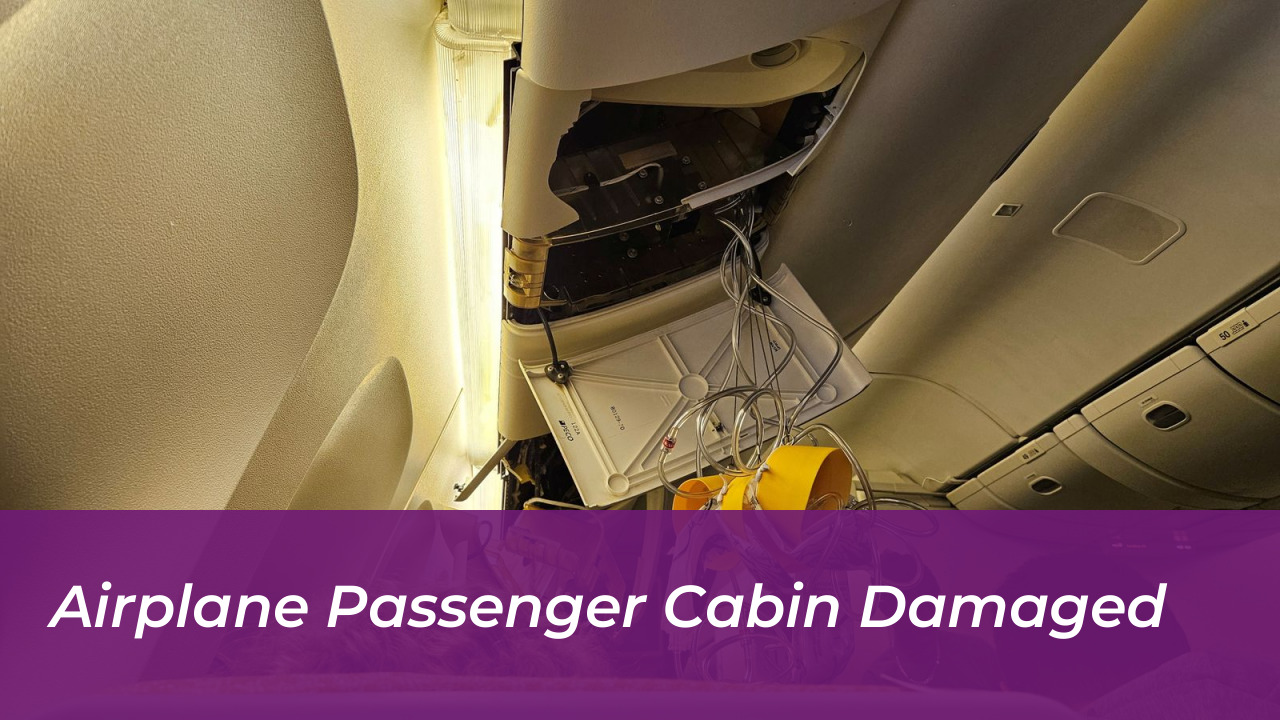
The interior of the Boeing 777 suffered extensive destruction during the five-second descent. Overhead luggage bins fractured, exposing internal structural framework and releasing personal belongings into the aisle space.
Air conditioning panels, ceiling tiles, and emergency oxygen mask housings broke apart upon impact. Catering trolleys broke free from retention locks, spilling heavy items into cabin walkways and increasing the injury count.
Legal Proceedings and Aviation Industry Implications
Following the inquest, legal representatives acting for affected families initiated formal actions to establish liability and address airline safety standards. Specialist aviation injury lawyers at Irwin Mitchell took on representation for the Kitchen family and multiple injured passengers, mounting formal legal challenges in the High Court.
The legal claims focus on passenger rights under the Montreal Convention, seeking compensation for medical expenses, severe physical trauma, and loss of life. The court filings also aim to compel airlines to release complete flight operational data and weather monitoring logs recorded prior to the drop.
Legal Accountability and Compensation Claims
Aviation attorneys argue that commercial air carriers must exercise enhanced duty of care when operating through regions known for unstable weather patterns. Legal proceedings in the High Court seek to establish full operational transparency regarding flight plan routing and cabin crew warning procedures.
Under international aviation law, carriers face strict liability for passenger injuries sustained on board, subject to specific regulatory liability limits and proof of operational standards.
Future of Aviation Safety and Clear-Air Turbulence
The SQ321 disaster has exposed critical limitations in modern onboard radar equipment. Standard doppler weather radar systems detect moisture droplets in clouds but struggle to identify clear-air turbulence, which occurs without visual clouds or water vapor.
In response to the incident, global civil aviation regulators face pressure to introduce stricter seatbelt mandates during all cruising phases. Airlines are actively testing advanced satellite forecasting systems and LIDAR technology to detect unseen wind shear, aiming to prevent similar severe flight turbulence incidents in the future.
Frequently Asked Questions
What caused the cardiac arrest on Flight SQ321?
The inquest ruled that violent clear-air turbulence triggered a massive shock response and adrenaline surge, which interacted with underlying heart disease to cause a fatal cardiac arrest.
Can weather radar detect clear-air turbulence?
Standard airborne weather radar cannot detect clear-air turbulence because it relies on reflecting signals off water droplets. Airlines are currently exploring ground-based satellite models and optical LIDAR systems to improve detection.
What legal rights do passengers have after flight turbulence injuries?
Under the Montreal Convention, passengers injured during commercial international flights can claim compensation from the operating airline for proven physical trauma and financial losses.