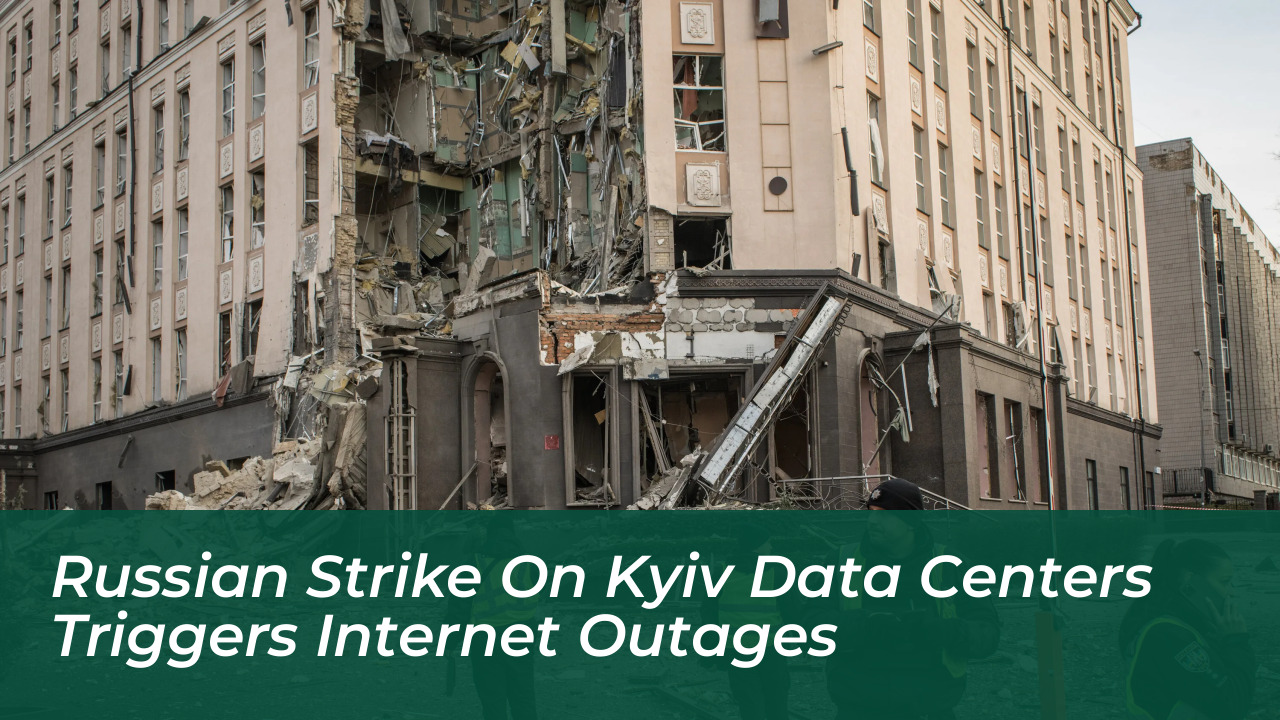
A Russian military strike targeting Kyiv on the morning of September 23, 2026, hit critical telecommunications infrastructure, causing significant internet outages across the capital region and surrounding oblasts. This combined drone and missile assault targeted a major data center housing core server equipment for local internet service providers, disrupting digital services for tens of thousands of residents. Emergency response units and technical repair crews deployed immediately to assess physical damage to server racks, backup power generators, and cooling systems. The incident highlights the growing vulnerability of civilian digital networks amid escalating attacks on Ukraine’s urban centers and technical backbone.
- Overview of the September 2026 Kyiv Data Center Strike
- Impact on Kyiv Internet Providers and Subscribers
- Disruptions at Major Telecommunications Operators
- Subscriber Experience and Service Blackouts
- Wider Context of Digital Infrastructure Targeting
- Collateral Damage: Transport Infrastructure and Casualties
- Impact on Railway and Transit Networks
- Urban Destruction and Casualties
- Emergency Restoration and Technical Challenges
- Frequently Asked Questions
- Which internet providers were affected by the Kyiv data center strike?
- How many households experienced internet outages in Kyiv?
- Were other critical infrastructure sectors impacted during the raid?
- What measures are being taken to restore internet access in Kyiv?
- How do data centers handle sudden power loss during military strikes?
Overview of the September 2026 Kyiv Data Center Strike
The morning assault on September 23, 2026, began shortly after dawn, utilizing a combined wave of loitering munitions and cruise missiles directed at multiple urban districts in Kyiv. One of the primary projectiles struck a central telecommunications facility, cutting off power to essential network components and destroying physical server architecture. This direct impact on core infrastructure immediately triggered widespread internet connectivity issues across the capital region and surrounding oblasts.
Emergency response units, fire crews, and technical repair teams arrived at the site shortly after the explosions subsided. Their primary objective involves assessing the physical damage to server racks, backup power generators, and climate control systems. However, ongoing security protocols and frequent air raid alerts continue to complicate restoration efforts. Telecommunications providers are actively working on rerouting traffic through redundant network nodes to restore stability to the regional web.
Strategic analysis reveals that modern urban centers depend entirely on centralized computing hubs for daily economic and administrative functions. When hostile forces target these digital nodes, the ripple effects extend far beyond simple household connectivity losses. Financial transactions, emergency dispatch services, and municipal government portals face immediate operational bottlenecks during prolonged network disruptions.
Impact on Kyiv Internet Providers and Subscribers
Disruptions at Major Telecommunications Operators
Several major Ukrainian telecommunications and internet service providers confirmed significant operational disruptions following the morning strikes. Provider Pavutyna reported a large-scale network failure after the data center it utilizes sustained structural and electrical damage. Subscribers across multiple districts of Kyiv experienced temporary service blackouts and severely reduced connection speeds as packets failed to route through the damaged facility.
Similarly, provider UTELS issued public statements confirming that its core network equipment housed within the targeted Kyiv facility lost all electrical power. The sudden outage affected network routing, leading to intermittent connections and complete service drops for numerous customers. Crazy Network, another regional provider, experienced secondary disruptions at a traffic exchange point, which subsequently affected users in Vinnytsia and the Khmelnytskyi region.
Network engineers faced immense pressure to isolate damaged server clusters before electrical short circuits could ignite secondary fires in adjacent racks. Temporary bypass lines were quickly rigged, though bandwidth capacity remained severely constrained across all affected enterprise networks.
Subscriber Experience and Service Blackouts
The disruption left approximately 100,000 households facing total connectivity loss or intermittent speeds, according to updates from the Ministry of Digital Transformation. Residents across the capital found themselves temporarily cut off from fixed broadband networks, forcing an immediate reliance on alternative mobile data networks for emergency communications, news, and daily tasks. Technical teams from all affected operators remain on-site to execute emergency repairs where safety permits.
Local businesses struggled to process digital payments, while remote workers lost secure connections required for daily commercial operations. Telecommunications authorities distributed emergency satellite-linked Wi-Fi hotspots to designated public squares across Kyiv to assist citizens stranded without cellular or fixed-line data services.
Wider Context of Digital Infrastructure Targeting
The September 23 incident represents part of an escalating campaign by Russian forces against Ukraine’s digital backbone and telecommunications architecture throughout late 2026. Over the preceding weeks, multiple commercial and mobile-servicing data centers across Kyiv have faced direct aerial bombardments. On September 15, a drone strike impacted the BeMobile data center, temporarily knocking offline services such as the website of Ukraine’s National Paralympic Committee.
Subsequent bombardments hit the De Novo commercial data center, a Tier III facility supporting major financial institutions and sovereign cloud infrastructure. Ukrainian officials emphasize that targeting these computing facilities aims to cripple civil defense networks, air raid notifications, and government portals. Despite these systematic attacks, Ukrainian operators continue to rely on geographically distributed infrastructure and redundant cloud systems to maintain operational continuity for critical civilian and financial services.
International cybersecurity firms have documented a parallel rise in coordinated distributed denial-of-service attacks coinciding with physical missile strikes. This hybrid warfare strategy combines kinetic impacts on server hardware with digital intrusions designed to overwhelm backup routing channels simultaneously.
Collateral Damage: Transport Infrastructure and Casualties
Impact on Railway and Transit Networks
The morning strike on Kyiv did not restrict its impact to digital architecture. The aerial assault also severely damaged transport infrastructure across the capital, including railway facilities operated by Ukrzaliznytsia. While explosions occurred near Kyiv’s Central Railway Station, the main terminal building sustained no structural damage, and passenger operations continued under strict underground security procedures.
Despite the continuation of terminal services, the physical disruptions resulted in major rail delays exceeding nine hours on key routes connecting central Ukraine, Zaporizhzhia, and Dnipropetrovsk. Transport authorities worked quickly to clear tracks and inspect rail bridges for hidden structural compromises before clearing trains for high-speed transit.
Maintenance crews deployed heavy lifting equipment overnight to remove fallen overhead catenary wires and shattered concrete blocks from the primary rail corridors. Passenger trains stranded mid-route were gradually towed back to safe staging areas using auxiliary diesel locomotives.
Urban Destruction and Casualties
City authorities reported widespread damage across the Holosiivskyi, Solomianskyi, and Darnytskyi districts, with fires breaking out at commercial warehouses, gas stations, and other civilian facilities. Emergency services confirmed at least two fatalities and 25 injuries resulting from the broader wave of drone and missile strikes across the capital. Local hospitals received the wounded while municipal crews tackled localized blazes.
First responders worked tirelessly through the heavy smoke and falling debris to extract trapped citizens from collapsed industrial structures. Civil defense volunteers established mobile warming and medical aid stations near the blast sites to treat individuals suffering from acute smoke inhalation and blast-induced shock.
Emergency Restoration and Technical Challenges
Restoring power and network connectivity to damaged Kyiv data centers presents immense engineering and logistical hurdles. Technical personnel must navigate hazardous structural environments while remaining vulnerable to renewed air alerts and subsequent missile attacks during repair windows. Network engineers are prioritizing the stabilization of core routing equipment and the deployment of mobile power generators to bypass incapacitated grid connections.
Because modern data centers rely heavily on continuous power for climate control, server operations, and data transmission, the initial power loss risks permanent hardware degradation if thermal management fails. Providers have not established a definitive timeline for full network recovery, urging subscribers to monitor official updates and utilize mobile data networks where fixed broadband access remains offline.
Advanced cooling restoration involves pumping chilled water directly into intact server chassis via temporary exterior manifolds. Network architects continue synchronizing international cloud backups to ensure government and commercial databases remain accessible from secure foreign mirror servers.
Frequently Asked Questions
Which internet providers were affected by the Kyiv data center strike?
Major operators including Pavutyna, UTELS, and Crazy Network reported significant service disruptions, network failures, and power losses at their primary data hosting facilities.
How many households experienced internet outages in Kyiv?
Ukraine’s Ministry of Digital Transformation confirmed that approximately 100,000 households across Kyiv and surrounding regional oblasts experienced connectivity issues following the attacks.
Were other critical infrastructure sectors impacted during the raid?
Yes, regional railway infrastructure suffered major delays exceeding nine hours, alongside direct hits to commercial warehouses, gas stations, and fuel storage facilities.
What measures are being taken to restore internet access in Kyiv?
Emergency repair crews and network specialists are actively working on-site to clear debris, restore electrical power to core servers, and reroute internet traffic through redundant backup nodes across the region.
How do data centers handle sudden power loss during military strikes?
Facilities switch immediately to industrial backup diesel generators and uninterruptible power supply batteries to maintain critical server cooling and data integrity.