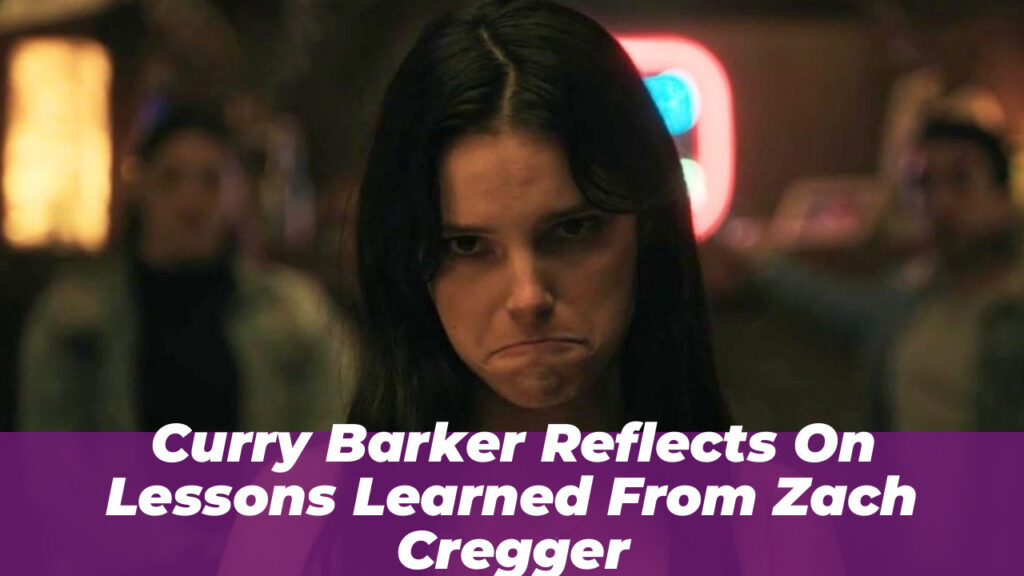
Curry Barker, the visionary behind the breakout 2025 horror hit Obsession, has returned to the spotlight with a candid admission about the grueling production of his sophomore feature. As he transitions into his next project, the filmmaker is reflecting on the high-stakes gamble he took during the development of Anything But Ghosts. By choosing to ignore expert advice from industry veterans, Barker found himself navigating a production nightmare that nearly derailed his latest cinematic effort.
The transition from a successful debut to a second feature is often where emerging directors face their greatest tests. For Barker, the pressure was compounded by an ambitious script and a compressed timeline. What began as a creative endeavor quickly transformed into a race against the clock, highlighting the stark reality that even the most talented storytellers are subject to the rigid laws of film production logistics.
The Production Bottleneck: A 130-Page Challenge
The primary conflict facing the production of Anything But Ghosts stemmed from a fundamental mismatch between the screenplay length and the available shooting window. Barker entered production with a 130-page script, a length typically reserved for films with far more generous schedules. However, his team had secured only 26 days to capture the entirety of the film, creating a mathematical impossibility that would haunt the set.
This discrepancy meant that the production team was required to shoot roughly five pages of dialogue and action every single day. In the world of independent horror, where complex practical effects and tension-building shots are paramount, this pace is exceptionally aggressive. The cast and crew were forced to operate at a breakneck speed, leaving little room for the experimentation or perfectionism that often defines a director’s signature style.
Furthermore, Barker faced the immense challenge of pulling double duty as both the lead actor and the director. Navigating the emotional demands of a performance while simultaneously managing the technical logistics of a feature film is a feat few attempt. The dual role meant that whenever Barker was in front of the camera, his ability to oversee the wider production was severely hampered, forcing an over-reliance on his department heads to maintain the vision.
The constraints of a 26-day shooting window
A 26-day schedule is considered a luxury for some micro-budget features, but it is remarkably thin for a genre film requiring intricate setups. Every hour lost to lighting adjustments or technical malfunctions represented a significant portion of the film’s total production life. The pressure to stay on schedule meant that the team often had to settle for the first take, regardless of whether the performance or the camera movement was fully realized.
This time constraint forced the team to prioritize quantity over quality in a way that left Barker feeling exposed. While he was determined to get his vision on screen, the clock proved to be an unforgiving master. The necessity of moving to the next setup became the singular focus, often at the expense of the atmospheric tension that his previous work was so highly praised for.
Balancing the roles of lead actor and director
Directing while starring is a logistical tightrope walk that requires immense preparation and a clear separation of responsibilities. Barker found that his presence in the frame often created a vacuum in the director’s chair. Even with a dedicated crew, the lack of an external eye to monitor the monitor during his scenes led to a fragmented creative process.
The physical exhaustion of performing, combined with the mental fatigue of directing, created a feedback loop that made the 130-page script feel even more insurmountable. Barker acknowledged that his inability to step back and view the dailies with a fresh perspective hindered his ability to pivot when the schedule began to slip. It was a baptism by fire that tested his resilience as a filmmaker.
The Advice That Went Unheeded
Before the cameras even began to roll, Barker received clear, professional guidance from those who had walked the path before him. Zach Cregger, the mind behind the critically acclaimed horror hit Barbarian, offered a blunt assessment of the project’s viability. He warned Barker that a 130-page script was simply too dense for the allotted timeframe and advised him to cut at least 30 pages of material.
Barker’s own management team echoed this sentiment, urging him to trim the narrative fat to ensure the production remained sustainable. They understood that in the high-pressure environment of indie horror, brevity is often the key to maintaining quality control. Despite the consensus among his peers and advisors, Barker remained deeply attached to his original vision, believing he could force the material into the box.
Insights from the mind behind Barbarian
Cregger’s advice was born from his own experiences in navigating the complexities of genre filmmaking. Known for his meticulous control over pacing and tension, Cregger understood that a script is only as good as the time allowed to shoot it. By suggesting a 30-page cut, he was not just looking to save time, but to sharpen the film’s narrative focus and ensure that every scene could be executed with the necessary care.
The suggestion was rooted in the reality that horror films rely heavily on the “slow burn” and the precise timing of scares. When a director is forced to rush through pages, the nuance of the horror is often the first thing to be discarded. Cregger recognized that Barker was setting himself up for a scenario where he would have to sacrifice his artistic integrity to meet the studio’s delivery requirements.
Why the 30-page cut was deemed necessary
The logic behind the recommended cut was simple: fewer pages meant more time per scene. A 100-page script would have allowed the production to allocate more than five minutes of screen time to complex sequences that required multiple angles and lighting shifts. By keeping the extra 30 pages, Barker essentially eliminated the possibility of “coverage” in the traditional sense.
The decision to hold onto the script as it was written reflected a common struggle for emerging directors: the fear that cutting pages would diminish the story. However, in the context of a 26-day shoot, the decision proved to be a liability. The extra pages became a weight that dragged the production down, forcing the director to make compromises that he would later regret in the editing suite.
The Consequences of Keeping the Script Intact
The refusal to trim the script had immediate and tangible consequences for the production. As the days ticked by, the team found themselves perpetually behind schedule. The necessity of capturing the required footage meant that the crew had to abandon complex camera movements and intricate lighting setups, resulting in a visual style that was dictated by necessity rather than creative intent.
The editing room eventually became the site of the final reckoning. With the footage captured under extreme duress, the team realized that the lack of coverage made it difficult to build the tension required for the horror-comedy genre. Barker had to work harder in post-production to stitch together a coherent narrative, realizing that the advice he ignored had been the key to a much smoother, more effective film.
Sacrificing coverage for completion
Coverage is the lifeblood of a director. It allows for reaction shots, alternative angles, and the ability to manipulate the rhythm of a scene during the edit. Because Barker had to rush through the 130 pages, he was forced to shoot scenes in single, wide masters or simple two-shots. This lack of variety meant that his editor had very few options when trying to emphasize the film’s most critical moments.
The sacrifice was not just technical; it was emotional. Without the ability to cut away to a character’s reaction or to a subtle detail in the background, the film’s ability to scare the audience was diminished. The team had to rely on dialogue and performance to carry scenes that were designed to be visually driven, a compromise that Barker admits was difficult to accept.
Real-world impact on the editing room floor
When the production wrapped, the reality of the situation became clear during the first assembly. The film lacked the fluidity that a well-paced script would have provided. Barker spent months in the editing room attempting to fix pacing issues that were inherent in the script’s length. It was a lesson in the importance of pre-production discipline that he would not soon forget.
The experience serves as a stark reminder that in the film industry, the script is a living document that must adapt to the realities of the budget and the schedule. By refusing to adapt, Barker created a scenario where he was fighting his own material. While the film was eventually completed, the process left him with a newfound respect for the collaborative advice of his peers.
Anything But Ghosts: A New Direction in Horror-Comedy
Despite the production challenges, Anything But Ghosts represents a bold swing for Barker. The film, which is described as a hybrid of Key and Peele and Hereditary, attempts to blend high-concept comedy with genuine, disturbing horror. It follows two fake paranormal investigators who accidentally stumble upon a real supernatural threat while trying to stage a hoax for their audience.
The film boasts an impressive pedigree, produced by industry heavyweights including Jason Blum, Roy Lee, and Steven Schneider. The cast is equally notable, featuring Barker alongside Cooper Tomlinson, Aaron Paul, Bryce Dallas Howard, Violet McGraw, and Chris Reinacher. The project is currently slated for a 2027 release through Focus Features, marking a significant step up in scale for the director.
Blending Key and Peele with Hereditary
The tonal balance of the film is its most ambitious feature. Barker intends to use humor to lower the audience’s guard before delivering intense, visceral horror. This “horror-comedy” approach is notoriously difficult to pull off, as it requires a delicate handling of tone that can easily tip into parody or lose the audience’s investment in the characters’ safety.
By drawing inspiration from the sharp, observational comedy of Key and Peele and the dread-filled atmosphere of Hereditary, Barker is attempting to carve out a unique space in the genre. If successful, the film could redefine the boundaries of horror-comedy, proving that humor and terror are not mutually exclusive but can actually amplify one another when executed with precision.
The star-studded cast and production pedigree
The inclusion of actors like Bryce Dallas Howard and Aaron Paul brings a level of prestige to the project that is rare for a sophomore horror feature. Their involvement suggests that Barker’s vision, despite the production hurdles, holds enough promise to attract top-tier talent. The production team, led by Jason Blum, is known for fostering unique voices and allowing them to take risks within the horror genre.
This support system was crucial during the difficult weeks of production. Even when the schedule was collapsing, the backing of such experienced producers provided a safety net for the film. The pedigree behind the project ensures that it will have a significant marketing push, giving Barker the platform to showcase his growth as a director despite the lessons learned the hard way.
Lessons for Emerging Filmmakers
For those looking to break into the industry, Barker’s experience provides a cautionary tale about the dangers of ego and the importance of logistics. The desire to keep every scene in a script is a common trap for writers who transition into directing. However, the ability to “kill your darlings” is what separates a filmmaker who can deliver on time from one who remains stuck in a cycle of production crises.
The film industry is a collaborative medium, and ignoring the advice of experienced mentors like Zach Cregger is a risk that rarely pays off. Barker’s story is a testament to the fact that pre-production is where the film is truly made. By failing to plan for the realities of his schedule, he made his own job significantly harder, proving that even a talented director must respect the constraints of the medium.
The danger of ego in the pre-production phase
Ego often manifests as a refusal to acknowledge the limitations of a project. When a director believes that their script is perfect as written, they lose the objectivity necessary to make the tough decisions that ensure a smooth shoot. Barker’s admission highlights how the emotional connection to a screenplay can cloud a director’s judgment, leading to choices that prioritize the page over the production.
Learning to accept that a script is a blueprint, not a sacred text, is a vital part of a director’s growth. True leadership in the film industry involves listening to the professionals around you, especially when they point out flaws in your plan. Admitting that you are wrong before the cameras start rolling is a sign of strength, not weakness, and it is a lesson that Barker has taken to heart for his future projects.
Understanding the logistics of indie horror budgets
Indie horror is a genre defined by its constraints. The limited budgets and tight schedules are not just obstacles; they are the environment in which the film must exist. Understanding how to work within these parameters how to block a scene for a single camera, how to use lighting to hide a lack of set design, and how to pace a script for a 26-day shoot is the hallmark of a seasoned filmmaker.
Barker’s experience shows that these logistics cannot be ignored or bypassed. They are the foundation upon which the creative vision is built. By failing to integrate these logistical realities into his pre-production process, he found himself struggling against the very constraints that define the genre. It is a lesson that will undoubtedly inform his future work as he continues to evolve in the industry.
FAQ Section
What is the plot of Anything But Ghosts?
The film follows two fake paranormal investigators who, while attempting to stage a fraudulent ghost hunt to boost their profile, inadvertently encounter genuine supernatural forces. The story blends horror and comedy as the duo must navigate a truly terrifying situation that they are completely unprepared for.
Why did Zach Cregger advise Barker to cut his script?
Zach Cregger, drawing on his own experience with high-tension horror filmmaking, advised Barker to cut 30 pages because the 130-page script was too long to be filmed effectively within the assigned 26-day shooting window. He recognized that the density of the script would force the director to sacrifice essential camera coverage and pacing.
When is the film scheduled for release?
Anything But Ghosts is currently expected to hit theaters in 2027. The project is being distributed by Focus Features, and while no specific release date has been confirmed, the film is moving through post-production to prepare for its wide launch.
Is Curry Barker directing and starring in the same project?
Yes, Curry Barker is both the director and a lead actor in Anything But Ghosts. This dual role contributed to the production challenges he faced, as it made it difficult for him to oversee the technical aspects of the filming process while simultaneously focusing on his performance in front of the camera.
Conclusion: Learning from the Trial by Fire
Curry Barker’s journey with Anything But Ghosts serves as a powerful reminder that filmmaking is as much about discipline as it is about creativity. The trial by fire he endured on set has clearly left an indelible mark on his approach, forcing him to confront the limitations of his own ambition and the necessity of listening to seasoned advice. While the production was fraught with difficulty, the experience has undoubtedly sharpened his skills as a filmmaker.
As he moves forward into his career, Barker carries with him the hard-won knowledge that a director’s greatest tool is the ability to adapt. By embracing the lessons learned from his sophomore feature, he is better positioned to tackle future projects with a refined sense of scope and logistical awareness. The film industry is a demanding master, but for those willing to learn from their mistakes, it offers the ultimate reward of a long and successful career.