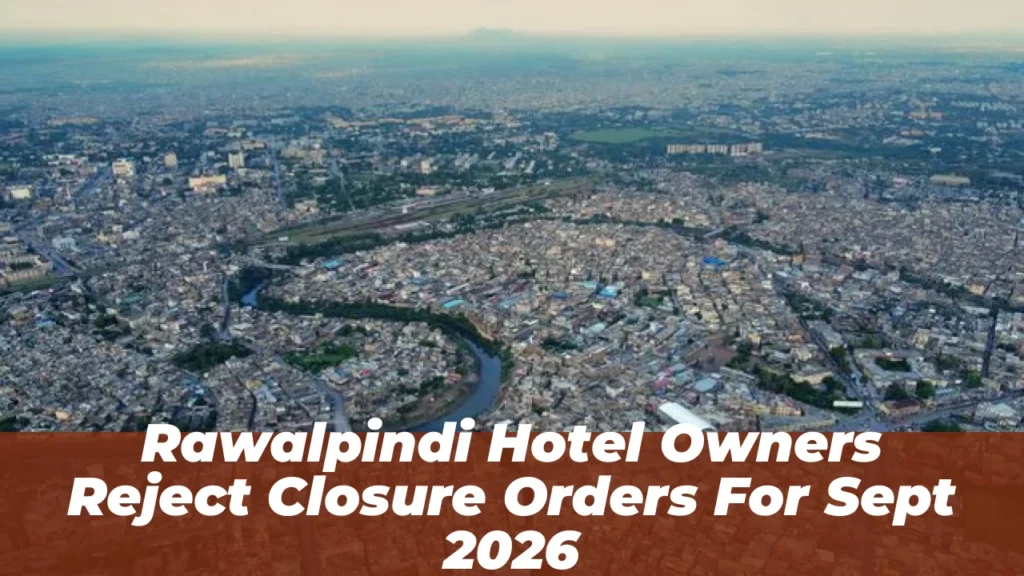
The business climate in Rawalpindi has reached a boiling point as the Inter City Hotel Association has officially rejected government directives to shut down operations ahead of the political demonstrations scheduled for September 19, 2026. As the city braces for potential unrest, hotel owners are pushing back against administrative pressure, arguing that their establishments are essential service providers that should not be penalized for political volatility.
The Core Conflict: Security vs. Livelihood
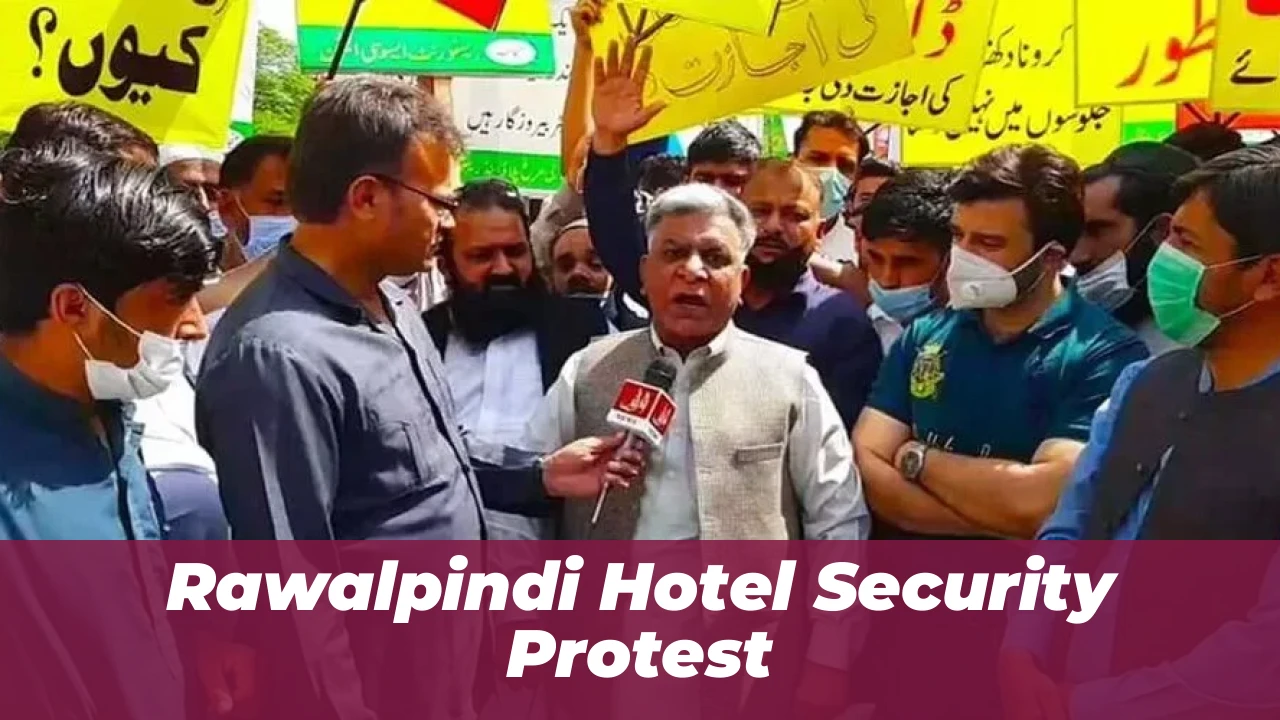
The tension stems from a government request to cease hotel operations, citing security concerns. However, the hotel industry, led by Association President Sheikh Abdul Waheed, maintains that such blanket closures are unjustified.
The primary argument put forth by the association is the integration of the Hotel Eye system. This digital surveillance platform is already linked directly to the Punjab IG, the Special Branch, and the Rawalpindi Police Command and Control center. Because every guest check-in is monitored in real-time, hotel owners argue that they are already functioning as a critical arm of the city’s security infrastructure. Consequently, they view a forced closure as an unnecessary economic burden rather than a genuine security necessity.
Broader Context: The 2026 Regulatory Crackdown
To understand why this rejection is so significant, one must look at the current administrative environment in Rawalpindi. The hotel industry is not acting in a vacuum; they are operating under the shadow of a wider enforcement drive by the Rawalpindi Development Authority (RDA) and the Capital Development Authority (CDA).
Throughout 2026, the RDA has intensified its demolition drive against properties deemed in violation of the Punjab Development of Cities Act, 1976. Recent actions, such as the demolition of commercial structures near Al-Mumtaz Colony and the Gulraiz Housing Scheme, have created an atmosphere of uncertainty. Furthermore, the CDA’s recent cancellation of layout plans for over 2,999 kanals in Bahria Town (Phases III-E and IV) due to long-standing NOC violations has signaled that the government is in no mood for leniency regarding commercial land use.
Why Hotel Owners Are Taking a Stand
The hotel association’s refusal to comply with closure orders is a calculated move to protect an industry already reeling from regulatory pressure. Key factors driving this resistance include:
- Economic Viability: With the ongoing RDA crackdown, businesses are struggling to maintain operational stability. A forced shutdown directly threatens the revenue stream required to meet compliance costs.
- Neutrality as Business Policy: Hotel owners assert that they are neutral entities. They argue that if specific security threats exist, the state should target those individuals rather than disrupting the entire hospitality sector.
- Compliance as a Shield: By highlighting their full cooperation with the Hotel Eye system, owners are challenging the state to prove that a shutdown provides any additional security value that the current digital monitoring does not already offer.
Specifications and Compliance Overview
For business owners navigating the current climate, understanding the intersection of digital security and physical property rights is essential.
| Feature | Description | Status (2026) |
|---|---|---|
| Hotel Eye Integration | Real-time guest data sharing | Mandatory/Active |
| RDA Oversight | Property NOC and Zoning compliance | Strict Enforcement |
| Association Stance | Rejection of non-essential closures | Active Resistance |
| Primary Goal | Operational continuity | Ongoing |
Pros and Cons of the Current Standoff
Pros:
- Business Advocacy: Protects the rights of small and medium-sized hotel owners from arbitrary closure.
- Accountability: Forces the administration to justify security measures rather than using blanket bans.
- Digital Transparency: Reinforces that modern hotels are already transparent via the Hotel Eye system.
Cons:
- Escalation Risk: Could lead to friction between business owners and local law enforcement.
- Economic Uncertainty: Continued political instability creates a volatile environment for tourism and business travel.
Looking Ahead: The September 19 Impasse
As of September 17, 2026, the standoff remains unresolved. The association’s stance is clear: they are willing to assist the police in maintaining order, but they are no longer willing to absorb the financial losses associated with political shutdowns.
For the administration, the challenge lies in balancing security protocols with the rights of business owners who are already operating under the intense scrutiny of the RDA and CDA. The outcome of this impasse will likely set a precedent for how commercial entities in Rawalpindi engage with the state during periods of civil unrest for the remainder of 2026. Businesses focused on industrial solutions 2026 are also closely monitoring these regulatory shifts, as the city’s overall commercial climate remains highly sensitive to administrative policy changes.