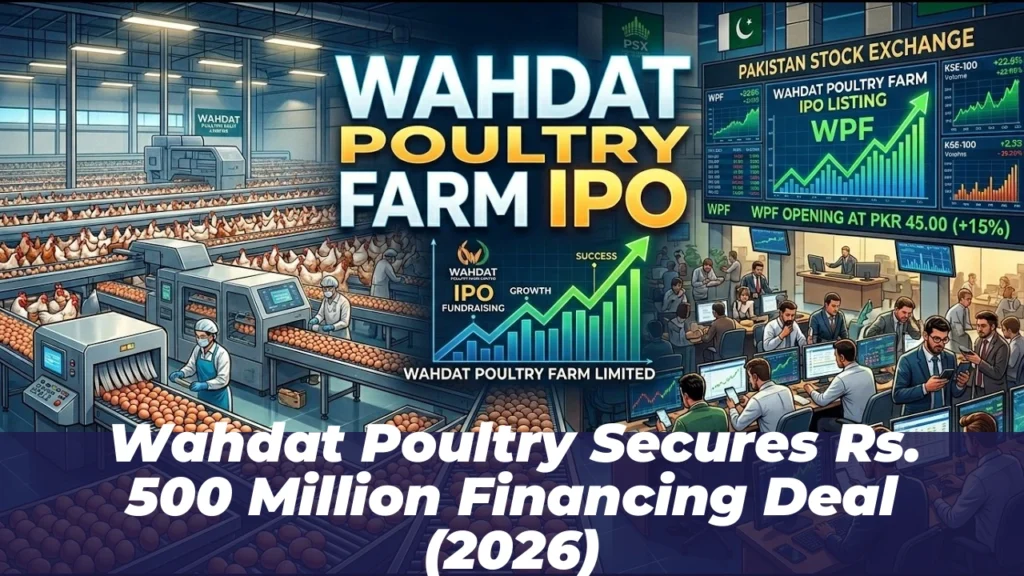
Wahdat Poultry (PSX: WAHDAT) has officially entered into a significant financing agreement with the Saudi Pak Industrial and Agricultural Investment Company to secure Rs. 500 million in credit facilities. This move serves as a critical milestone in the company’s FY2026 roadmap, signaling a transition from traditional poultry farming to a value-added, high-margin industrial processor.
The Financial Architecture of the Deal
For stakeholders evaluating the company’s leverage, the structure of this financing provides insight into Wahdat’s current liquidity management and its ability to navigate the volatile agricultural market.
- Facility Type: Short-term revolving facility aimed at optimizing working capital.
- Cost of Capital: 3-month KIBOR + 1.5% per annum, reflecting a competitive rate given the current economic climate of 2026.
- Tenor: 120 days per drawdown, with a total facility expiry of 3 years.
- Collateral: First pari passu charge on current assets, maintaining a 25% margin.
Strategic Roadmap: Beyond the Farm
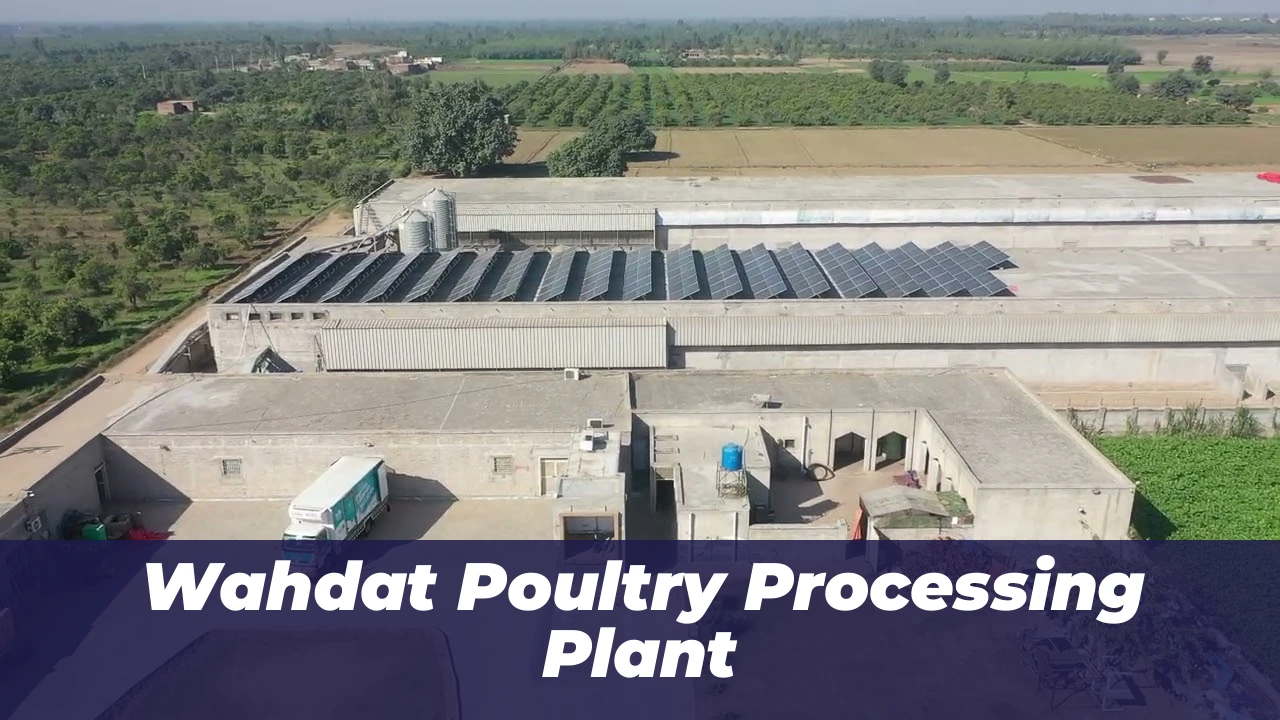
Unlike traditional poultry players, Wahdat Poultry is aggressively scaling its infrastructure. The Rs. 500 million infusion is not merely for operational expenses; it is the fuel for a broader capital expenditure strategy.
| Project Phase | Objective | Status (Q3 2026) |
|---|---|---|
| Egg Powder Plant | Transition to high-margin exportable goods | Under Construction |
| Storage Silos | 14,000-tonne capacity for feed security | Procurement Phase |
| Pasteurization Line | Enhancing shelf-life for commercial supply | Operational |
By shifting focus from liquid pasteurized eggs to high-shelf-life egg powder, the company is positioning itself to capture a larger share of the B2B food manufacturing market. This strategy is essential for mitigating the price volatility typically associated with raw poultry and feed commodities.
Market Sentiment and Investor Outlook
As of September 17, 2026, WAHDAT is trading at PKR 14.75. With a 52-week range of PKR 14.30 – 21.78, the stock is currently hovering near its lower bound.
Why the market is cautious yet attentive:
- Execution Risk: Investors are waiting to see the tangible output from the new processing facilities scheduled for the 2026 fiscal year.
- Asset Turnover: The decision to secure debt against current assets implies that management is confident in their inventory turnover rate. If the processing plant reaches capacity as projected, this leverage will likely translate into significant earnings growth.
- Shariah Compliance: Being part of the KMIALL index, the company continues to attract institutional investors who prioritize ethical financial structures.
The Unique Edge: Why This Deal Matters
What sets this development apart from standard corporate borrowing is the nature of the partnership. By aligning with the Saudi Pak Industrial and Agricultural Investment Company, Wahdat is gaining a partner with deep expertise in the agricultural sector.
This capital injection comes on the back of a successful IPO that raised Rs. 637 million and strategic land acquisition in Sargodha for Rs. 28.13 million. The company is effectively building a closed-loop system from feed storage to high-tech processing that protects the bottom line. Just as reliable Dubai logistics ensure the smooth movement of goods, Wahdat’s new silo infrastructure ensures the steady flow of raw materials for production.
Pros and Cons of the Financing Deal
| Pros | Cons |
|---|---|
| Competitive interest rate (KIBOR + 1.5%) | Increased debt-to-equity ratio |
| Diversification into high-margin egg powder | Execution risk on new plant commissioning |
| Strong backing from Saudi Pak investment | Dependence on commodity price stability |
Final Verdict: A Calculated Growth Trajectory
Wahdat Poultry’s strategy for 2026 is clear: Value Addition. While the Rs. 500 million debt increases the company’s gearing ratio, the underlying assets being developed are designed to provide long-term operational efficiencies.
For investors, the current price point of PKR 14.75 offers a window into a company that is fundamentally changing its business model. The success of this expansion will depend on the speed of commissioning the new processing lines and the ability to maintain the projected inventory turnover throughout the remainder of 2026.
Disclaimer: This analysis is based on public disclosures and market data as of September 17, 2026. It is intended for informational purposes and does not constitute financial advice.