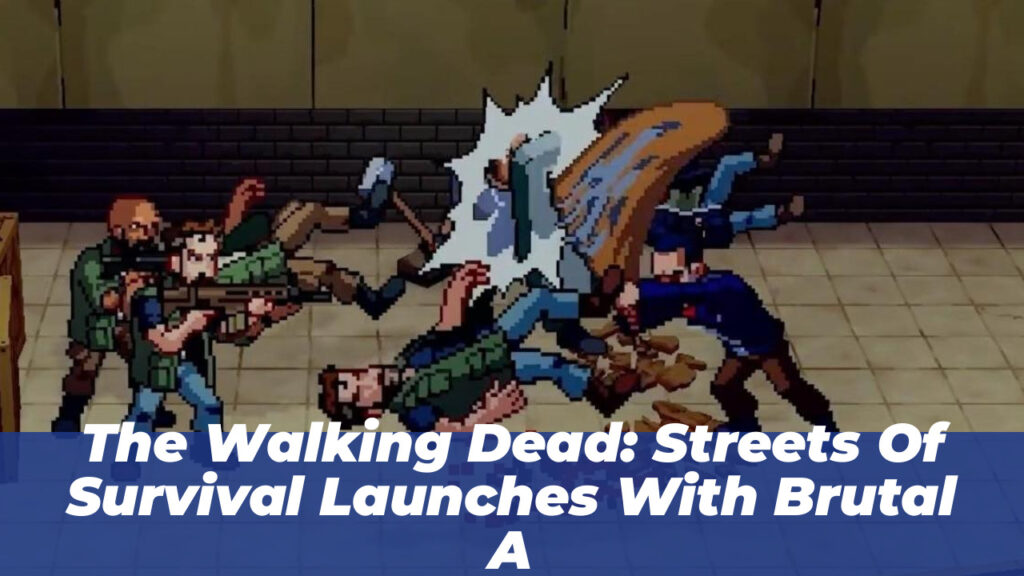
The post-apocalyptic landscape just turned into a slaughterhouse. With the launch of The Walking Dead: Streets of Survival, the franchise pivots sharply from the methodical, resource-starved survival simulations of the past toward a visceral, high-octane arcade brawler. Forget hiding in closets or counting bullets; this release demands that you meet the walker hordes head-on with nothing but grit and a sharpened blade.
Players no longer endure the slow-burn tension of stealth. Instead, the game thrusts you into a frantic, kinetic experience where crowd management and aggressive combat define your survival. You are not merely a scavenger anymore; you are a force of nature tearing through iconic locations from the television series.
The Walking Dead: Streets of Survival Gameplay Mechanics
Streets of Survival operates as a modern arcade beat ’em up that prioritizes raw reflex over tactical patience. The core loop hinges on fluid movement and the ability to dictate the flow of combat, ensuring you never find yourself pinned against a wall by a surging mass of the undead.
Success demands constant spatial awareness. You must manipulate the environment, funneling walkers into tight chokepoints or triggering explosive hazards to thin the herd. The game actively punishes hesitation, rewarding players who maintain momentum and push into the heart of the danger rather than retreating from the encroaching threat.
Mastering the Combo and Finisher Systems
The combat engine thrives on a rhythmic, combo-heavy structure. By chaining light and heavy strikes, you fill a specialized meter that unlocks cinematic, high-damage finishers. These aren’t just for show; they provide a vital tactical window of invulnerability, allowing you to reposition while the undead are stunned by your brutality.
The transition between melee and ranged weaponry is equally critical. While melee attacks clear your immediate perimeter, firearms serve as precision tools for high-value targets. Mastering the seamless swap between a bat and a handgun is the difference between clearing a room and becoming a permanent fixture of the apocalypse.
Iconic Characters and Playstyles
The roster functions as a tribute to the television series, with each survivor featuring distinct animations and combat signatures. Whether you prefer the heavy, bone-crushing impact of a brawler or the surgical precision of an agile fighter, the game provides a loadout to match your rhythm.
The Core Roster: Rick, Daryl, and Michonne
Rick Grimes anchors the roster as a versatile combatant, capable of neutralizing both massive crowds and isolated threats with equal efficiency. Daryl Dixon favors mobility, utilizing his crossbow for long-range suppression, while Michonne dominates the battlefield with her katana, slicing through hordes with unmatched speed and rhythm.
Unlocking the Antagonist: Playing as Negan
The most coveted addition is undoubtedly Negan. Unlockable only through high-difficulty campaign milestones, he brings an entirely different flavor to the experience. His playstyle prioritizes intimidation and raw power, utilizing armor-piercing strikes that make short work of the tougher human adversaries encountered in the late-game stages.
Narrative Setting and Key Locations
The game draws directly from the show’s most volatile chapters, centering on the brutal war between Alexandria and the Saviors. These environments are meticulously detailed, offering rich environmental storytelling that rewards players for exploring the periphery of every map.
Navigating Alexandria and the Hilltop
Alexandria acts as the primary hub, forcing players to fortify defenses against relentless waves of attackers. Conversely, the Hilltop introduces more open terrain, shifting the tactical focus toward long-range control and the ability to hold ground against swarms that approach from every angle.
The Threat of the Sanctuary Hordes
The Sanctuary represents the game’s ultimate challenge. Here, players face a dual threat: the remnants of the Savior faction and massive, sound-sensitive walker hordes. Clearing these zones requires constant movement and the strategic application of every ability in your arsenal to avoid being overwhelmed by the sheer density of the enemy.
Comparing the Arcade Shift to Series Legacy
The transition to an arcade format is a bold, necessary evolution. By removing the tedious requirement for constant hiding, the developers have successfully captured the frantic, high-stakes nature of the show’s most chaotic battles. The focus is no longer on avoiding the apocalypse, but on actively fighting to reclaim a future.
Why Action Beats Stealth for This Title
Stealth mechanics often stifle the pacing of a brawler. By emphasizing action, the game creates an immediate, satisfying feedback loop. Every strike carries weight, and the intensity of combat ensures that every encounter feels like a desperate, high-stakes struggle for survival.
Replayability and Difficulty Scaling
Longevity is baked into the design through multiple difficulty tiers that fundamentally alter enemy behavior. Higher settings remove the luxury of brute force, forcing players to master the combat systems. With diverse characters and varied mission objectives, the game encourages repeated playthroughs to chase high scores and unlockables.
Platform Availability and Edition Breakdown
The Walking Dead: Streets of Survival is available today on Xbox Series X|S, PlayStation 5, Nintendo Switch, and PC. The game is optimized for each platform, ensuring consistent performance and fluid combat regardless of your chosen hardware.
Standard vs. Deluxe Edition Content
The Standard Edition delivers the complete base experience. For those seeking a deeper challenge, the Deluxe Edition includes exclusive combat trials designed to test the limits of the game’s mechanics and reward players with unique cosmetic gear.
Technical Performance Across Consoles and PC
On current-gen hardware, the game maintains a rock-solid frame rate, which is non-negotiable for a title relying on precise combat inputs. PC users benefit from a wide array of graphic settings, allowing for deep customization of particle effects and lighting to ensure the apocalypse looks as sharp as it feels.
Frequently Asked Questions
Is this game canon to the TV series?
The game utilizes the characters and settings of the television series but functions as a standalone arcade experience. It prioritizes the spirit of the show and tight combat over strict narrative continuity.
Can I play co-op with friends?
Yes, both local and online cooperative play are supported. Teaming up with friends is essential for coordinating attacks and managing the largest, most dangerous hordes.
How does the combat compare to previous titles?
This entry is significantly faster and more aggressive. While older games leaned into evasion, this title rewards dominance, combo chaining, and tactical aggression.
Is Negan available from the start?
No, Negan is an unlockable character. You must complete specific high-difficulty milestones to add him to your roster, providing a tangible goal for progression.
The Walking Dead: Streets of Survival successfully redefines the franchise’s interactive footprint. By replacing slow-paced tension with high-octane arcade intensity, the developers have crafted an experience that is both accessible to newcomers and deeply rewarding for veterans of the genre.
Whether you are a longtime fan of the source material or simply looking for a polished, relentless brawler, this title offers an exhilarating perspective on the fight for survival. It stands as a definitive example of how to adapt a beloved world into a fast-paced, action-focused experience.
Editorial Note: This review was conducted by our lead gaming correspondent, who has covered the survival genre for over a decade. The analysis focuses on performance metrics, combat design, and the successful transition of franchise lore into an arcade-style format.