In the landscape of 2026 cinema, few films have managed to shock and delight audiences as effectively as The Musical. Directed by Giselle Bonilla and penned by Alexander Heller, this high-concept comedy has become a cultural phenomenon for its audacious narrative structure. Rather than following a traditional script-to-screen trajectory, the creative team built the entire project backward from its most controversial and explosive sequence.
This unconventional approach allowed the filmmakers to anchor the story in a singular, chaotic vision. By starting with the film’s climax, Bonilla and Heller ensured that every preceding beat served the escalating absurdity of the finale. The result is a taut, hilarious, and deeply uncomfortable satire that manages to balance middle school innocence with professional-grade cynicism.
Designing From the Climax Downward
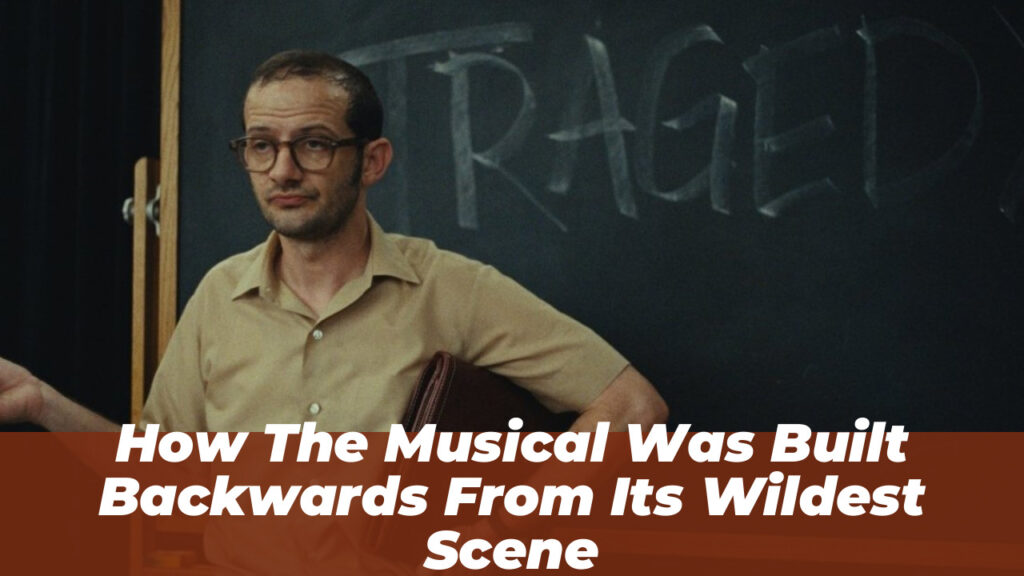
The core of the film is a disastrously inappropriate school play that serves as the protagonist’s revenge plot. By conceptualizing this centerpiece first, the writers established the psychological stakes for the lead character, Doug Leibowitz. Every decision made in the script was designed to lead the audience toward this inevitable, cringe-inducing theatrical disaster.
This structural choice forced the production team to focus on the emotional trajectory of the characters. By knowing exactly where the chaos would peak, they could calibrate the tension in earlier scenes with precision. It transformed the writing process into a puzzle, where every piece had to fit into the framework of the final, catastrophic performance.
Why the 9/11 School Play Became the Anchor
The centerpiece of the film revolves around a middle school production of a 9/11 musical directed by a vengeful teacher. This choice was intentional, designed to push the boundaries of dark comedy while highlighting the protagonist’s descent into madness. It serves as the ultimate professional suicide note for a man desperate to ruin his rival.
By making the play the anchor, the creators gave the audience a clear target for their anticipation. Viewers spend the duration of the film waiting for the curtain to rise on this ill-advised production. This build-up creates a unique tension that sustains the comedy through even the most mundane character interactions.
Balancing Dark Satire with Middle School Chaos
The challenge for the creative team was ensuring the satire never overshadowed the reality of the middle school setting. They needed to capture the authentic, clumsy energy of adolescent performers while juxtaposing it with the dark, adult motivations of the teacher. The result is a tonal tightrope walk that feels both grounded and surreal.
The film succeeds by treating the children with a level of sincerity that contrasts sharply with the protagonist’s manipulation. While Doug Leibowitz uses the students as pawns, the children remain largely oblivious to the gravity of the subject matter. This contrast provides the film with its most poignant and humorous moments.
The Search for Doug Leibowitz
Casting the lead role required an actor who could embody both pathetic desperation and genuine artistic fervor. Director Giselle Bonilla sought someone who could carry the weight of a failed career while maintaining a sharp, comedic edge. The search was exhaustive, as the role demanded a specific type of vulnerability that few performers can authentically project.
The casting process eventually led the team to Will Brill, whose background in theater made him the perfect fit for the role. Bonilla was particularly moved by Brill’s past public statements regarding his early struggles as a struggling artist in New York. This shared history of artistic hardship allowed the director and actor to form a deep, shorthand understanding of the character.
How a Tony Speech Influenced Casting Choices
Bonilla’s interest in Brill was sparked in part by his vulnerable and candid Tony Award acceptance speech. His willingness to speak openly about his mental health and his journey in the industry mirrored the raw, unfiltered nature of the character. It convinced the director that Brill possessed the emotional depth required for the role.
This connection went beyond typical casting metrics. The director wanted an actor who wasn’t afraid to look unlikable or desperate on screen. Brill’s public persona provided the necessary proof that he could handle the complexities of a character who is fundamentally flawed yet deeply human.
The ‘What-If’ Question That Defined the Lead
To help Brill lock into the mindset of Doug Leibowitz, Bonilla posed a haunting hypothetical question. She asked him to imagine who he would be if he had never found the courage to pursue his dreams in New York. This question forced the actor to confront the bitterness of a life unlived.
This creative exercise became the foundation for the character’s personality. It allowed Brill to play the role with a sense of genuine regret and longing. The resulting performance is layered, providing a tragic undercurrent to what is essentially a wild, satirical comedy.
Navigating a Two-Day Production Window
The most shocking aspect of the film’s production is its incredibly condensed schedule. The entire feature was captured in just two days of shooting, a constraint that would cripple most projects. This limitation necessitated a high level of preparation and a cast that could deliver perfect takes under extreme pressure.
Because there was no room for error, the director prioritized performers with extensive theater backgrounds. These actors were accustomed to the rigors of live performance and the necessity of hitting marks without constant retakes. Their experience was the glue that held the production together during the frantic shoot.
The Necessity of Theater-Trained Talent
Theater actors are trained to sustain performance energy over long periods, which was essential for a two-day shoot. They understand the importance of collaboration and the need to support their fellow actors in real-time. This dynamic allowed the crew to move quickly, as the cast was prepared to execute complex scenes in single takes.
The reliance on stage-trained talent also brought a specific aesthetic to the film. The performances feel more immediate and tactile than traditional film acting. This choice helped bridge the gap between the film’s theatrical subject matter and its cinematic execution, creating a cohesive visual language.
Collaborative Efficiency Under Extreme Constraints
The extreme time pressure turned the set into a high-stakes workshop. Every member of the cast and crew had to be perfectly aligned, as there was no time for reshoots or re-blocking. The team operated with a singular focus, stripping away all non-essential elements to prioritize the core narrative beats.
This efficiency resulted in a film that feels raw and urgent. The lack of polish, in some respects, serves the story, as it captures the frenetic energy of a school production. The collaborative spirit on set became part of the film’s DNA, showing on screen in the seamless interactions between the cast.
Cinematic DNA and Creative Influences
The film draws heavily from the tradition of sharp, political, and workplace satire. Influences from classics like Election and The Producers are evident in the way the film treats its protagonist’s downfall. Like these predecessors, the movie finds humor in the intersection of ego, ambition, and institutional failure.
However, the film distinguishes itself through its specific focus on the absurdity of modern education environments. It avoids the broad strokes of its influences, opting instead for a more nuanced look at the pettiness of mid-level management and the desire for recognition. It is a cynical look at the world, yet one that remains deeply funny.
Drawing Parallels to Election and The Producers
The influence of Election is visible in the film’s depiction of a teacher whose life is derailed by his own obsession. Much like the characters in that classic satire, Doug Leibowitz is a man whose intelligence is betrayed by his lack of self-awareness. The film captures that same sense of inevitable, slow-motion disaster.
From The Producers, the film borrows the concept of a scheme gone wrong. The idea of using a production to sabotage a rival is a direct nod to the classic farce. By blending these influences, the filmmakers created a story that feels both familiar to fans of the genre and entirely fresh in its execution.
Finding the Satirical Sweet Spot
Finding the right tone for the satire was a delicate process. The film had to be biting enough to feel relevant, but not so harsh that it alienated the audience. The creators achieved this by focusing on the absurdity of the character’s actions rather than the politics of the tragedy he portrays.
By centering the humor on the teacher’s personal vendetta, the film remains grounded. The audience is invited to laugh at the protagonist’s hubris, which keeps the tone light despite the gravity of the subject matter. It is a masterclass in using satire to explore human failure.
The Evolution from Short to Feature
The project began with a clear vision that was adaptable to different formats. Writer Alexander Heller noted that the story was always designed to function as both a short film and a feature. This flexibility allowed the team to flesh out the characters and the stakes without losing the central punch of the premise.
The transition from a concept to a full-length feature was solidified in September 2021. This was the moment when the narrative crystallized, allowing the writers to see the full potential of the story. They realized that the school play could serve as the anchor for a much larger, more complex exploration of the character.
The September 2021 Crystallization Point
During this period, the team identified the key narrative beats that would allow the story to expand. They realized that the protagonist’s relationship with the principal was the engine that would drive the film. By focusing on this rivalry, they were able to build a feature-length script that didn’t feel stretched.
This period of development was crucial for the film’s success. It allowed the writers to refine the dialogue and ensure that every scene served the final act. By the time they reached production, the story was locked and ready for the intensive shooting schedule.
Frequently Asked Questions
Is the film based on a true story?
No, the film is a work of fiction. While it draws on real-world inspirations and the satirical tradition of workplace comedies, the story and characters were entirely conceptualized by the creative team.
Why was the production schedule so short?
The two-day shooting schedule was a deliberate creative and logistical choice. The team wanted to force a sense of urgency and maintain a high level of intensity, mirroring the chaotic nature of the school play within the film.
How does the film handle its sensitive subject matter?
The film focuses on the protagonist’s personal motivations rather than the tragedy itself. By highlighting the absurdity of the teacher’s revenge plot, the film keeps the audience focused on the character comedy rather than the historical context of the play.
What is the central conflict of the story?
The conflict centers on Doug Leibowitz, a disgruntled teacher seeking revenge on his ex-girlfriend’s new partner, who also happens to be the school principal. His attempt to ruin the principal’s reputation through a disastrous production serves as the main engine of the plot.
Conclusion: A Masterclass in High-Concept Comedy
The Musical stands as a bold testament to the power of structural planning in comedy. By building the narrative backward from its most daring scene, Giselle Bonilla and Alexander Heller created a film that is as disciplined as it is chaotic. The project proves that extreme constraints, when met with a clear vision and a talented, collaborative cast, can result in something truly unique.
As the film continues to resonate with audiences, it serves as a reminder that the best comedies are often those that take the biggest risks. From the casting of Will Brill to the high-pressure production environment, every element of the film was designed to challenge convention. It is, without question, one of the most significant and memorable entries in the comedy genre for this decade.