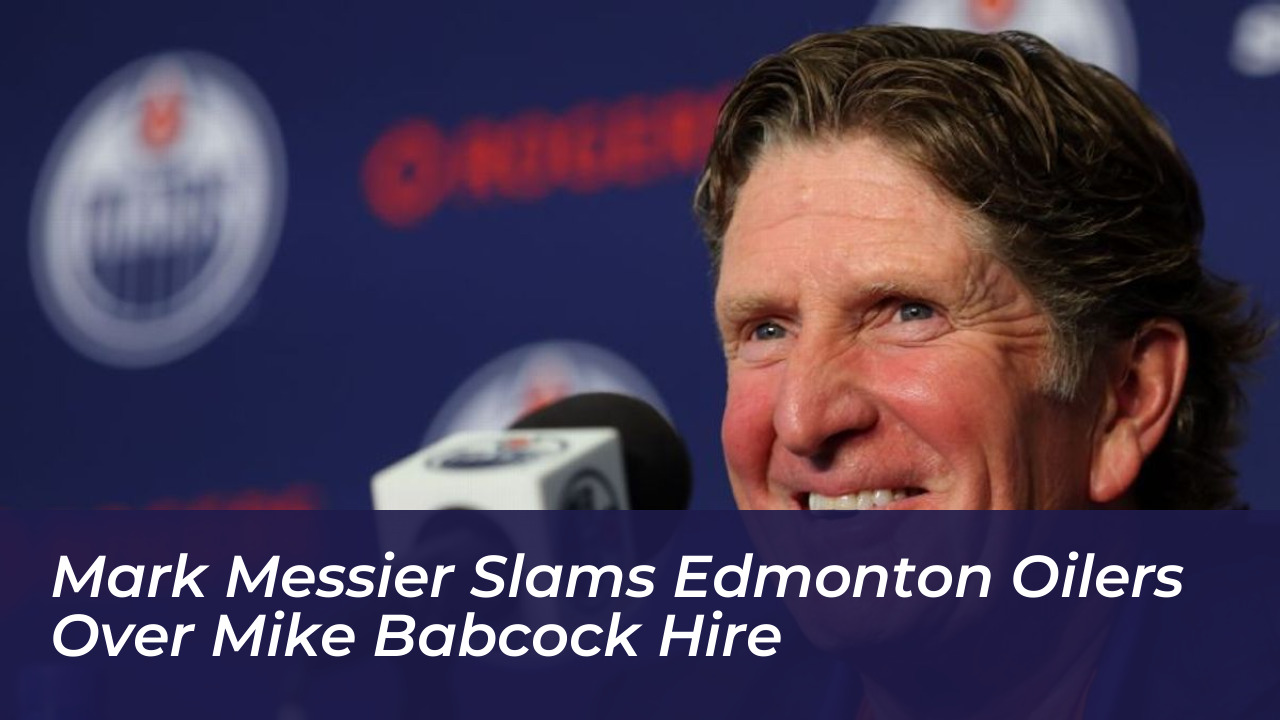
The Edmonton Oilers made a stunning pivot by bringing in veteran bench boss Mike Babcock following a frustrating first-round playoff exit. This leadership shift arrived despite the franchise reaching consecutive Stanley Cup Finals in 2024 and 2025. Franchise legend Mark Messier broke his silence during an ESPN NHL media session on September 23, 2026. He strongly condemned the hiring and criticized management for involving active players in the decision-making process. Messier argued that this administrative overlap creates dangerous vulnerabilities within a professional hockey organization.
- Introduction to the Controversy
- The Breakdown of the Separation of Powers
- Blurring Lines Between Management and Players
- Locker Room Safety Nets and Accountability
- Unresolved Concerns Over Mike Babcock’s Coaching History
- A Legacy of Success Mired in Controversy
- The Columbus Blue Jackets Episode and NHL Return
- Contrasting Executive and Player Perspectives in Edmonton
- Management Defense and Star Endorsements
- Messier Perspective on Tactical Excellence Versus Ethics
- Frequently Asked Questions
- When Did Mark Messier Criticize the Edmonton Oilers?
- Why Is Mike Babcock a Controversial Coaching Hire?
- Which Oilers Players Participated in Vetting Mike Babcock?
- What Was Messier’s Primary Structural Concern?
- How Might This Hire Impact Younger Oilers Roster Players?
Introduction to the Controversy
Edmonton needed a spark after the previous postseason disappointment under Kris Knoblauch. General manager Stan Bowman sought a proven winner to push the roster over the championship threshold. Bringing in Babcock fulfilled that desire for veteran pedigree. Yet, the choice immediately ignited a firestorm across the hockey world.
Fanbases across Alberta debated the wisdom of hiring a coach with such a polarizing reputation. Media outlets dissected every quote coming out of the front office press conference.
Messier anchored his critique on the erosion of traditional organizational hierarchies. Professional sports rely on strict boundaries between players, coaches, and front office executives. When those lines blur, accountability vanishes. Messier warned that involving star athletes in hiring decisions jeopardizes the long-term stability of the locker room.
The Breakdown of the Separation of Powers
Blurring Lines Between Management and Players
Franchise success requires a delicate balance of authority. Coaches push athletes to their physical and mental limits. Players respond through established internal channels when disputes arise. Involving elite skaters like Connor McDavid and Leon Draisaitl in the vetting of their next boss completely alters this dynamic.
Participating in the selection process compromises traditional checks and balances. If an athlete helps hire a coach, that athlete shares ownership of the appointment. Voicing discontent about tactical methods or personal treatment becomes exponentially harder. The player essentially complains about a choice they endorsed.
Locker rooms require neutral territory. Athletes need a safe space to vent frustrations without feeling like they are undermining management. Edmonton stripped away that sanctuary by inviting core roster members into the executive boardroom.
Locker Room Safety Nets and Accountability
Coaches require independent evaluation separate from the players they manage. When star leadership steps into executive roles, the distinction between boss and employee dissolves. This shift removes critical safety nets for younger or depth players who lack the protective status of franchise icons.
If friction develops between the bench and the locker room, junior players lose their voice. They cannot turn to their team captains for advocacy if those same captains handpicked the coaching staff. Accountability flows downward rather than operating objectively across the entire roster.
Edmonton risks alienating the broader roster by centralizing power among top earners. Sustainable winning cultures demand objective oversight from people who answer solely to ownership, not to the players on the ice.
Unresolved Concerns Over Mike Babcock’s Coaching History
A Legacy of Success Mired in Controversy
Mike Babcock owns an undeniable resume of on ice triumphs. He captured the Stanley Cup with the Detroit Red Wings in 2008 and guided Team Canada to consecutive Olympic gold medals in 2010 and 2014. His tactical mind shaped modern hockey strategies.
Historical context shows that elite franchises often chase championship pedigree regardless of collateral damage. Winning cures many organizational ills in professional sports.
However, his past achievements remain heavily overshadowed by recurring behavioral controversies. Former Detroit forward Johan Franzen publicly detailed instances of verbal abuse during their time together. Later, in Toronto, Babcock orchestrated an incident where rookie Mitch Marner was forced to rank teammates by work ethic and share the list with veterans.
These episodes established a troubling pattern of psychological intimidation. While teams crave winning pedigrees, the human cost associated with Babcock’s methods consistently draws intense scrutiny from former players and media analysts alike.
The Columbus Blue Jackets Episode and NHL Return
The controversy followed Babcock to his next destination. He resigned as head coach of the Columbus Blue Jackets in September 2023 before ever stepping behind the bench for a regular season game. An NHLPA investigation and subsequent league inquiry uncovered allegations that Babcock violated player privacy by demanding access to personal photos on their mobile devices.
The league officially cleared Babcock to return to coaching in June 2026. Despite league clearance, many respected voices in the hockey community remain deeply skeptical. Messier highlighted these lingering concerns as a primary reason why Edmonton should have looked elsewhere.
Contrasting Executive and Player Perspectives in Edmonton
Management Defense and Star Endorsements
Edmonton leadership defended the appointment vigorously. General manager Stan Bowman emphasized the exhaustive vetting process that preceded the announcement. Management believed that a demanding, uncompromising coaching style was the exact missing ingredient needed to capture the elusive Stanley Cup.
Star forwards Connor McDavid and Leon Draisaitl publicly backed the decision. McDavid argued that Babcock’s intense approach matches the locker room’s championship hunger. Draisaitl called the move a necessary evolution for a team desperate to convert deep playoff runs into a championship parade.
These endorsements carry immense weight within the organization. Yet, they simultaneously validate Messier’s core argument regarding player overreach in front office affairs.
Messier Perspective on Tactical Excellence Versus Ethics
Messier understands the demands of winning at the highest level. He played under fiercely intense coaches like Mike Keenan during his storied career. He knows that elite competition requires thick skin and unwavering dedication.
However, Messier draws a firm line between tactical rigor and ethical misconduct. Demanding physical and mental excellence is mandatory in the NHL. Crossing professional boundaries and damaging player dignity is not. This philosophical divide between veteran legacy figures and active roster stars creates tangible friction in Edmonton.
Frequently Asked Questions
When Did Mark Messier Criticize the Edmonton Oilers?
Mark Messier delivered his critique on September 23, 2026, during an ESPN NHL Opening Night media call.
Why Is Mike Babcock a Controversial Coaching Hire?
Babcock faces a history of player mistreatment allegations, including verbal abuse in Detroit, public humiliation tactics in Toronto, and a privacy violation scandal in Columbus.
Which Oilers Players Participated in Vetting Mike Babcock?
Captain Connor McDavid and alternate captain Leon Draisaitl were directly involved in interviewing Babcock before management finalized the hiring decision.
What Was Messier’s Primary Structural Concern?
Messier argued that involving players in management hiring decisions eliminates the separation of powers, leaving athletes without an independent channel to report grievances against the coaching staff.
How Might This Hire Impact Younger Oilers Roster Players?
Depth players might struggle to find advocacy or recourse if conflicts arise with a coach chosen directly by team captains.