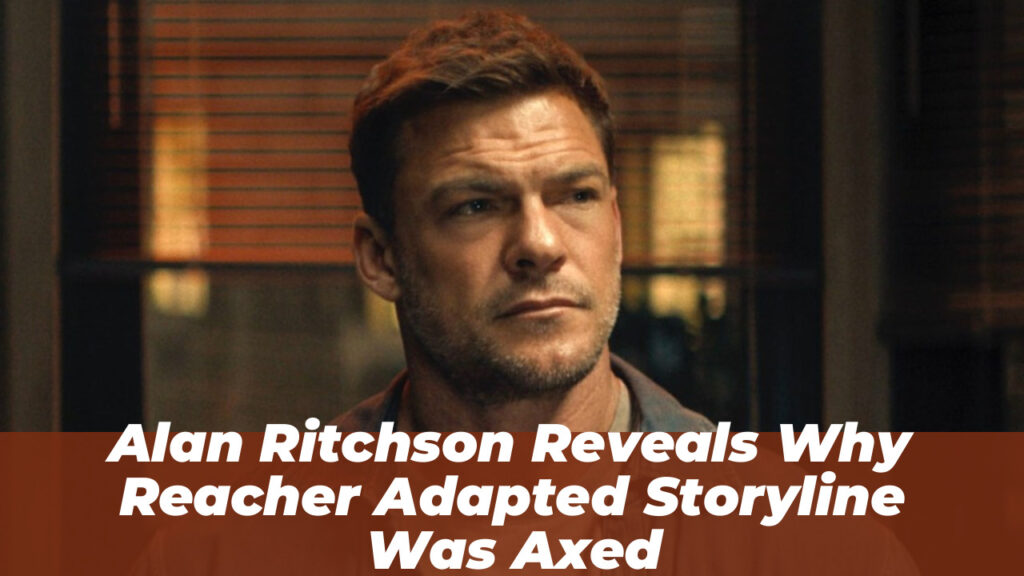
The Reacher franchise has firmly established itself as a cornerstone of modern streaming, delivering high-octane action and a faithful representation of Lee Child’s iconic drifter. As of September 2026, the series continues to dominate viewership metrics, proving that audiences remain hungry for the stoic, tactical justice that Alan Ritchson provides in the lead role.
However, the star recently pulled back the curtain on the creative process, revealing that the path to this success has not been without its obstacles. In a candid social media disclosure, Ritchson confirmed that a planned adaptation of the second novel, Die Trying, was abruptly scrapped following the 2024 presidential election.
The Die Trying Controversy
The novel Die Trying serves as a significant entry in the literary series, depicting Jack Reacher as he finds himself kidnapped alongside an FBI agent. The narrative takes a dark turn as they are transported to a secluded compound, where Reacher must dismantle a dangerous, well-armed white supremacist militia group from within.
Given the book’s central premise, the plot inherently involves themes of domestic extremism and political radicalization. While such topics have always been a staple of the thriller genre, the timing of the production cycle coincided with a volatile shift in the American political landscape, leading executives to view the material through a different lens.
Ritchson’s revelation points to the aftermath of the 2024 election as the primary catalyst for the decision. By linking the cancellation of this specific storyline to the political climate, the actor has highlighted how the real-world atmosphere can exert significant pressure on the development of serialized entertainment.
Plot specifics of the axed novel
At the heart of the story is an intense, claustrophobic struggle against a fringe group attempting to incite widespread civil unrest. Reacher’s tactical expertise is pushed to the limit as he navigates the ideological fanaticism of his captors while attempting to protect his companion.
Fans of the source material had long awaited this adaptation, viewing it as one of the most action-heavy and character-defining entries in the canon. The removal of this plotline from the development slate represents a significant departure from the show’s goal of adapting the books in chronological order.
Why white supremacist storylines became sensitive
In the wake of the 2024 election, corporate sensitivity regarding depictions of domestic political violence reached an all-time high. Executives likely feared that a narrative centering on a militia group could be misconstrued or trigger unnecessary controversy in a polarized nation.
This caution reflects a broader trend in the industry where studios prioritize brand safety over provocative storytelling. By avoiding themes that mirror current political tensions, the production team sought to maintain a neutral ground that would not alienate any segment of their massive global audience.
Corporate Strategy and Streaming Optics
Balancing the gritty, uncompromising nature of Lee Child’s novels with the corporate requirements of a major streaming platform is a delicate task. Amazon has invested heavily in the franchise, and the protection of that investment remains a top priority for decision-makers.
The decision to axe Die Trying suggests that the studio is increasingly wary of external optics. When creative choices begin to overlap with real-world political discourse, the corporate apparatus often defaults to a strategy of risk mitigation to ensure long-term sustainability.
Balancing gritty source material with brand safety
Jack Reacher is a character defined by his willingness to confront evil wherever he finds it, which often necessitates exploring dark, gritty themes. However, streaming platforms must answer to shareholders and advertisers who demand a level of brand safety that can sometimes stifle creative exploration.
This creates a tension where the show must remain true to the “Reacher” spirit while avoiding content that could be labeled as inflammatory. The axing of the militia-centric plot shows that even a successful franchise must bow to the realities of the modern media landscape.
Analyzing Amazon’s internal decision-making process
The internal deliberation likely involved weighing the fan demand for specific books against the potential for negative media cycles. By choosing to bypass Die Trying, leadership opted for a path of least resistance that allowed the show to continue without the baggage of a politically charged plot.
This process highlights how streaming giants function more like political entities than traditional production houses. Every script is scrutinized not just for its entertainment value, but for its potential impact on the platform’s public image and regulatory standing.
The Reacher-Verse Expansion
Following the conclusion of Season 4 in September 2026, the franchise has shifted its focus toward the Neagley spin-off. Starring Maria Sten, this new series marks a strategic pivot for the studio, moving away from the main book adaptations to explore character-driven stories within the same world.
This transition has been met with positive critical reception, with the spin-off holding a 92 percent rating on major review aggregators. It appears that by diversifying the content, the studio is successfully insulating the franchise from the risks associated with the original novel adaptations.
Transitioning from the main series to the Neagley spin-off
The seamless hand-off from Reacher to Neagley demonstrates that the studio is doubling down on the characters rather than the specific plots of the books. This allows for more creative freedom while keeping the established fanbase engaged with familiar faces.
By focusing on spin-offs, the production team can explore different genres and themes that are less tethered to the explosive, often controversial narratives of the source novels. This is a clear indicator that the “Reacher-verse” is evolving into a more flexible and safer brand.
Is the studio pivoting toward safer narratives?
The pivot toward the Neagley spin-off suggests a long-term strategy of prioritizing character longevity over the faithful, chronological adaptation of the source material. It allows the studio to avoid the “political minefields” present in the remaining books while maintaining high production values.
Fans should expect this trend to continue as the studio seeks to maximize the franchise’s potential without risking the controversies that characterized the decision to scrap Die Trying. The focus has clearly moved toward building a sustainable, long-term ecosystem of content.
Fan Reaction and Industry Implications
The reaction to Ritchson’s disclosure has been mixed, with many book purists expressing disappointment that a fan-favorite novel was sacrificed for political convenience. However, others understand the necessity of keeping a multi-million dollar production free from unnecessary real-world controversy.
Ritchson himself has played a vital role in managing these expectations, often using his social media presence to bridge the gap between the fans and the studio. His transparency has helped maintain a loyal base, even when the creative direction deviates from the expected path.
The divide between book purists and streaming executives
There is a growing chasm between those who want a 1:1 adaptation of Lee Child’s work and those who manage the streaming platform. Purists argue that the books’ themes are essential to Reacher’s identity, while executives argue that those themes are liabilities in a modern, sensitive market.
This divide is unlikely to close as the franchise progresses. It sets a precedent where future literary adaptations may be subjected to similar sanitization, leading to a “watered-down” version of the source material that prioritizes marketability over narrative integrity.
The precedent set for future literary adaptations
The cancellation of Die Trying serves as a warning for other adaptations currently in development. It shows that no matter how popular a property is, the political climate remains a significant factor in whether a story ever makes it to the screen.
Industry observers are watching closely to see if this trend spreads to other major franchises. If studios continue to skip controversial source material, we may see a shift toward original, safer stories that are easier to control in an increasingly polarized cultural environment.
Navigating the Future of the Franchise
The revelation that Die Trying was axed due to the 2024 political climate highlights the complex intersection of art, politics, and commerce. While fans may lament the loss of a gritty story, the franchise’s shift toward the Neagley spin-off shows that the studio is prioritizing stability and character development.
As the “Reacher-verse” moves into its next phase, the tension between creative freedom and corporate caution will continue to define its trajectory. Regardless of these challenges, the success of the series remains a testament to the enduring appeal of its central character and the star power of Alan Ritchson.
FAQ: Frequently Asked Questions
Was Die Trying officially greenlit by Amazon?
While the project was in early development phases, it was never formally greenlit for production. The decision to scrap the adaptation occurred during the internal planning stages following the 2024 election.
Why did the Neagley spin-off launch immediately after Season 4?
The launch was a strategic move to maintain momentum and keep the audience engaged within the “Reacher-verse.” It allows the studio to expand the brand beyond the main series while mitigating the risks associated with adapting the more controversial books.
What other Lee Child books might be skipped?
The studio has not provided a definitive list of skipped titles. However, any novel featuring themes of intense political radicalization or domestic extremism is likely under review for potential exclusion or heavy modification.
How does Ritchson feel about the creative limitations?
Ritchson has maintained a professional stance, acknowledging the realities of the industry while remaining committed to the character. His public comments reflect an understanding that the show must navigate a complex, real-world landscape to survive.
Will the militia storyline ever be revisited?
There are no current plans to revisit the militia plotline from Die Trying. The franchise appears to be moving in a different direction, focusing on character-driven narratives that avoid the specific political sensitivities of that story.
Ultimately, the long-term success of high-budget television relies on finding a middle ground between source fidelity and market reach. The studio is clearly betting that its audience prefers long-term character consistency over the volatile nature of the original novels. By carefully selecting which stories to translate to the screen, they are ensuring that the brand remains resilient even when the cultural tides turn unexpectedly. As production on future seasons continues, viewers can expect a more curated, safe, and character-focused experience that avoids the political pitfalls of the past.