
A routine late-night traffic stop in Westlake Village turned unexpected when former child star Jonathan Taylor Thomas found himself behind bars. The incident, which drew immediate media attention, highlights the strict legal consequences of failing to follow law enforcement commands during roadside investigations. When Jonathan Taylor Thomas arrested headlines began circulating, fans and legal analysts alike scrambled to understand the events that transpired on a quiet Monday morning.
- Details of the Westlake Village Traffic Stop
- Timeline and Location
- Passenger Status and Driver Arrest
- The Escalation Leading to Custody
- Uncooperative Behavior and Police Orders
- Booking and Release from Custody
- Legal Analysis of California Penal Code Section 69
- Understanding Felony Obstruction Charges
- Key Factors in Prosecutor Case Review
- Career Background and Return to Public View
- Rise to 1990s Stardom
- Transition Away from Hollywood
- Frequently Asked Questions
- Why was Jonathan Taylor Thomas arrested?
- Was Jonathan Taylor Thomas driving the vehicle?
- Is Jonathan Taylor Thomas still in jail?
- Have formal criminal charges been filed against him?
The situation unfolded on September 21, 2026, marking a rare and startling return to the public eye for the actor who spent decades avoiding the spotlight. Law enforcement officials handled the case according to standard operating procedures for roadside detentions, but rapid escalations quickly altered the trajectory of the stop. Understanding the timeline and specific actions of all individuals involved helps clarify why a routine patrol check transformed into a felony arrest.
Details of the Westlake Village Traffic Stop
Timeline and Location
The incident occurred on Monday, September 21, 2026, at approximately 12:30 a.m. Deputies from the Los Angeles County Sheriff’s Department pulled over a vehicle near Westlake Boulevard and Townsgate Road in Westlake Village, California. Patrol units initiated the stop as part of an ongoing driving under the influence investigation.
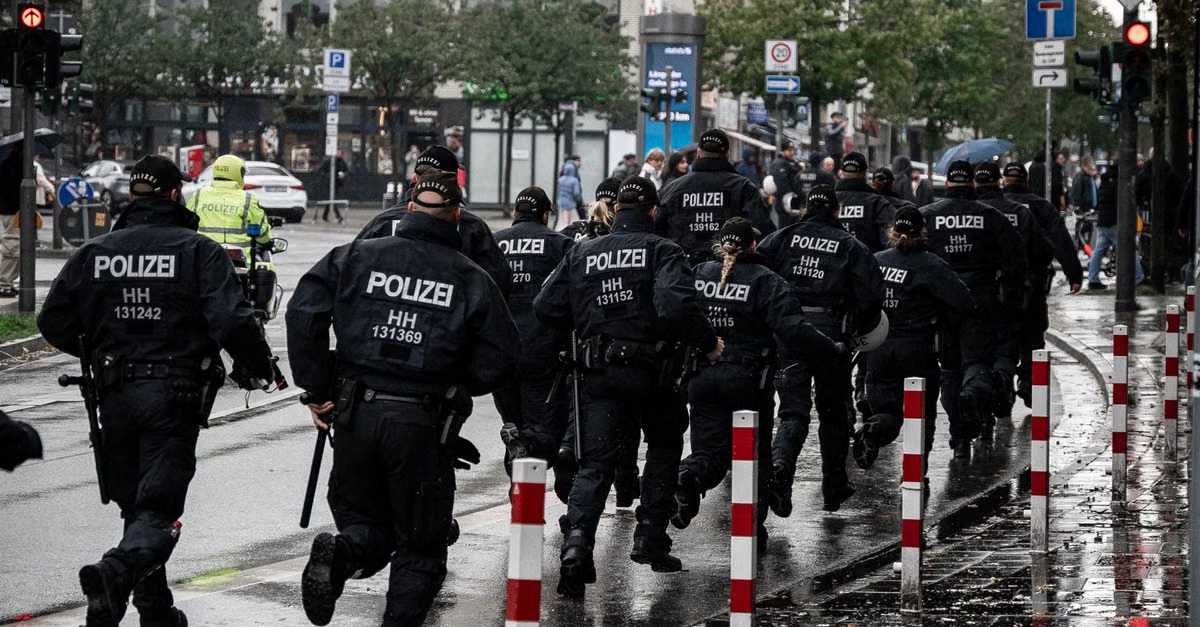
Westlake Boulevard is typically quiet during these early morning hours, allowing officers to conduct standard field evaluations without heavy traffic interference. The responding deputies secured the scene and approached the vehicle to evaluate the driver and any occupants.
Passenger Status and Driver Arrest
Thomas, age 45, occupied the vehicle as a passenger rather than the driver. While deputies concentrated on the operator of the automobile, the interaction shifted as officers observed signs of alcohol impairment throughout the vehicle cabin. The driver of the car ultimately faced a separate arrest for driving under the influence.
Passengers during DUI investigations usually remain inside the vehicle unless officers issue specific instructions. However, roadside dynamics change quickly when law enforcement detects potential intoxication or hostile compliance, setting the stage for an escalation in police custody procedures.
The Escalation Leading to Custody
Uncooperative Behavior and Police Orders
The situation intensified when Thomas stepped out of the vehicle against direct, explicit orders from responding deputies. Law enforcement protocol dictates that passengers stay seated during active traffic stops to ensure officer safety and maintain control of the environment. Investigators stated that this sudden movement and subsequent uncooperative demeanor escalated the roadside stop.
Deputies noted that Thomas displayed signs of alcohol impairment during the interaction. Refusing to obey lawful commands regarding physical positioning during a felony or DUI investigation provides grounds for immediate detention, as officers must neutralize perceived threats and manage erratic behavior.
Booking and Release from Custody
Following the roadside altercation, deputies transported Thomas to the Malibu/Lost Hills Sheriff’s Station jail for booking processing. Jail records show that officers registered him under suspicion of felony obstruction and resisting an executive officer. Thomas spent roughly 34 hours in custody before jail officials released him on Tuesday, September 22, 2026.
While an initial release without bail or immediate arraignment provides temporary relief, the legal process remains active. The local district attorney’s office retains the authority to review police reports and decide whether to pursue formal charges in the coming weeks.
Legal Analysis of California Penal Code Section 69
Understanding Felony Obstruction Charges
California Penal Code Section 69 governs allegations of obstructing or resisting an executive officer. The statute covers two main behaviors: attempting by threat or violence to deter an officer from performing official duties, and knowingly resisting an officer through the use of force or violence. Depending on the nature of the confrontation, prosecutors can file this offense as either a misdemeanor or a felony.
When an individual ignores explicit directives to stay inside a vehicle, prosecutors often look at whether that action constituted an intentional physical barrier to law enforcement operations. Even without direct violence, physical defiance of an officer’s orders during an active investigation often triggers severe legal scrutiny under this statute.
Key Factors in Prosecutor Case Review
Legal analysts evaluating the potential case focus on several core elements required to sustain a conviction under Section 69. First, officers must operate strictly within the lawful performance of their duties during the traffic stop. Second, investigators must prove willful resistance, meaning the suspect acted with intent to interfere rather than through mere confusion.
Defense attorneys often examine body-worn camera footage to determine whether the police commands were clear and whether the physical movement posed an actual threat. As of the current publication date, formal criminal charges have not been filed, leaving room for legal counsel to engage with prosecutors before any court date is set.
Career Background and Return to Public View
Rise to 1990s Stardom
The arrest brought rare public attention to Thomas, who achieved household-name status in the 1990s as Randy Taylor, the middle son on the hit ABC sitcom “Home Improvement.” He shared the screen with prominent actors like Tim Allen and Patricia Richardson, capturing the hearts of millions of television viewers. Beyond television, Thomas voiced young Simba in Disney’s animated classic “The Lion King” and starred in feature films such as “Man of the House” and “Tom and Huck.”
His face adorned countless teen magazine covers, making him one of the most recognizable young actors of his generation. Despite massive commercial success and widespread fame, Thomas made a conscious choice to step away from the relentless demands of the entertainment industry.
Transition Away from Hollywood
After leaving television, Thomas pursued higher education with intense dedication. He attended Harvard University and the University of St Andrews before ultimately graduating from Columbia University in 2010. Choosing privacy over celebrity, he maintained a largely reclusive lifestyle for over a decade, rarely appearing at public events or engaging with the media.
Recent public sightings have been exceptionally rare, with a notable exception in July 2026 when former co-star Patricia Richardson shared a reunion photograph featuring Thomas alongside fellow actor Taran Noah Smith. This latest news cycle places the former child star back into the media spotlight under entirely unexpected circumstances.
Frequently Asked Questions
Why was Jonathan Taylor Thomas arrested?
Deputies arrested Thomas on suspicion of felony obstruction and resisting an executive officer after he stepped out of a vehicle against direct orders during a late-night DUI traffic stop in Westlake Village.
Was Jonathan Taylor Thomas driving the vehicle?
No. Thomas was a passenger in the vehicle. The driver of the car faced a separate arrest for driving under the influence.
Is Jonathan Taylor Thomas still in jail?
No. Authorities released him from the Malibu/Lost Hills Sheriff’s Station jail on Tuesday, September 22, 2026, after spending approximately 34 hours in custody.
Have formal criminal charges been filed against him?
As of publication, the local district attorney’s office has not formally filed criminal charges, though prosecutors continue to review the police reports from the incident.