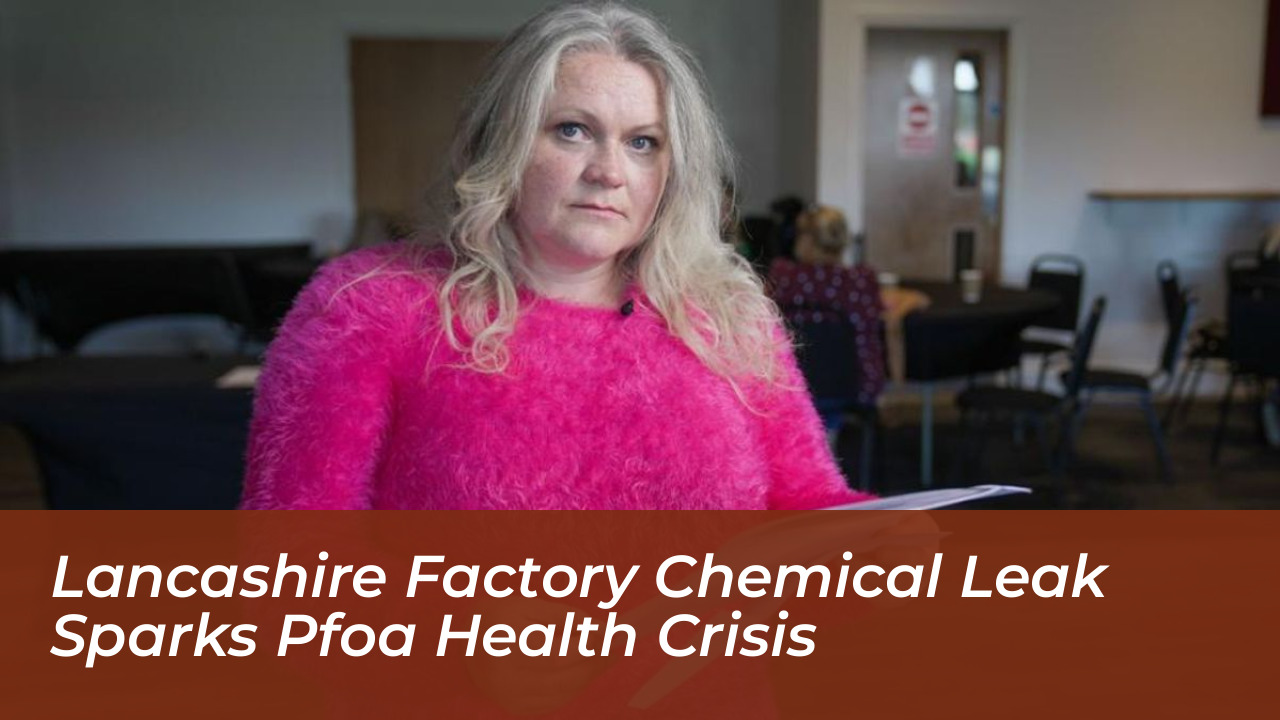
Dozens of families living near the Hillhouse industrial site in Thornton-Cleveleys, Lancashire, carry elevated levels of perfluorooctanoic acid in their bloodstreams. Independent testing reveals that nearly 70 percent of participating locals exceed safe exposure thresholds. These findings link local industrial history to long-term environmental accumulation and spark immediate demands for systemic health interventions. The Environment Agency and Wyre Council maintain ongoing investigations into soil and food chain contamination surrounding the facility. While regulatory bodies evaluate official land classifications, affected families navigate the reality of living with persistent synthetic compounds in their immediate ecosystem.
- The Science of Forever Chemicals and PFOA Exposure
- What Are Per- and Polyfluoroalkyl Substances
- Health Classification and Biological Risks
- Industrial History of the Hillhouse Manufacturing Plant
- Corporate Operators and Production Timelines
- Legacy of Airborne Deposition and Runoff
- Independent Blood Testing Results and Local Findings
- Bypassing Official Public Health Guidance
- Shocking Concentrations and High-Risk Demographics
- Regulatory Responses and Local Restrictions
- Allotment Closures and Dietary Advisories
- Landmark Legal Action and International Precedents
- Frequently Asked Questions
- What are forever chemicals and why are they dangerous?
- How did residents in Thornton-Cleveleys become exposed to PFOA?
- What health conditions are linked to high PFOA levels?
- Can individuals in the UK get their blood tested for PFAS through the NHS?
- Overview of the independent testing initiative funded by investigative journalists to uncover hidden contamination.
- Scope of environmental accumulation affecting local soils, agricultural food chains, and residents.
- Immediate community demands for systemic public health interventions and corporate accountability.

The Science of Forever Chemicals and PFOA Exposure
Per- and polyfluoroalkyl substances represent a vast family of synthetic chemicals prized for their resistance to heat, water, and oil. Manufacturers integrated these compounds into thousands of commercial products, including non-stick cookware, firefighting foams, water-repellent textiles, and industrial lubricants, beginning in the mid-twentieth century. Scientists classify perfluorooctanoic acid as a forever chemical because extremely strong carbon-fluorine bonds prevent natural degradation. These substances persist indefinitely in soil, groundwater, and living tissue. Once absorbed, they bioaccumulate over years of continuous low-level exposure.
The World Health Organization classifies perfluorooctanoic acid as a Group 1 carcinogen, confirming clear scientific evidence linking the substance to increased cancer risks in humans. Medical literature associates elevated systemic levels with several severe health conditions, including reduced thyroid function, kidney cancer, testicular cancer, elevated cholesterol levels, pre-eclampsia, and ulcerative colitis. While high blood concentrations do not guarantee immediate disease development, international health authorities recommend proactive clinical screening protocols for exposed populations.
What Are Per- and Polyfluoroalkyl Substances
- Properties of synthetic compounds prized for intense resistance to heat, water, and oil.
- Integration into commercial products including non-stick cookware and firefighting foams.
- Carbon-fluorine bonds preventing natural degradation in soil, groundwater, and living tissue.
Health Classification and Biological Risks
- World Health Organization Group 1 carcinogen classification for perfluorooctanoic acid.
- Links to kidney cancer, testicular cancer, reduced thyroid function, and elevated cholesterol.
- Bioaccumulation mechanisms over years of continuous low-level environmental exposure.
Industrial History of the Hillhouse Manufacturing Plant
Industrial chemical manufacturing at the Hillhouse site spans multiple decades and corporate operators. Imperial Chemical Industries initiated the production of non-stick cookware coatings using these hazardous compounds at the Lancashire facility during the 1950s. AGC Chemicals Europe assumed control of operations in 1999 and continued utilizing the substance until phasing it out in 2012 in favor of alternative compounds like EEA-NH4. Despite ceasing usage over a decade ago, historical emissions settled into the surrounding environment via airborne deposition and runoff.
Investigations by environmental scientists indicate that decades of industrial activity left a legacy of soil and food chain contamination that continues to impact the local community. AGC Chemicals recently announced plans to close the Hillhouse manufacturing plant permanently, citing volatile market conditions and a lack of viable operating solutions. Local community members and legal representatives argue that the impending closure does not absolve corporate entities of responsibility for historical environmental contamination and resultant public health liabilities.
Corporate Operators and Production Timelines
- Initiation of non-stick coating production by Imperial Chemical Industries in the 1950s.
- AGC Chemicals Europe assuming control in 1999 and phasing out production by 2012.
- Transition to alternative compounds like EEA-NH4 following modern regulatory shifts.
Legacy of Airborne Deposition and Runoff
- Decades of industrial emissions settling into surrounding soil and groundwater networks.
- Announced permanent plant closure due to volatile chemical market conditions.
- Corporate responsibility debates regarding historical contamination liabilities and remediation.
Independent Blood Testing Results and Local Findings
Official public health guidance from the UK Health Security Agency previously discouraged routine biomonitoring, stating that individual readings offer limited actionable insight. To bypass this policy, investigative journalists from Watershed and Law for Change funded an independent testing initiative conducted by Dr. David Megson and researchers at Manchester Metropolitan University. Forty-nine local volunteers provided blood samples for analysis, yielding results that shocked participants and researchers alike.
Sixty-nine percent of tested residents recorded perfluorooctanoic acid concentrations exceeding 20 nanograms per milliliter, placing them into high-risk categories based on German and US threshold guidelines. The average concentration across all participants reached 26 nanograms per milliliter. Zero participants recorded readings within the low-risk category of under 2 nanograms per milliliter. Residents living within one kilometer of the factory perimeter demonstrated the highest systemic concentrations, while three-quarters of individuals who regularly consumed locally grown fruit and vegetables fell into the highest risk brackets.
Bypassing Official Public Health Guidance
- UK Health Security Agency stance on routine biomonitoring limitations.
- Independent funding by Watershed and Law for Change supporting academic research.
- Participation of forty-nine local volunteers providing blood samples for laboratory analysis.
Shocking Concentrations and High-Risk Demographics
- Sixty-nine percent of tested residents exceeding safe thresholds of 20 nanograms per milliliter.
- Highest systemic concentrations recorded within one kilometer of the factory perimeter.
- Correlation between regular consumption of homegrown produce and elevated risk brackets.
Regulatory Responses and Local Restrictions
Multi-agency investigations involving Wyre Council and the Environment Agency began tracking environmental pathways to protect local populations. Testing confirmed elevated concentrations within local soils, homegrown vegetables, and backyard poultry eggs. Regulatory measures include the temporary closure of two local allotment sites pending formal land contamination classifications. The Food Standards Agency issued specific advisories for residents living within one kilometer of the perimeter, urging them to thoroughly wash and peel all home-grown root vegetables to remove contaminated surface soil particles.
, authorities issued warnings regarding backyard poultry egg consumption exceeding weekly safe exposure limits. Local authorities emphasize that scientific understanding of exposure pathways continues to evolve. Affected residents press municipal and national agencies for standardized healthcare pathways, routine monitoring, and comprehensive remediation strategies to restore environmental safety across the Lancashire region.
| Jurisdiction | Regulatory Body | Blood Testing Stance | Action Thresholds |
|---|---|---|---|
| United Kingdom | UK Health Security Agency | Not routinely recommended; tests offer limited individual clarity. | No official statutory limits established for human blood concentrations. |
| United States | Environmental Protection Agency | Recommended for highly exposed communities near industrial discharge points. | Strict Maximum Contaminant Levels enforced for public drinking water supplies. |
| Germany | German Human Biomonitoring Commission | Encouraged for risk assessment and clinical follow-up planning. | Established HBM-II values requiring medical intervention and lifestyle modification advice. |
Allotment Closures and Dietary Advisories
- Temporary closure of two local allotment sites pending formal land classifications.
- Food Standards Agency guidelines for washing and peeling root vegetables.
- Warnings regarding backyard poultry egg consumption exceeding weekly safe exposure limits.
Landmark Legal Action and International Precedents
More than 100 residents are preparing a group legal action against AGC Chemicals through the law firm Leigh Day. This litigation represents a legal milestone as the first community-led group claim in the UK targeting historical environmental contamination from synthetic chemicals. Legal representatives plan to seek financial compensation covering multiple dimensions of harm, including diminished property values, restricted land use enjoyment, economic losses stemming from contaminated gardens, and damages addressing acknowledged psychological distress and long-term health risks.
This UK litigation draws inevitable comparisons to historic international legal battles, most notably the West Virginia litigation involving DuPont, which inspired the feature film Dark Waters. That protracted legal battle ultimately resulted in thousands of settlements totaling hundreds of millions of dollars, establishing a global precedent for corporate accountability regarding hazardous industrial pollution.
- More than 100 residents preparing group legal action against AGC Chemicals.
- Claims covering diminished property values, economic losses, and health risks.
- Parallels to historic US West Virginia litigation and corporate accountability precedents.
Frequently Asked Questions
What are forever chemicals and why are they dangerous?
Synthetic compounds that resist natural breakdown, persisting indefinitely in the environment and bioaccumulating in human tissue.
How did residents in Thornton-Cleveleys become exposed to PFOA?
Through environmental pathways originating from the Hillhouse plant, contaminating soil, groundwater, and homegrown produce.
What health conditions are linked to high PFOA levels?
Kidney cancer, testicular cancer, reduced thyroid function, high cholesterol, and reproductive complications like pre-eclampsia.
Can individuals in the UK get their blood tested for PFAS through the NHS?
Routine NHS testing is generally unavailable, prompting affected communities to rely on independent research initiatives.